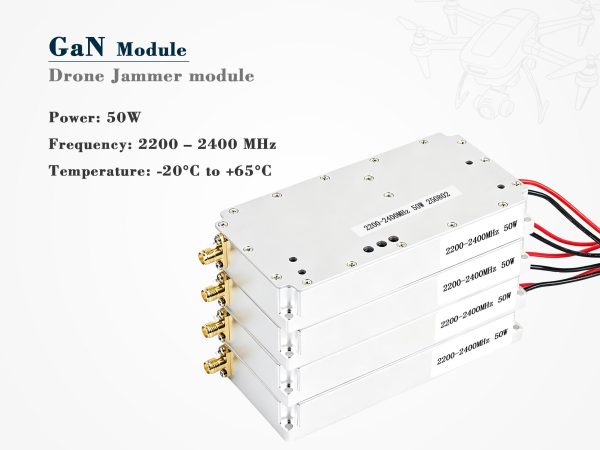
50W Drone Jamming Module – 6500-6700MHz GaN Blocker
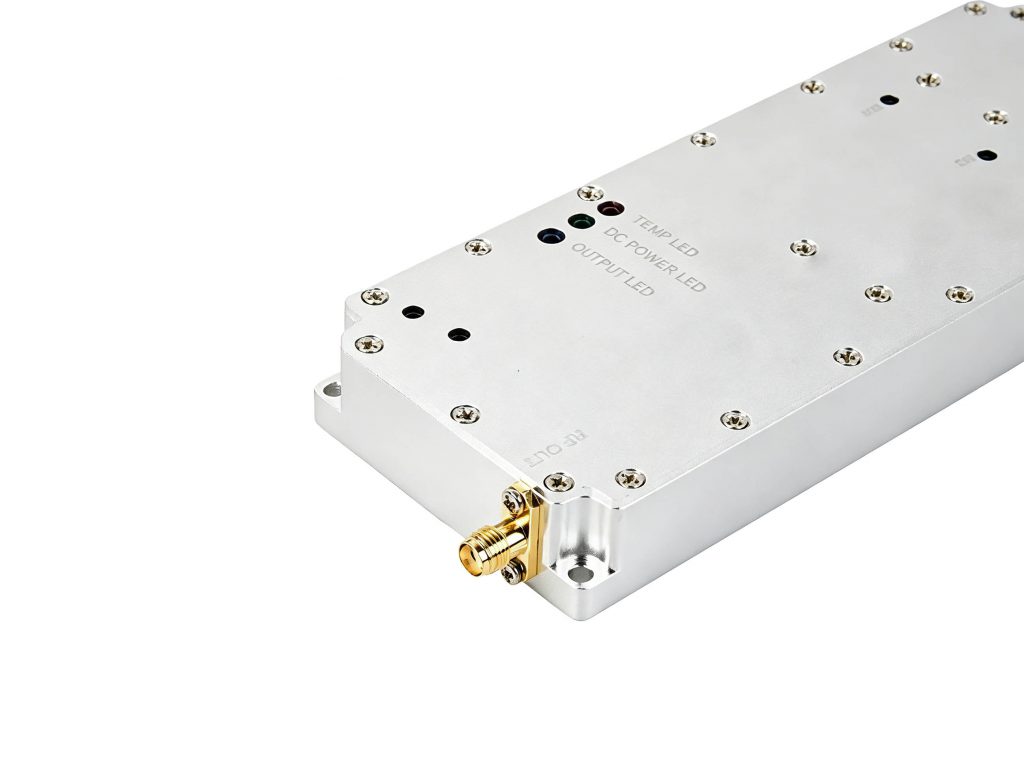
50W drone jamming module with GaN-on-SiC tech, 6500-6700MHz, 47±1dBm output, 270KHz scan speed, SMA female, 28V, compact 117×58×18mm, -20~+65°C. Customizable VCO/DDS/SDR.
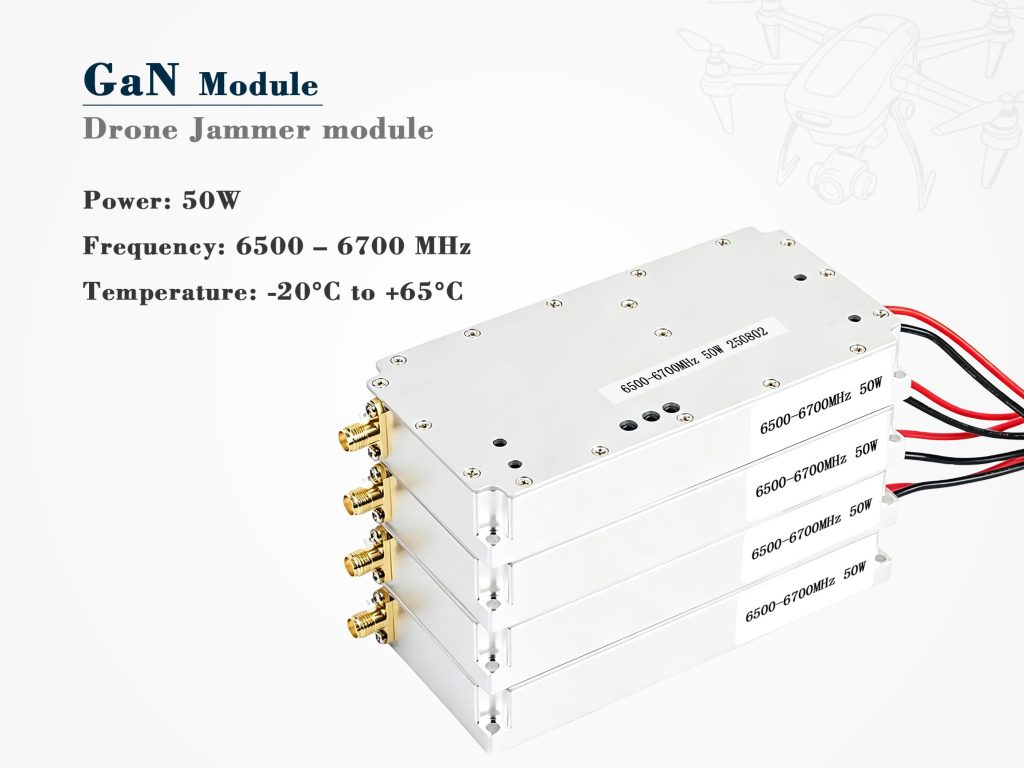
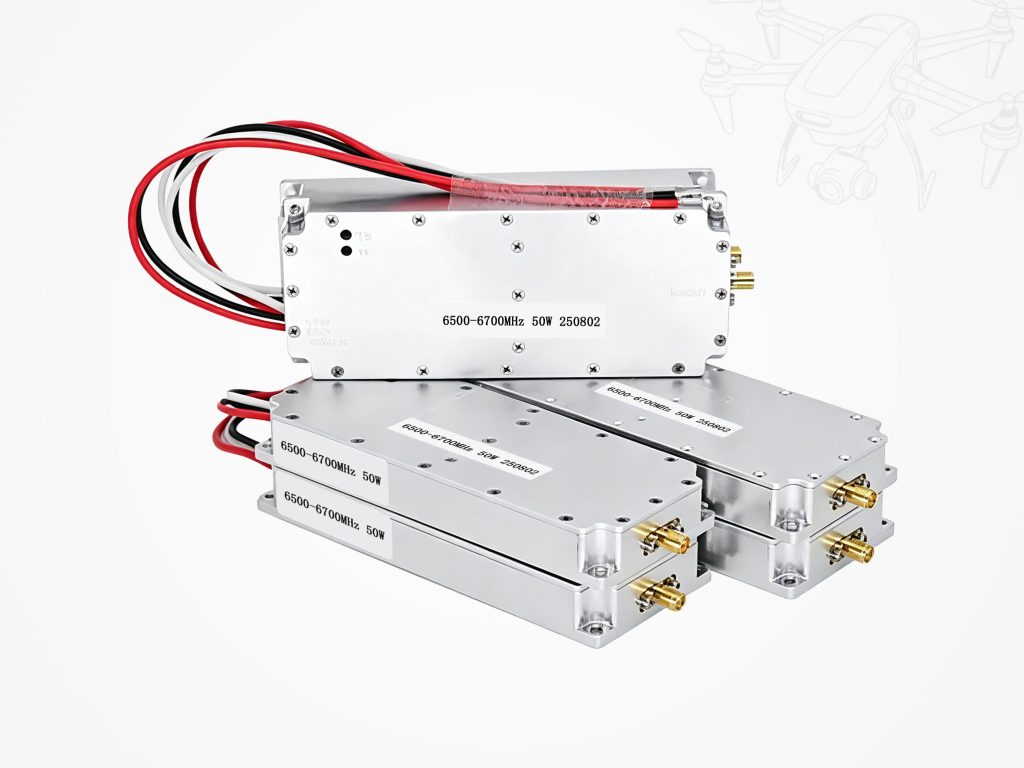
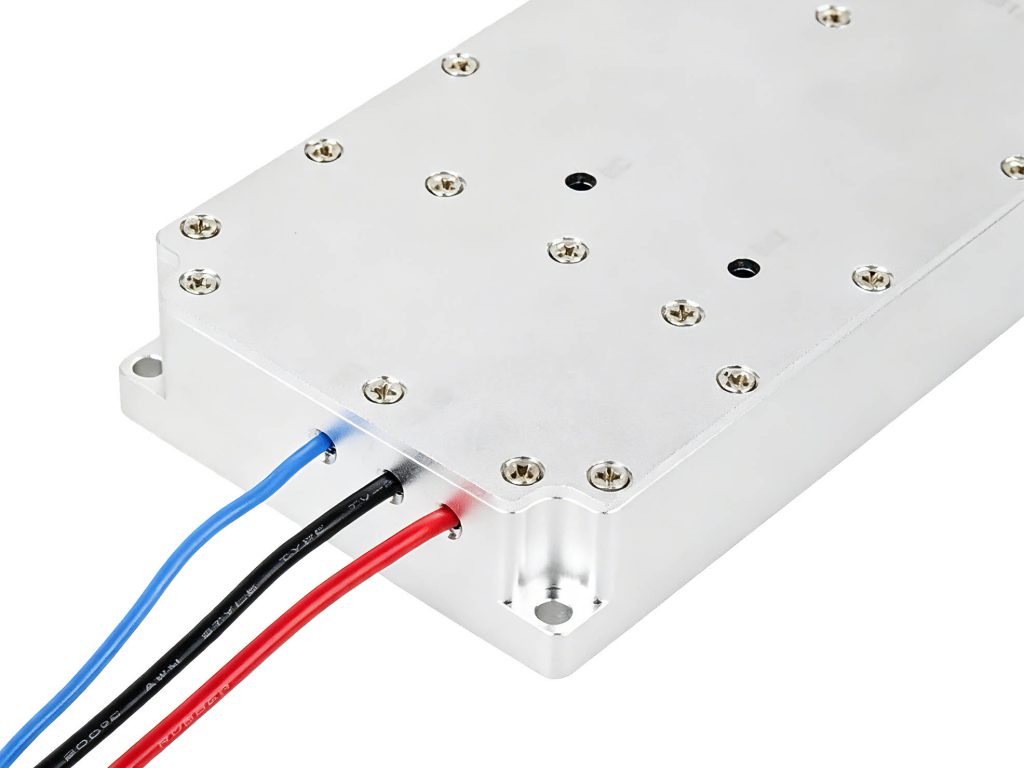
Technical Specifications
| Parameter | Specification | Notes |
| Frequency range | 6500 – 6700 MHz | Instantaneous full band |
| Output power | 47±1 dBm | 50W typical |
| Supply voltage | 24 – 28 V DC | 28V recommended |
| Current draw | ≤3.2 – 4.5 A | At 50W output |
| Modulation source | Built‑in high‑speed noise modulator | VCO/DDS/SDR optional |
| Analog scan speed | 270 KHz | Custom 100‑500 KHz |
| Input / output impedance | 50 Ω | SMA female |
| Protection LEDs | Power, over‑voltage, over‑temp | Red/green status |
| Operating temperature | -20 ~ +65 °C | Baseplate temperature |
| Dimensions (L×W×H) | 117 × 58 × 18 mm | Custom sizes available |
| Weight | 300 g | Without heatsink |
| Base material | Copper with Ni‑plating | GaN‑on‑SiC die attached |
Product Details
Reliable Countermeasures in a Compact Envelope
When you need to shut down rogue UAVs in the 6.5–6.7 GHz band, power and precision are non‑negotiable. This 50W drone jamming module delivers exactly that – a rugged, field‑ready amplifier built around mature GaN‑on‑SiC technology, mounted on a copper heat spreader for sustained heavy‑duty operation. Unlike bulky lab‑style generators, this unit fits into handheld or fixed‑mount systems without sacrificing output stability or thermal endurance. We have seen integrators use it for border security, event protection, and critical infrastructure defence, where every watt counts and downtime is not an option.
Built for Real‑World RF Warfare
The core of this blocker is its Class‑AB GaN design, which balances linearity and efficiency better than older LDMOS alternatives. It runs happily from a 24‑28V DC supply, drawing only 3.2–4.5A at full tilt – a modest appetite for 50W of clean forward power. The output sits at 47±1 dBm (that is 50W nominal), and the internal high‑speed noise modulation source sweeps at 270KHz as standard, with field‑adjustable options from 100 to 500KHz. If you prefer a VCO, DDS, or even an SDR front‑end, we can tailor the input stage to your existing waveform. The 50‑ohm I/O impedance keeps cabling simple, and the SMA‑female ports mate securely with standard test leads or antenna feeds.
Thermal Management and Protection You Can Trust
Heat kills RF components, so we took extra care with the thermal path. The GaN die sits directly on a copper base, wicking heat away to an external heatsink or chassis. Meanwhile, three LED indicators – power, over‑voltage, and over‑temperature – give you instant status feedback without needing a separate monitor. The working temperature range spans -20°C to +65°C, covering most outdoor deployments from freezing winters to scorching summer rooftops. At just 117×58×18mm and 300 grams, it slips into tight enclosures where larger modules simply will not go.
Why Choose This 50W Drone Jamming Module?
First, the instantaneous wideband response means you do not have to retune for different frequency offsets within the band – it locks on and stays effective. Second, the reliability of GaN on silicon carbide has been proven in thousands of military and commercial transceivers; we simply package that performance into a repeatable, cost‑conscious assembly. Third, the customisation flexibility – scan speed, modulation source, even mechanical dimensions – lets you match the 50W drone jamming module to your mission profile, not the other way around. Whether you are upgrading an existing jammer or building a new denial system, this block gives you a solid foundation with no hidden performance cliffs.
Practical Integration Tips
Mount the 50W drone jamming module with thermal paste against a flat metal surface, keep the RF input below +10 dBm to avoid overdriving, and always terminate the output when testing without an antenna. The current draw rises slightly at lower supply voltages, so we recommend a regulated 28V rail for consistent output. For swept‑noise jamming, the built‑in modulator works out of the box; for coherent or pulsed modes, order the DDS option. Most users report that the SMA connectors hold up well after repeated mating, but we suggest torque‑wrench tightening to 0.9 N·m for long‑term repeatability.
Frequently Asked Questions
Case Studies
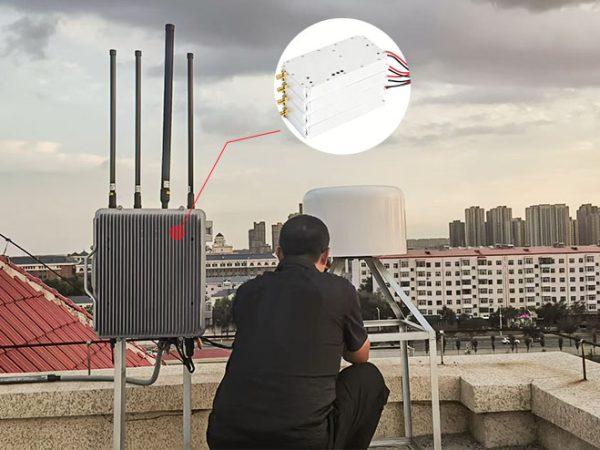
Heilongjiang Weather Center Completes Anti-Drone System Upgrade with Three High-Power Drone Jammer Modules

Tangshan Chem Plant Sealed Drone Gaps With 3 GaN Wideband Modules

How a National Prison Integrated Our Drone Jamming Module Into Their Fixed Counter-Drone System

Integrating Core RF Power: OEM Drone Jamming Module for Oil Refinery Security | Case Study
Send Us a Message
Related Products
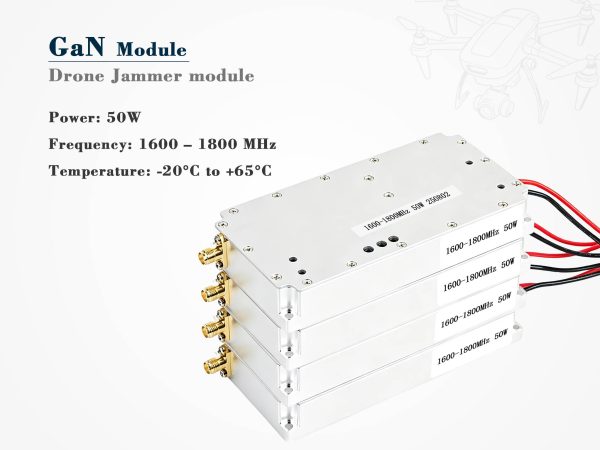
Powerful 50W GaN Drone Jamming Module Covers 1600-1800MHz
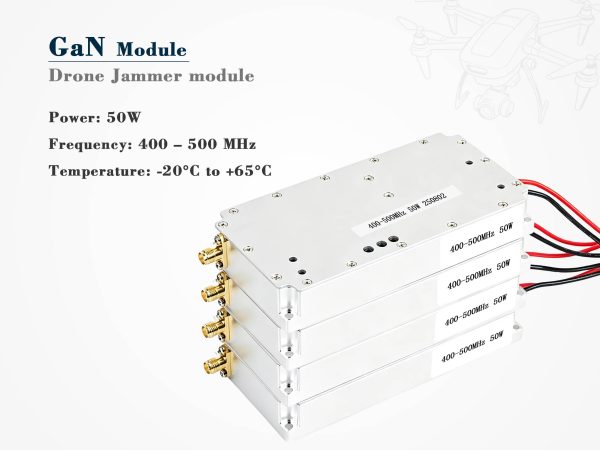
50W GaN UAV Jammer Module: Rugged 400-500 MHz Defense
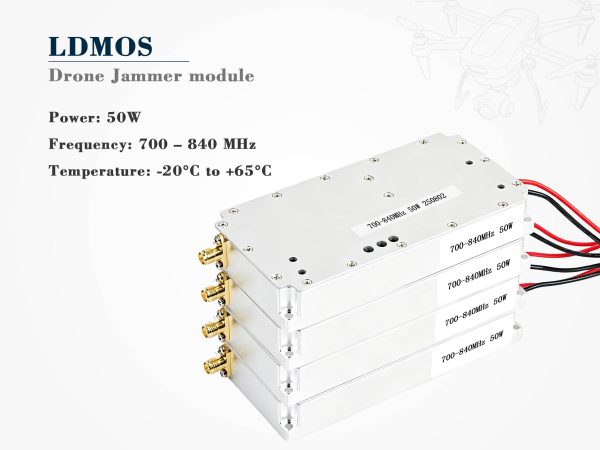
50W UAV Jammer Module 700-840MHz LDMOS