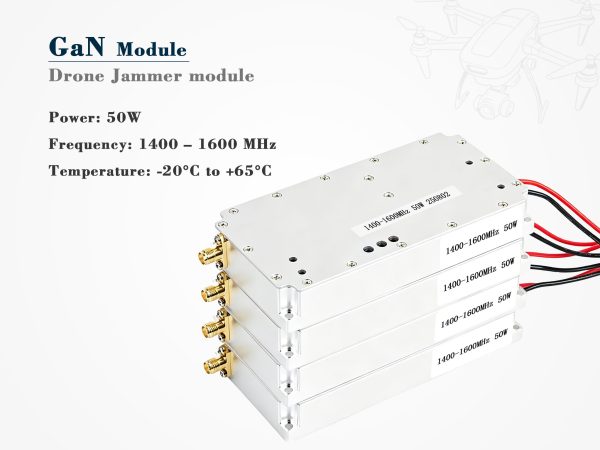
50W Anti Drone Module | 720-1020MHz LDMOS Shield
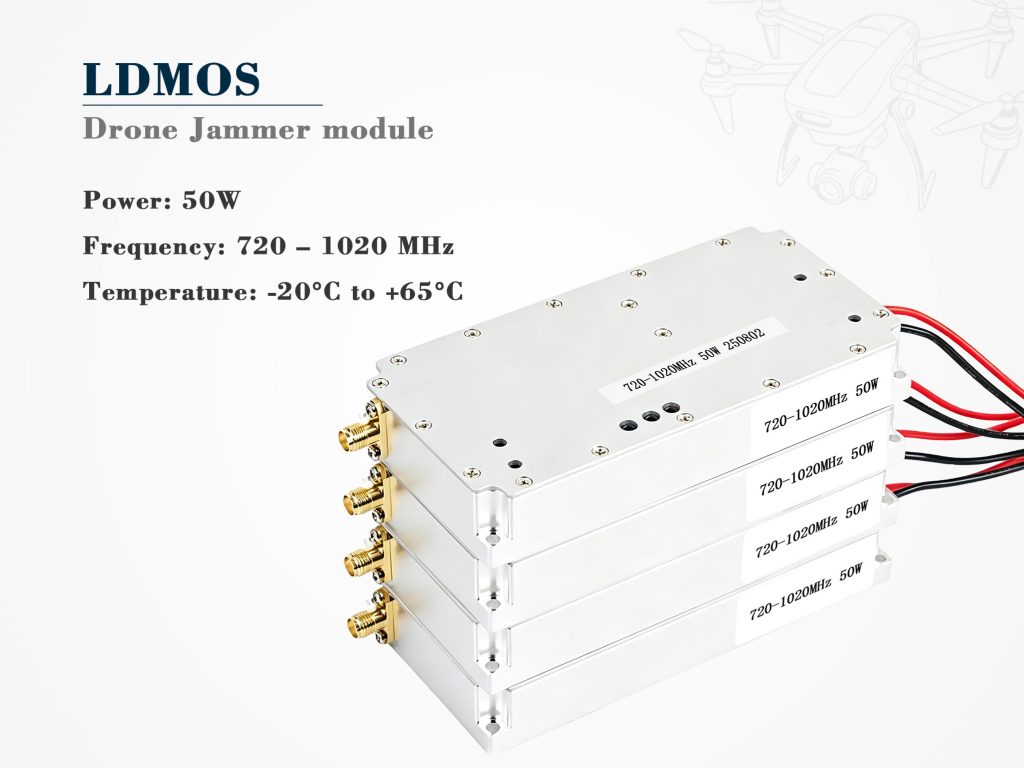
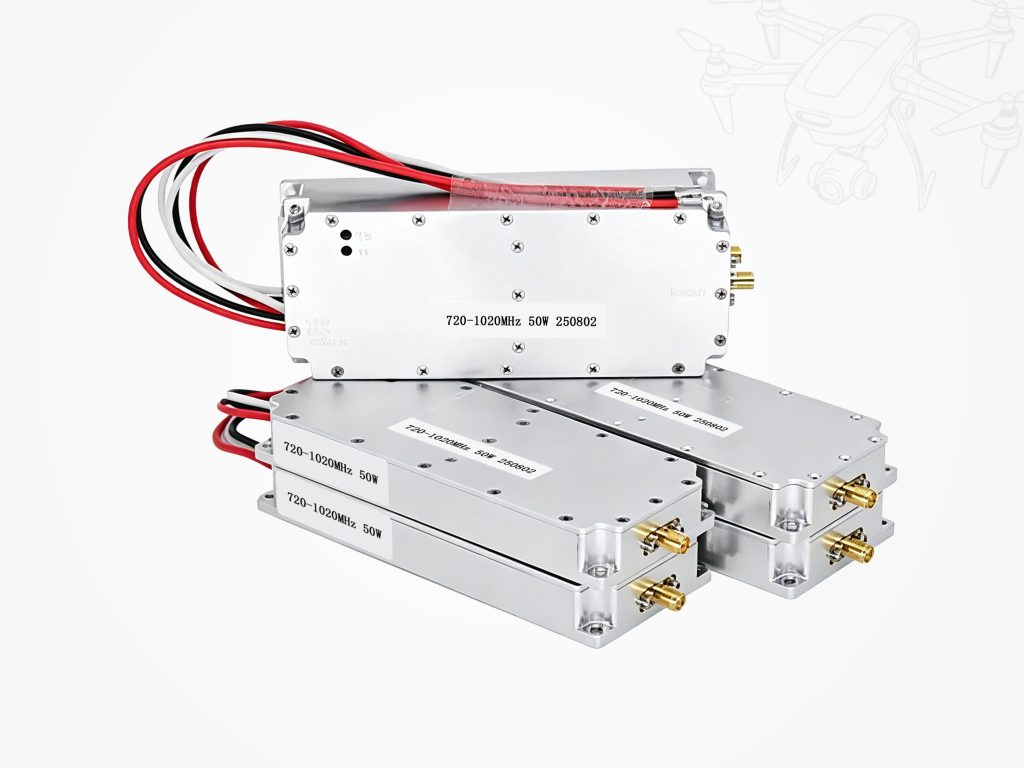
50W anti drone module with 720-1020MHz band, LDMOS shield, 47±1dBm output, built-in noise sweeper, 28V, SMA-female, customizable scan speed and source.
Technical Specifications
| Parameter | Specification | Notes |
| Frequency range | 720 – 1020 MHz | Full band covered by internal noise sweeper |
| Output power | 47±1 dBm (50W typical) | Measured at 28V DC, 25°C ambient |
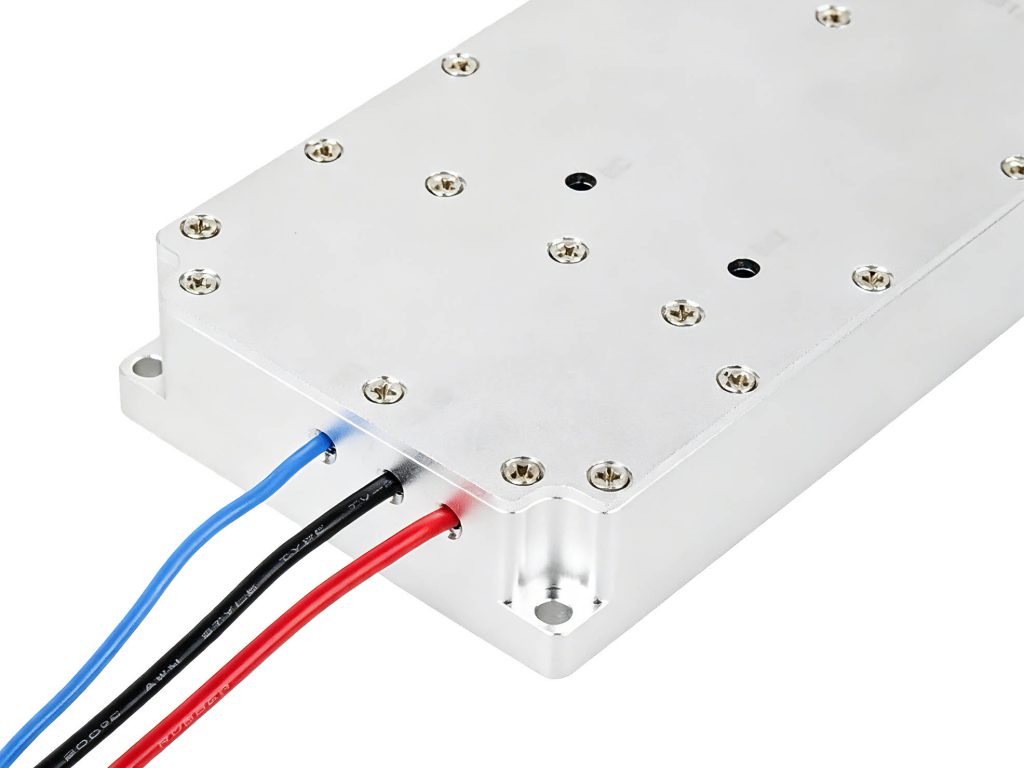
| Supply voltage | DC 24V – 28V (nominal 28V) | Reverse polarity protected |
| Current draw | ≤3.2 – 4.5A @ 50W output | Depends on supply voltage and load match |
| Modulation source | Built-in high-speed noise modulation sweeper | Customizable to VCO, DDS, or SDR on request |
| Analog scan speed | 270 KHz standard | Custom range: 100 – 500 KHz (order option) |
| Input / output impedance | 50Ω | SMA-female connector on output |
| Protection LEDs | Power-on, over-voltage, over-temperature | Red/Green indicators for each status |
| Operating temperature | -20°C to +65°C | Baseplate measurement; derate above +50°C for high duty |
| Dimensions (L×W×H) | 117 × 58 × 18 mm | Custom mechanical layouts available upon request |
| Weight | 300g approx. | Without heatsink or mating connectors |
| Base material | Aluminum alloy | Black anodized, with mounting holes for M3 screws |
Product Details
Versatile Jamming Power for Wideband Coverage
The 720–1020MHz band has become a crowded space where consumer drones, remote controllers, and telemetry links often operate. This 50W anti drone module delivers focused interference across that entire range, using an LDMOS amplifier stage that balances output power with thermal efficiency. Whether you need a drop-in solution for a fixed installation or a customizable board for integrated systems, this module offers a flexible foundation.
What sets this unit apart is its built-in high-speed noise modulation source – no external sweeper or synthesizer required. You get a self-contained RF shield that produces a continuous interference pattern, optimized to break control and video downlinks. And if your project demands different sweep characteristics or a specific signal type, the module supports customization of both scan speed and source topology (VCO, DDS, or SDR-based alternatives).
Electrical Performance That Fits Real-World Systems
Operating from a 24–28V DC supply (28V nominal), the module draws just 3.2–4.5A at full 50W output. That low current draw is a direct result of the LDMOS efficiency, which keeps heat manageable without oversized power supplies. Output power is specified at 47±1dBm – equivalent to 50W – with stable performance across the entire 720–1020MHz window.
The internal analog scan speed is preset at 270KHz, but this is where customization comes into play. You can request speeds from 100KHz to 500KHz to match specific modulation schemes or target drone protocols. This adaptability means the same hardware can be retuned for different operational environments without redesigning the RF chain.
Built-In Monitoring and Protection
Three LED indicators provide at-a-glance status: power-on, over-voltage, and over-temperature. The over-temperature threshold is set conservatively to protect the LDMOS die, with a working range of -20°C to +65°C. Unlike some modules that simply shut down on fault, this design allows for graceful thermal rollback – though for continuous high-duty operation, we recommend attaching a heatsink with passive or forced airflow.
The SMA-female connector simplifies antenna or circulator attachment, and the 50Ω input/output impedance ensures standard cable compatibility. The compact footprint (117×58×18mm) and light weight (300g) make it suitable for handheld, backpack, or UAV-mounted countermeasure pods, where every gram and millimeter counts.
Customization Options That Expand Utility
This 50W anti drone module isn’t a one-size-fits-all black box. Besides scan speed adjustments, you can opt for alternative internal signal sources – VCO for narrow-band sweeping, DDS for precise frequency stepping, or SDR-based front ends for software-defined modulation patterns. Such flexibility is rare in off-the-shelf jamming boards, and it allows integrators to adapt to evolving drone threats without swapping entire hardware generations.
For system builders, the board also supports external trigger and sync inputs (available as a custom option), enabling coordinated sweeps across multiple modules or frequency bands. This is particularly useful in perimeter defense networks where phase alignment or staggered scanning reduces blind spots.
Deployment Scenarios
Typical applications include correctional facility perimeter security, stadium event protection, VIP motorcade escort, and sensitive industrial site surveillance. The wide 720–1020MHz coverage also overlaps with some cellular and ISM bands, so careful antenna filtering is recommended if co-location with communication equipment is required. The LDMOS architecture ensures linearity and low spurious emission, helping you stay within regulatory constraints when used with appropriate output filtering.
Integration-Friendly Design
With only DC power, a simple enable line, and an RF output connection needed, this 50W anti drone module reduces development overhead. The onboard noise source is factory-tuned, but the customization options mean you can order variants that match your specific threat profile – without paying for unnecessary features or external generator modules.
Frequently Asked Questions
Case Studies
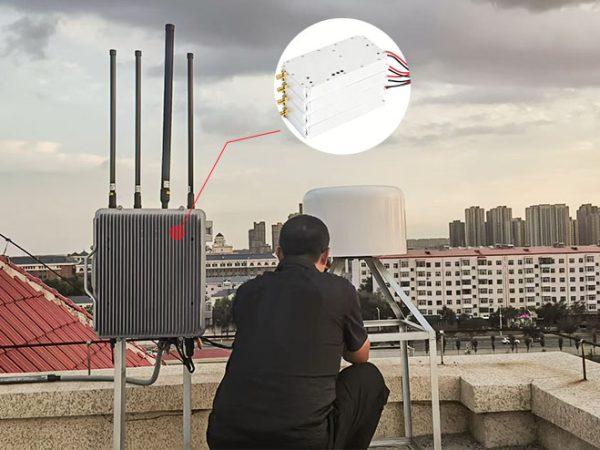
Heilongjiang Weather Center Completes Anti-Drone System Upgrade with Three High-Power Drone Jammer Modules
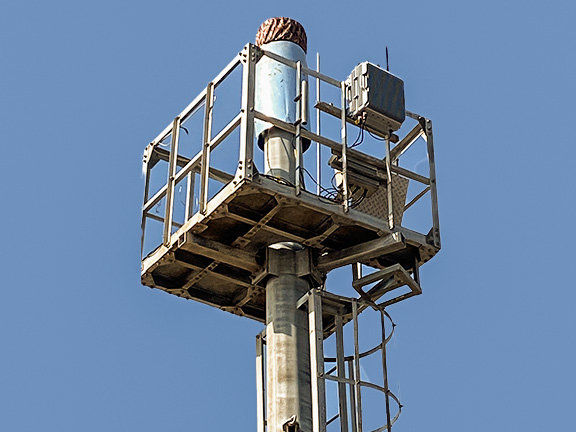
Tangshan Chem Plant Sealed Drone Gaps With 3 GaN Wideband Modules
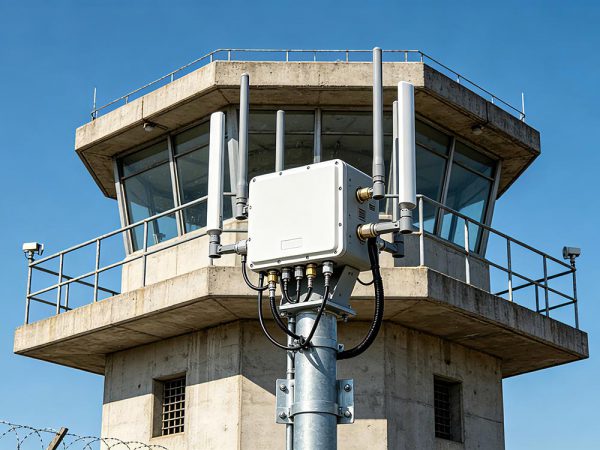
How a National Prison Integrated Our Drone Jamming Module Into Their Fixed Counter-Drone System

Integrating Core RF Power: OEM Drone Jamming Module for Oil Refinery Security | Case Study
Send Us a Message
Related Products
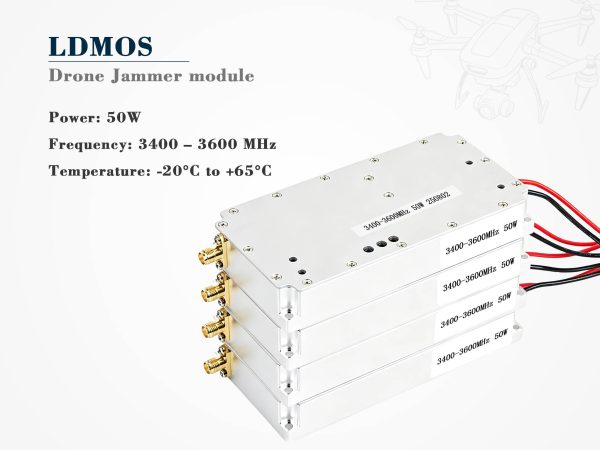
3400–3600 MHz 50W Drone Countermeasure Module
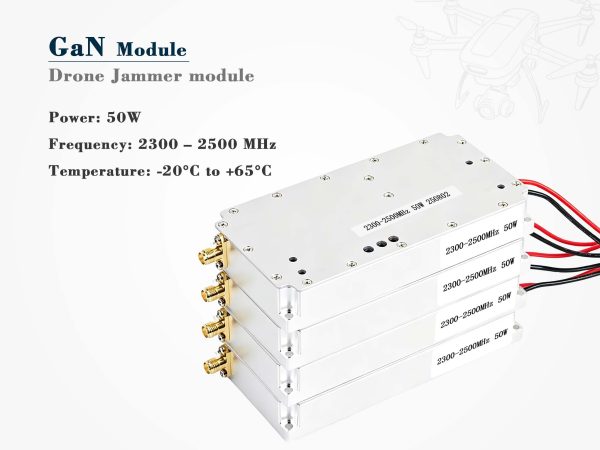
2300–2500MHz 50W GaN Module for Drone Countermeasure and Signal Shielding
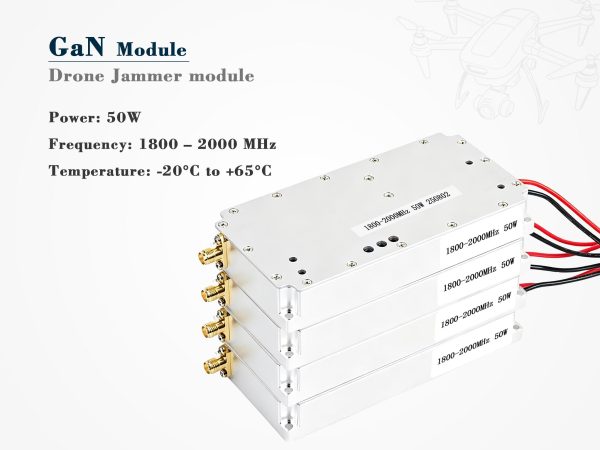
Powerful 50W GaN Jammer Module 1800-2000MHz