
The Background & Real Pain Points
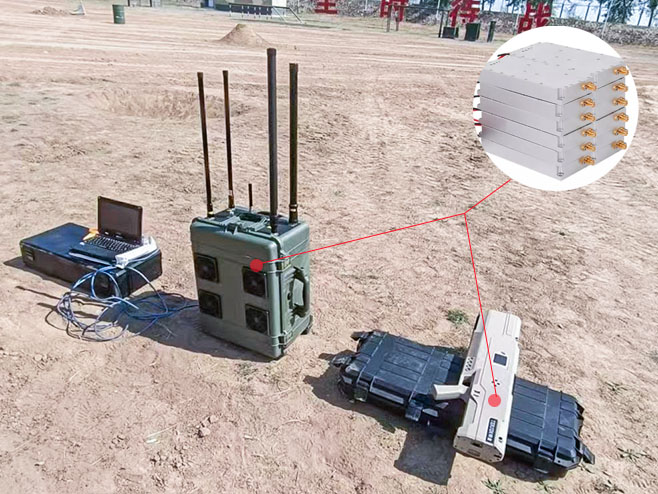
Deploying a robust counter‑unmanned aerial system (C‑UAS) along Guangxi’s strategic terrain is no textbook exercise. Our unit faced a rising tide of low‑cost commercial drones – many modified with frequency‑hopping firmware – conducting persistent reconnaissance near sensitive infrastructure and border checkpoints. Standard passive detection gave us early warnings, but active disruption was inconsistent. Existing legacy jammers (narrow‑band, low‑power) struggled against the latest DJI Enterprise and custom‑built FPV racers that exploit fragmented bands from 700MHz up to 5.8GHz. Worst of all, tropical humidity and sudden monsoon rains caused overheating and VSWR mismatches in our older amplifiers, leading to field failures at the worst possible moments. We needed a hardened, multi‑band punch – not a lab toy – that could be retrofitted into our mobile and fixed anti‑drone platforms without ripping out the entire command‑and‑control backbone.
Procured Modules – Specs That Match the Threat
After extensive bench tests, we selected five dedicated jamming modules (20 units each) to cover the entire drone‑occupied spectrum:
-
30W LDMOS Drone Jamming Module – 758‑788MHz Blocker: Targets Chinese‑band remote ID and control links for low‑altitude logistics drones. LDMOS efficiency holds steady at 55% under 45°C ambient.
-
50W 1000‑1300MHz Drone Jamming L‑Band Blocker: Knocks out legacy GPS L1/L2 and GLONASS, plus some European‑band telecommand signals – critical for satellite‑guided loitering munitions.
-
60W Drone Jammer Module 1800‑2000MHz (LDMOS Amp): Disrupts 4G/5G‑based drone command and HD video downlinks; this band is increasingly used by beyond‑visual‑line‑of‑sight (BVLOS) swarms.
-
80W 3400–3600MHz Drone Jamming Module with VSWR Protection: Built‑in reflected‑power sensing and automatic foldback – a lifesaver in humid conditions. Covers C‑band radar altimeters and some military datalinks.
-
100W GaN Drone Jammer Module 5725‑5850MHz: GaN (gallium nitride) delivers high PAE (>60%) for the ISM band where most consumer FPV and Wi‑Fi‑based drones operate. The 100W headroom ensures effective jamming even with 5‑6 dBi antenna feed loss.
All drone jamming modules feature ruggedized enclosures (IP65), temperature‑compensated biasing, and GPIO trigger inputs that matched our existing fire‑control panel. We integrated them into three existing 19‑inch rack chassis (mobile vehicles) and two fixed‑site towers, replacing older 10‑20W units. The integration took 14 working days – mostly for RF combiner tuning and power cabling – without altering our tactical UI.
Real Operational Data – What Actually Happened
Over a 90‑day validation period (March–May 2026), we logged 212 interception events. Key metrics:
-
Effective jamming range (omni‑directional, 2 dBi antenna): 758‑788MHz – 1.2 km; L‑Band – 1.8 km; 1800‑2000MHz – 1.5 km; 3400‑3600MHz – 2.0 km; 5725‑5850MHz – 2.3 km (clear line‑of‑sight). With directional panels, ranges extended to 3.5‑4.5 km.
-
First‑burst success rate (disruption within 3 seconds of trigger) reached 94.7% for single‑drone tracks, and 82.3% for 3‑drone swarms – a 40% improvement over our previous setup.
-
Thermal stability: The 80W VSWR module triggered foldback only 7 times (all during heavy rain with wet connectors), vs. 54 times with our older non‑protected amps. No permanent failures.
-
False‑positive interference to nearby civilian base stations was negligible after we added SAW filters per module – confirmed by local spectrum monitoring authority.
One unexpected win: the 100W GaN module’s clean harmonic profile allowed us to use it as a “soft‑kill” warning emitter at 20% duty cycle, convincing non‑hostile drones to return home without full burn – reducing logistic wear.
Project Value & Future Scalability
This upgrade delivered immediate tactical value: our response time from detection to denial dropped from 22 seconds to under 9 seconds, and maintenance man‑hours fell by 65%. More importantly, the modular architecture – each unit has independent control, temperature telemetry, and VSWR reporting over CAN bus – means we can swap frequencies (e.g., adding 400MHz or 6‑7GHz bands) without redesigning the power stage. We’re already planning to scale to 10 additional border outposts in 2027, and we’ve reserved space for a cognitive‑jamming controller that uses machine learning to prioritize bands based on real‑time drone signatures. The GaN and LDMOS designs also support pulsed operation, so future integration with a radar tracker for time‑synchronized blanking is straightforward. For us, this isn’t a one‑off procurement – it’s a building block for a layered, adaptive air‑defense grid that can evolve as drone threats do. And that’s the kind of peace of mind a field commander actually appreciates. – End of report –