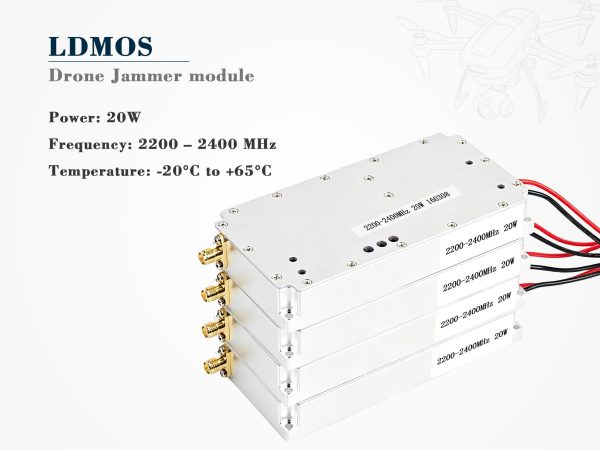
20W 1550-1620MHz Drone Jammer Module LDMOS
20W drone jammer module with LDMOS, 1550–1620MHz, built‑in sweep, 24–29V 2.5A, SMA out, 115.5×46.5×21mm, 0.21kg. Lightweight, efficient, ideal for portable counter‑UAV deployment.
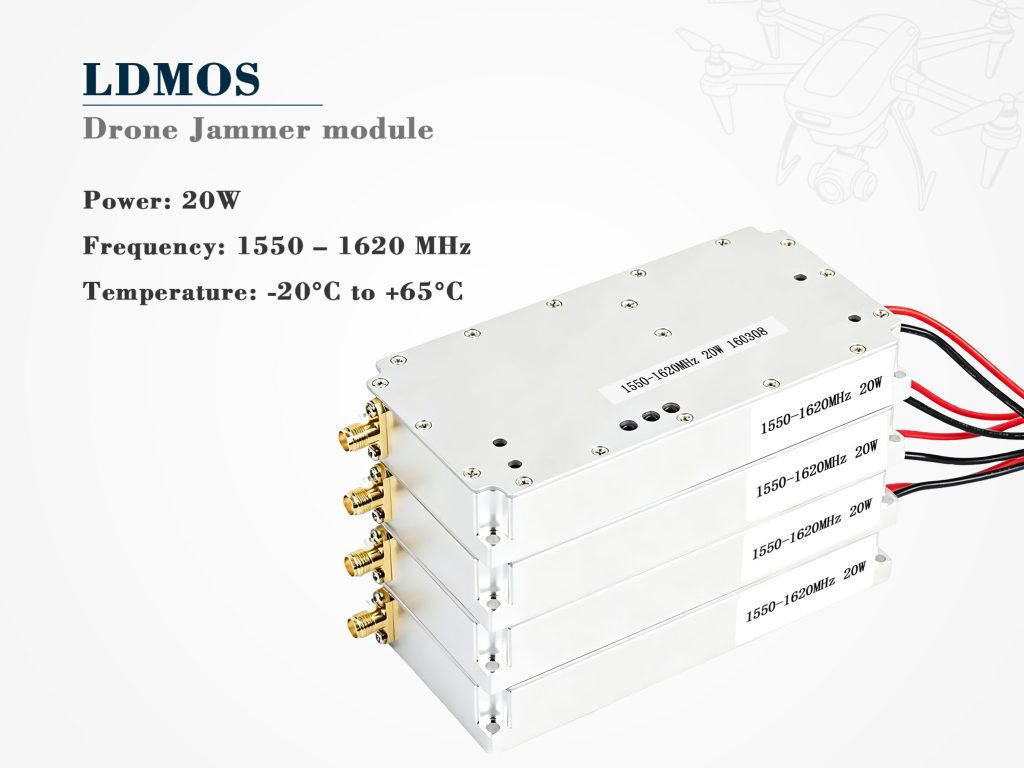

Technical Specifications
| Parameter | Specification | Notes |
| Frequency range | 1550 – 1620 MHz | GPS L1 / GNSS navigation band |
| Output power | 20 W | Typical, CW or swept |
| Supply voltage | DC 24 – 29 V | Nominal 28V recommended |
| Current draw | 2.5 A | At maximum output |
| Modulation source | Built‑in high‑speed sweep | No external signal required |
| Analog scan speed | Continuous sweep | Factory‑set for optimal coverage |
| Input / output impedance | 50 Ω | SMA female output connector |
| Protection LEDs | None | External monitoring advised |
| Operating temperature | -10 °C to +55 °C | Derate above 45°C for continuous use |
| Dimensions (L×W×H) | 115.5 × 46.5 × 21 mm | Ultra‑compact for portable systems |
| Weight | 0.21 kg | Extremely light – ideal for handheld |
| Base material | LDMOS (Laterally Diffused MOS) | Linear, efficient amplifier |
Product Details
Lightweight Jamming for the GPS/GNSS Band
The 1550–1620MHz spectrum is the nerve centre for GPS L1 and most GNSS navigation signals. Disrupting this band effectively neutralises a drone’s ability to hold position or follow a waypoint route. While many operators assume they need a heavy, power‑hungry 60W drone jammer module, this 20W unit proves that size and output aren’t everything. It delivers clean, swept interference across the entire band, yet weighs just 0.21kg and draws only 2.5A at 24–29V.
This 20W drone jammer module is built around an LDMOS amplifier core, which offers excellent linearity and efficiency. At ≥40% efficiency, it converts battery power into useful RF energy without wasting excessive heat. The compact 115.5×46.5×21mm footprint makes it one of the smallest jammers in its class, easily sliding into handheld enclosures, drone‑mounted payloads, or backpack systems. If you are designing a lightweight counter‑UAV solution, this 20W drone jammer module deserves a close look – especially when compared to bulkier 60W drone jammer module alternatives that demand larger batteries and heavier cooling.
Integrated Sweep Source – No External Signal Needed
Like its more powerful cousins, this 20W unit includes a built‑in high‑speed sweep oscillator. The internal source continuously scans the 1550–1620MHz range, producing a moving interference pattern that is far more difficult for drone receivers to filter out than a fixed carrier. The sweep rate is pre‑optimised for maximum disruption, and the module requires no external signal generator – just apply DC power and it starts jamming.
The on/off control is refreshingly simple: a +5V signal or floating pin turns the module on, while grounding the pin shuts it off. This logic level works with standard microcontrollers, manual toggle switches, or remote relay triggers. The SMA female output connector is the industry standard for 50‑ohm systems, though we recommend using cables rated for at least 20W continuous power to minimise insertion loss and heating.
Efficient Power Management at Low Current
Operating from DC 24–29V, the module pulls a maximum of 2.5A at full 20W output. That translates to roughly 60–72W of DC input, with ≥40% efficiency meaning about 20W goes out as RF and the rest dissipates as heat – around 40–50W. This low current draw is a game‑changer for portable systems. A typical 6‑cell Li‑ion battery pack can run this module for extended periods without the weight penalty of a high‑capacity pack, unlike a 60W drone jammer module which would need twice the current and substantially more battery mass.
Thermal management is also simpler. The module’s baseplate is designed for conduction cooling; in intermittent duty (e.g., 50% duty cycle), passive heatsinking is often sufficient. For continuous operation, a small fan or larger heatsink is recommended, but the overall cooling requirement is far less demanding than for higher‑power units. The absence of built‑in VSWR protection LEDs means you should rely on external monitoring, but the LDMOS design is robust against moderate mismatches – still, keep antenna VSWR ≤2.0 for best results.
Where This 20W Drone Jammer Module Fits Best
The 1550–1620MHz band is the primary target for GPS‑guided drones. This 20W drone jammer module is particularly well‑suited for:
-
Handheld jammers – its light weight and low current draw make it ideal for battery‑powered devices.
-
UAV‑mounted counter‑UAS – small enough to be carried as a payload on a surveillance drone.
-
Rapid‑deployment kits – backpackable units for field operations where weight is critical.
-
Indoor or close‑range protection – for venues, prisons, or sensitive buildings where 20W is ample.
While a 60W drone jammer module might offer longer range, this 20W version provides an excellent balance of size, weight, and power for most urban and suburban scenarios. Its low current also reduces stress on power supplies, allowing integration into systems with limited battery capacity.
Installation Tips for Reliable Operation
When integrating this drone jammer module, follow these practical guidelines. First, use a regulated 24–29V supply that can deliver at least 3A continuously – 2.5A is typical, but startup surges may be higher. Second, mount the module on a flat, thermally conductive surface with a thin layer of thermal compound to spread heat effectively. Third, keep the RF output cable as short as possible – under 20cm is ideal – to preserve output power and maintain low VSWR.
For antennas, choose a wideband 1550–1620MHz model with a VSWR below 2.0 across the entire sweep range. The SMA connector is convenient but delicate; avoid over‑torquing and use a torque wrench if available. Finally, test the module with a dummy load before field deployment to verify current draw and output power. The sweep source should produce a clean, continuous chirp – you can confirm this with a spectrum analyser or a simple receiver tuned to the band.
Frequently Asked Questions
Case Studies
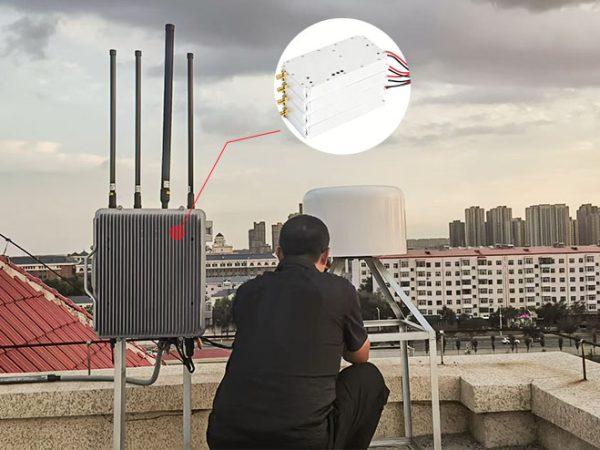
Heilongjiang Weather Center Completes Anti-Drone System Upgrade with Three High-Power Drone Jammer Modules

Tangshan Chem Plant Sealed Drone Gaps With 3 GaN Wideband Modules

How a National Prison Integrated Our Drone Jamming Module Into Their Fixed Counter-Drone System

Integrating Core RF Power: OEM Drone Jamming Module for Oil Refinery Security | Case Study
Send Us a Message
Related Products
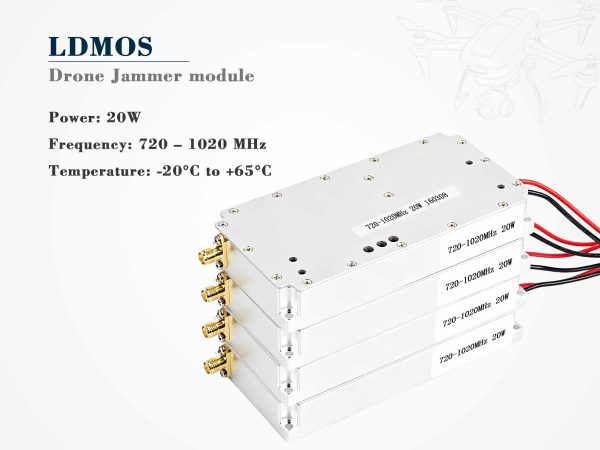
20W 720–1020MHz UAV Jammer Module | LDMOS Analog
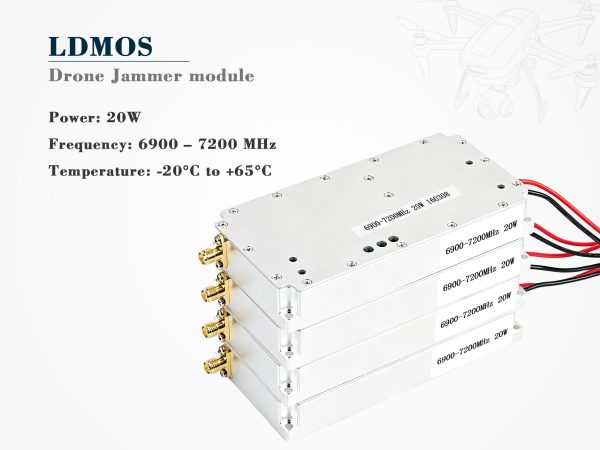
Powerful 20W LDMOS Drone Jammer Module for 6.9–7.2 GHz
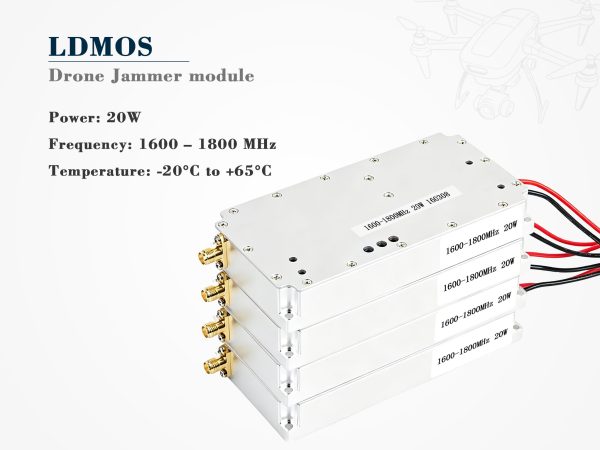
Powerful 20W Anti Drone Module 1600–1800MHz