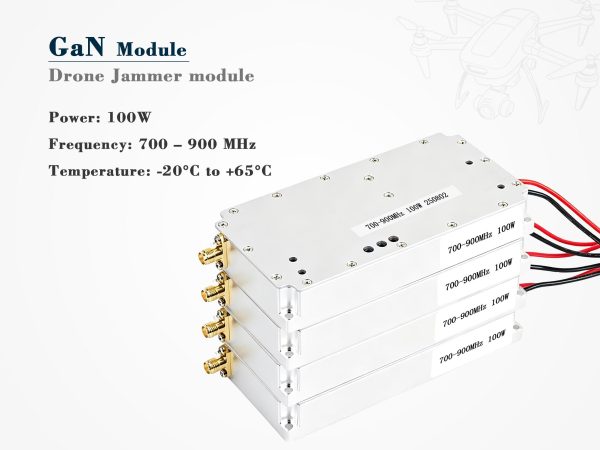
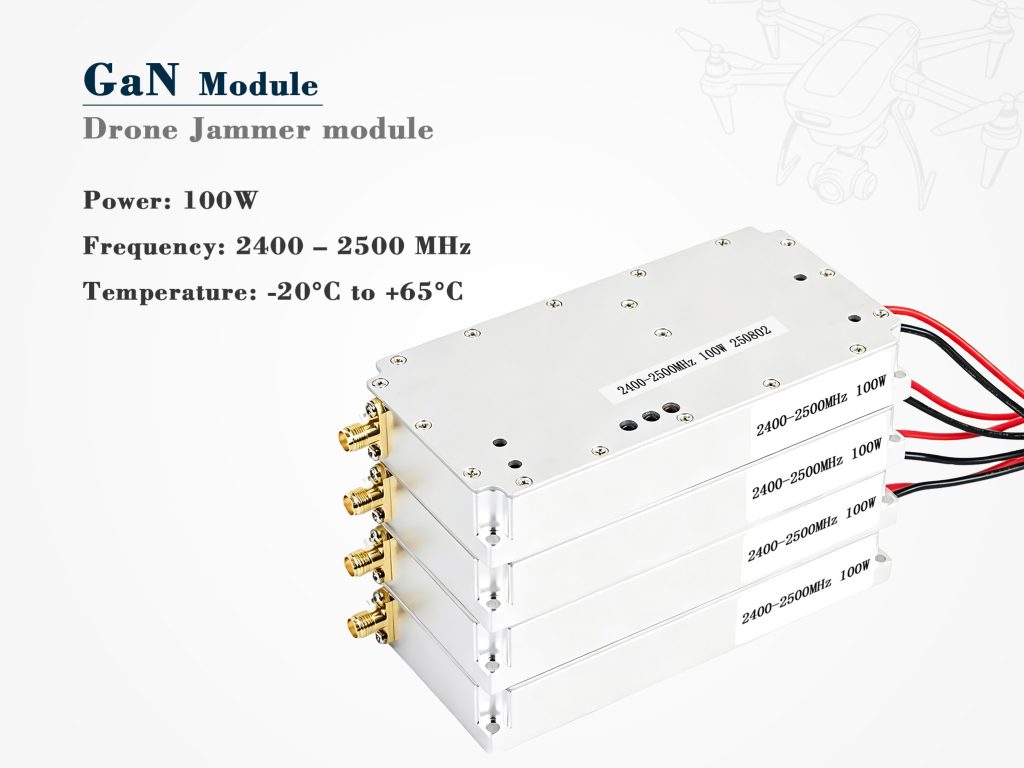
100W GaN Drone Jammer Module 2400-2500MHz
100W GaN drone jammer module, 2400-2500MHz, 28V, 50dBm, built-in noise source, 150x80x22mm, 800g, -20 to +65°C. For counter-UAS.

Technical Specifications
| Parameter | Specification | Notes |
| Frequency range | 2400–2500 MHz | Covers common drone RC and video band |
| Output power | 50±1 dBm (100 W) | Class AB GaN |
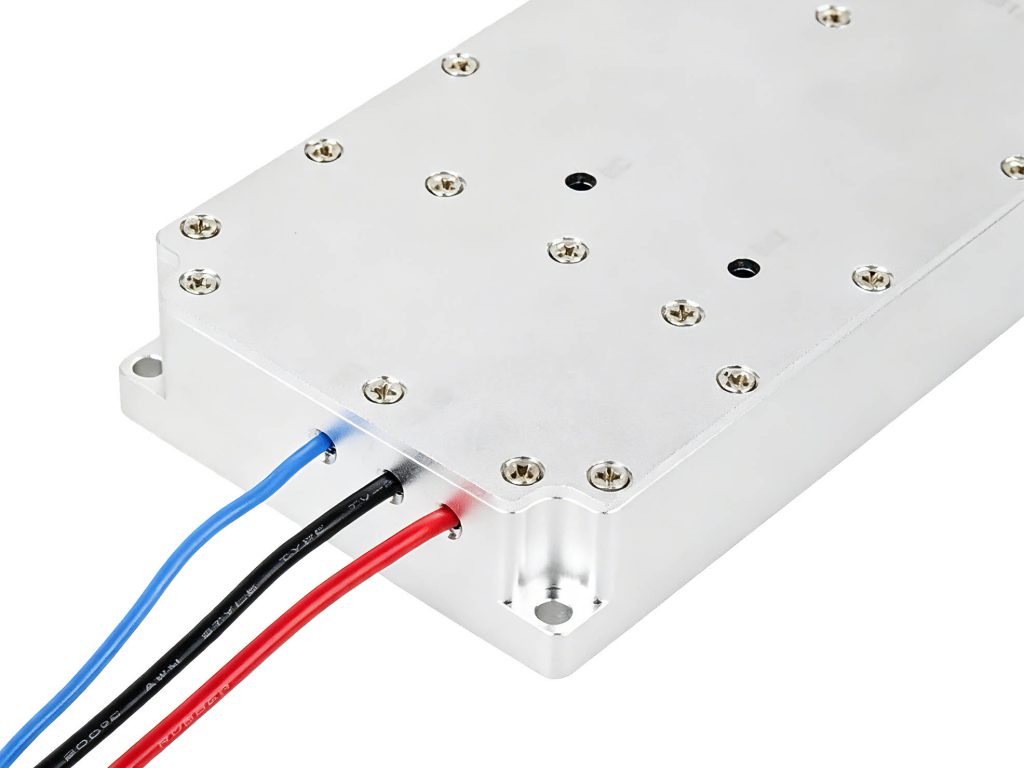
| Supply voltage 28 V DC (28–32 V) | Single DC supply | |
| Current draw | ≤9.2 A | At full 100 W output |
| Modulation source | Built-in high-speed noise (VCO, DDS, SDR customizable) | Standard noise source |
| Analog scan speed | 270 kHz (customizable 100–500 kHz) | Swept jamming |
| Input / output impedance | 50 Ω | N-female connector |
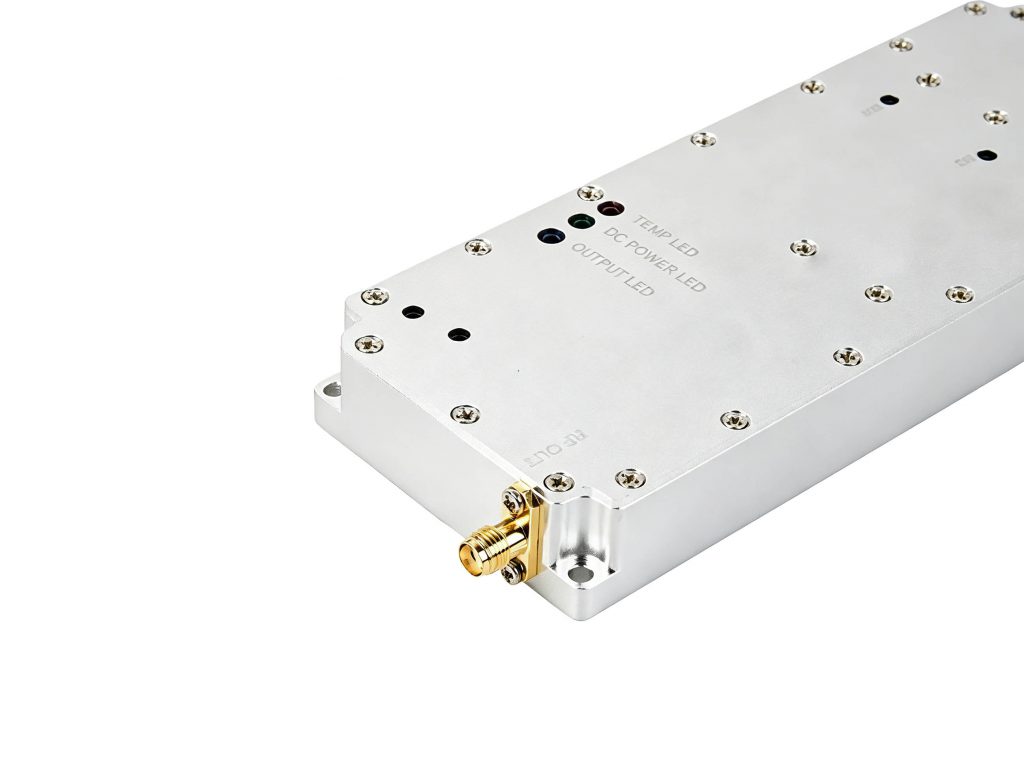
| Protection LEDs | Power On, Over-voltage, Over-temperature | Visual indicators |
| Operating temperature | -20 to +65 °C | Full performance range |
| Dimensions (L×W×H) 150 × 80 × 22 mm | Compact module | |
| Weight | 800 g | Including base |
| Base material | Copper carrier, GaN-on-SiC technology | Patented thermal process |
Product Details
If you’ve been piecing together counter-drone systems, you already know that the 2.4 GHz band is where the majority of commercial UAV control links and video feeds live. From DJI’s OcuSync to generic Wi-Fi-based drones, 2400–2500 MHz is the backbone. To effectively deny this band, you need a jammer module that hits hard across the entire 100 MHz span, without giving the drone’s frequency hopping a chance to escape. That’s precisely what our 100W GaN drone jammer module delivers.
We didn’t start with an off-the-shelf amplifier and bolt on a noise source. This module was designed from the ground up as a complete jamming solution. Inside, you’ll find a Class AB GaN-on-SiC final stage paired with a built-in high-speed noise modulation source. Apply 28V DC, and you get a full 100 watts (50 dBm) of wideband jamming power from 2400 to 2500 MHz—instantly. No external signal generator, no frequency synthesizer to program, no waiting for a PLL to lock. It’s ready the moment you need it.
What makes GaN-on-SiC the right choice here? It’s not just a buzzword. Gallium nitride on silicon carbide can handle higher voltage swings and dissipate heat far more efficiently than traditional LDMOS or GaAs transistors. That translates to a module that runs cooler, maintains its output power at elevated temperatures, and survives the harsh thermal cycling common in field deployments. We mount the GaN die onto a copper carrier using a patented bonding process, pulling heat away from the junction and straight into your heatsink or cold plate. The result: dependable 100W output even at +65°C ambient.
The module is impedance-matched to 50 ohms, with N-female RF connectors—a rugged standard for high-power applications. You won’t find any fragile SMA connectors here. Power, over-voltage, and over-temperature indicators are right on the housing, giving you at-a-glance status without needing a separate telemetry system. If voltage spikes or the temperature creeps beyond safe limits, the LED tells you, and the module’s protection circuitry kicks in to save the hardware.
Now let’s talk about the jamming waveform. Out of the box, the internal high-speed noise source sweeps the entire 2400–2500 MHz band at 270 kHz. This rapid analog scan creates a moving interference pattern that’s tough for receivers to lock onto. It’s especially effective against frequency-hopping spread spectrum (FHSS) links that try to dodge fixed-frequency jammers. Need a different sweep rate? We can tune it to anywhere between 100 and 500 kHz. And while the standard noise modulation works brilliantly for most scenarios, you can order the module with a VCO, DDS, or SDR input if your mission demands a specific jamming signature or pseudo-random sequence. The architecture supports it without changing the RF chain.
One of the biggest headaches in portable jamming is power consumption. At full 100W RF output, this module draws ≤9.2A from a 28V supply—that’s about 260W DC input. For a battery-powered drone gun or backpack system, that’s a manageable figure that won’t demand a car battery. You can operate comfortably on a compact Li-ion pack. The wide input tolerance (28–32V) also gives you flexibility in supply design.
Physically, the drone jammer module measures just 150 x 80 x 22 mm and weighs 800 grams. That’s smaller than most 50-watt amplifiers from a few years ago. The low profile means you can stack modules for multi-band systems or squeeze it into a tube chassis for a handheld jammer. Despite the compact size, we didn’t compromise on robustness. The aluminum housing and encapsulated components handle vibration and shock that would crack a typical lab amplifier. It’s built to be bolted down and forgotten.
When you’re fielding counter-UAS equipment in environments ranging from desert heat to alpine cold, you can’t afford to nurse your RF hardware. This module is rated for full-parameter operation from -20°C to +65°C. Combined with the GaN-on-SiC’s inherent reliability and the copper carrier’s thermal spreading, you get a module that just works, sortie after sortie.
Integration is straightforward. Connect your 50-ohm antenna (or combiner/antenna array) to the N-female output, feed 28V into the DC input, and you’re jamming. The module comes with a power switch and indicator, so you can integrate a remote kill switch or use the onboard one during testing. Because it’s a true 50-ohm source, you won’t damage the output stage even with a moderately mismatched antenna—although for best efficiency, you’ll want a good VSWR.
If you’re developing a multi-band drone jammer, the 2.4 GHz module pairs naturally with our 5.8 GHz version, giving you coverage of the two most popular ISM bands used by commercial drones. Both modules share the same footprint, power requirements, and control logic, making system design far simpler.
Bottom line: this is a no-compromise jamming building block. Whether you’re building a portable drone gun, a vehicle-mounted protection pod, or a fixed-site perimeter defense system, the 100W GaN module at 2400–2500 MHz delivers the power, bandwidth, and reliability you need without the integration hassle.
Frequently Asked Questions
Case Studies
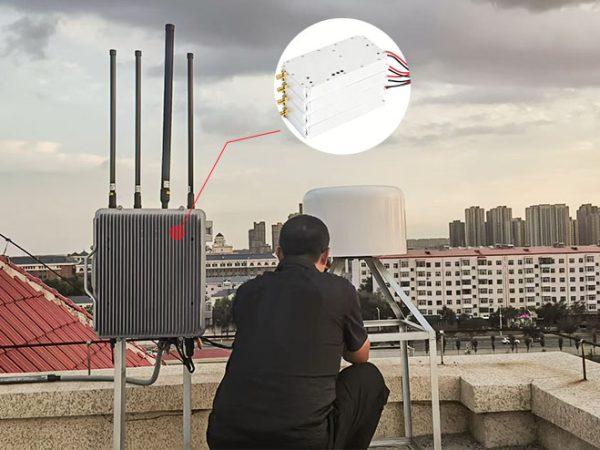
Heilongjiang Weather Center Completes Anti-Drone System Upgrade with Three High-Power Drone Jammer Modules

Tangshan Chem Plant Sealed Drone Gaps With 3 GaN Wideband Modules

How a National Prison Integrated Our Drone Jamming Module Into Their Fixed Counter-Drone System

Integrating Core RF Power: OEM Drone Jamming Module for Oil Refinery Security | Case Study
Send Us a Message
Related Products
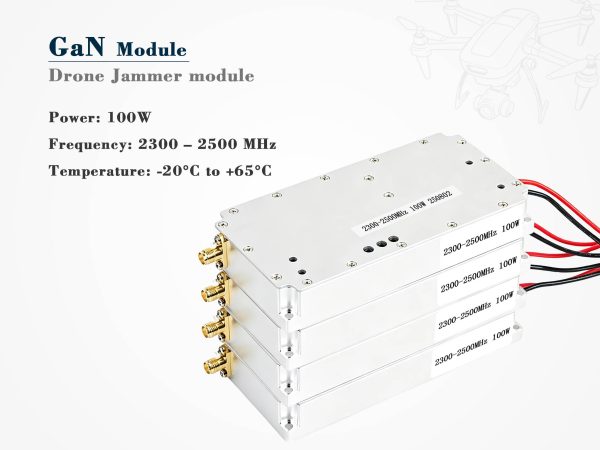
2300–2500 MHz 100W GaN Counter-UAV Module
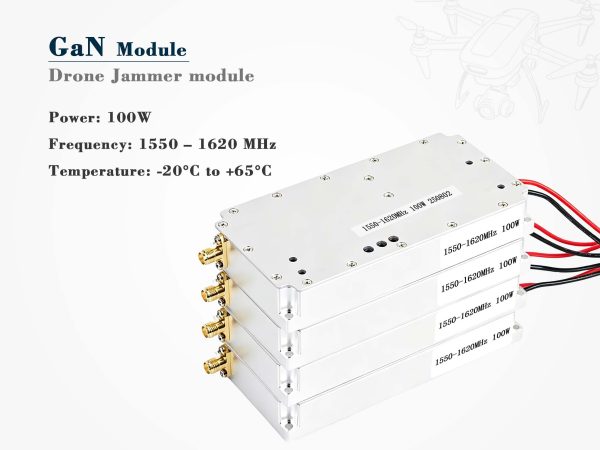
100W GaN Drone Jamming Module 1550–1620MHz
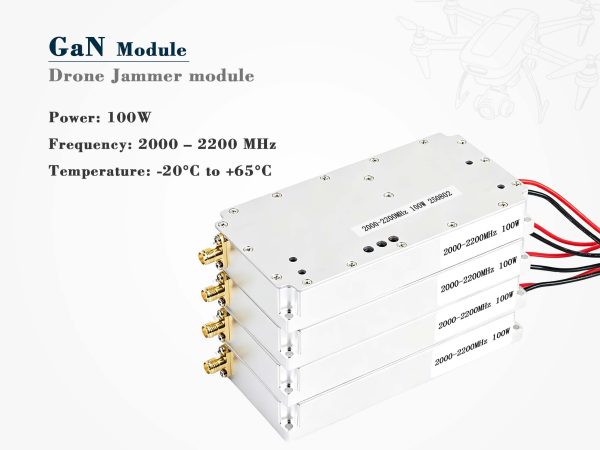
100W 2000–2200MHz GaN Analog Drone Interference Module