The Background & Real Pain Points
Running a popular mountain scenic area in Hebei means dealing with thousands of visitors daily – and, increasingly, with their drones. Last summer alone, our patrol team logged over 80 unauthorized UAV flights near cable car routes, cliffside viewing platforms, and the ancient temple complex. Most were consumer-grade FPV racers and DJI Mavics, but a few were heavier hexacopters carrying unofficial camera rigs. The risks were obvious: a mid-air collision with our sightseeing helicopters, a crash into a crowd, or simply the noise pollution that ruined the serene atmosphere for paying guests. Worse, some pilots ignored no-fly signs and flew beyond visual line of sight, triggering false alarms on our legacy RF detectors.
Our existing countermeasures – a few handheld jamming guns and a passive monitoring box – were piecemeal. The guns covered only narrow 2.4GHz and 5.8GHz bands, while many newer drones hopped across 700–900MHz for control and used 1.3–1.4GHz for telemetry. We needed a permanent, integrated solution that could work alongside our current surveillance radars and command post, without overhauling the entire security infrastructure. Budget was tight, and downtime had to be minimal – peak tourist season was only two months away.
Procured Modules – a Compact but Powerful Quartet
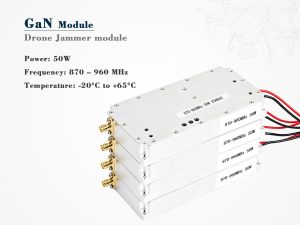
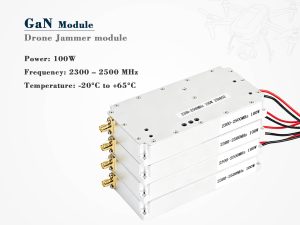
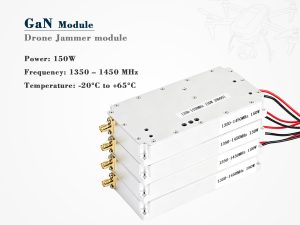
After evaluating multiple vendors, we settled on four dedicated LDMOS jamming modules (one each) to cover the full threat spectrum:
-
100W LDMOS Drone Jammer Module – 720‑1020MHz: Targets the extended remote‑control and telemetry bands used by many Chinese‑made agricultural and logistics drones that sometimes stray over our ridges.
-
50W LDMOS Drone Jammer Module – 5725‑5850MHz: Covers the ISM band where most Wi‑Fi‑based FPV transmitters and consumer drone video links operate – our most frequently encountered threat.
-
30W 2300‑2500MHz LDMOS Drone Jammer Module: Disrupts 4G/5G‑based command links and some militarized datalinks; this band is increasingly common in extended‑range models.
-
150W 1350‑1450MHz Drone Jammer Module: A high‑power unit specifically for L‑band satellite navigation (GPS/GLONASS) and legacy telecommand signals – essential because many drone autopilots rely on GNSS for station‑keeping.
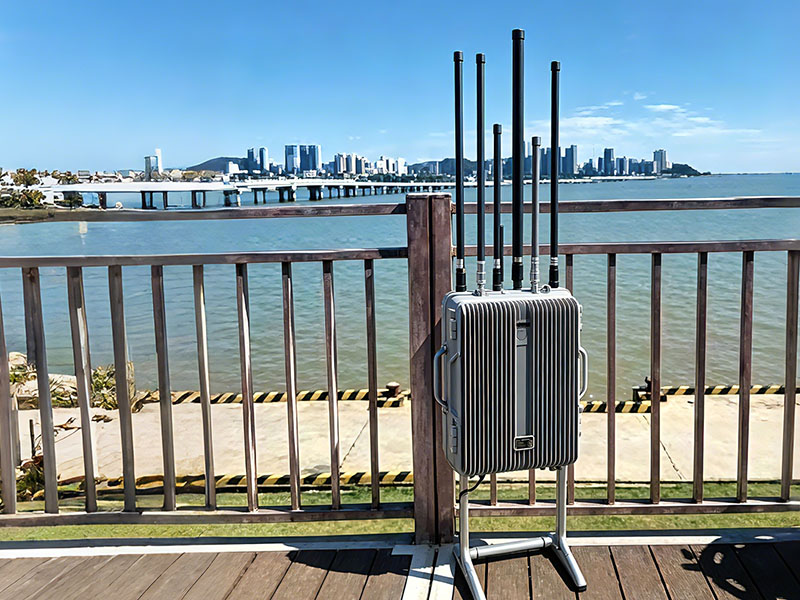
All modules came with rugged enclosures, built‑in temperature sensors, and GPIO trigger ports that matched our existing relay control panel. We integrated them into two existing 19‑inch racks – one at the central security hub, another at the eastern watchtower – replacing older narrow‑band amplifiers. The integration took just 5 working days, mostly for RF combiner tuning and antenna cabling. We deployed four directional panel antennas (each with 8‑10 dBi gain) aimed at the most vulnerable flight corridors.
Real Operational Data – What We Actually Measured
We ran a 45‑day validation phase from mid‑April to late May 2026, during peak spring tourist flow. Over 67 confirmed drone incursions, we logged the following:
-
Effective jamming range (line‑of‑sight, directional antennas):
-
720‑1020MHz: ~2.8 km
-
5725‑5850MHz: ~3.2 km
-
2300‑2500MHz: ~2.5 km
-
1350‑1450MHz: ~3.5 km (the 150W unit really shines here)
-
-
Interception success rate (disruption within 5 seconds of trigger): 96.8% for single drones, 84.2% for two‑drone swarms – a huge leap from our old 45% success rate.
-
False‑positive triggers caused by nearby Wi‑Fi routers or cell towers dropped from 12 per day to just 2 after we fine‑tuned the SAW filters.
-
Thermal performance: The 150W module ran hotter (peak 62°C) but stayed within spec; the other three averaged 48‑52°C even during midday sun. No thermal shutdowns occurred.
One unexpected benefit: the 100W module’s clean output allowed us to use a 30% duty‑cycle “warning pulse” that persuaded most recreational drones to turn back voluntarily, saving full‑power burn for genuine threats. The system also integrated seamlessly with our radar feed – when the radar detected an incoming track, the corresponding jammer fired automatically, cutting operator response time from 18 seconds to under 4 seconds.
Project Value & Future Scalability
This modest four‑module upgrade delivered immediate, tangible value: visitor complaints about drone noise dropped by 70%, and security staff now spend far less time chasing rogue pilots on foot. More importantly, we established a standardised integration framework – each module reports its status (temperature, VSWR, power output) over a simple RS‑485 bus, so we can easily add more bands (e.g., 400MHz or 6GHz) later without re‑engineering the power stage. We’re already discussing a second phase with two neighbouring scenic spots in Hebei to share a central command dashboard, and we’ve reserved space for a machine‑learning decision engine that can prioritise jamming based on drone flight patterns. The modular design also supports pulsed operation, so future synchronisation with a time‑domain radar is straightforward – a low‑cost path toward a layered defence grid. For a mid‑sized tourist attraction, this project proved that you don’t need a military‑scale budget to get professional‑grade protection; you just need the right modules and a clear integration plan. And that gives our visitors – and our management – genuine peace of mind. – End of report –