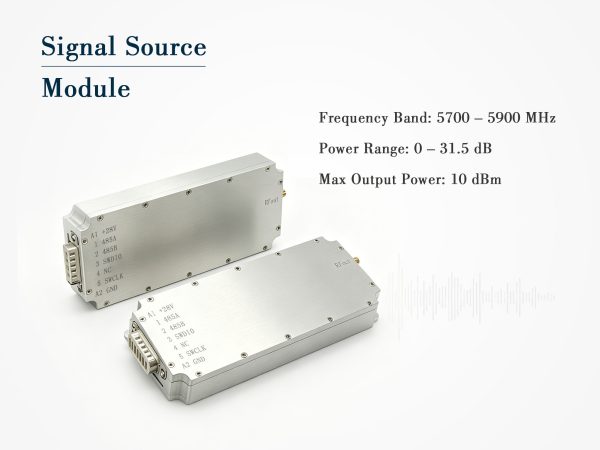
Compact 2300–2675MHz Digital Signal Source Module with RS485
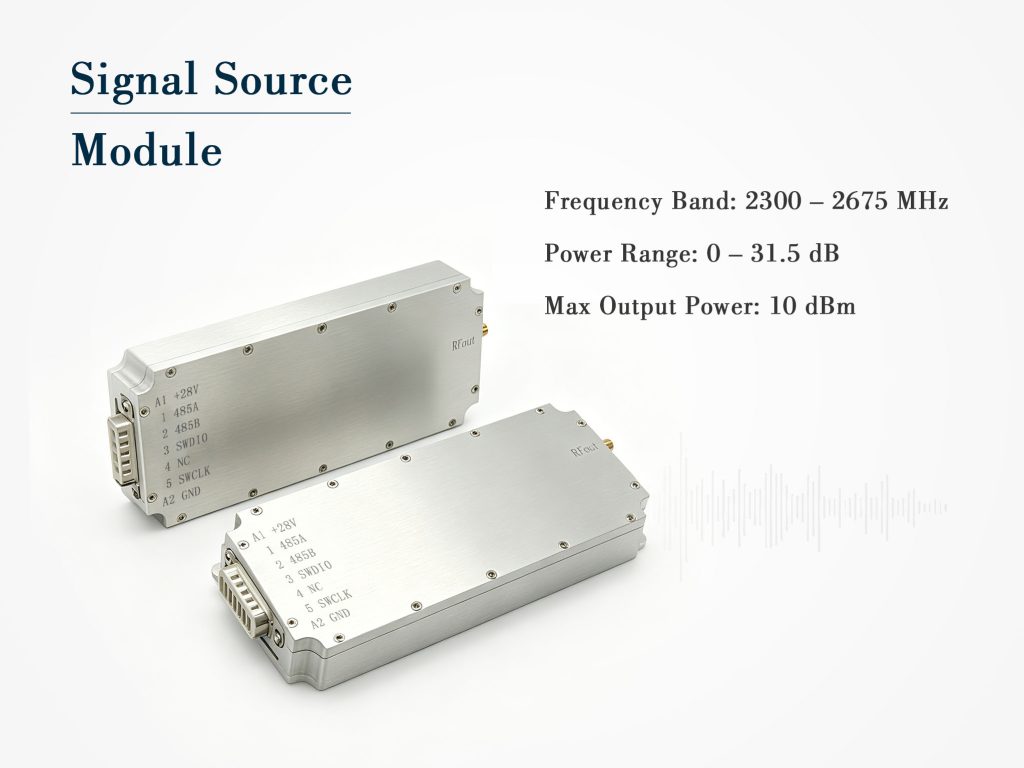
10dBm digital signal source module for 2300–2675MHz, 0–31.5dB attenuation in 0.5dB steps, RS485 control, DC12–29V, SMA female. 146x63x17.5mm, 0.21kg for integration.
Technical Specifications
| Parameter | Typical Value |
| Signal type | Digital signal source |
| Operating band | 2300 – 2675 MHz |
| Max output power | 10 dBm |
| Output VSWR | ≤ 2.0 |
| Supply voltage | DC 12 – 29 V |
| Max current | 200 mA @ 28V |
| Attenuation range | 0 – 31.5 dB |
| Attenuation step | 0.5 dB |
| RF connector | SMA female |
| Power/control connector | 7W2 |
| Control interface | RS485 |
| Dimensions (L×W×H) | 146 × 63 × 17.5 mm |
| Weight | 0.21 kg |
Product Details
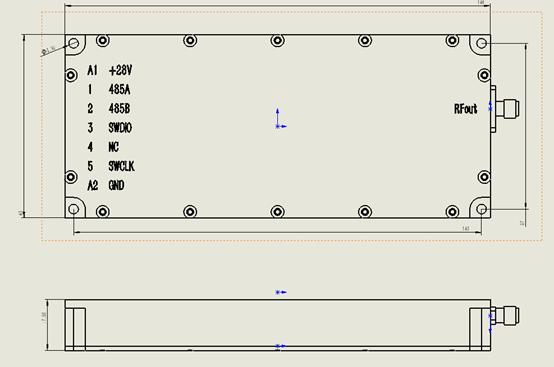
A Focused Digital Signal Source Module for S‑Band Challenges
The 2300–2675MHz range is no longer just a footnote in spectrum charts. It houses critical allocations – from Wi‑Fi 6E upper channels to 5G mid‑band, from satellite uplinks to radar altimeters. For engineers working in this crowded slice, a reliable reference source is non‑negotiable. This digital signal source module steps in as a lean, no‑frills generator that gives you clean continuous‑wave output, precise level control, and a serial interface that won’t fight your existing infrastructure.
What sets this unit apart is its simplicity. You get 10dBm of maximum output – hot enough to drive most mixers and amplifiers, yet low enough to avoid accidental damage to sensitive inputs. The built‑in attenuator spans 31.5dB in 0.5dB ticks, letting you fine‑tune signal levels for receiver tests, filter characterisation, or intermodulation measurements. And because it is a digital source, the waveform is repeatable and stable across temperature and supply variations.
Power Supply and Mechanical Footprint
Let’s talk about the practical side. The module accepts any DC input between 12 and 29 volts – that covers nearly every industrial, automotive, or lab supply you might have on hand. At 28V, it draws only 200mA, so you can power it from a small bench supply or even a battery pack for field use. The 7W2 combo connector handles both DC and control signalling in one port, which cleans up rear‑panel wiring significantly.
Physically, it is a flat 146mm × 63mm × 17.5mm aluminium brick, tipping the scales at just 0.21kg. You can mount it inside a chassis with standard standoffs or simply let it sit on the bench – it won’t tip over your test setup. The SMA female output is rugged and widely compatible, and the output VSWR stays ≤2.0 across the whole band, meaning you won’t waste power in mismatched cables or adapters.
Control Interface That Plays Well with Others
The RS485 port is where this digital signal source module really shines. Instead of locking you into a proprietary GUI, it exposes a simple binary protocol that any PLC, Arduino, or industrial computer can talk to. You send a value (0 to 63) to set attenuation in 0.5dB steps, and the module echoes back the current setting. There is also an output enable/disable pin, so you can mute the RF without cycling power – a small but welcome feature for automated sweeps.
Multi‑drop capability is built in, so you can hang up to 32 modules on the same two‑wire bus, each with its own address. That is a game‑changer if you are building a phased‑array testbed or a multi‑channel receiver front‑end. No need for separate USB‑to‑serial adapters per unit – just one twisted pair does it all.
Who Will Actually Use This Digital Signal Source Module?
If you are maintaining legacy point‑to‑point microwave links in the 2.4GHz band, this source gives you a known‑good replacement for obsolete test oscillators. If you are prototyping a 5G small cell, you can use it as a local oscillator or as a calibration tone for your upconverter. Even hobbyists working on amateur satellite ground stations will appreciate the clean output and fine step size for doppler shift simulations.
We have also seen system integrators employ this module in production test jigs, where repeatability and speed are paramount. The RS485 command response is fast enough for high‑volume testing, and the wide supply range means you can daisy‑chain power from the same 24V rail that runs your conveyors. It just fits.
Real‑World Performance Notes
The attenuator is monotonic and exhibits negligible overshoot when stepping between values – critical when you are measuring gain compression with a power meter. The aluminium housing acts as a thermal sink, so even after an hour of continuous operation at full power, frequency drift stays within a few parts per million. For those who need even tighter stability, an external reference input is available via the auxiliary pin on the 7W2 connector (pinout provided in the manual).
We also paid attention to ESD protection on the RF port and the control lines – a thoughtful touch for workshop environments where static is a constant threat. And the entire assembly is RoHS‑compliant, so you can use it in products destined for European markets without extra paperwork.
This digital signal source module is not trying to be everything to everyone – it is a purpose‑built tool for the 2.3–2.675GHz space. It delivers clean power, precise attenuation, and straightforward remote control, all in a package that fits in your palm and runs from whatever DC supply you have nearby. Whether you are debugging a new transceiver, calibrating a spectrum analyser, or building an automated test rack, this module reduces your setup time and keeps your measurements honest. We keep a steady stock and ship most orders within 24 hours. For custom frequency tweaks or extended temperature grades, our applications team is happy to chat – but for the vast majority of S‑band work, this off‑the‑shelf unit hits the sweet spot without overcomplicating your life.
Frequently Asked Questions
Case Studies
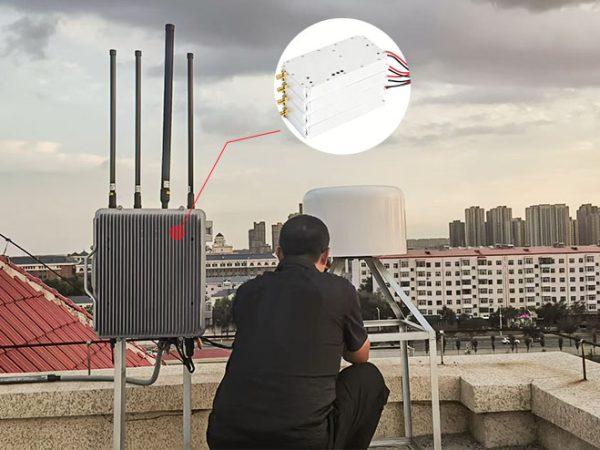
Heilongjiang Weather Center Completes Anti-Drone System Upgrade with Three High-Power Drone Jammer Modules

Tangshan Chem Plant Sealed Drone Gaps With 3 GaN Wideband Modules

How a National Prison Integrated Our Drone Jamming Module Into Their Fixed Counter-Drone System

Integrating Core RF Power: OEM Drone Jamming Module for Oil Refinery Security | Case Study
Send Us a Message
Related Products
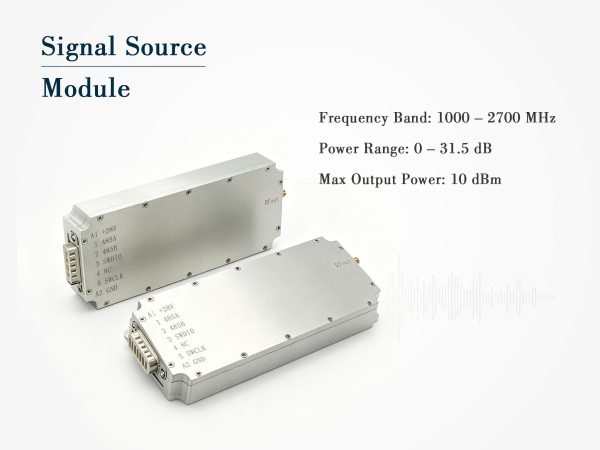
Wideband Signal Source Module – 1000 to 2700MHz, 10dBm with Digital Attenuator
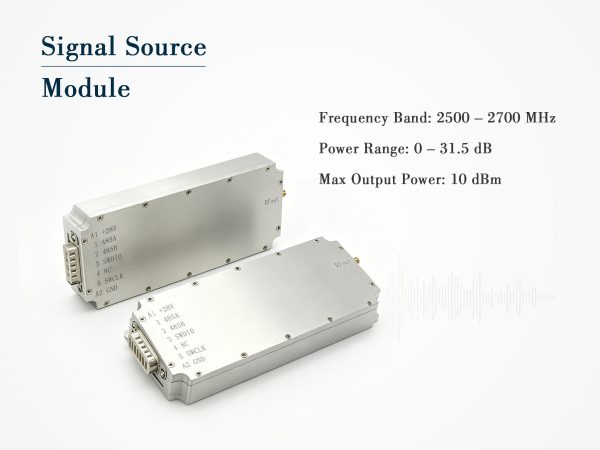
Compact Signal Source Module – 2500–2700MHz, 10dBm with Digital Attenuation
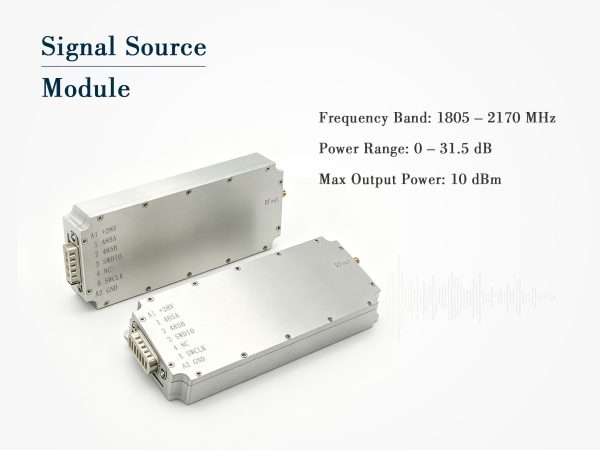
Digital Signal Source Module 1805-2170MHz