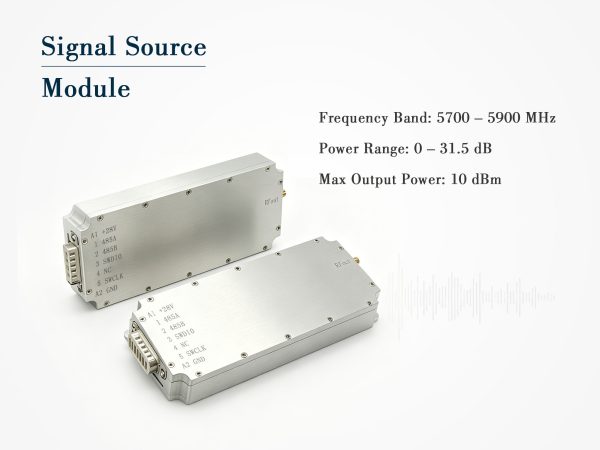
400–800MHz Signal Source Module with 0.5dB Step Attenuation
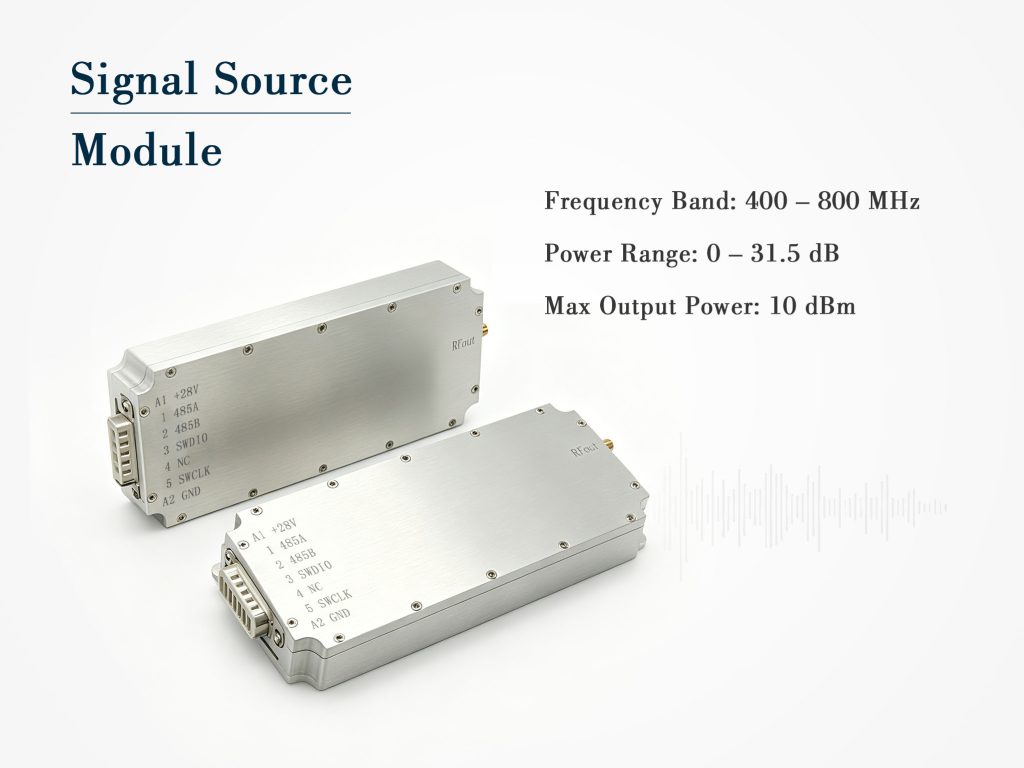
10dBm signal source for 400–800MHz, 0–31.5dB attenuation, RS485 control, 12–29V DC, SMA female. Compact 146x63x17.5mm, 0.21kg for test and integration.
Technical Specifications
| Parameter | Typical Value |
| Signal type | Digital signal source |
| Operating band | 400 – 800 MHz |
| Max output power | 10 dBm |
| Output VSWR | ≤ 2.0 |
| Supply voltage | DC 12 – 29 V |
| Max current | 200 mA @ 28V |
| Attenuation range | 0 – 31.5 dB |
| Attenuation step | 0.5 dB |
| RF connector | SMA female |
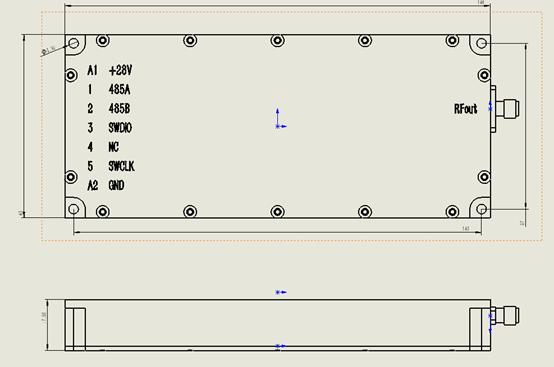
| Power/control connector | 7W2 |
| Control interface | RS485 |
| Dimensions (L×W×H) | 146 × 63 × 17.5 mm |
| Weight | 0.21 kg |
Product Details
A Versatile 400–800MHz Signal Source for Demanding RF Workflows
Not every project needs millimeter‑wave frequencies. Many practical applications – from land mobile radio to airborne transponders, from amateur repeaters to industrial telemetry – live comfortably in the 400–800MHz band. This Signal Source Module has been tailored for that exact sweet spot, giving you a dependable, digitally‑controlled source without the overhead of a full vector signal generator. It is built to be a workhorse: predictable output, fine level control, and a serial interface that plays nicely with existing automation.
The module outputs a clean digital‑type signal at up to 10dBm, which is more than enough to drive most mixers, filters, and amplifiers in this frequency range. More importantly, you can dial that power down over a 31.5dB range in precise 0.5dB increments. That granularity is a lifesaver when you are characterising receiver sensitivity or mapping out gain compression points – you can sweep levels methodically without needing external step attenuators or manual pads.
Power Delivery and Mechanical Footprint
One of the first things you notice is the wide input voltage tolerance: 12V to 29V DC. This makes the signal source module equally at home in a 24V industrial cabinet, a 13.8V amateur radio supply, or a 28V aerospace test rig. Current draw is a modest 200mA at 28V, so thermal management is straightforward – no bulky heatsinks required. The 7W2 hybrid connector combines power and supply control into a single physical port, reducing wiring clutter in dense chassis.
Mechanically, it is a slim 146mm × 63mm × 17.5mm brick weighing only 0.21kg. That small footprint allows you to slot it into portable field kits or stack multiple units for multi‑channel phase‑aligned setups. The SMA female output is industry‑standard, and the output VSWR stays at or below 2.0 across the entire band – a reassuring spec when you are cascading with sensitive low‑noise front‑ends.
Who Reaches for This Signal Source Module?
System integrators working on distributed antenna systems (DAS) for public safety or indoor coverage will find the 400–800MHz coverage ideal for band‑specific testing. RF engineers who maintain legacy VHF/UHF equipment can use it as a substitute for obsolete signal generators during repairs. And if you are developing software‑defined radios, this source gives you a known‑good reference to validate your receiver chains without lugging around a heavy bench unit.
The RS485 control interface is particularly valued in automated test environments. You can address multiple modules on the same twisted‑pair bus, each with a unique ID, and command attenuation changes in milliseconds. No proprietary drivers – just simple binary commands that any microcontroller or PLC can handle. The default baud rate is configurable, but we set it to 9600 out‑of‑the‑box for immediate use.
Practical Considerations for Daily Use
We have paid attention to the little details that matter. The output enable/disable function lets you keep the module powered while muting the RF – handy for warm‑up stability before a critical measurement. The step attenuator is monotonic and repeatable, so you won’t see unexpected jumps when changing settings. And because the housing is machined aluminium, it doubles as a heat spreader, keeping internal temperature drift low even during extended runs.
For those who need to embed this module into a larger system, the pinout on the 7W2 connector is clearly documented. Power ground, RS485 A/B, and an auxiliary shutdown line are all accessible – you can even tie the shutdown to a hardware interlock if safety regulations require it. The entire assembly is designed for industrial temperature ranges (0–50°C ambient), though we have seen it perform reliably beyond that in well‑ventilated enclosures.
This Signal Source Module does not pretend to be a multi‑function vector instrument – it is a focused, reliable building block for the 400–800MHz region. Whether you are automating production tests, restoring vintage radio gear, or prototyping a new transceiver, the combination of wide supply range, precise step control, and simple serial commands will save you time and reduce cabling headaches. We keep these modules in stock and can ship same‑day for most orders. For custom frequency variants or extended temperature options, our engineering team is ready to discuss modifications – but for the vast majority of VHF/UHF needs, this off‑the‑shelf unit hits the mark perfectly.
Frequently Asked Questions
Case Studies
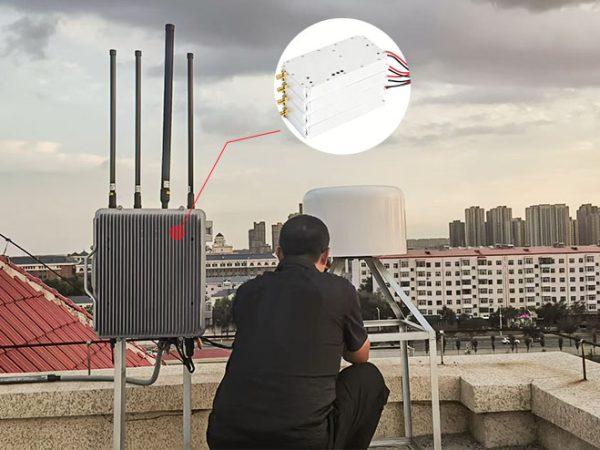
Heilongjiang Weather Center Completes Anti-Drone System Upgrade with Three High-Power Drone Jammer Modules

Tangshan Chem Plant Sealed Drone Gaps With 3 GaN Wideband Modules

How a National Prison Integrated Our Drone Jamming Module Into Their Fixed Counter-Drone System

Integrating Core RF Power: OEM Drone Jamming Module for Oil Refinery Security | Case Study
Send Us a Message
Related Products
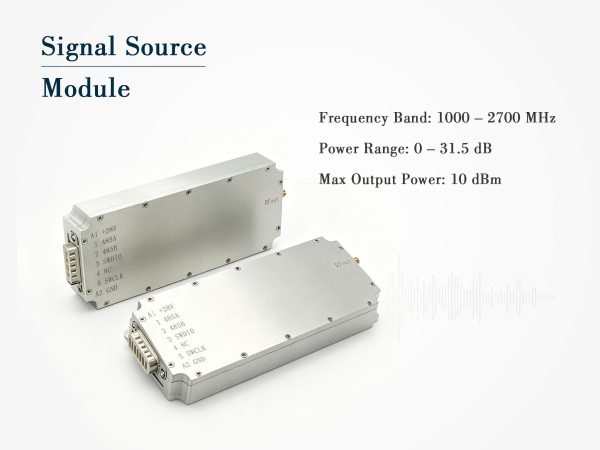
Wideband Signal Source Module – 1000 to 2700MHz, 10dBm with Digital Attenuator
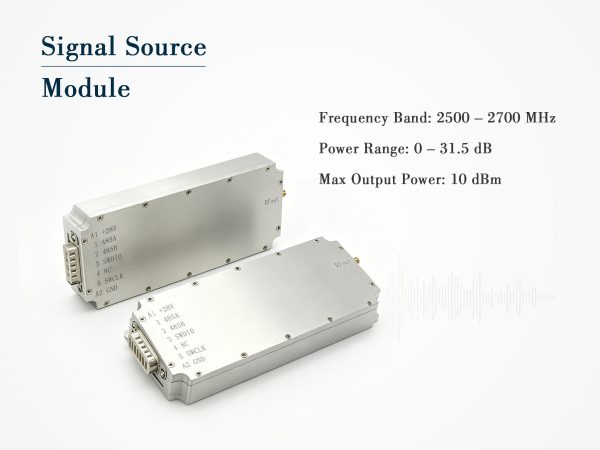
Compact Signal Source Module – 2500–2700MHz, 10dBm with Digital Attenuation
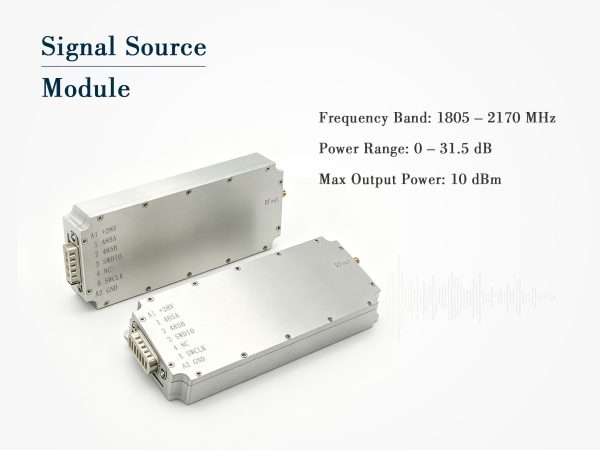
Digital Signal Source Module 1805-2170MHz