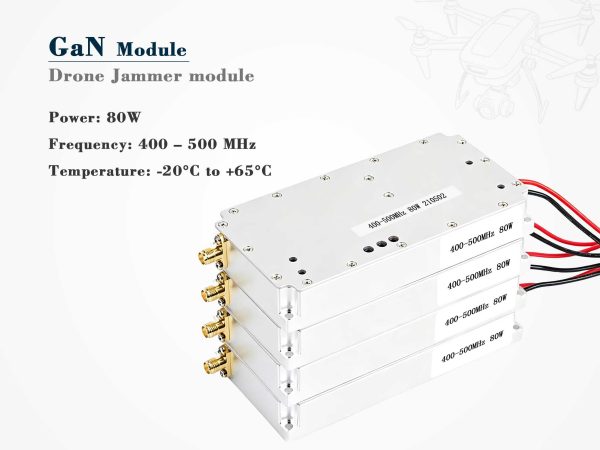
80W Drone Jammer Module | 870-960MHz LDMOS Analog Sweeper
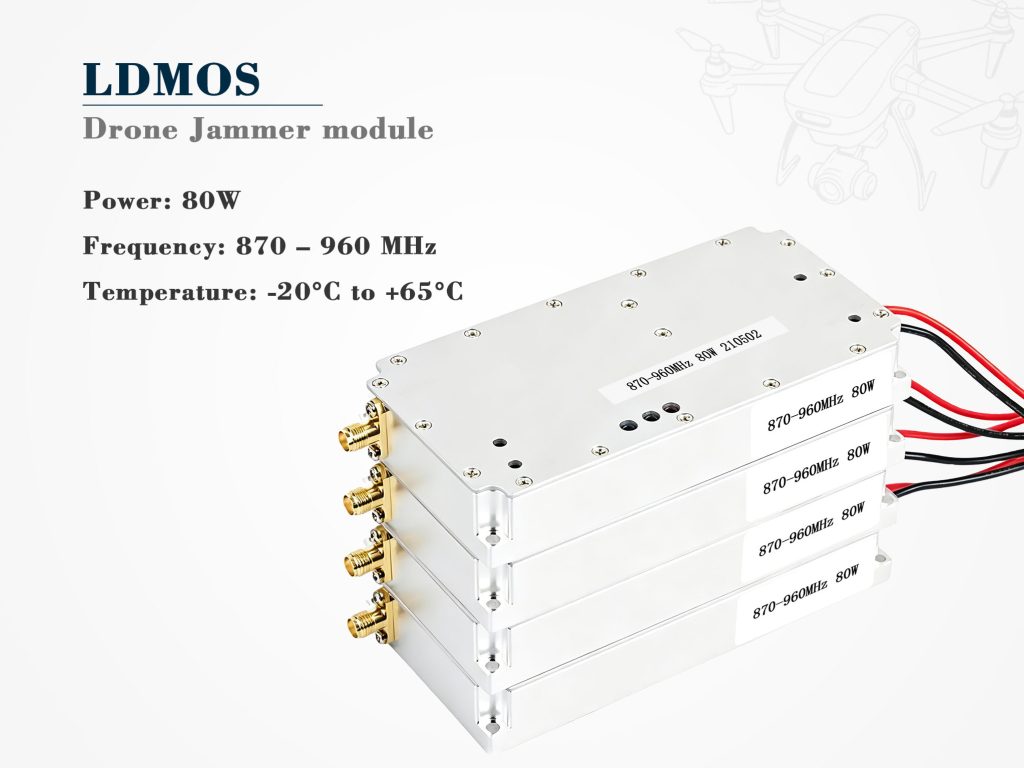
80W drone jammer module with 870-960MHz band, LDMOS analog sweeper, 80W output, DC24-29V, SMA-female, built-in VSWR protection. For UAV countermeasure systems.
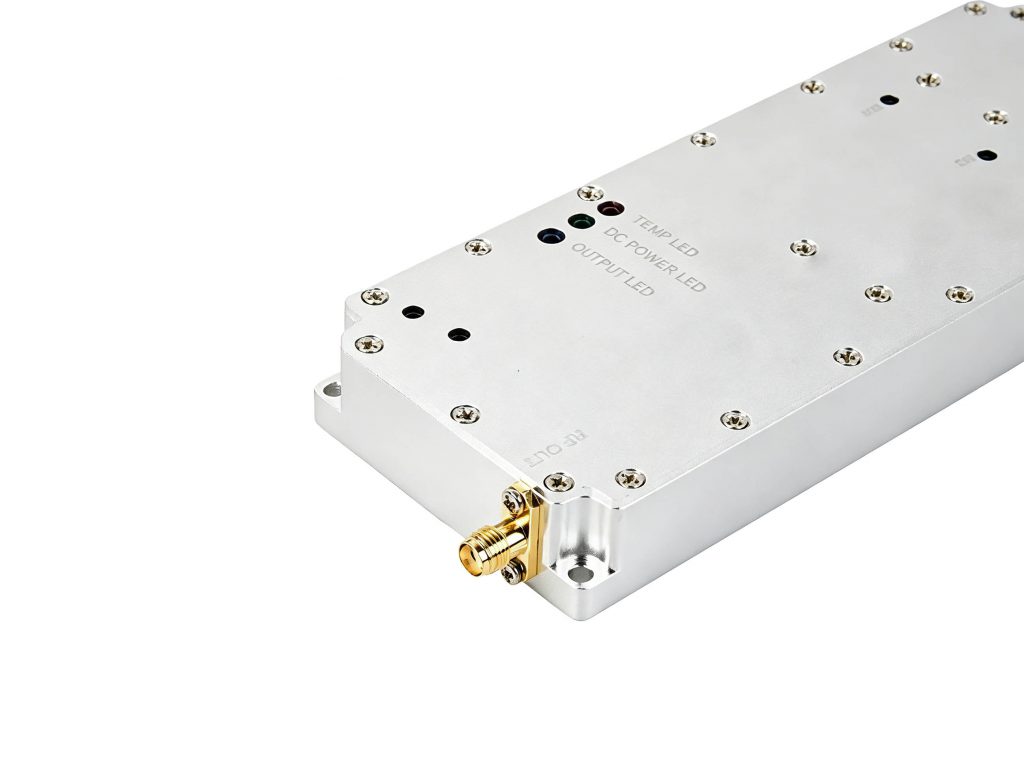
Technical Specifications
| Parameter | Specification | Notes |
| Frequency range | 870 – 960 MHz | Fixed band, internal sweeper covers full range |
| Output power | 80W typical (≥75W min) | Measured at 28V DC, 25°C ambient |
| Supply voltage | DC 24V – 29V | Reverse polarity protected |
| Current draw | ≤10.0A @ 80W output | At nominal 28V supply |
| Modulation source | Built-in high-speed analog sweeper | Factory-aligned, no external input required |
| Analog scan speed | 1.2 – 1.8 ms per sweep | Continuous triangular waveform |
| Input / output impedance | 50Ω | SMA-female connector |
| Protection LEDs | Over-temp + VSWR fault | Red LED indicators, active-high fault |
| Operating temperature | -20°C to +65°C | Baseplate temperature measured |
| Dimensions (L×W×H) | 168.5 × 84.5 × 23 mm | Excluding connector protrusion |
| Weight | 0.55 kg | ±10g without mating connectors |
| Base material | Aluminum alloy | 6061-T6, black anodized |
Product Details
High-Power Countermeasure in a Compact Enclosure
When you need reliable drone disruption in the 870–960MHz band, this 80W drone jammer module delivers professional-grade performance without unnecessary complexity. Designed around an efficient LDMOS architecture, it combines a built-in high-speed analog sweep source with robust thermal management – all within a 168.5×84.5×23mm aluminum housing that weighs just 0.55kg.
Unlike discrete component assemblies that require external signal generators, this unit integrates the interference source internally. You supply DC power (24–29V) and a simple TTL-level switch command, and the module produces a continuously sweeping analog waveform across the full band. The result? Consistent spectral coverage that makes it difficult for consumer and prosumer drones to maintain GPS or control links.
Performance That Matters in the Field
Output power is rated at 80W typical, with the amplifier stage running at ≥40% efficiency under normal load. That translates to less heat dumped into your enclosure – a critical factor when you mount multiple modules side by side. The input/output impedance is set at 50Ω, and the output VSWR is kept at ≤2.0, ensuring that the LDMOS device operates within a safe load range even when the antenna isn’t perfectly matched.
Current draw stays around 10.0A at full tilt, so a standard 30A supply leaves enough headroom for fans or ancillary circuits. If you’re integrating this into a portable or vehicle-mounted system, the wide voltage tolerance (24–29V) helps you work with unregulated battery packs or automotive alternators without additional buck-boost stages.
Built-In Safeguards and Real-Time Feedback
One feature that sets this module apart is the built-in absorbing-type VSWR protection. Instead of simply shutting down when it detects a high reflected power, the protection circuit absorbs the return energy, giving the module a chance to recover gracefully without catastrophic device failure. This is particularly valuable during field testing, where antenna swaps or cable faults are not uncommon.
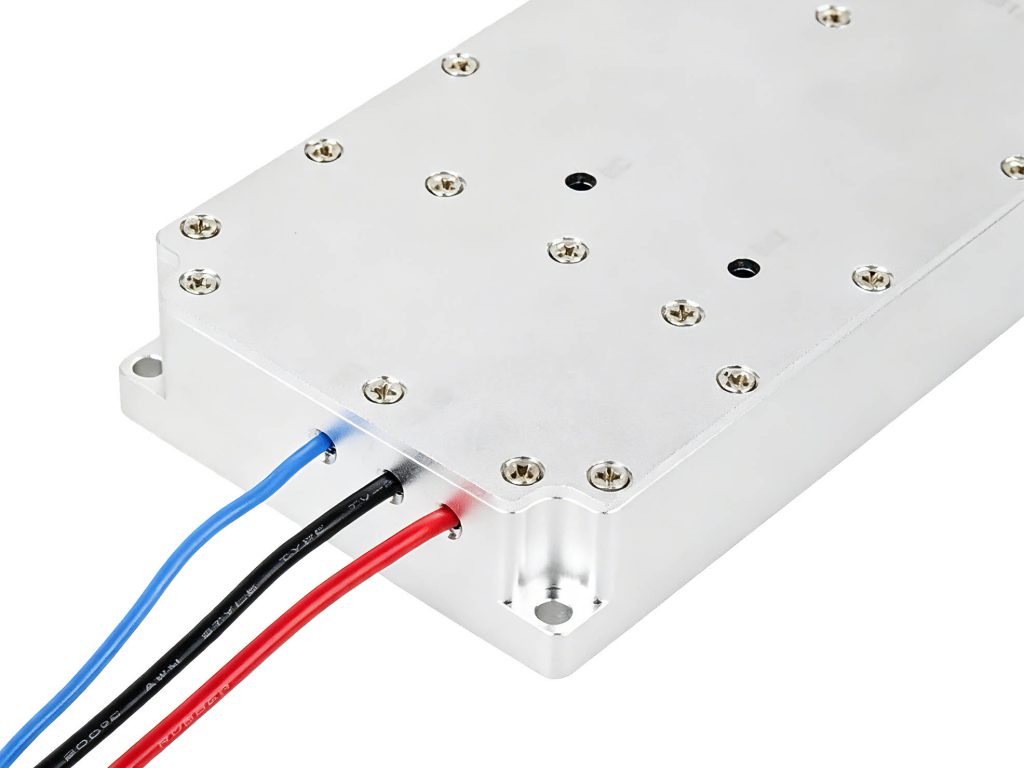
On the front panel, two protection LEDs give you instant visual status: one for over-temperature (threshold set at +65°C) and another for VSWR fault. The module also supports an external enable line – leave it floating or apply +5V to turn the RF output on; ground the pin to disable it. This makes it easy to interlock with a controller or a manual safety switch.
Application Scenarios That Demand Reliability
This 80W drone jammer module is often deployed in fixed-site perimeter security, mobile convoy protection, and temporary event security setups. Because the sweep source is analog rather than digitally synthesized, the output exhibits low phase noise and minimal spurious products – both desirable traits when you need to avoid interfering with adjacent communication bands.
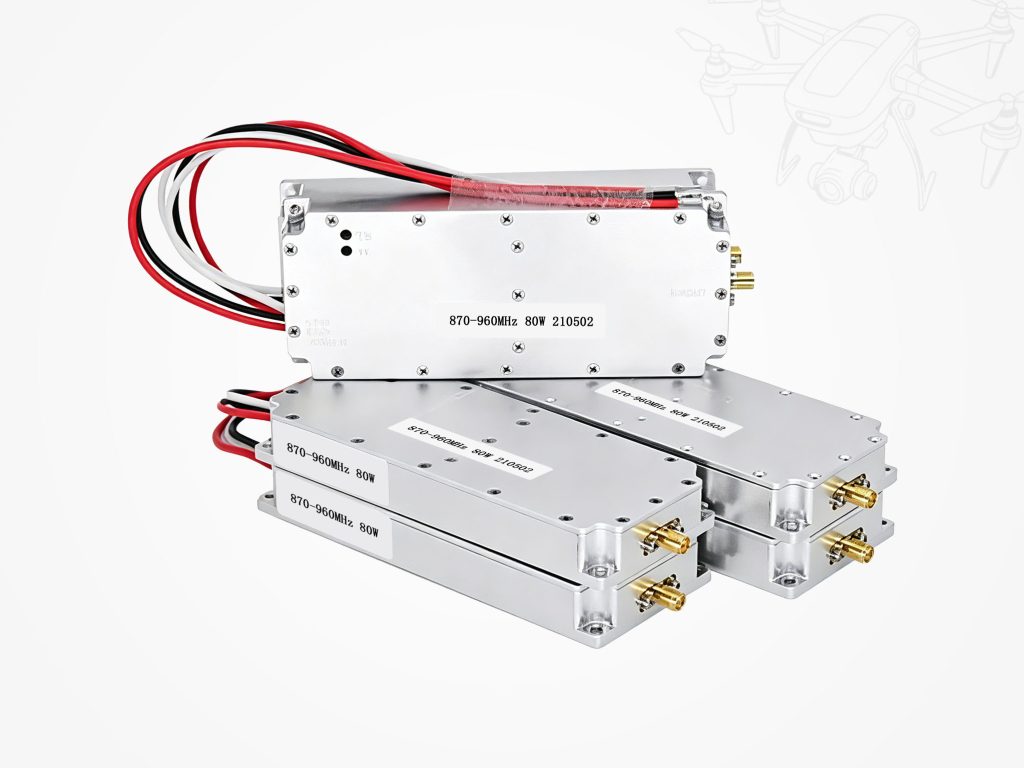
For multi-band systems, the slim 23mm profile allows side-by-side mounting on a standard heatsink plate, and the SMA-female output connector simplifies cable routing to a combiner or directly to a panel antenna. The operating temperature range (-20°C to +65°C) covers most outdoor environments, and the aluminum base material aids in passive cooling.
Integration Simplicity
You don’t need a separate sweep generator or a microcontroller to generate a modulation profile. The internal high-speed sweeper covers the 870–960MHz range continuously, with a scan rate optimized for drone command links. This reduces your BOM count, shortens development time, and ensures that the sweep characteristics are factory-aligned – no tweaking of external VCOs or PLLs required.
Frequently Asked Questions
Case Studies
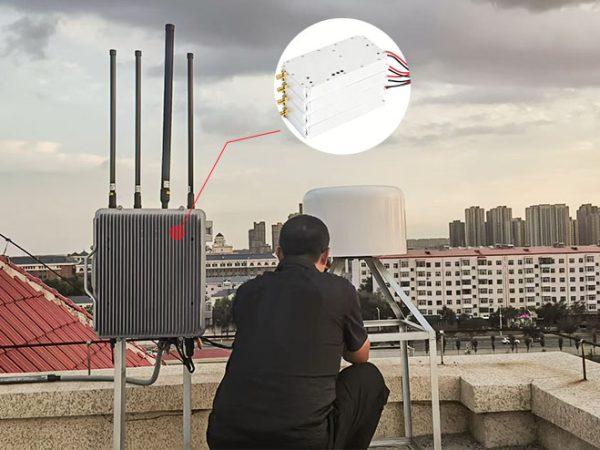
Heilongjiang Weather Center Completes Anti-Drone System Upgrade with Three High-Power Drone Jammer Modules

Tangshan Chem Plant Sealed Drone Gaps With 3 GaN Wideband Modules

How a National Prison Integrated Our Drone Jamming Module Into Their Fixed Counter-Drone System

Integrating Core RF Power: OEM Drone Jamming Module for Oil Refinery Security | Case Study
Send Us a Message
Related Products
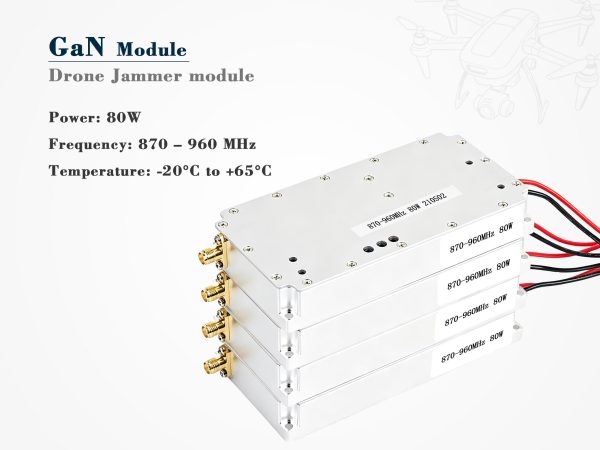
80W GaN Drone Jammer Module 870–960MHz | Analog Sweep
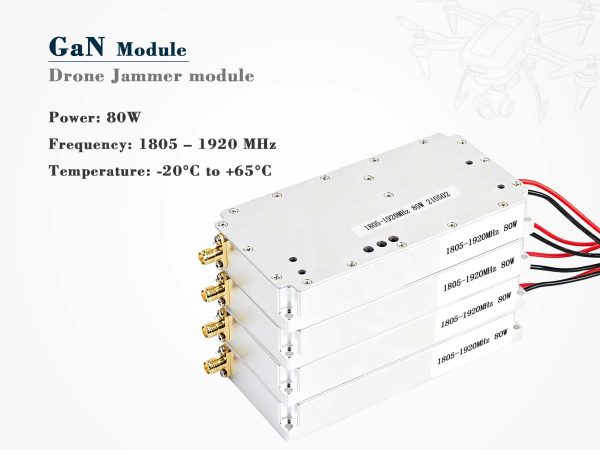
80W 1805–1920MHz GaN UAV Countermeasure Jammer Module
80W GaN Jammer Module: Powerful 2200–2400MHz Counter-UAS Solution