80W 5600‑5900MHz Drone Jammer Module with VSWR Protection
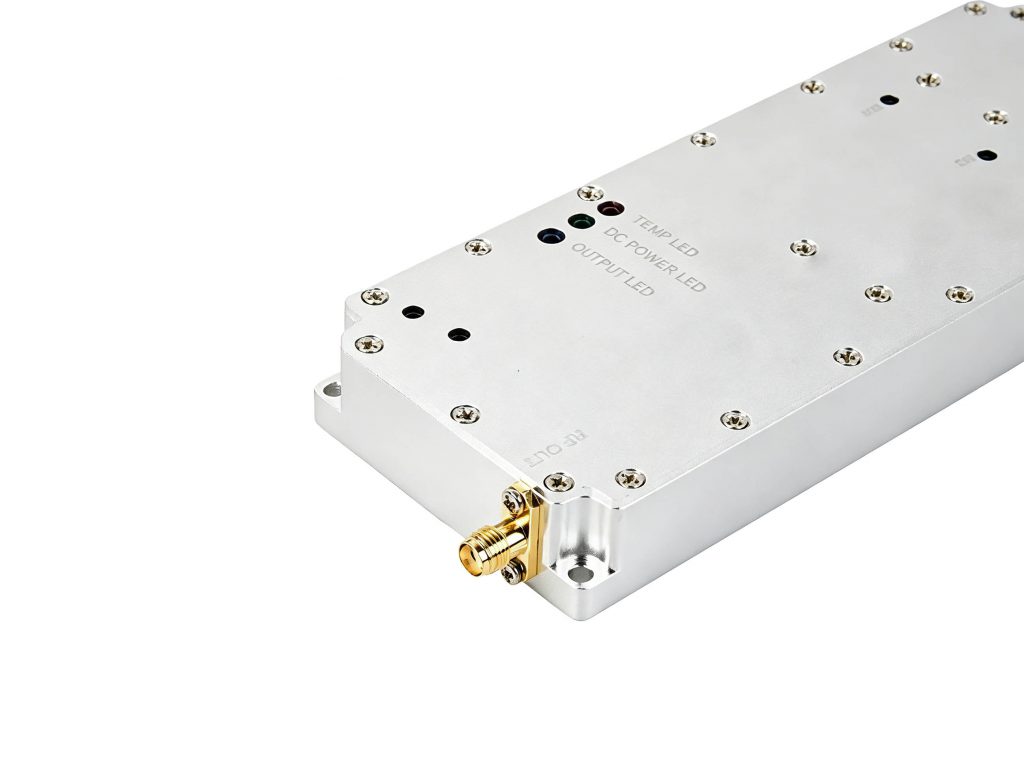
80W drone jammer module for 5600‑5900MHz with analog sweep & absorptive VSWR protection. DC 24‑29V, 10A, SMA out, 168×84×23mm. For professional counter‑UAS.
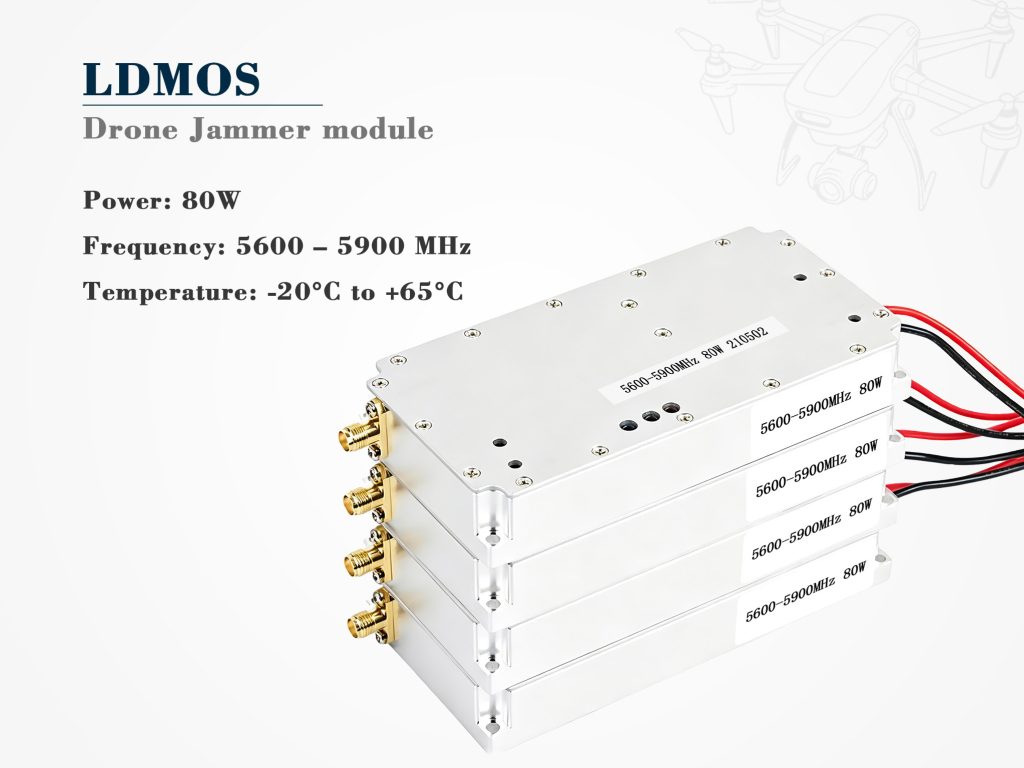
Technical Specifications
| Parameter | Specification | Notes |
| Frequency range | 5600 – 5900 MHz | Full 300 MHz coverage |
| Output power | 80W (typical) | Measured at 50Ω load, 26V supply |
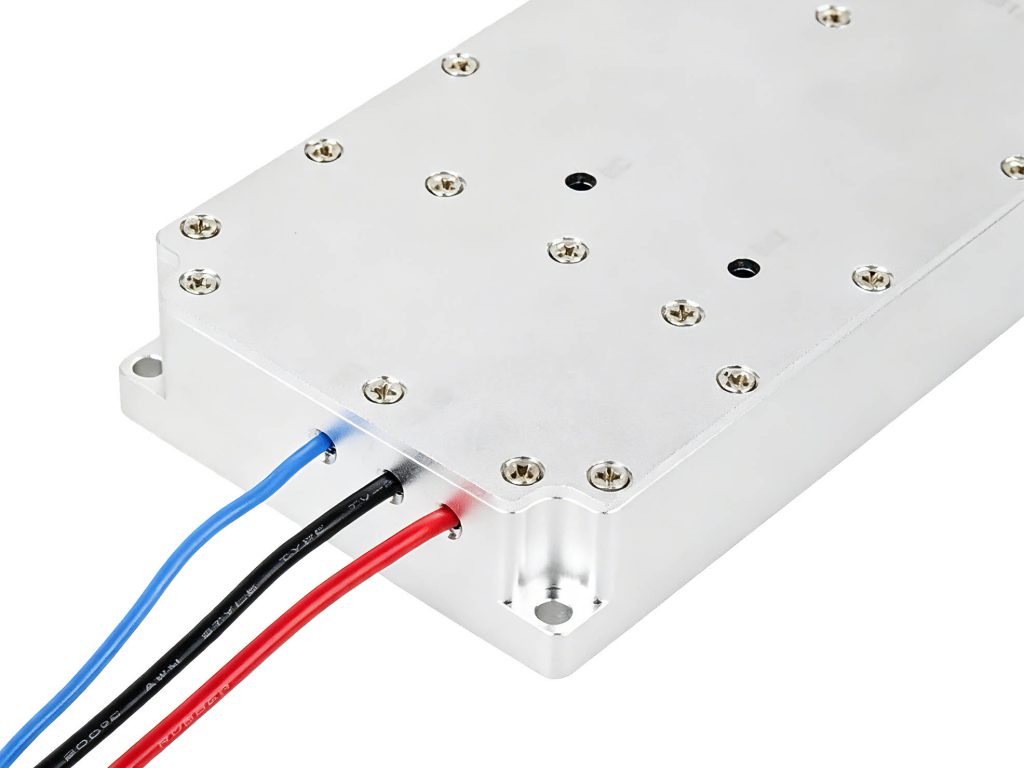
| Supply voltage | DC 24V – 29V | Nominal 26V recommended |
| Current draw | ≤ 10.0A | At maximum output power |
| Modulation source | Built‑in high‑speed analog sweep | VCO‑based, no external generator |
| Analog scan speed | > 50 MHz/ms | Covers band in < 6 ms |
| Input / output impedance | 50Ω (RF output) | Control input is high‑impedance TTL |
| Protection LEDs | Built‑in absorptive VSWR protection; over‑temp & over‑current (internal) | No external LED pins – protection is automatic and self‑resetting |
| Operating temperature | -20°C to +65°C | Ambient, with adequate heatsinking |
| Dimensions (L×W×H) | 168.5 × 84.5 × 23 mm | Excluding connectors and mounting tabs |
| Weight | 0.57 kg | Approximately |
| Base material | Aluminium alloy (6061) | Provides thermal spread and structural strength |
Product Details
Covering the Full 5.6‑5.9GHz Spectrum – No Gaps, No Compromises
Walk into any drone racing event or check the specs of a modern consumer quadcopter, and you’ll see 5.8GHz everywhere. It’s the go‑to frequency for high‑definition video downlinks – and increasingly, for command links too. But here’s the thing: the ISM band actually runs from 5.725GHz to 5.85GHz in most regions, and many drones now operate anywhere between 5.6GHz and 5.9GHz, especially when they’re using frequency‑hopping or adaptive channel selection. Jamming a single fixed frequency isn’t enough anymore.
This drone jammer module sweeps the entire 5600–5900MHz range at high speed, throwing out a solid 80W of interference across all 300MHz of bandwidth. No gaps, no blind spots. If a drone is talking on 5.65GHz, 5.8GHz, or 5.88GHz, it’s getting hit.
80W – Because Range Matters
Eighty watts in this band gives you serious reach. With a decent directional antenna (say, 12‑15dBi), you’re looking at effective jamming out past 1 kilometre in open terrain – sometimes more, depending on line‑of‑sight and atmospheric conditions. That kind of range is what you need for perimeter defence around airports, military installations, or large public events.
The drone jammer module pulls about 10A at 26V DC, which works out to roughly 260W of input power. Efficiency is spec’d at ≥35%, which is typical for a broadband amplifier covering 300MHz at this power level. The remaining 170‑odd watts become heat – and that’s a number you need to take seriously. We’ll talk cooling in a minute, but the takeaway is: this is a professional‑grade module that demands professional‑grade thermal management.
Antenna Protection Built Right In
One of the most valuable features on this module is the built‑in absorptive VSWR protection. What does that actually mean? Inside the unit, there’s an isolator that absorbs reflected power from the antenna. If your antenna gets knocked loose, damaged, or presents a bad match for any reason, that reflected energy would normally bounce back into the amplifier and fry the output transistors in a fraction of a second. With this drone jammer module, the isolator absorbs that energy and dissipates it safely.
The specified output VSWR is ≤2.0, which gives you decent tolerance for antenna mismatches. But even if the load swings worse than that, the protection circuitry will keep the module alive. It’s one of those features you don’t think about until you need it – and when you do, you’re glad it’s there.
Built Tough, Sized Right
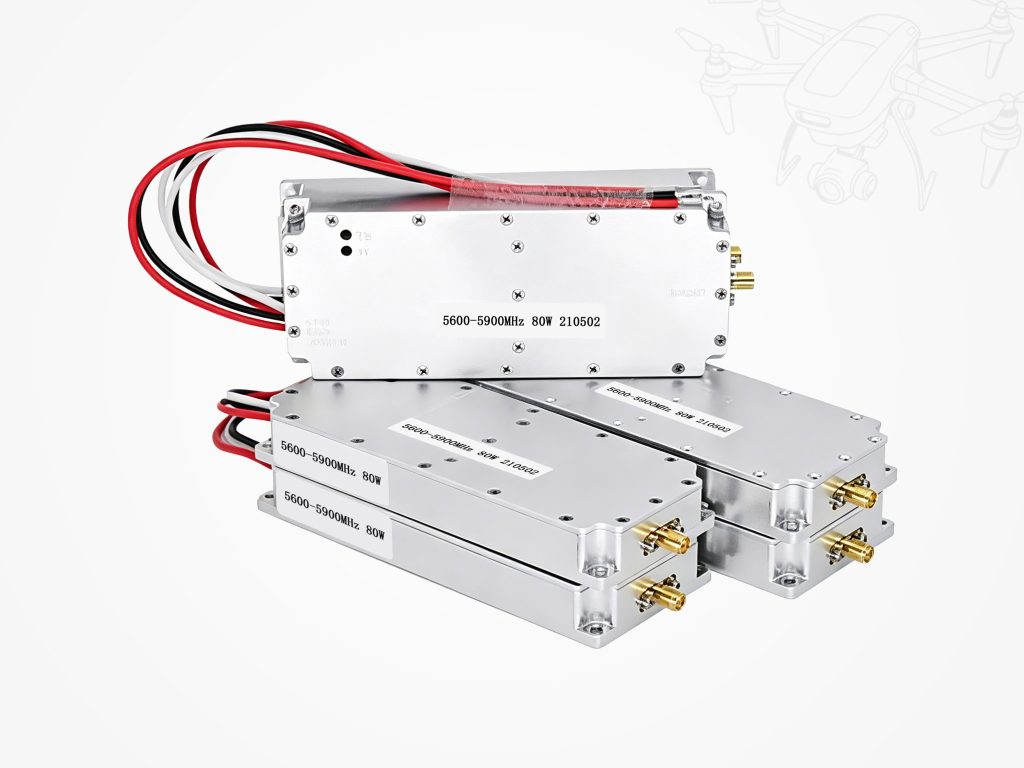
At 168.5 × 84.5 × 23mm and 0.57kg, this drone jammer module is compact enough to fit into vehicle‑mounted systems, fixed installations, or larger handheld units. The aluminium housing (6061 alloy) doubles as a heat spreader, and the mounting holes let you bolt it down securely to a chassis or heatsink.
The 300MHz bandwidth (5600‑5900MHz) covers not only the standard 5.8GHz ISM band but also the extended frequencies that some drones use for channel‑hopping. This extra coverage is a big deal – many cheaper modules only cover 5725‑5850MHz, leaving you exposed if a drone jumps outside that narrow window. This one doesn’t have that limitation.
Control – Keep It Simple
The control interface is refreshingly straightforward. A +5V or floating input turns the module on; grounding it turns it off. That’s all there is to it. You can drive it from a GPIO, a toggle switch, a relay, or even a mechanical push‑button with a pull‑up resistor. No SPI, no I²C, no firmware debugging – just a clean enable line.
The RF output is a standard SMA female connector, so you can attach it to any 50Ω antenna or external filter without hunting for custom adapters. Since the module has an internal sweep source, you don’t need to supply an external RF signal – just add power and an antenna, and you’re operational.
Power Requirements – Straightforward
Feed it DC between 24V and 29V, with a supply capable of delivering at least 12A continuous to give yourself some margin. That’s a common range – 6‑cell Li‑ion packs (25.2V nominal), lead‑acid batteries, and industrial 24V power supplies all fit the bill. For portable systems, you’ll need a decent‑sized battery, but that’s the reality of running 80W of RF output.
Thermal Management – No Cutting Corners
Let’s be direct about heat. At 35% efficiency, this module generates roughly 170W of waste heat at full tilt. Without a heatsink, you’ll get maybe 5‑10 seconds of operation before the internal over‑temperature protection shuts you down. With a solid passive heatsink (think 200×100×40mm with fins), you can run a 30% duty cycle – 30 seconds on, 60 seconds off. Add a fan pushing decent airflow, and continuous operation is achievable as long as the heatsink stays below 65°C.
The drone jammer module includes internal over‑temp and over‑current protection. There are no external LED indicators – it’s all internal and automatic. The protection trips, the module shuts off, and it resets once temperatures drop back to safe levels. It won’t let you destroy it through thermal neglect, but you’ll get nuisance trips if you undersize your cooling.
The Sweep – Fast and Wide
The internal analog VCO sweeps the entire 5600‑5900MHz band at speeds exceeding 50MHz per millisecond. That means the full 300MHz range is covered in under 6 milliseconds. Against frequency‑hopping drones, that’s a nightmare scenario for the drone – it’s hopping channels, but the jammer is right there on every channel before the drone can finish its hop. This isn’t a fixed‑frequency tone generator; it’s a broadband denial system that actually keeps up with modern drones.
Who’s This For?
This is for integrators and security teams who need to cover the full 5.8GHz spectrum – not just the narrow ISM slice. Whether you’re protecting a border, a stadium, a VIP convoy, or a critical infrastructure site, the extended 5600‑5900MHz coverage gives you an edge against drones that use non‑standard channels or aggressive frequency‑hopping.
It’s also a solid choice for R&D labs testing drone resilience against broadband jamming. If you’re developing counter‑UAS systems and you need a reliable, high‑power RF source for the 5.6‑5.9GHz range, this module does the heavy lifting so you can focus on the rest of your system.
Frequently Asked Questions
Case Studies
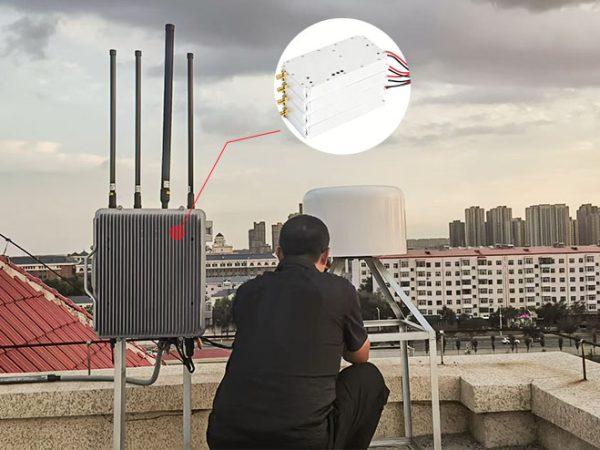
Heilongjiang Weather Center Completes Anti-Drone System Upgrade with Three High-Power Drone Jammer Modules

Tangshan Chem Plant Sealed Drone Gaps With 3 GaN Wideband Modules

How a National Prison Integrated Our Drone Jamming Module Into Their Fixed Counter-Drone System

Integrating Core RF Power: OEM Drone Jamming Module for Oil Refinery Security | Case Study
Send Us a Message
Related Products
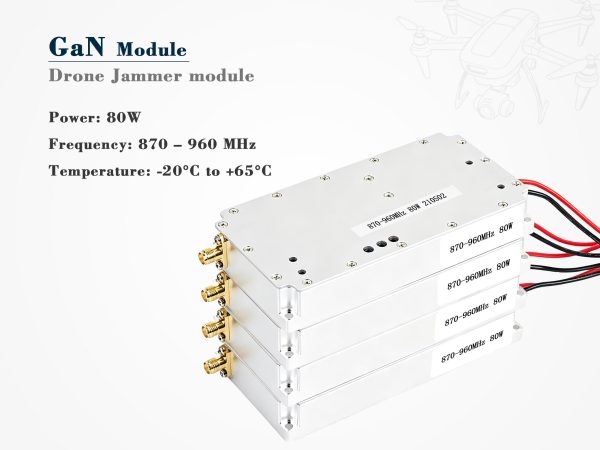
80W GaN Drone Jammer Module 870–960MHz | Analog Sweep
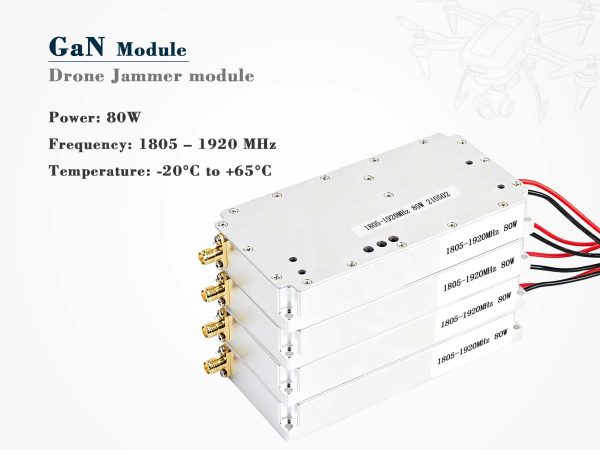
80W 1805–1920MHz GaN UAV Countermeasure Jammer Module
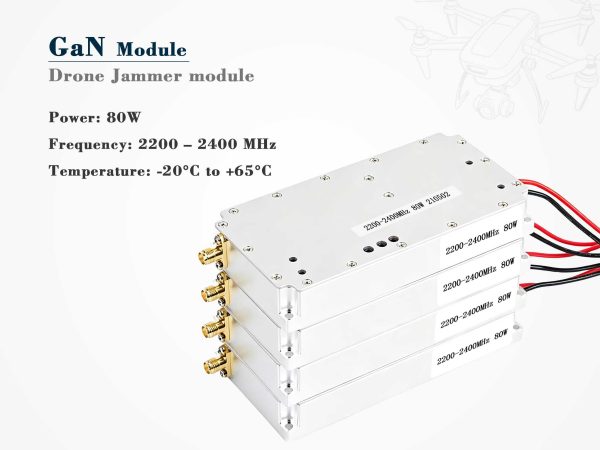
80W GaN Jammer Module: Powerful 2200–2400MHz Counter-UAS Solution