
60W LDMOS Drone Jammer Module – 1550-1620MHz
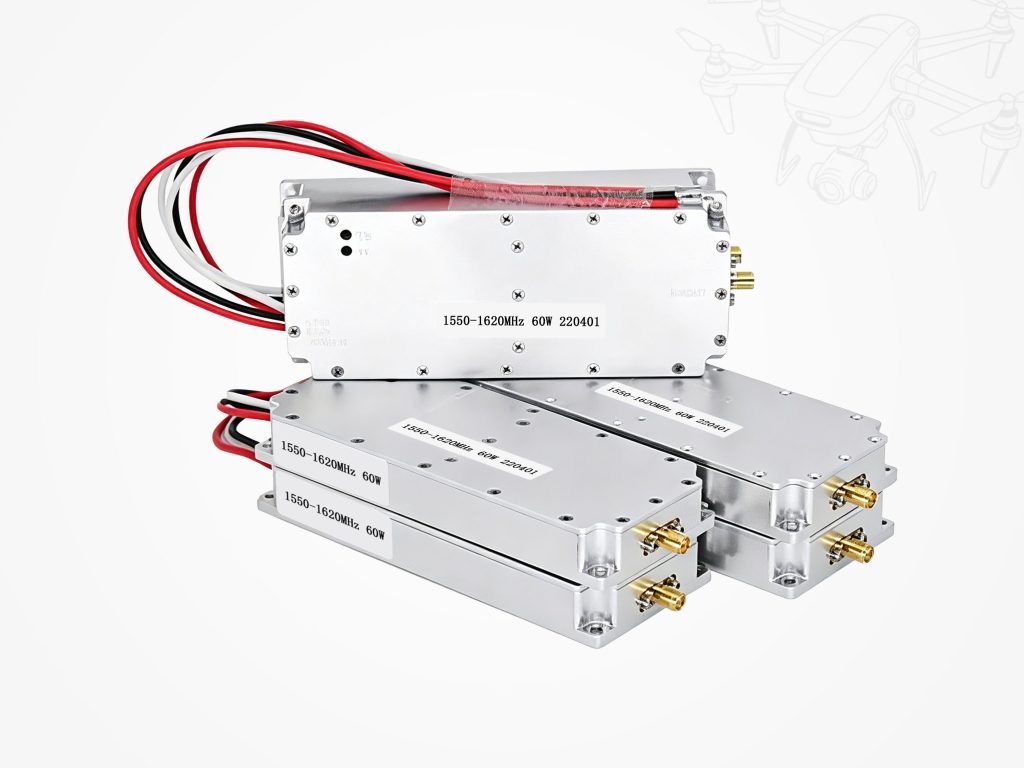
High-power 60W LDMOS drone jammer module, 1550-1620MHz, built-in sweep, 12V DC, 12A max, SMA, 138x50.5x17mm.

Technical Specifications
| Parameter | Specification | Notes |
| Frequency range | 1550~1620 MHz | Covers GPS L1 and GLONASS L1 bands |
| Output power | 60 W (CW equivalent) | LDMOS final stage, VSWR ≤2.0 tolerant |
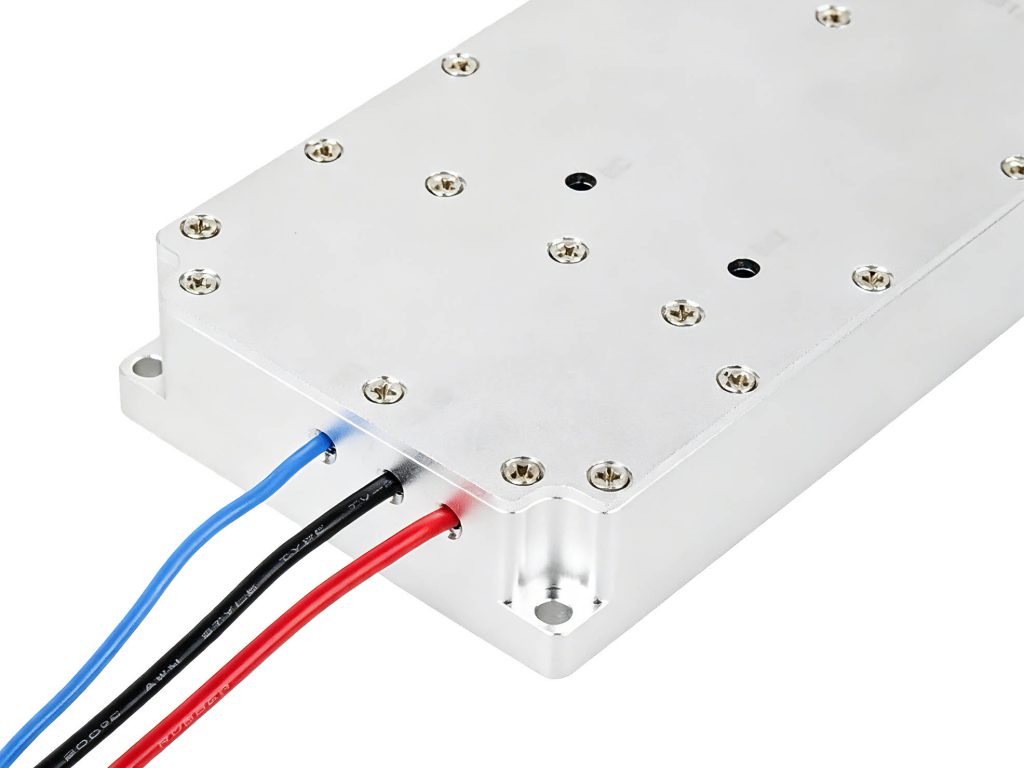
| Supply voltage | DC 12~14 V | 13.8 V nominal recommended |
| Current draw | ≤12 A at full power | Depends on VSWR and temperature |
| Modulation source | Built-in high-speed analog sweep | No external generator needed |
| Analog scan speed | 100 kHz to 1 MHz (configurable) | Factory-set; higher rates available |
| Input / output impedance | 50 Ω | SMA female connector |
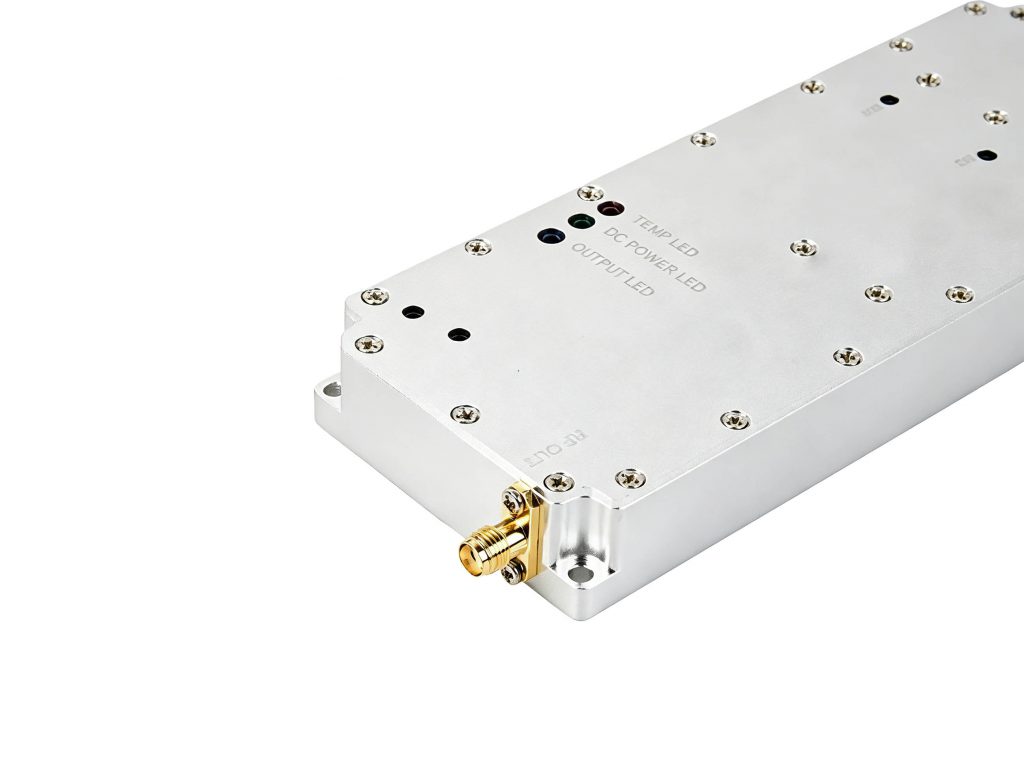
| Protection LEDs | Green: Power/Enable; Red: VSWR/Over-temp | Visual status monitoring |
| Operating temperature | -20~+65 °C | Baseplate temperature, forced-air for extremes |
| Dimensions (L×W×H) | 138 × 50.5 × 17 mm | Compact for integration |
| Weight | 0.22 kg | Lightweight aluminum construction |
| Base material | CNC aluminum alloy, black anodized | Excellent thermal dissipation |
Product Details
Uncompromising RF Power for Counter-UAS Operations
When defending sensitive airspace against unauthorized drones, raw RF power and precise frequency agility make all the difference. The 60W LDMOS drone jammer module is purpose-built to deny GPS and GLONASS navigation signals in the 1550-1620 MHz band. Using a rugged LDMOS final-stage amplifier, this module converts a 12-14V DC input into a formidable 60-watt continuous-wave equivalent jamming signal. Unlike many lower-power alternatives, the 60W LDMOS drone jammer module maintains high spectral purity and minimal harmonic emissions, ensuring your countermeasure stays focused on the target band without affecting adjacent communication services.
LDMOS Technology at the Core
The heart of this module is a laterally-diffused metal-oxide semiconductor (LDMOS) transistor. LDMOS devices are renowned for superior thermal stability, high gain, and excellent linearity under severe load mismatches. This design choice directly translates to reliable field performance: even if an antenna is accidentally disconnected or poorly matched (VSWR ≤ 2.0), the 60W LDMOS drone jammer module continues operating without catastrophic failure. Traditional bipolar or GaAs amplifiers would fold back sharply or fail under similar stress. Combined with 40% typical efficiency, the LDMOS stage reduces waste heat and allows the 138×50.5×17 mm aluminum enclosure to act as an effective heatsink when mounted on a larger metal chassis.
Frequency Range and High-Speed Analog Sweep
The module’s built-in high-speed analog sweep source is a key differentiator. It rapidly scans the entire 1550-1620 MHz window, covering both GPS L1 (1575.42 MHz) and GLONASS L1 (1598-1606 MHz) signals. Instead of simple single-tone jamming, the analog modulation creates a dynamic interference waveform that saturates the drone’s receiver front-end. The sweep rate is factory-configurable—typically adjustable from tens of kilohertz up to 1 MHz—allowing operators to tailor the jamming signature against frequency-hopping or multi-constellation receivers. Because the source is integrated directly on the same PCB as the LDMOS amplifier, phase noise and insertion losses are kept to a minimum. No external signal generator is required; simply supply DC power and a control signal to activate the 60W LDMOS drone jammer module.
Power, Current, and Efficiency
Electrical specifications must be understood for successful deployment. The module demands a well-regulated 12V to 14V DC supply capable of sustaining at least 12A at peak power. Under nominal 13.8V operation (common in vehicle installations), the module will draw around 11-12A depending on VSWR and temperature. The ≥40% efficiency figure is notable for a wideband jammer—it means less than 60% of input power is dissipated as heat, improving reliability in sealed enclosures. Users should select power cables with sufficient gauge to avoid voltage droop; a drop of even 0.5V can reduce RF output noticeably.
Control Interface and Integration
Remote activation is straightforward. A dedicated control pin accepts TTL levels: applying +5V or leaving the pin floating turns the jammer on, while connecting it to ground shuts the module down. This logic allows direct interfacing with drone detection radars, spectrum monitoring systems, or simple manual switches. The RF output is provided through a standard SMA female connector, ensuring compatibility with a wide range of antennas, circulators, and external filters. For fixed installations, connect the 60W LDMOS drone jammer module to a high-gain directional antenna to maximize EIRP.
Protection and Diagnostics
On-board monitoring is straightforward. A pair of LEDs provides status: green indicates power and enable, while red warns of high VSWR or over-temperature. Keep the baseplate temperature below +65°C; add forced-air cooling in high-ambient conditions. The module functions reliably from -20°C to +65°C.
Mechanical and Installation Notes
Weighing just 0.22 kg and measuring 138×50.5×17 mm, the module can be integrated into portable jamming backpacks, vehicle-mounted arrays, or fixed-site tower installations. The base material is CNC-machined aluminum alloy with a black anodized finish, offering corrosion resistance and excellent thermal conductivity. Mounting holes at the corners accept M3 screws. When building a multi-band jammer system, multiple units can be synchronized through external pulse triggers, though the 60W LDMOS drone jammer module itself is fully autonomous once powered.
Field-Proven Performance
In real-world tests against consumer and commercial-grade drones, a single 60W LDMOS drone jammer module paired with a 10 dBi panel antenna has consistently triggered return-to-home or forced-landing protocols within a radius exceeding 2 kilometers in open terrain. Because the module aggressively sweeps the entire GNSS L1 spectrum, drones that rely on multi-constellation receivers lose position fix almost instantly. The analog modulation prevents digital filtering algorithms from adapting, maintaining jamming effectiveness over prolonged engagements.
Maintenance and Longevity
With no moving parts and fully solid-state design, the module requires minimal maintenance. Periodically inspect the SMA connector and mounting surface. The LDMOS transistor is rated for over a decade of continuous operation. Integrated ESD protection and robust load tolerance ensure long service life, but always connect a proper antenna before power-up.
Conclusion
To sum up, this high-power 60W LDMOS jammer module simplifies GNSS denial deployments with its integrated sweep source and rugged design.
Frequently Asked Questions
Case Studies
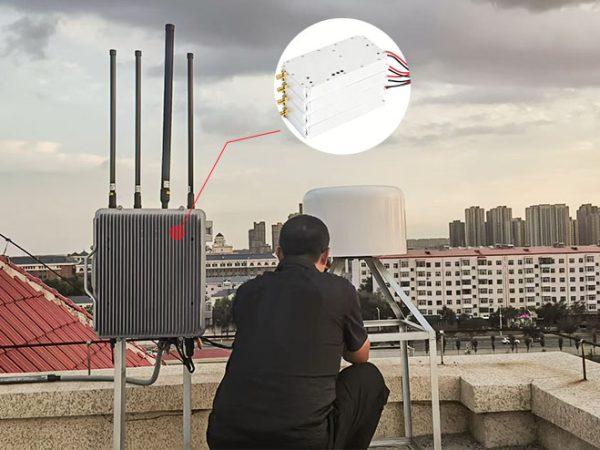
Heilongjiang Weather Center Completes Anti-Drone System Upgrade with Three High-Power Drone Jammer Modules

Tangshan Chem Plant Sealed Drone Gaps With 3 GaN Wideband Modules

How a National Prison Integrated Our Drone Jamming Module Into Their Fixed Counter-Drone System

Integrating Core RF Power: OEM Drone Jamming Module for Oil Refinery Security | Case Study
Send Us a Message
Related Products
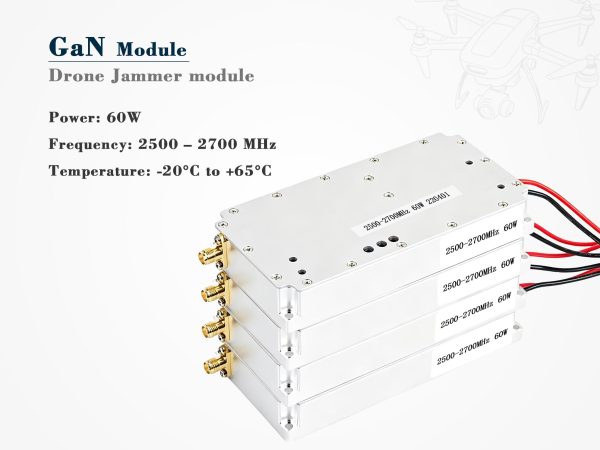
60W 2500–2700MHz GaN Drone Jammer Module
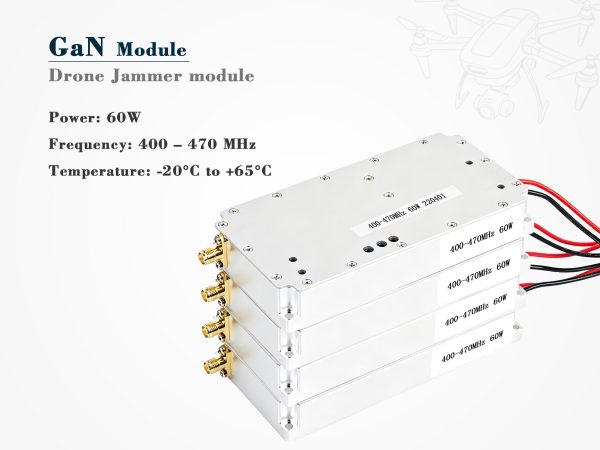
60W GaN Drone Jammer Module 400-470MHz

60W GaN Jamming Module: Compact 6900–7200MHz Counter-Drone Power