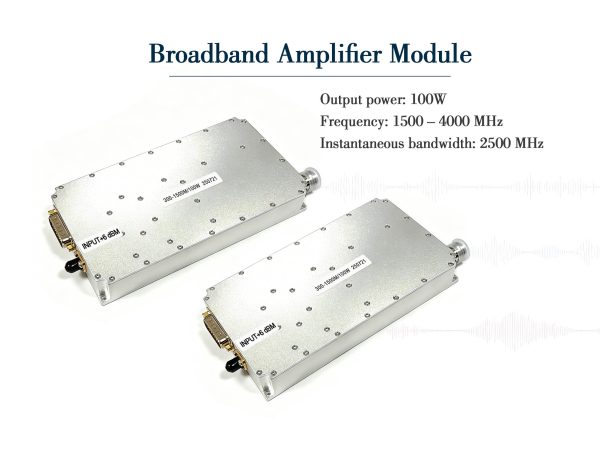
100W Broadband Amplifier Module – 6 to 8 GHz Wideband Power
100W broadband amplifier module, 6000–8000 MHz, 50±3 dB gain, 28% efficiency, 28-30V, 0.75kg, rugged GaN design for test and comms.
This broadband amplifier module fits well in test laboratories where wide‑band swept measurements are routine – you can cover the entire 6‑GHz band without swapping pallets. It also serves as a driver for high‑power TWT replacements, as a booster for satellite communication ground terminals, and as a general‑purpose gain stage for emerging 6‑GHz Wi‑Fi or 5G NR bands.
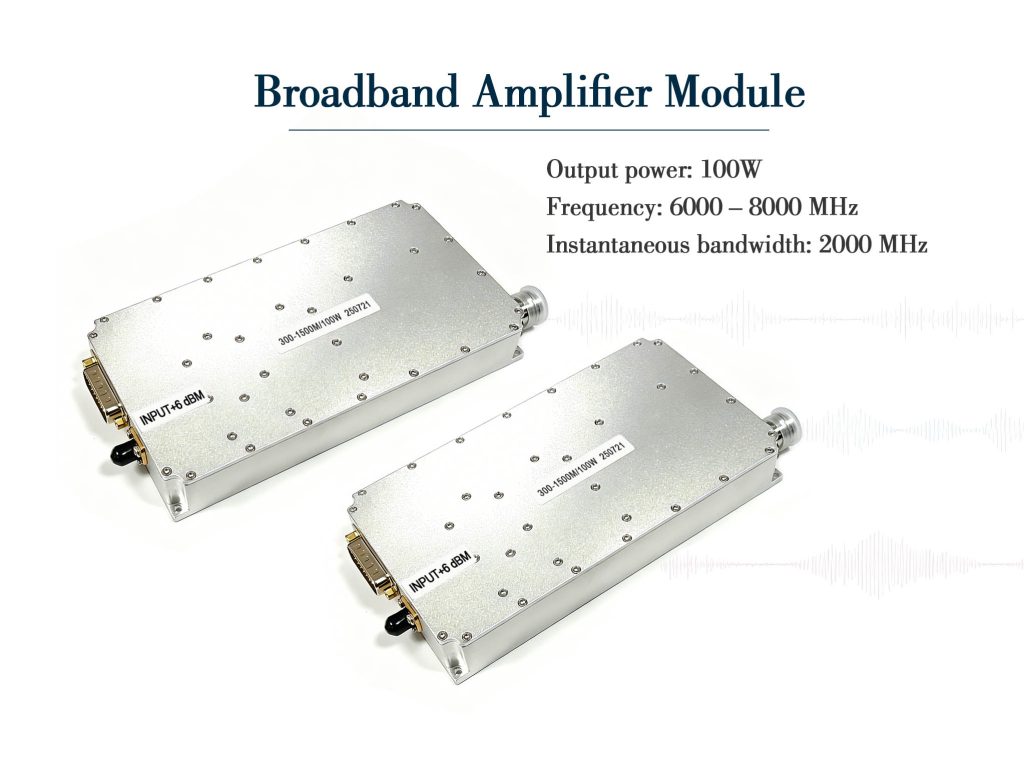
Technical Specifications
| Parameter | Value |
| Frequency range | 6000 – 8000 MHz |
| Instantaneous bandwidth | 2000 MHz |
| Peak output power (CW) | 100 W (typical) |
| Input drive power | -2 ±3 dBm (typical) |
| Max input without damage | 5 dBm |
| Power gain (at 0 dBm in) | 50 ±3 dB (typical) |
| Gain flatness | ±3 dB (max, full band) |
| Efficiency | 28% (typical, slight drop at high end) |
| Harmonics @100W | ≥10 dBc |
| Spurious level | ≥60 dBc |
| Input / Output VSWR | ≤2:1 |
| Operating voltage | 28 – 30 VDC |
| Current @100W | 11 A (typical) |
| Mass | 0.75 kg |
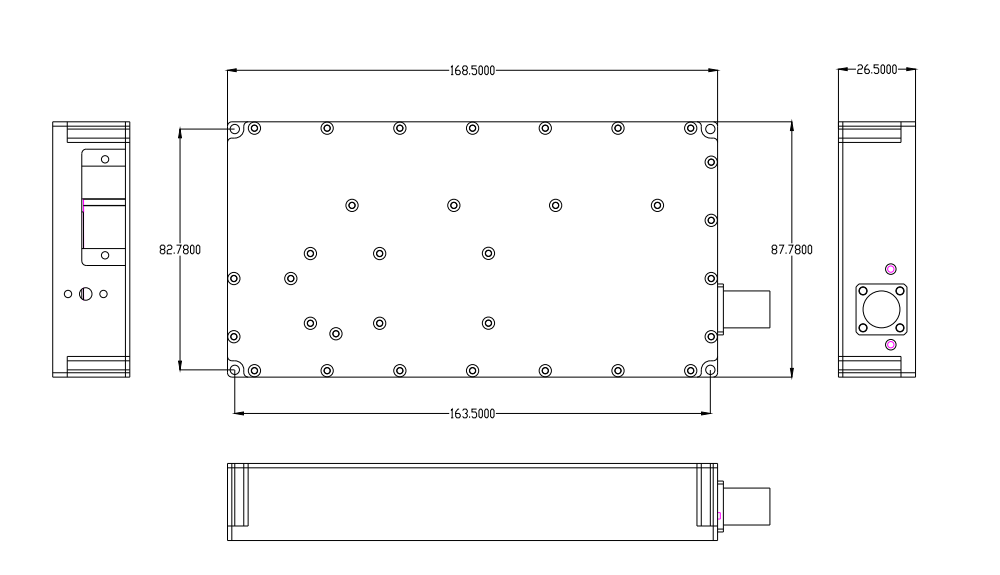
| Dimensions | 168.5 × 82.8 × 26.5 mm |
Product Details
Moving into the 6–8 GHz region presents a fresh set of challenges: higher path loss, tighter matching tolerances, and more heat concentrated in smaller structures. Yet many radar, satellite downlink, and 5G backhaul systems now demand exactly that range. This 100W broadband amplifier module steps up to the task, delivering a full 2000 MHz of instantaneous bandwidth without internal tuning or band switching – a straightforward solution for engineers who need consistent power across the upper S and lower C bands.
GaN-on-SiC Core for High-Frequency Toughness
The 100W broadband amplifier module uses a Class AB GaN design on silicon carbide substrate, which is particularly valuable at 6–8 GHz because parasitic losses in silicon would degrade gain significantly. The die is mounted on a copper sub-carrier, and the same patented thermal management as the lower‑band version ensures that heat spreads quickly away from the junction. Even with the baseplate at 50°C, the amplifier maintains its rated output – a necessity for continuous operation in compact enclosures.
Electrical Characteristics Across the Band
Supplied from a 28–30V DC rail, this unit produces 100 W CW typical at peak, drawing about 11 A at that level. Small‑signal gain is 50 ±3 dB with a 0‑dBm input, and the gain flatness is tighter than the lower‑band model: ±3 dB maximum over the entire 6000–8000 MHz span. That consistency saves you from external equalisation networks. Harmonics remain at least 10 dBc below the carrier at full power, and spurious products are suppressed by 60 dBc or better, preserving spectral purity for sensitive receive chains or measurement setups.
Both input and output VSWR are specified at ≤2:1 into 50‑ohm systems, so you can cascade this module with other components without worrying about reflected power. The maximum input drive without damage is 5 dBm – a safe margin, but we recommend staying within the typical -2 ±3 dBm range for optimal linearity and efficiency.
Mechanical Footprint and Thermal Reality
Physically, the module shares the same compact dimensions as the 1.5–4 GHz sibling: 168.5 × 82.8 × 26.5 mm and 0.75 kg. That uniformity helps if you are swapping bands in the same rack. However, at 6–8 GHz, the higher operating frequency means more RF losses in connectors and internal traces, so the efficiency drops slightly to 28% typical – still respectable for a GaN Class‑AB design covering a 2‑GHz octave. For continuous CW operation, active cooling (forced air or liquid cold plate) is strongly advised, as the 100‑W dissipation demands a good thermal path.
Practical Applications and System Integration
This broadband amplifier module fits well in test laboratories where wide‑band swept measurements are routine – you can cover the entire 6‑GHz band without swapping pallets. It also serves as a driver for high‑power TWT replacements, as a booster for satellite communication ground terminals, and as a general‑purpose gain stage for emerging 6‑GHz Wi‑Fi or 5G NR bands. The instantaneous bandwidth supports frequency hopping and chirp waveforms, making it suitable for radar simulation and EW jamming test beds.
Design Considerations for 6–8 GHz Operation
At these frequencies, every millimeter of trace matters. The module’s internal matching is optimized for 50‑ohm environments, but external cabling and adapters should be low‑loss and phase‑stable. Input drive level should be kept close to 0 dBm for best gain stability; too low and you lose output power, too high and you may force the amplifier into compression prematurely. Also, because harmonic content at 12–16 GHz may interfere with downstream components, a low‑pass filter after the output is often beneficial if your system has strict out‑of‑band rejection requirements.
Reliability and Ruggedness
The housing is machined from aluminum alloy with a corrosion‑resistant finish, and the internal epoxy‑encapsulated circuitry withstands vibration and thermal cycling per military‑grade standards. The GaN technology inherently offers higher breakdown voltage and better ruggedness than LDMOS or GaAs, so accidental load mismatches or momentary overdrive are less likely to cause catastrophic failure – though we still advise keeping VSWR within the specified limit for long‑term reliability.
Why This 100W Broadband Amplifier Module Over Others?
Competing designs in this frequency band often sacrifice bandwidth for efficiency, or they use complex multi‑stage tuning that narrows the useful range. This 100W broadband amplifier module takes the opposite approach: it prioritises flat gain and full 2‑GHz coverage, accepting a modest efficiency trade‑off. For applications that require sweeping or multiband agility, that trade‑off is well worth it. The rugged construction and consistent thermal behaviour make it a dependable workhorse for both lab and field deployments.
Final Thoughts
If your system needs a solid 100 watts from 6 to 8 GHz without band‑specific hardware changes, this 100W Broadband Amplifier module offers a clean, proven solution. It is not the cheapest on the market, but the combination of bandwidth, power flatness, and mechanical durability reduces integration effort and long‑term maintenance costs. For RF engineers who value simplicity and repeatability, this unit is a strong candidate.
Frequently Asked Questions
Case Studies
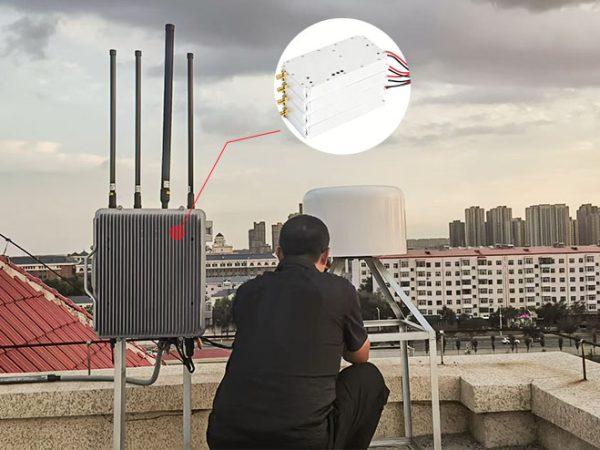
Heilongjiang Weather Center Completes Anti-Drone System Upgrade with Three High-Power Drone Jammer Modules

Tangshan Chem Plant Sealed Drone Gaps With 3 GaN Wideband Modules

How a National Prison Integrated Our Drone Jamming Module Into Their Fixed Counter-Drone System

Integrating Core RF Power: OEM Drone Jamming Module for Oil Refinery Security | Case Study
Send Us a Message
Related Products
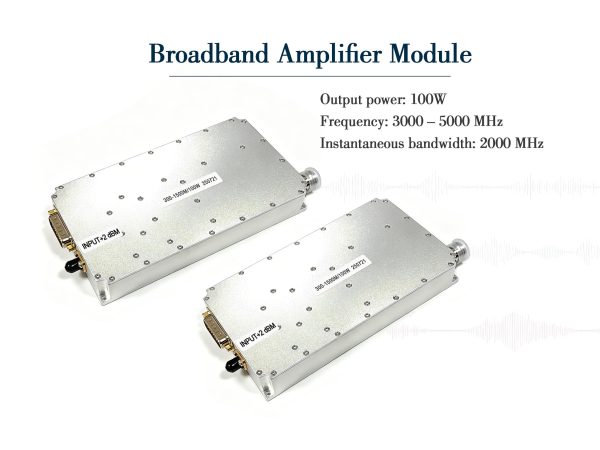
High-Power 100W GaN Broadband Amplifier Module 3-5 GHz
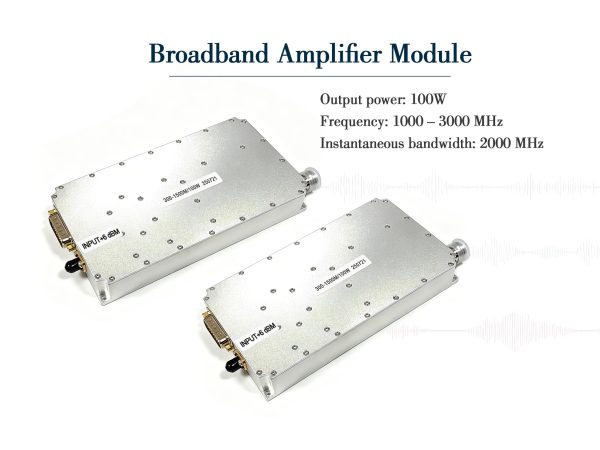
100W GaN Broadband Amplifier Module 1–3 GHz
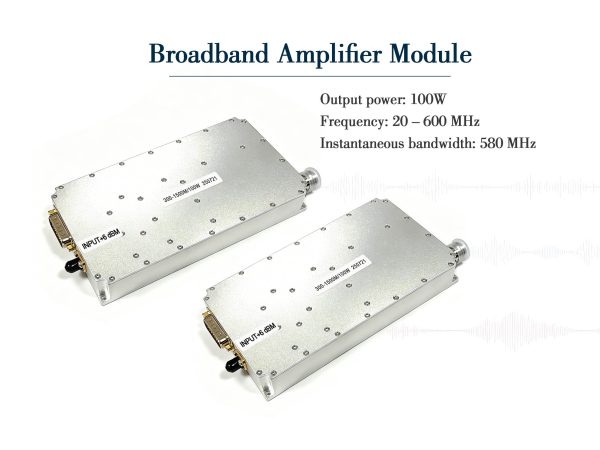
100W Broadband Amp Module – 20 to 600 MHz Wideband Power for HF/VHF/UHF