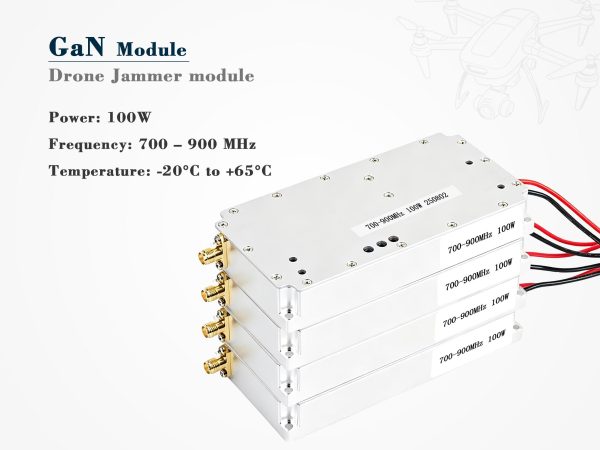
100W Drone Jammer Module 400-500MHz LDMOS Amplifier
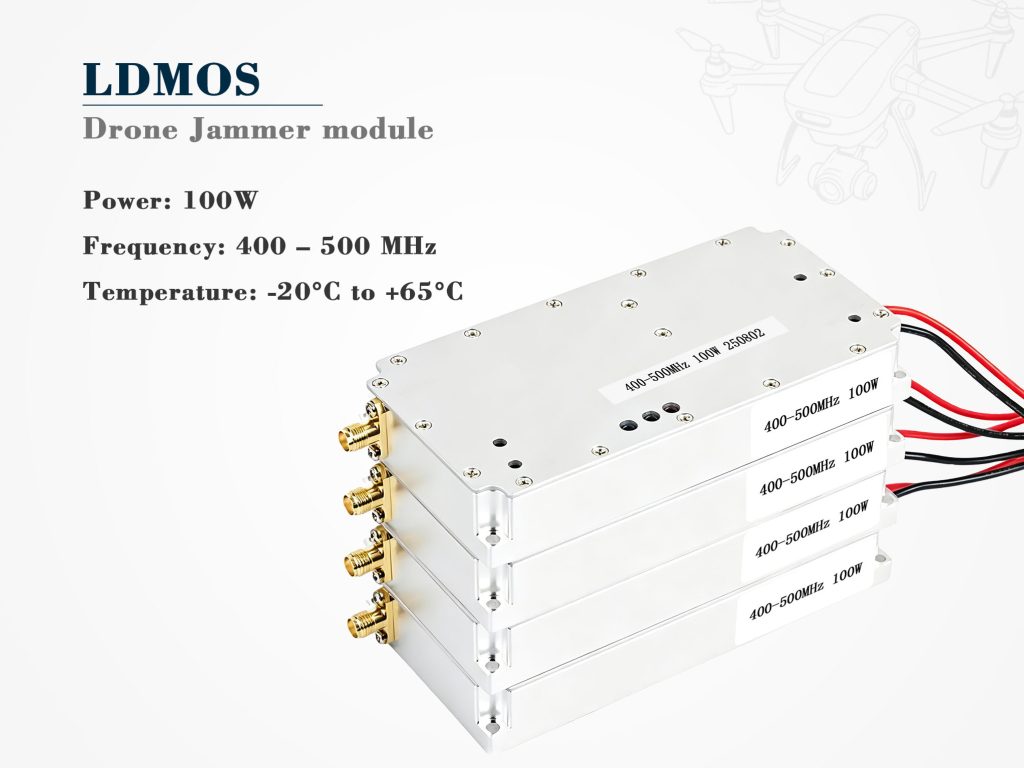
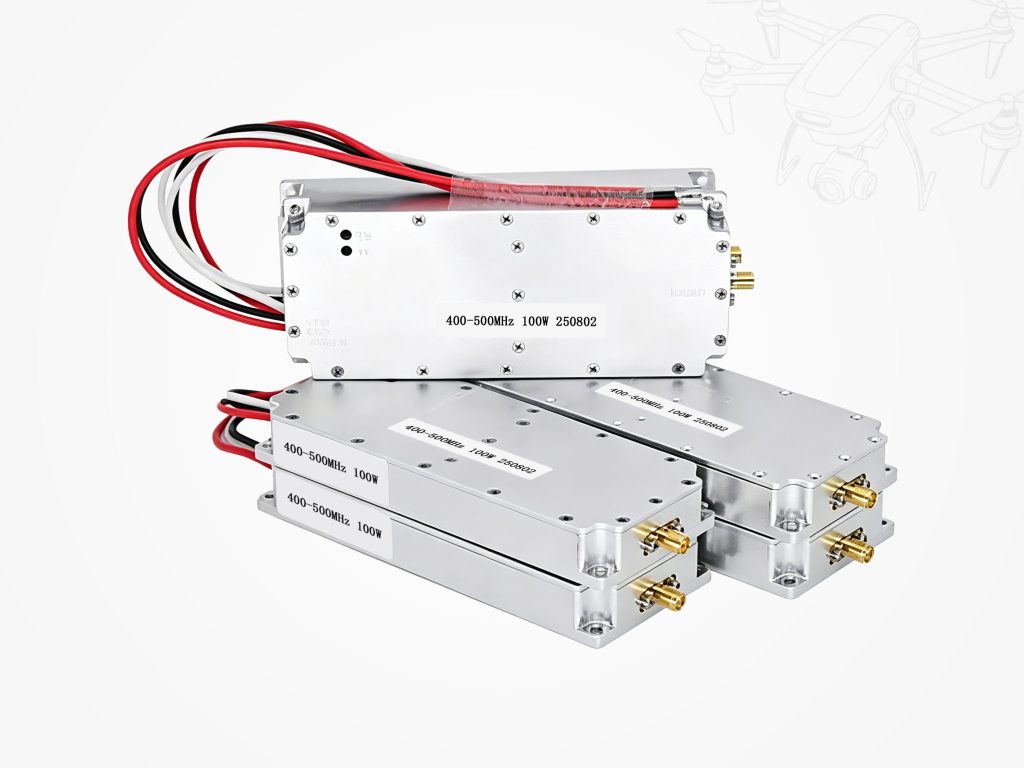
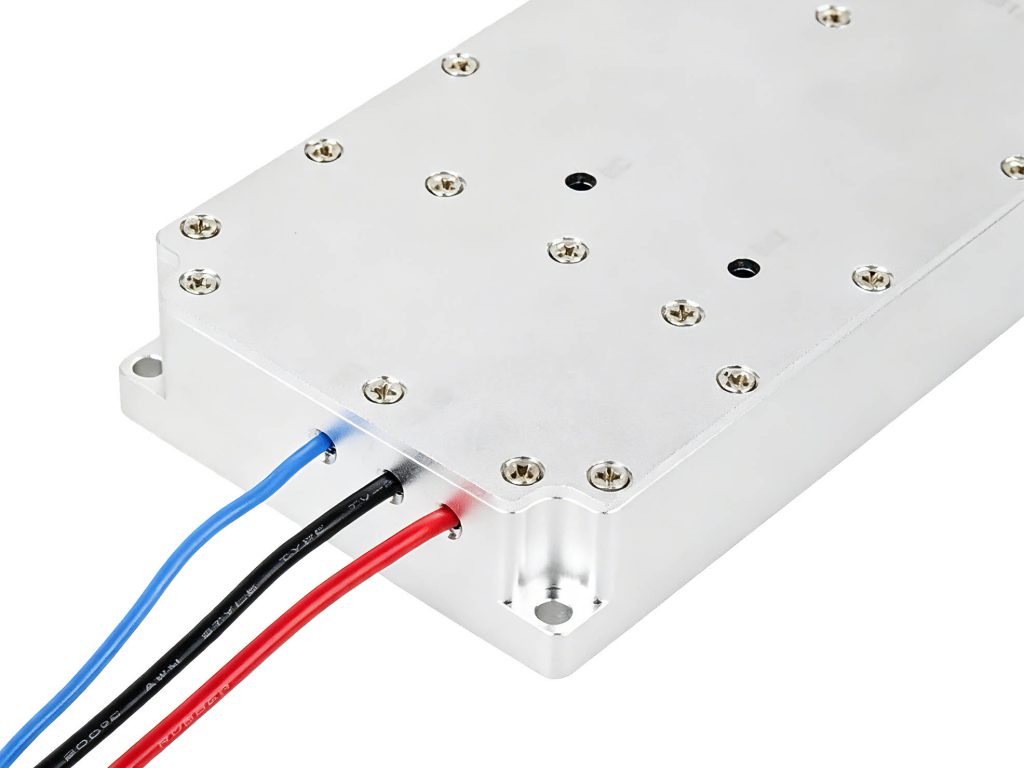
100W drone jammer module with LDMOS, 400-500MHz band, built‑in noise modulation source, 28V 9.2A, −20~+65°C, compact 150×80×22mm, 800g. Customizable scan speed and signal source.
Technical Specifications
| Parameter | Specification | Notes |
| Frequency range | 400 – 500 MHz | Lower UHF band for command links |
| Output power | 100 W (50±1 dBm) | Typical, CW or modulated |
| Supply voltage | DC 28 – 32 V | Nominal 28V recommended |
| Current draw | ≤ 9.2 A | At full 100W output |
| Modulation source | Built‑in high‑speed noise modulation | Customizable: VCO, DDS, SDR |
| Analog scan speed | 270 kHz (standard) | Customizable 100–500 kHz |
| Input / output impedance | 50 Ω | N‑type female output connector |
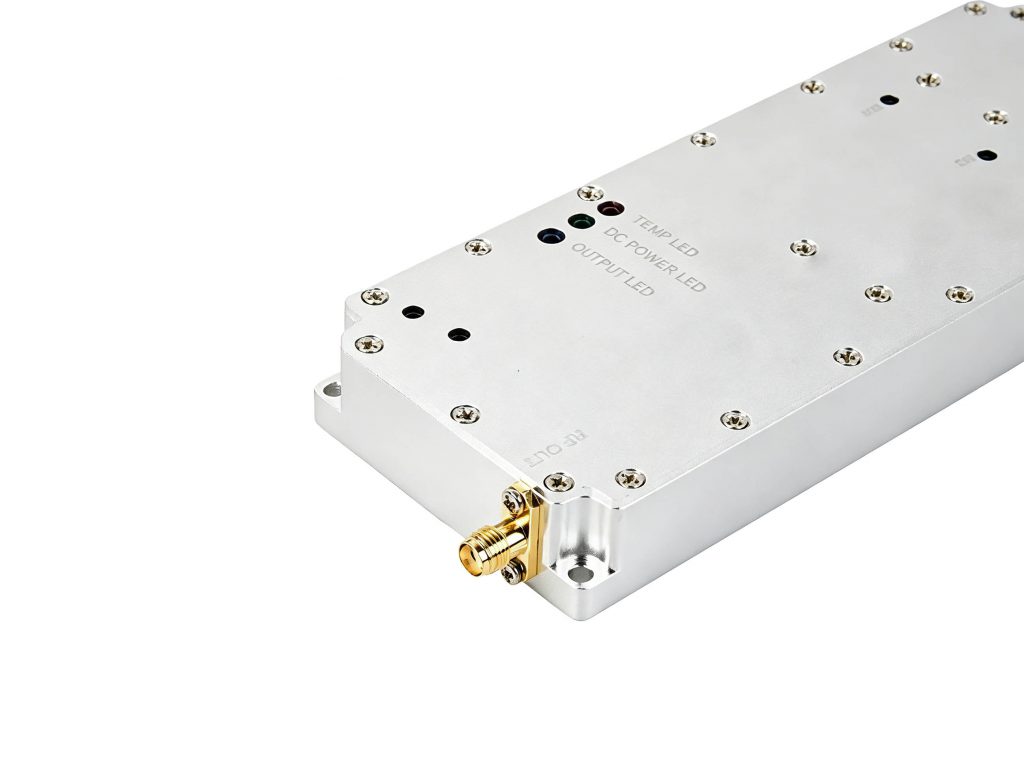
| Protection LEDs | Power on, overvoltage, overtemperature | Visual fault indication |
| Operating temperature | −20 °C to +65 °C | Derate above 50°C for continuous use |
| Dimensions (L×W×H) | 150 × 80 × 22 mm | Compact, board‑mount design |
| Weight | 800 g | Light enough for portable systems |
| Base material | LDMOS (Laterally Diffused MOS) | High‑efficiency, linear amplifier |
Product Details
Powerful Jamming for the Lower UHF Band
When it comes to disrupting drone communications, most attention goes to 2.4GHz and 5.8GHz. However, many tactical and long‑range UAVs rely on lower UHF frequencies around 400–500MHz for command and control links. The 100W drone jammer module operating in this band fills a critical gap for security teams facing these less common but equally dangerous threats.
This module delivers a solid 100 watts of output power across the 400‑500MHz range, effectively saturating downlink and uplink channels used by various military‑grade and custom‑built drones. With its LDMOS (Laterally Diffused Metal Oxide Semiconductor) architecture, the amplifier combines high gain with robust linearity, ensuring that the jamming signal remains clean and effective even at maximum output.
The module is designed for integration into fixed, vehicle‑mounted, or portable counter‑UAV systems. Its compact footprint (150×80×22mm) and relatively light weight (800g) make it suitable for deployments where space and payload are limited. Despite its size, the unit handles continuous duty cycles with proper heat management, thanks to the efficient LDMOS design and wide operating temperature range of −20°C to +65°C.
Built‑In Noise Modulation and Customization Options
One of the standout features of this 100W drone jammer module is its integrated high‑speed noise modulation source. Unlike swept‑frequency or fixed‑carrier jammers, noise modulation produces a broad, unpredictable interference pattern that is extremely difficult for drone receivers to filter out. This random‑like signal covers the entire 400‑500MHz band effectively, degrading both data and telemetry links.
The module’s analog scan speed is factory‑set at 270 kHz, which strikes a good balance between coverage speed and spectral density. But flexibility is built in – the scan speed can be customized from 100 kHz to 500 kHz according to specific operational requirements. Furthermore, the internal signal source is not locked to noise only; it can be replaced or augmented with VCO (Voltage‑Controlled Oscillator), DDS (Direct Digital Synthesis), or even SDR (Software‑Defined Radio) front‑ends upon request. This level of customization makes the module adaptable to evolving threat profiles and experimental setups.
Robust Power and Protection Circuitry
Powering the module is straightforward – it accepts DC input from 28V to 32V, with a nominal 28V recommended. At full 100W output, the current draw stays at or below 9.2A, which is remarkably efficient for this power class. The LDMOS technology contributes to this efficiency, reducing wasted heat and easing the burden on power supplies and cooling systems.
Three LED indicators provide real‑time status: power on, overvoltage, and overtemperature. These visual alerts help operators quickly diagnose issues before they escalate. The module also features built‑in protection against reverse polarity and load mismatch, though a well‑matched antenna (50Ω N‑female connector) is always advised for optimal performance.
The output interface uses a durable N‑type female connector, which offers lower loss and better mechanical stability compared to smaller connectors – especially important when handling 100W of RF power. The connector is widely compatible with standard 50‑ohm cables and antennas used in professional jamming systems.
Real‑World Deployment Scenarios
The 400‑500MHz band is not as crowded as 2.4GHz, but it is used by specialized drones operating in remote areas, military environments, or beyond‑line‑of‑sight missions. This 100W drone jammer module is ideal for:
-
Border security – disrupting drones used for surveillance or smuggling across borders.
-
Military forward operating bases – protecting troops from drone‑launched munitions.
-
Offshore platforms and vessels – countering drone threats in maritime environments.
-
Critical infrastructure in rural areas – where long‑range UAVs often operate.
The high output power ensures a substantial effective range, even when the target drone uses directional antennas or elevated gain receivers. The module’s customizable signal source also allows operators to tailor the jamming waveform to specific drone protocols, increasing the probability of successful disruption.
Installation and Operational Tips
Integrating this 100W drone jammer module into your system is relatively simple. Ensure that your power supply can deliver at least 10A continuously at 28–32V, with low ripple to avoid introducing spurious emissions. Mount the module on a heatsink or with forced air cooling, as 100W output will generate significant heat during prolonged operation – the overtemperature LED will warn you if cooling is inadequate.
For antenna selection, a broadband 400‑500MHz antenna with VSWR below 2.0 is recommended. The N‑female connector provides a secure, low‑loss interface; use high‑quality RF cables and keep runs as short as practical. If you plan to operate in extreme cold or heat, note the −20°C to +65°C range – we recommend derating continuous power above 50°C ambient.
Finally, take advantage of the customization options: discuss your specific scan speed and modulation type with the supplier before ordering. The module can be pre‑configured to match your jamming strategy, saving you time on firmware development.
Frequently Asked Questions
Case Studies
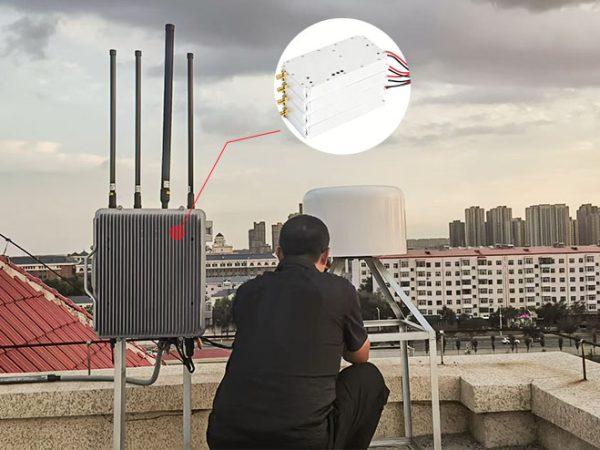
Heilongjiang Weather Center Completes Anti-Drone System Upgrade with Three High-Power Drone Jammer Modules

Tangshan Chem Plant Sealed Drone Gaps With 3 GaN Wideband Modules
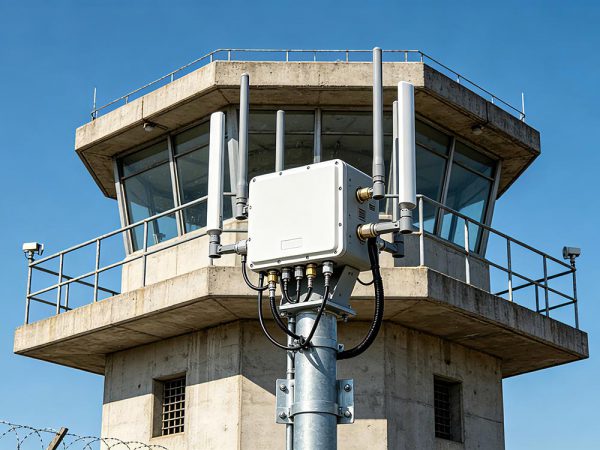
How a National Prison Integrated Our Drone Jamming Module Into Their Fixed Counter-Drone System

Integrating Core RF Power: OEM Drone Jamming Module for Oil Refinery Security | Case Study
Send Us a Message
Related Products
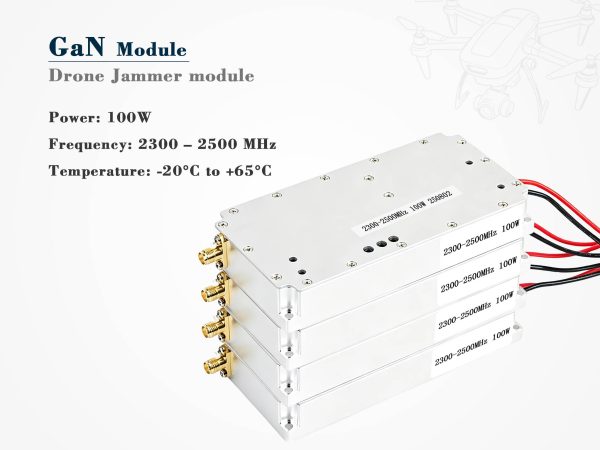
2300–2500 MHz 100W GaN Counter-UAV Module
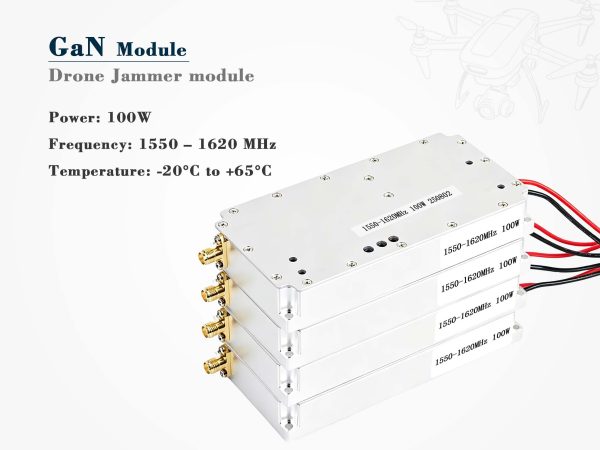
100W GaN Drone Jamming Module 1550–1620MHz
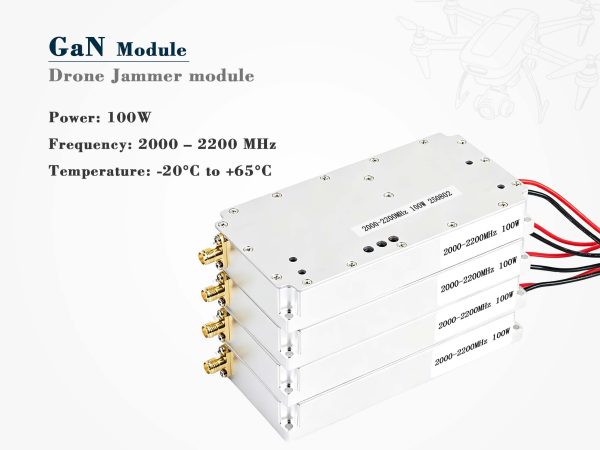
100W 2000–2200MHz GaN Analog Drone Interference Module