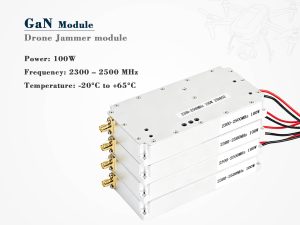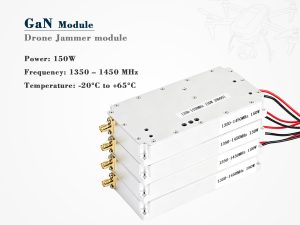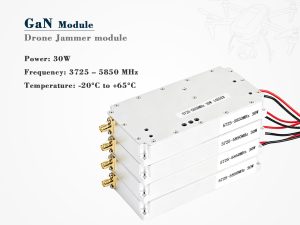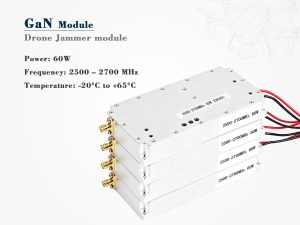
Let’s face it — narrowband just doesn’t cut it anymore. When you need to cover everything from VHF comms to 6 GHz WiFi in a single chain, that’s where a wideband module steps in. These are not your grandfather’s fixed-frequency amplifiers. A proper wideband module can sweep across multi-octave bandwidths, amplify or generate signals with minimal retuning, and handle multiple threats or protocols simultaneously. They’ve become the backbone of modern electronic warfare, testing labs, and even some industrial heating rigs. But before you bolt one into your system, you need to understand what separates a usable module from a paperweight.

The Core Idea
A wideband module isn’t a single circuit — it’s a carefully designed RF chain built around distributed amplifiers, GaN or LDMOS transistors, and broadband matching networks. Some modules are pure amplifiers that take a low-level signal and boost it across a 10:1 bandwidth. Others are complete signal sources with integrated VCOs and PLLs that spit out a clean tone from 10 MHz to 6 GHz. The goal is always the same: flat gain or output power across the entire range, minimal spurs, and the ability to hop from one frequency to another almost instantly.
Where You’ll Find Wideband Modules
Here’s a look at where wideband modules are doing the heavy lifting right now.
| Application Field | Typical Use | Frequency & Power Highlights |
|---|---|---|
| Counter-UAV / Drone Jamming | Multi-band exciter or amplifier stage | 433 MHz, 915 MHz, 2.4 GHz, 5.8 GHz; 20 W to 100 W |
| Electronic Warfare Training | Radar and comms jamming simulation | 0.5–18 GHz, pulse-capable |
| EMC / EMI Compliance Testing | Swept interference generation for immunity tests | 80 MHz–6 GHz, +10 dBm typical |
| Broadband Communications | Local oscillator or transmit driver in SDRs | 10 MHz–6 GHz, low phase noise |
| Industrial & Scientific | RF plasma, induction heating, and ISM processing | 13.56 MHz, 27.12 MHz, 40.68 MHz; kW-level modules |
In counter-drone systems, a wideband amplifier module is what sits right after the signal source, taking a +10 dBm swept tone and pushing it to 20 W or more before the antenna. Without a true wideband design, you’d need separate modules for each frequency band — and that means size, weight, and power budgets explode.
Specs That Define Real-World Usability
A wideband module’s datasheet can look impressive on the surface, but these are the numbers that actually dictate whether it’ll survive in the field.
Gain Flatness vs. Peak Power
Don’t get hypnotized by “20 W max.” Look at the power curve from 10 MHz to 6 GHz. A module that delivers 20 W at 900 MHz but craters to 8 W at 5.8 GHz is barely a wideband device. Aim for ±2 dB flatness across the operational band. Also check the input return loss — poor input matching can make a module oscillate at certain frequencies and destroy itself.
Harmonic Suppression and Linearity
A wideband module with lousy harmonics will interfere with your own systems. When running a 2.4 GHz jammer, a strong second harmonic at 4.8 GHz can step on your 5.8 GHz channel. Look for harmonic suppression below -20 dBc, and for digital modulation, check the adjacent channel leakage ratio (ACLR) or EVM figures if listed.
Thermal Management
Wideband GaN modules can gulp 5–10 A at 28 V and turn 60% of that into heat. If the module doesn’t have a copper coin base or an integrated heat spreader, you’re in for a thermal shutdown right when things get interesting. Continuous operation at full power across the full bandwidth demands active cooling — a small fan can be a lifesaver.
Control and Protection
Most modules speak SPI or UART these days. You want the ability to adjust gain stages, enable/disable bands, and read back VSWR alarms. Built-in protection against over-temperature, over-current, and high VSWR is a must if you’re bolting an expensive antenna to the output. Some modules even let you set a power foldback threshold automatically.
Integration Notes
When designing a wideband module into your system, pay attention to the connectors and layout. A module rated to 6 GHz needs SMA or SMP connectors; cheap UHF connectors will create impedance bumps and kill performance. Keep the DC supply lines choked and decoupled — low-frequency oscillations can sneak in through the bias tee.
Don’t Overlook the Obvious
A wideband module is only as good as its weakest link. Pair it with a mismatched antenna and you’ll get nothing but reflected power. Pair it with a noisy signal source and you’ll amplify garbage. But when you get the whole chain right — clean source, flat amplifier, and a well-matched broadband antenna — the module becomes a force multiplier. Whether you’re chasing rogue drones, certifying an IoT product for EMC, or pumping RF into a plasma chamber, the right wideband module makes the difference between a system that barely works and one that dominates the spectrum.