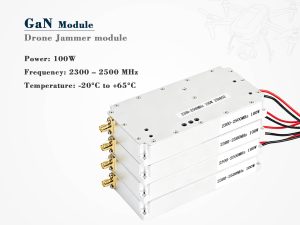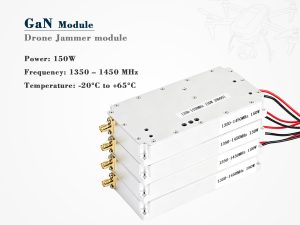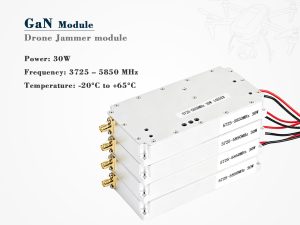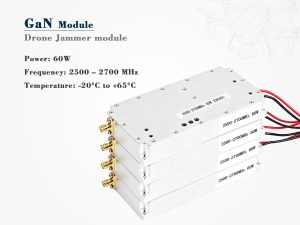
If you’ve spent any time researching counter-UAV technology, the term “drone jammer module” keeps popping up. It’s not just military jargon—it’s the core building block behind most portable and fixed anti-drone systems. From critical infrastructure protection to stopping prison contraband drops, these modules are actively shaping the low-altitude security landscape.

What Exactly Is a Drone Jammer Module?
A drone jammer module is an RF transmitter designed to disrupt the communication link between a drone and its pilot, or to overpower satellite navigation like GPS. Most drones rely on ISM bands—2.4 GHz and 5.8 GHz for control/video, plus 433 MHz or 915 MHz for telemetry. A quality module sweeps these frequencies with enough power to break the link. Lose the signal, and the drone typically enters failsafe: return-to-home, land immediately, or hover until the battery dies.
Real-World Deployments
You don’t need to look far. Jammer modules have moved beyond the military into the hands of law enforcement, airport authorities, and event security.
-
Airports & Aviation: After the Gatwick incident, airports worldwide integrated jammer modules on pan-tilt mounts. Linked to radar or RF sensors, they activate within seconds, safeguarding airspace without shutting down the airport.
-
Correctional Facilities: Drones dropping contraband are a huge problem. Fixed modules around the perimeter create an RF bubble that triggers a forced landing well before the drone reaches the fence.
-
VIP Protection & Public Events: Backpack or vehicle-mounted systems use compact, high-power modules to jam GPS L1, 2.4 GHz, and 5.8 GHz simultaneously, neutralizing drones carrying cameras or dangerous payloads.
-
Military & Border Control: Vehicle-mounted and man-portable modules are integrated into electronic warfare suites, jamming both off-the-shelf and custom FPV attack drones. Direction-finding arrays often help locate the pilot.
Key Specs That Matter
Not all drone jammer modules are equal. When sourcing one, pay close attention to these parameters.
Frequency Coverage:
The first thing to verify is the module’s band coverage. Here’s a rundown of the most targeted frequencies:
| Frequency Band | Primary Drone Use | Jamming Effect |
|---|---|---|
| 433 MHz | Long-range telemetry, DIY builds | Datalink loss, return-to-home triggered |
| 915 MHz | US ISM telemetry, some FPV control | Control/video disruption |
| 2.4 GHz | Mainstream drone control & FPV video | Immediate loss of control signal |
| 5.8 GHz | HD video downlink, secondary control | Video blackout, potential control loss |
| 1.575 GHz (GPS L1) | GNSS positioning | Forces ATTI mode or auto-landing |
Output Power and Integration
Don’t trust exaggerated range claims. In a cluttered urban setting, a 10W module might struggle past 300 meters. For open-field protection up to 1 km, you’ll want at least 50W per band. Some multi-band modules combine everything into one RF chain, which saves space but can reduce per-channel power—always check the datasheet. Cooling is another factor: passive heatsinks handle short bursts, but continuous jamming above 50W usually requires active fan cooling.
When integrating into a larger system, the module typically links with radar or RF detectors, firing only when a threat is confirmed. This minimizes collateral interference and preserves the element of surprise. The sensor-to-jammer loop is now standard in most fixed-site installations.
Form Factor and Installation
The physical design of a drone jammer module matters more than you’d think. They come as bare PCB boards for OEMs wanting custom enclosures, or as sealed, weatherproof units with MMCX/SMA connectors. If you’re building a man-portable gun-style jammer, weight and battery draw are critical—a 20W multi-band module under 2 kg is ideal. For fixed setups, PoE-powered modules with IP-based remote management let security teams adjust bands and power from a control room. Some advanced units offer programmable band selection, essential for avoiding interference with friendly comms in urban deployments.
The Legal Gray Area
A word of caution: in most countries, operating a jammer without authorization is illegal. Drone jammer modules count as radio transmission equipment and can disrupt everything from Wi-Fi to emergency services. Sales are normally restricted to government agencies, military, and licensed security contractors. Even possession without the right paperwork can get you in serious trouble. Always check with your national telecom regulator before buying or deploying.
Wrapping Up
The drone jammer module has evolved from a bulky single-band disruptor into a multi-band, network-integrated tool. Whether you’re securing an airport, a prison, or a battlefield, understanding their real-world use and spec sheet is the first step in building an effective counter-drone shield. As drones get faster and smarter, these modules will only become more critical—and more tightly regulated.