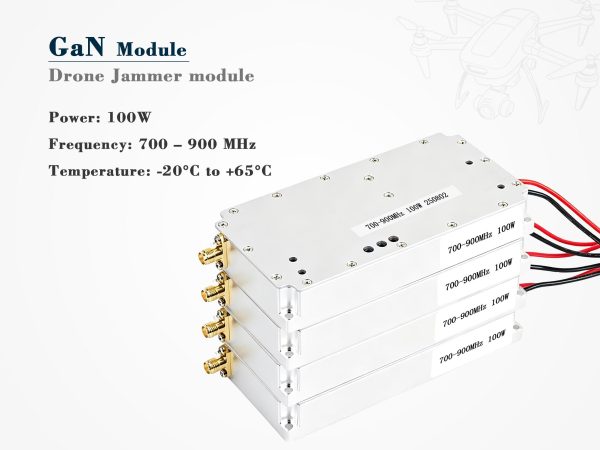
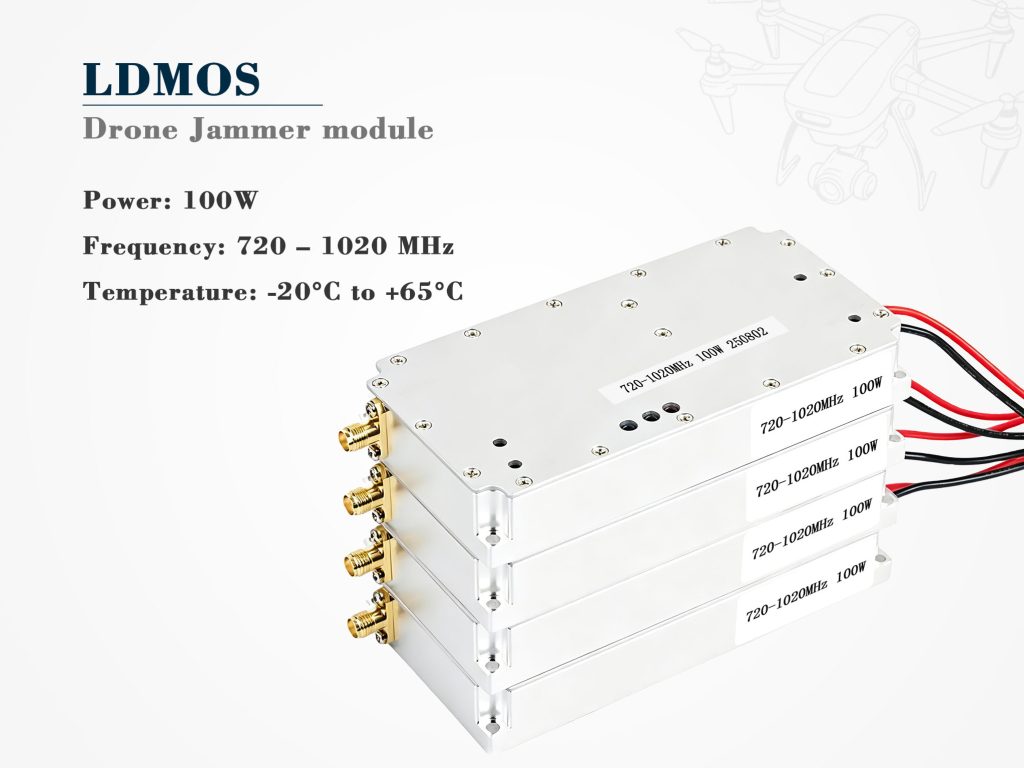
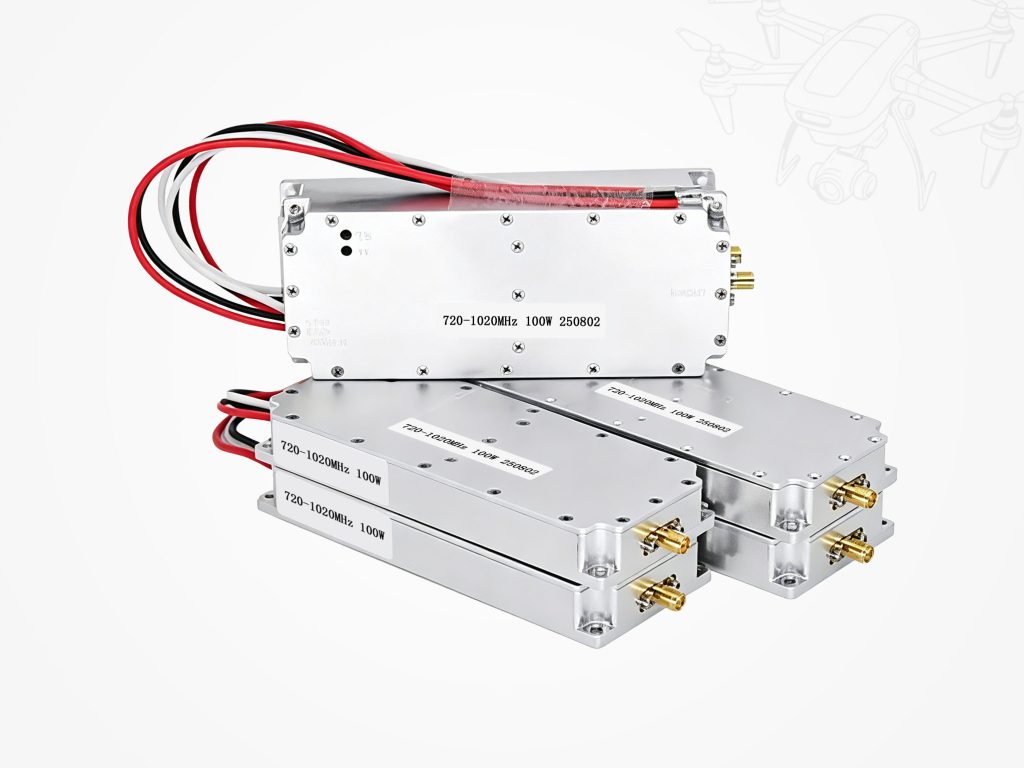
100W LDMOS Drone Jammer Module 720-1020MHz – Customizable
100W drone jammer module covering 720-1020MHz with 50±1dBm output, 28V, ≤9.2A, built‑in noise source, 270KHz scan, and compact 150×80×22mm. Optional VCO/DDS/SDR front‑ends.
Technical Specifications
| Parameter | Specification | Notes |
| Frequency range | 720 – 1020 MHz | Fixed band; other bands available on request |
| Output power | 50 ± 1 dBm (100W) | Measured at 28V, CW mode |
| Supply voltage | 28 – 32 V DC | Nominal 28V; absolute max 33V |
| Current draw | ≤ 9.2 A | At full 100W output |
| Modulation source | Built‑in high‑speed noise generator | Options: VCO, DDS, SDR |
| Analog scan speed | 270 kHz (default) | Customisable 100‑500 kHz |
| Input / output impedance | 50 Ω | N‑type female output; internal input |
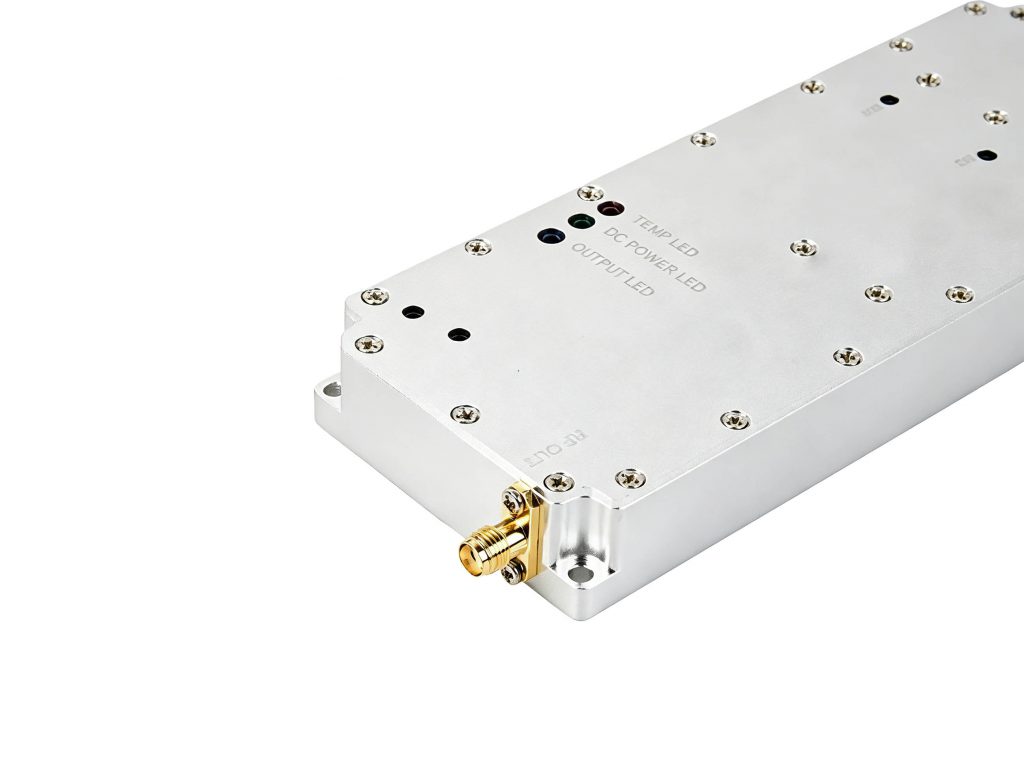
| Protection LEDs | Power, over‑voltage, over‑temperature | Visual status indicators |
| Operating temperature | ‑20 ~ +65 °C | Ambient, with adequate heatsinking |
| Dimensions (L×W×H) | 150 × 80 × 22 mm | Excluding connectors |
| Weight | 800 g | Approximate net weight |
| Base material | Aluminium alloy | Milled, anodised finish |
Product Details
Broader Band, Broader Reach
Moving beyond the traditional 700‑840MHz slice, this updated LDMOS drone jammer module now covers the full 720‑1020MHz range. That extra bandwidth matters – many commercial drones and remote‑controlled systems have shifted their control and telemetry channels upward, especially in regions where 800‑900MHz is heavily used for cellular services. With this module, you’re not just jamming a narrow sliver; you’re hitting the entire upper UHF band that hosts a mix of old‑school RC links and newer frequency‑hopping spread‑spectrum protocols. The output remains a genuine 100W (50±1 dBm), which is enough to overwhelm most drone receivers within a kilometre radius, depending on antenna gain and line‑of‑sight conditions. Whether you’re protecting a stadium, a military convoy, or a critical infrastructure site, this wider coverage gives you a tactical edge.
Power and Thermal Realities
Like its predecessor, this drone jammer module runs on a nominal 28V DC (acceptable range 28‑32V) and draws up to 9.2A at full tilt. That’s around 260W of DC input for 100W of RF output – typical for a Class‑AB LDMOS design. The operating temperature window of ‑20 to +65°C ensures you can deploy it in desert heat or freezing mountain passes without derating. However, 100W doesn’t come for free; you’ll need to bolt this 800g aluminium brick onto a heatsink with adequate surface area. We’ve seen users pair it with a 120mm fan‑cooled CPU cooler, and that keeps the case temperature well below 60°C even during continuous key‑down tests. The on‑board protection circuitry is straightforward: three LEDs flag power‑on, over‑voltage (above 32V), and over‑temperature. When either fault occurs, the module backs off the drive level to save the transistor, then recovers automatically once conditions normalise.
Modulation Options – From Simple to Sophisticated
The default configuration comes with a high‑speed noise generator that sweeps at 270KHz (adjustable from 100 to 500KHz upon order). This analog scan produces a dense interference pattern that’s more effective than pure continuous wave because it smears energy across the band, making it harder for hopping radios to lock onto a clean slot. But we understand that jamming tactics evolve. That’s why we offer three alternative signal‑source boards: a VCO for fixed‑frequency CW (useful for spot‑jamming specific channels), a DDS for programmable chirp and hopping patterns, and a full SDR front‑end that accepts external I/Q inputs. The SDR version is especially popular among R&D teams who want to experiment with custom waveforms or synchronise multiple bands. All variants share the same mechanical footprint and connector layout, so you can swap them without redesigning your enclosure.
Rugged Construction for Mobile and Fixed Installations
The housing is milled from a single block of aluminium alloy, providing both electromagnetic shielding and a heat‑spreading path. Dimensions are kept at 150×80×22mm – thin enough to slide into a 1U rack tray or attach to the back of a directional panel antenna. The N‑type female RF connector is a rugged industry standard, offering low loss and reliable mating even after repeated connect‑disconnect cycles. Weight is a manageable 800g, so you won’t struggle with mast‑head loading or handheld ergonomics. The base material is anodised aluminium, which resists corrosion and gives a professional finish. For outdoor enclosures, we recommend adding a silicone seal around the connector and DC input to keep moisture out – although the module itself is not IP‑rated, it’s been tested in humid environments with proper potting.
Integration Notes from the Field
When building your counter‑UAS system, remember that this drone jammer module is a linear amplifier; it expects a clean 50Ω input from the internal signal source (or your external SDR). The output impedance is also 50Ω, so any standard antenna or circulator will match. For pulse operation, you can add an external TTL gate – we can include a dedicated enable pin on request. Many users run a duty cycle of 30‑50% to reduce average heat, relying on short bursts to disrupt drone links. Also, pay attention to your power supply cabling: at 9A, voltage drops over long thin wires can cause instability. Keep leads as short as possible, and use at least 14 AWG. Finally, always test with a dummy load before connecting an antenna – accidental open or short circuits at 100W can damage the output stage. With proper handling, this drone jammer module delivers years of reliable service in both fixed and mobile jamming platforms.
Frequently Asked Questions
Case Studies
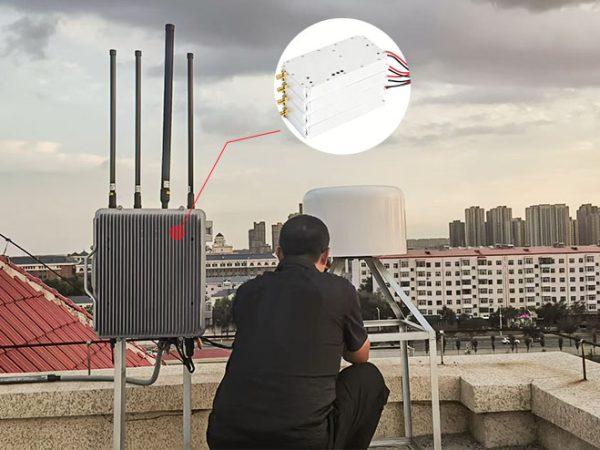
Heilongjiang Weather Center Completes Anti-Drone System Upgrade with Three High-Power Drone Jammer Modules

Tangshan Chem Plant Sealed Drone Gaps With 3 GaN Wideband Modules

How a National Prison Integrated Our Drone Jamming Module Into Their Fixed Counter-Drone System

Integrating Core RF Power: OEM Drone Jamming Module for Oil Refinery Security | Case Study
Send Us a Message
Related Products
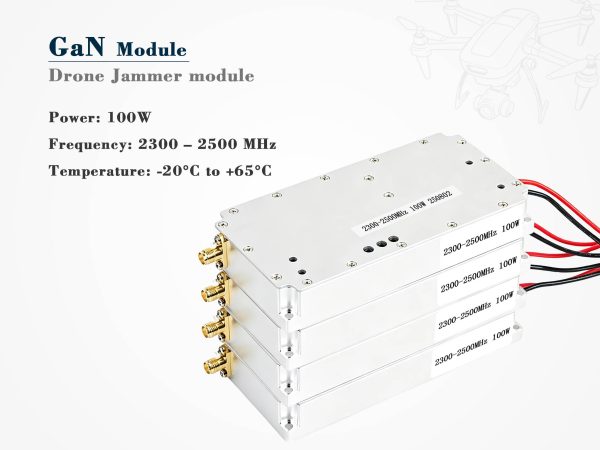
2300–2500 MHz 100W GaN Counter-UAV Module
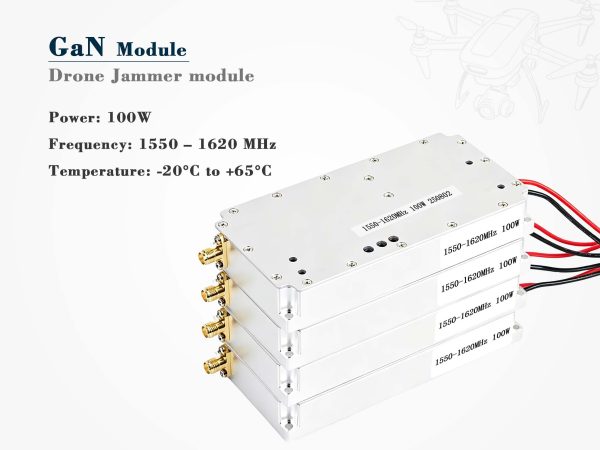
100W GaN Drone Jamming Module 1550–1620MHz
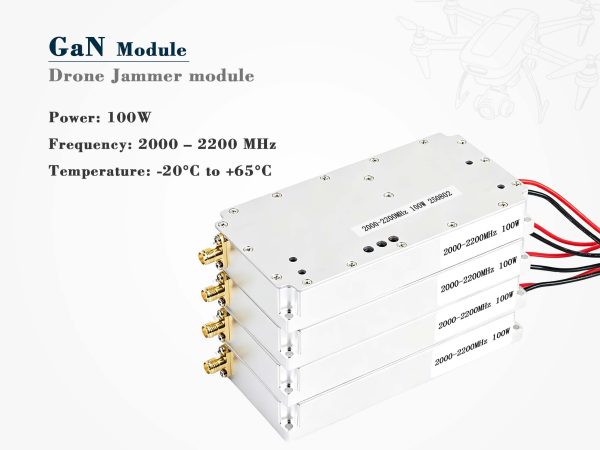
100W 2000–2200MHz GaN Analog Drone Interference Module