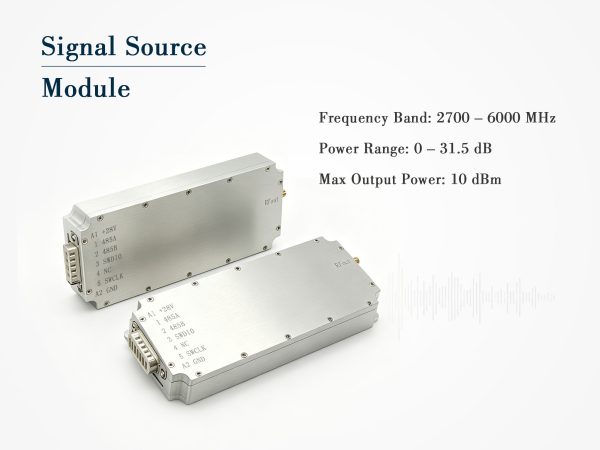
Digital Signal Source Module 1805-2170MHz
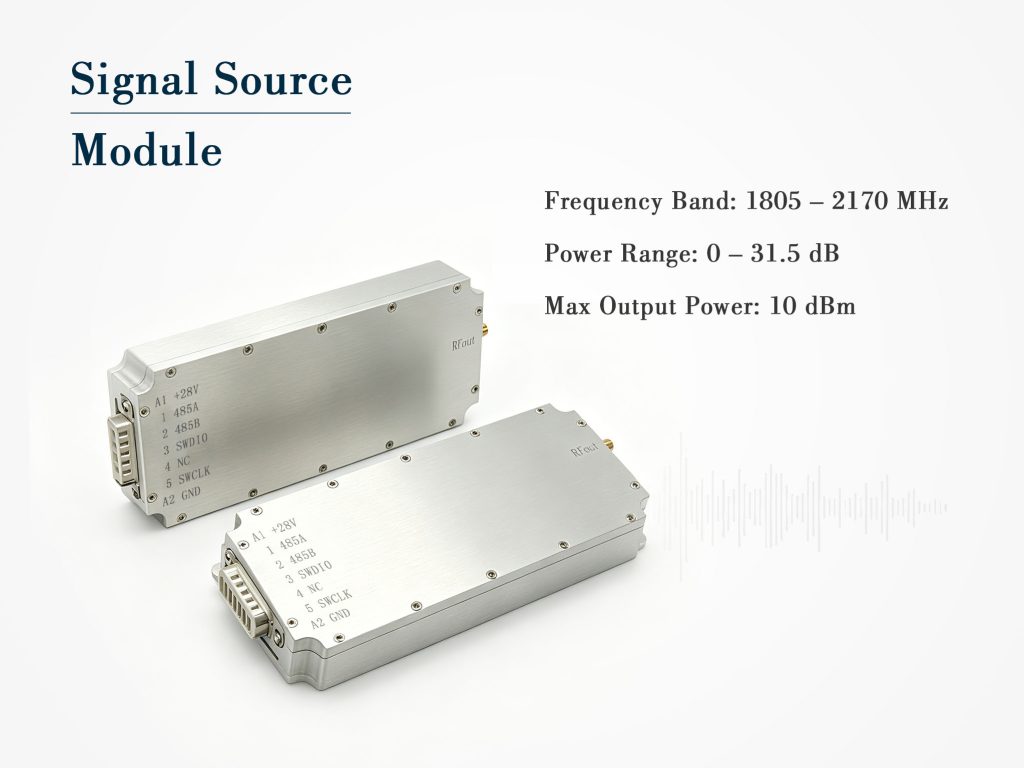
Digital signal source module 1805-2170 MHz, 10 dBm, RS485, 0.5 dB step, SMA female. Works from 12–29 V DC. Compact 146x63x17.5 mm, 0.21 kg.
Typical applications range from automated production testing of cellular repeaters and filters to university RF labs teaching wireless communication principles.
Technical Specifications
| Parameter | Typical Value |
| Frequency Range | 1805~2170 MHz |
| Max Output Power | 10 dBm |
| VSWR | ≤2.0 |
| Signal Type | Digital signal source |
| Supply Voltage | 12~29 V DC |
| Max Current | 200 mA @28 V |
| Attenuation Range | 0~31.5 dB |
| Step Size | 0.5 dB |
| Output Connector | SMA female |
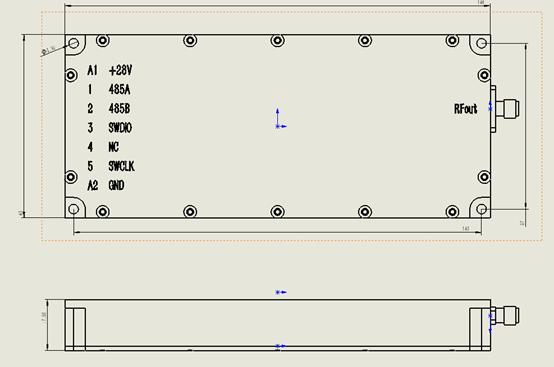
| Power/Control Connector | 7W2 |
| Control Interface | RS485 |
| Dimensions | 146×63×17.5 mm |
| Weight | 0.21 kg |
Product Details
Designed for Precision in a Small Footprint
When your project demands a reliable RF source that doesn’t consume rack space, a compact module like this one becomes invaluable. It operates from 1805 MHz to 2170 MHz, delivering up to +10 dBm of clean output power. The module’s aluminum enclosure measures just 146 × 63 × 17.5 mm and weighs 0.21 kg, making it perfect for embedded systems, portable test kits, and automated test environments. With an SMA female output connector and a 7W2 hybrid port for power and RS485 control, the digital signal source module combines signal generation and remote management in one efficient design. Whether you are characterizing receivers or emulating base station signals, you can count on stable performance backed by a VSWR of ≤2.0.
Wideband Performance You Can Rely On
The frequency coverage of this digital signal source module spans a common cellular downlink band, supporting LTE and other wireless standards between 1805 MHz and 2170 MHz. The signal type is a clean, digitally controlled continuous wave, ideal for sensitivity testing and link budget analysis. Because the module maintains consistent output impedance and low VSWR, you get repeatable measurements without excessive mismatch loss. In practical use, you simply supply DC power between 12 V and 29 V, and the internal regulation ensures the output remains stable even if the supply fluctuates. Drawing only 200 mA at 28 V, the device stays cool during extended operation, allowing you to focus on your test sequence rather than thermal management.
Flexible Output Control via RS485
One of the standout features is the built-in 0–31.5 dB power adjustment range with 0.5 dB step resolution. Using the RS485 interface, you can program the output level precisely, automate sweeps, or integrate the digital signal source module into a larger test platform. The half-dB step size gives you fine control for sensitivity thresholds and linearity measurements, while the 31.5 dB dynamic range lets you simulate path loss or adjust stimulus levels on the fly. All commands follow a straightforward protocol that works with common scripting languages and lab automation software. The unit also retains its last settings after power cycling, reducing setup time for repetitive tasks.
Simple Integration into Any Setup
Physical integration is straightforward thanks to the 7W2 mixed-layout connector, which carries both DC power and RS485 data lines. This cuts down on cable clutter and simplifies field deployments. The SMA female output mates directly with standard coaxial cables and antennas. Despite its small size, the digital signal source module is robust enough for bench use and light enough for drone-based or man-portable signal surveying. Mounting holes on the chassis allow secure attachment inside enclosures. A small LED confirms power and RS485 link status at a glance. If your system already uses an RS485 bus for sensors or actuators, you can drop this module onto the same bus and address it independently, further reducing wiring complexity.
Where to Use This Digital Signal Source Module
Typical applications range from automated production testing of cellular repeaters and filters to university RF labs teaching wireless communication principles. Because the module accepts such a wide voltage range, it can be powered from vehicle batteries, solar-charged systems, or standard bench supplies. The combination of a pure signal source and fine attenuation control makes it suitable for bit-error-rate testing, adjacent channel selectivity verification, and interference simulation. Engineers also deploy it as a local oscillator substitute in prototype downconverters when paired with a mixer. Whether you are building a custom test jig or need a portable signal reference, this digital signal source module delivers consistent, low-hassle RF without overcomplicating your workflow.
Frequently Asked Questions
Case Studies
Heilongjiang Weather Center Completes Anti-Drone System Upgrade with Three High-Power Drone Jammer Modules

Tangshan Chem Plant Sealed Drone Gaps With 3 GaN Wideband Modules

How a National Prison Integrated Our Drone Jamming Module Into Their Fixed Counter-Drone System

Integrating Core RF Power: OEM Drone Jamming Module for Oil Refinery Security | Case Study
Send Us a Message
Related Products
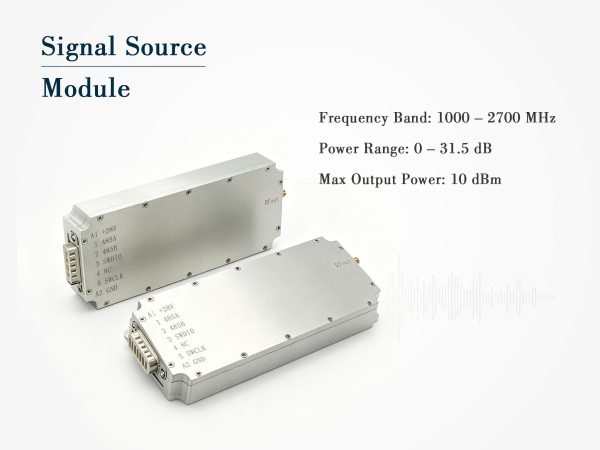
Wideband Signal Source Module – 1000 to 2700MHz, 10dBm with Digital Attenuator
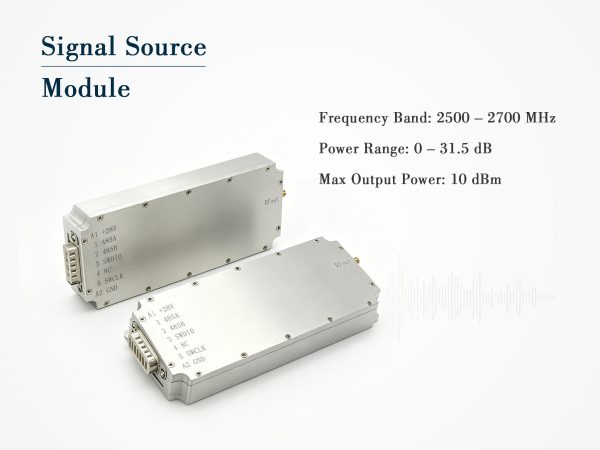
Compact Signal Source Module – 2500–2700MHz, 10dBm with Digital Attenuation
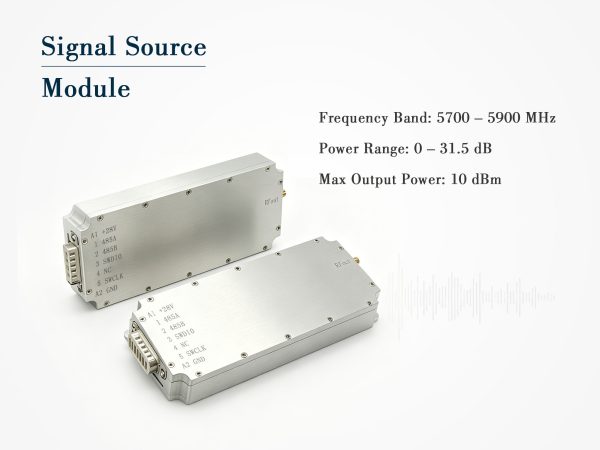
Digital Signal Source Module – 5700–5900MHz, 10dBm