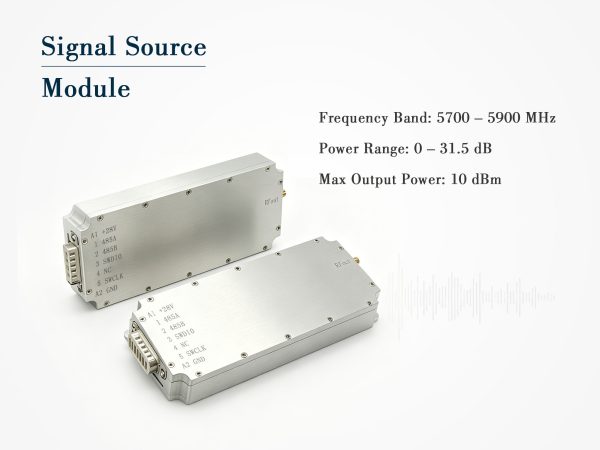
2.7-6 GHz Signal Source Module with RS485 Control
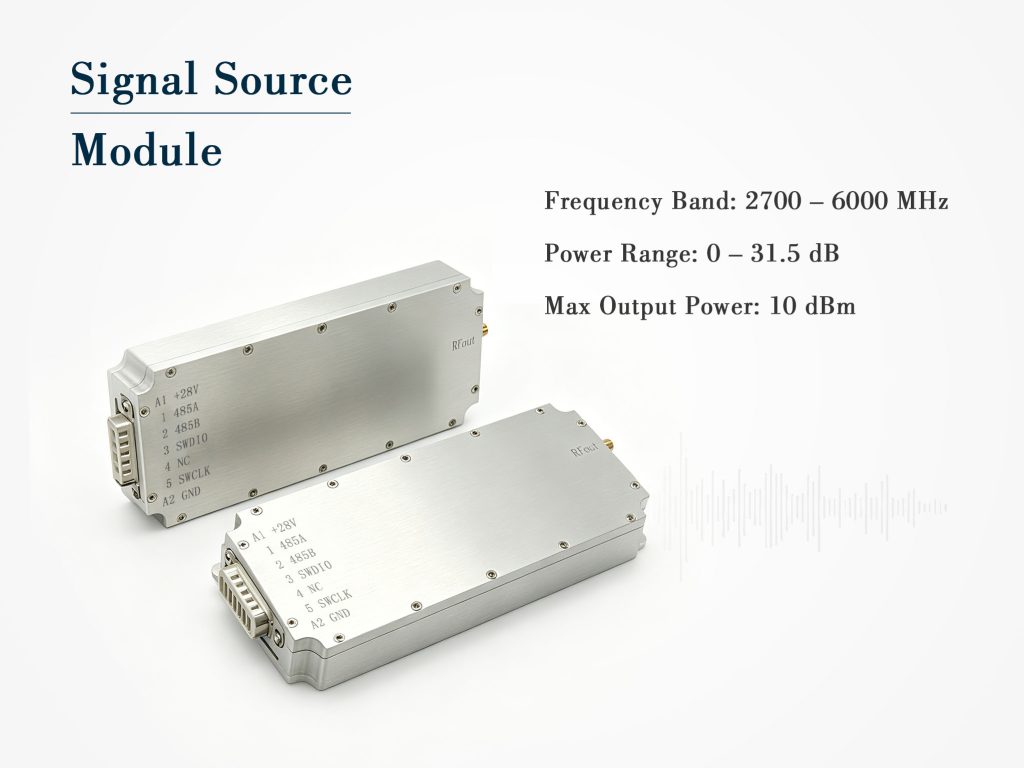
Wideband signal source module covering 2700–6000 MHz, 10 dBm max output, 0.5 dB step, RS485 interface, SMA female, 24–29 V DC, 188x98x18.5 mm compact size.
Typical deployments include automated production testers, software-defined radio front-ends, drone-based payload simulators, and phased-array calibration rigs. The ability to output a clean digital waveform directly at the operating frequency cuts bill-of-materials cost and debugging time.
Technical Specifications
| Parameter | Typical Value |
| Signal Type | Digital signal source |
| Frequency Range | 2700 – 6000 MHz |
| Maximum Output Power | +10 dBm |
| Output VSWR | ≤ 2.0 |
| Operating Voltage | DC 24 – 29 V |
| Maximum Operating Current | 600 mA @ 28 V |
| Attenuation Range | 0 – 31.5 dB |
| Attenuation Step | 0.5 dB |
| RF Connector | SMA female |
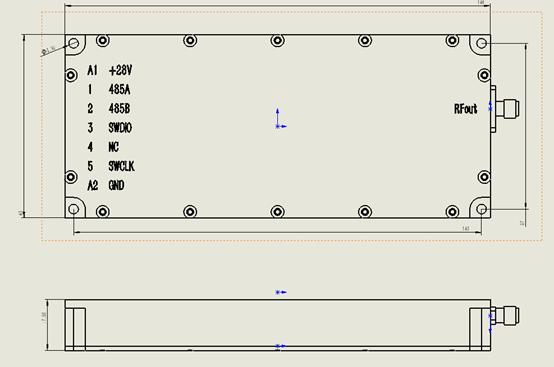
| Power & Control Connector | 7W2 |
| Control Interface | RS485 |
| Dimensions | 188 × 98 × 18.5 mm |
| Weight | 0.4 kg |
Product Details
Compact Wideband RF Generation for Demanding Setups
When a test bench or an embedded system requires a clean, repeatable stimulus between 2.7 GHz and 6 GHz, the right signal source module saves both space and integration time. This unit generates a digital signal directly in that band, removing the need for external upconverters or bulky benchtop instruments. With a maximum output of +10 dBm and a characteristic SMA female port, it connects easily to amplifiers, mixers, or antenna feeds while keeping return loss well within acceptable limits.
Precision Output Adjustment in Fine Steps
Power agility is one of the main reasons engineers reach for a dedicated signal source module. A wide attenuation range of 31.5 dB, tunable in 0.5 dB increments, gives precise level control without relying on extra programmable attenuators. Whether you are conducting sensitivity sweeps, linearity tests, or driving a gain block at a specific back-off point, this signal source module reacts predictably. The digital control loop ensures that each 0.5 dB step settles fast and stays stable, which simplifies automated test sequences running over long periods.
Built for Embedded and Rack-Mount Integration
Space-constrained designs benefit from the slim 188 × 98 × 18.5 mm aluminum chassis. At just 0.4 kg, the module can be stacked, mounted on a cold plate, or placed inside a shielded enclosure without major mechanical redesign. A 7W2 mixed connector handles DC supply and auxiliary control, keeping the footprint tidy. For systems that already use a 24–29 V rail, powering the signal source module is straightforward; typical current draw sits at 600 mA when running from a 28 V bus, and the internal regulation rejects most ripple and noise present on the supply line.
Reliable Communication and Field Hardening
Remote operation goes through an RS485 serial interface, which is widely adopted in industrial and defense electronics for its noise immunity and multi-drop capability. A single host controller can address several modules on the same bus, synchronizing frequency-hopping patterns or power profiles without complex cabling. The RF output remains resilient up to a VSWR of 2.0, so moderate impedance mismatches in the antenna or test fixture do not cause erratic shutdowns or drift. This ruggedness makes the module suitable not only for lab benches but also for field-deployed transmitters and repeaters.
Where It Fits in a Modern Signal Chain
Typical deployments include automated production testers, software-defined radio front-ends, drone-based payload simulators, and phased-array calibration rigs. The ability to output a clean digital waveform directly at the operating frequency cuts bill-of-materials cost and debugging time. Combined with a power detector and a simple feedback routine, the signal source module can also serve as a tracking generator, maintaining a flat amplitude envelope across its full 2700–6000 MHz span even when cable losses change with temperature.
Frequently Asked Questions
Case Studies
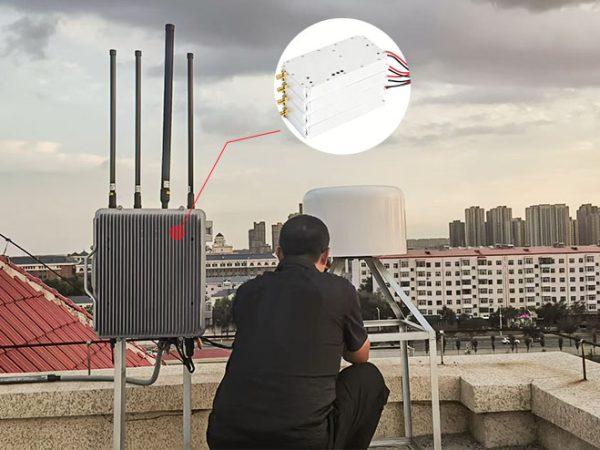
Heilongjiang Weather Center Completes Anti-Drone System Upgrade with Three High-Power Drone Jammer Modules

Tangshan Chem Plant Sealed Drone Gaps With 3 GaN Wideband Modules

How a National Prison Integrated Our Drone Jamming Module Into Their Fixed Counter-Drone System

Integrating Core RF Power: OEM Drone Jamming Module for Oil Refinery Security | Case Study
Send Us a Message
Related Products
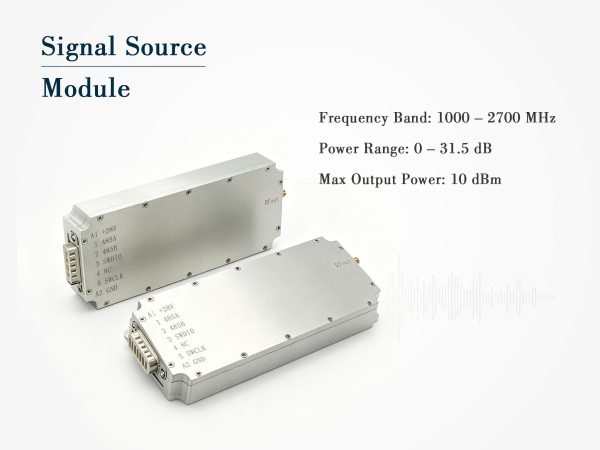
Wideband Signal Source Module – 1000 to 2700MHz, 10dBm with Digital Attenuator
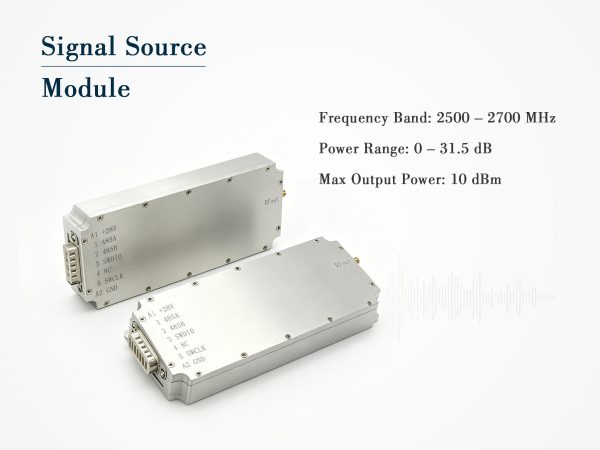
Compact Signal Source Module – 2500–2700MHz, 10dBm with Digital Attenuation
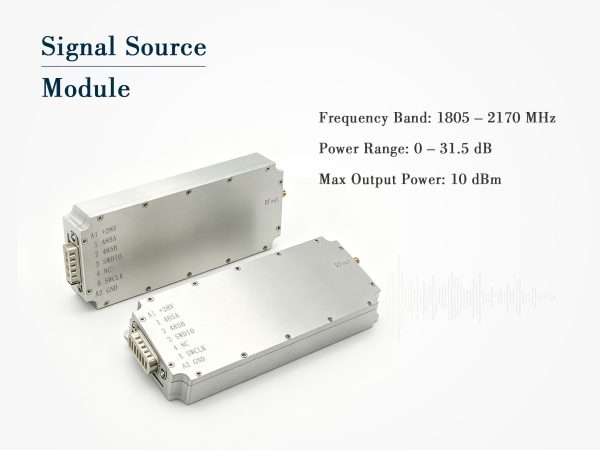
Digital Signal Source Module 1805-2170MHz