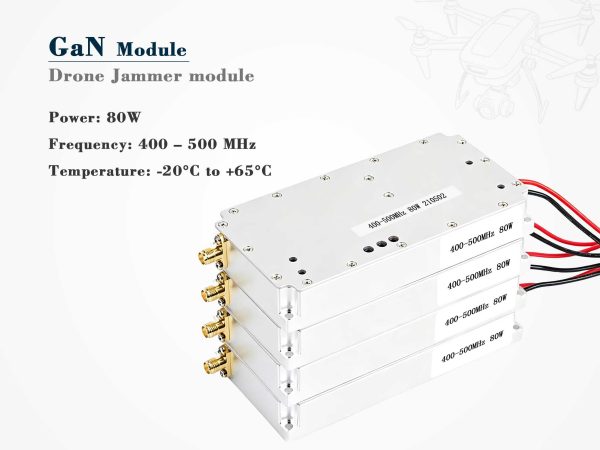
80W Anti Drone Module: 500-600MHz GaN Countermeasure
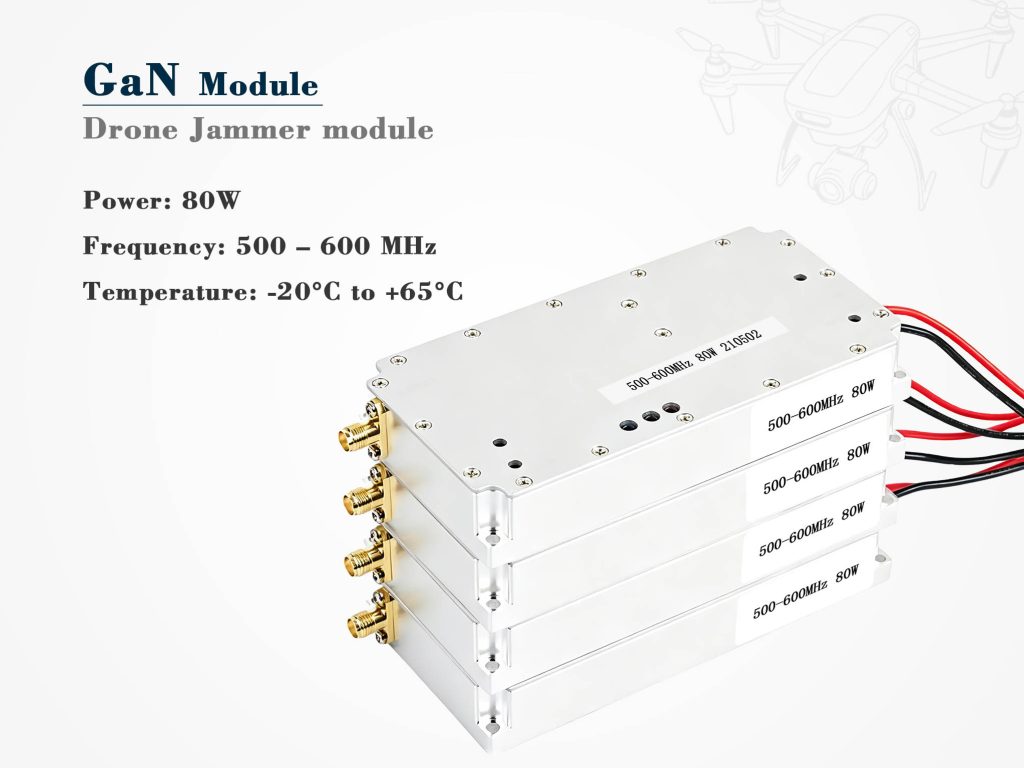
80W anti drone module covers 500-600MHz, 80W output, GaN efficiency ≥40%, DC24-29V, 10A max, SMA female, built-in sweep source and VSWR protection.
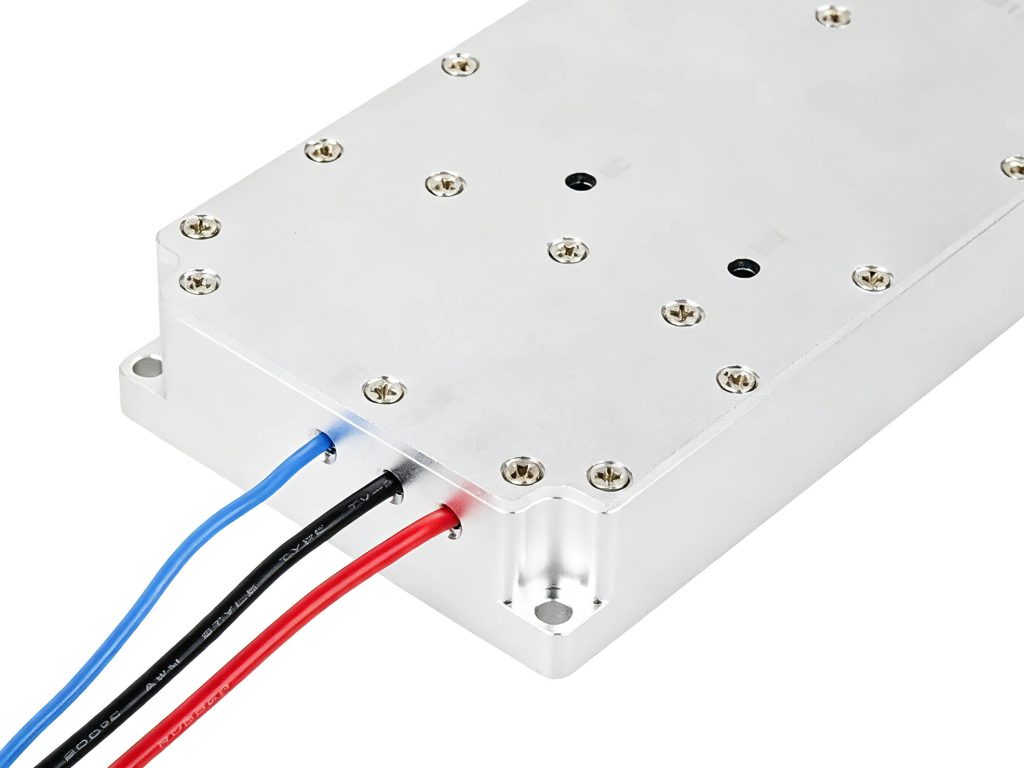
Technical Specifications
| Parameter | Specification | Notes |
| Frequency range | 500–600 MHz | Covers common UAS control/telemetry bands |
| Output power | 80 W typical | GaN final stage |
| Supply voltage | DC 24–29 V | Use a supply rated for at least 10 A |
| Current draw | ≤10.0 A max | At full output |
| Modulation source | Built-in high-speed sweep source | Analog jamming integrated |
| Analog scan speed | High-speed sweep across full band | Band-wide analog profile |
| Input / output impedance | 50 Ω nominal / SMA female output | Output connector SMA female |
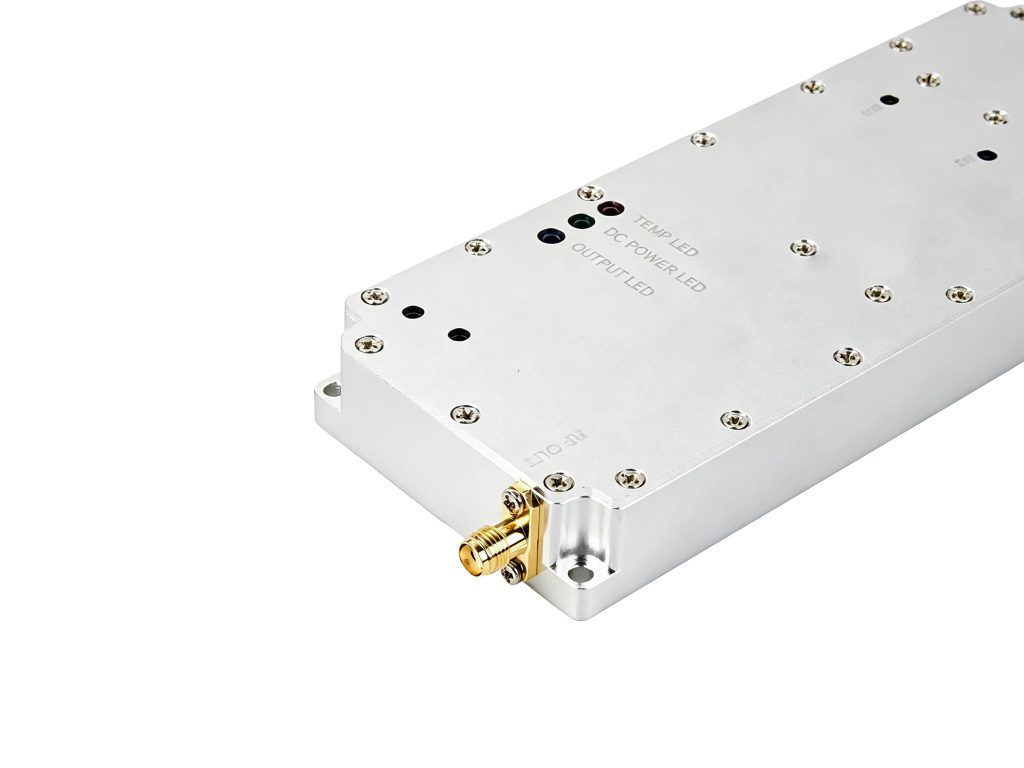
| Protection LEDs | Built-in power/protection status indicator | Monitors RF enable and alarm state |
| Operating temperature | -20°C to +65°C | Forced air cooling recommended |
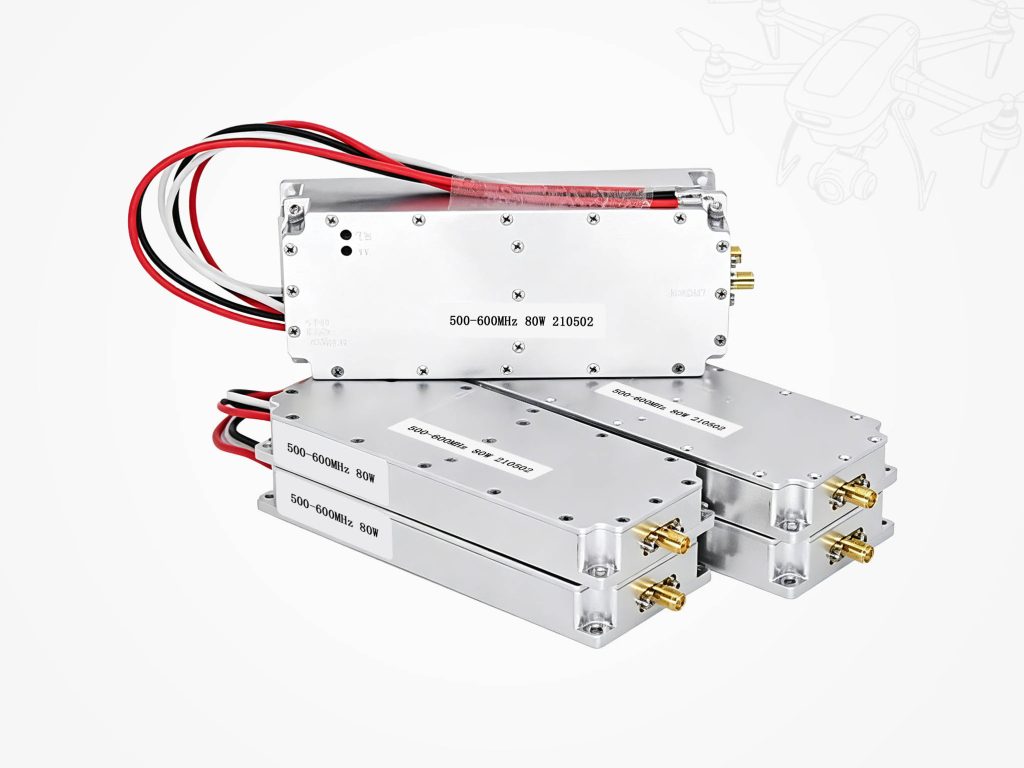
| Dimensions (L×W×H) | 168.5 × 84.5 × 23 mm | Compact low-profile module |
| Weight | 0.55 kg | Includes baseplate |
| Base material | Aluminum alloy with conductive finish | Suitable for heatsink mounting |
Product Details
The 500–600 MHz band remains a practical target for counter-UAS work. Many commercial drones and older UAV platforms rely on control, telemetry, or fallback channels inside this spectrum. An 80W anti drone module with a GaN final stage gives integrators a compact way to add broadband analog jamming without building a separate exciter and amplifier chain. This module combines the sweep source, driver, final amplifier, and RF protection in a 168.5 × 84.5 × 23 mm aluminum package.
Why the 500–600 MHz Range Still Matters
Some counter-drone systems focus only on 2.4 GHz and 5.8 GHz. That leaves a gap. Many platforms still use 500–600 MHz for command links, video fallback, or telemetry. A wideband module in this range can disrupt frequency-hopping links more effectively than a fixed tone. Because the 80W anti drone module integrates an analog high-speed sweep source, it produces continuous RF energy across the entire band rather than narrow spot jamming. That reduces the chance of missing a hopping channel.
GaN Output Stage and Efficiency
The 80W anti drone module is built around a GaN final amplifier. Typical efficiency is at least 40% at 80W output from a DC 24–29V supply. This is important because the current draw can reach 10A under full load. The aluminum baseplate and low-profile housing help move heat away from the RF devices, but forced air cooling is still recommended for continuous operation. Output VSWR is specified at ≤2.0, which keeps the amplifier stable with most antennas.
Built-in Sweep Source
Unlike a bare RF power amplifier, this 80W anti drone module does not need an external signal generator for basic operation. The internal high-speed sweep source drives the chain across 500–600 MHz. The analog sweep profile creates broadband interference that is generally more effective against frequency-hopping UAS links than fixed-tone jamming. It also simplifies integration into portable or fixed counter-UAS boxes because fewer RF connections are required.
Switching and Control
The module accepts a simple TTL-style control signal. Apply +5V or leave the control pin floating to turn RF output on; connect it to ground to turn it off. This makes the 80W anti drone module easy to pair with microcontrollers, manual switches, or detection systems. Always sequence DC power before enabling RF, and disable RF before removing power.
RF Protection and Interface
The output uses an SMA female connector with 50Ω nominal impedance. An absorptive VSWR protection device is built into the RF chain. This reduces the risk of damage if an antenna is disconnected or poorly matched for a short period. That said, do not operate the module without a proper load. Use high-quality coaxial cable and keep the antenna return loss within the specified VSWR limit.
Thermal and Mechanical Notes
The 80W anti drone module measures 168.5 × 84.5 × 23 mm and weighs 0.55 kg. It is designed for metal-chassis mounting. Use thermal paste or a flat heatsink interface on the baseplate. At 80W output, waste heat can be significant. The operating temperature range is -20°C to +65°C, but the case should be kept below 65°C under full load. Good airflow across the baseplate extends reliability.
Integration Checklist
A short checklist helps avoid field failures:
-
Provide a stable DC 24–29V supply rated for at least 10A.
-
Mount the module on a metal plate or heatsink.
-
Use a 500–600 MHz antenna with VSWR ≤2.0.
-
Enable RF only after the load is connected.
-
Keep the control line grounded when the system is idle.
Who Should Use This Module
The 80W anti drone module fits fixed-site counter-UAS cabinets, portable jamming cases, and vehicle-mounted systems. It is also useful for security integrators who need a reliable RF power stage with built-in protection. Because the module includes a sweep source, it can reduce development time compared to separate PA and exciter designs. Just remember that output power and antenna placement must follow local regulations.
In short, the module is a practical 500–600 MHz building block for counter-drone applications. It delivers 80W typical output, integrated analog sweep, GaN efficiency, and VSWR protection in a compact metal housing.
Frequently Asked Questions
Case Studies
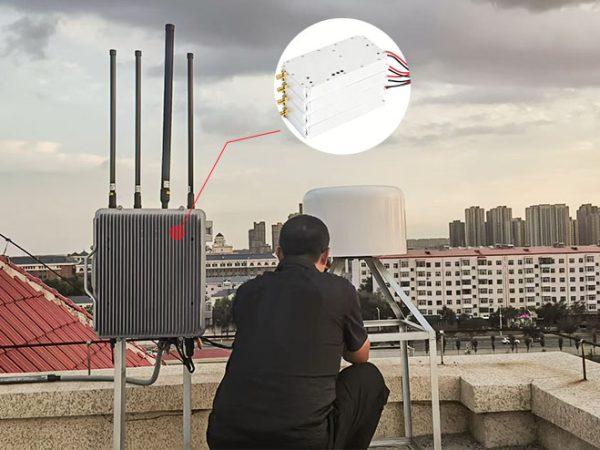
Heilongjiang Weather Center Completes Anti-Drone System Upgrade with Three High-Power Drone Jammer Modules

Tangshan Chem Plant Sealed Drone Gaps With 3 GaN Wideband Modules
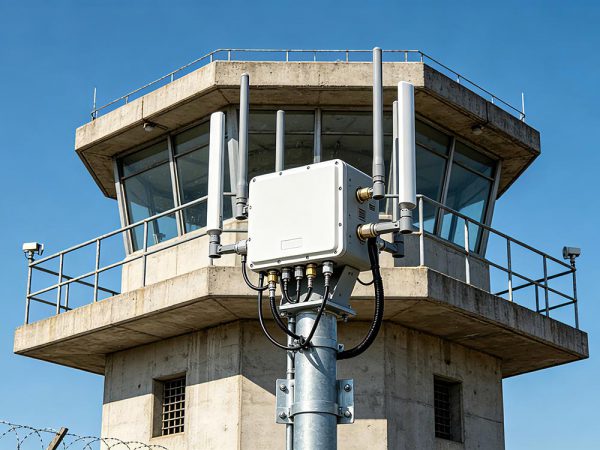
How a National Prison Integrated Our Drone Jamming Module Into Their Fixed Counter-Drone System
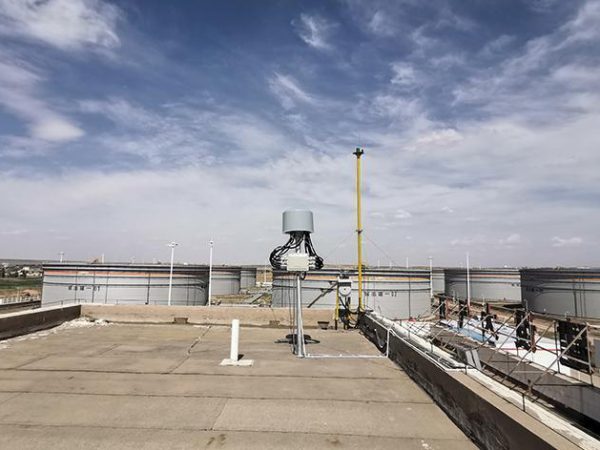
Integrating Core RF Power: OEM Drone Jamming Module for Oil Refinery Security | Case Study
Send Us a Message
Related Products
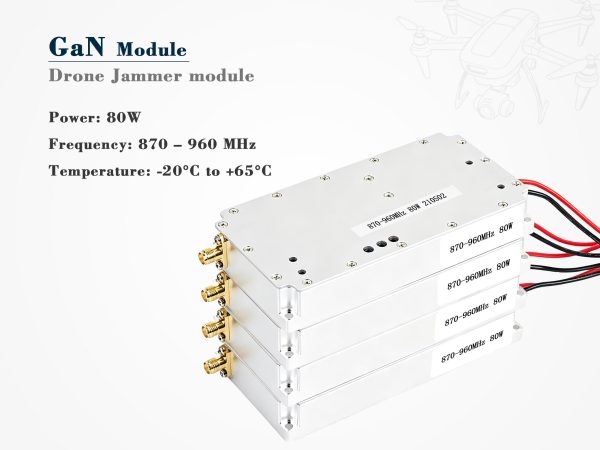
80W GaN Drone Jammer Module 870–960MHz | Analog Sweep
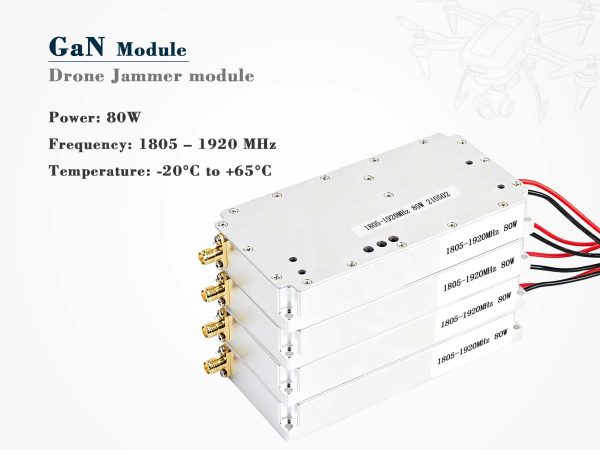
80W 1805–1920MHz GaN UAV Countermeasure Jammer Module
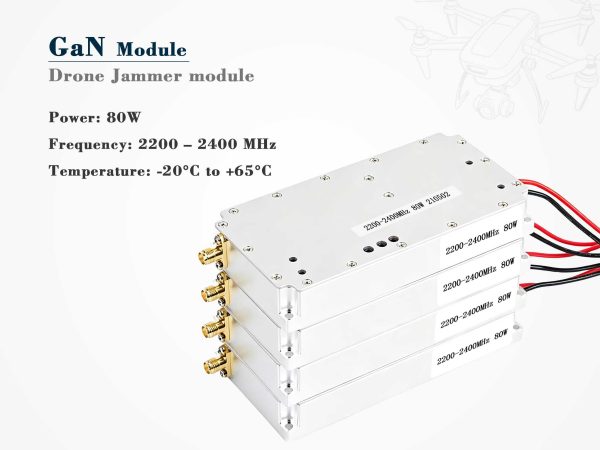
80W GaN Jammer Module: Powerful 2200–2400MHz Counter-UAS Solution