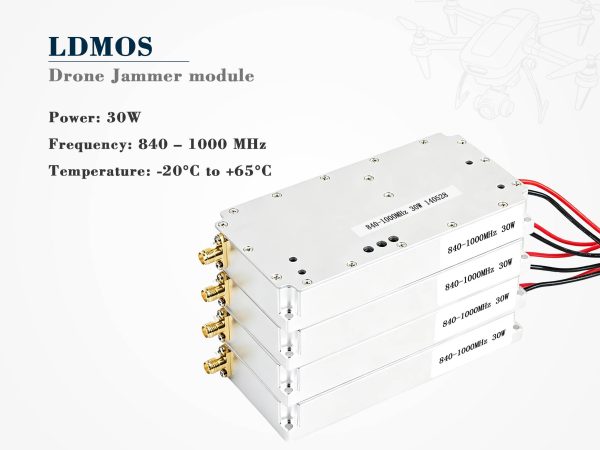
30W 1805-1920MHz LDMOS Drone Jamming Module – Compact & Efficient
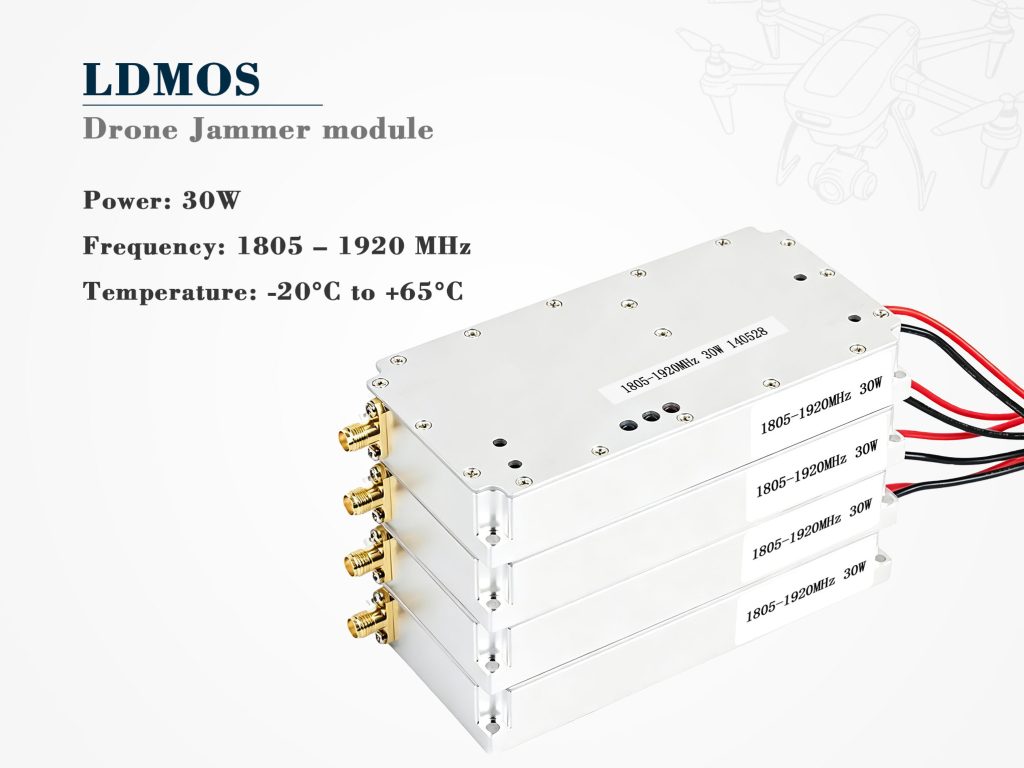
30W drone jamming module for 1805-1920MHz, 24-29V, 3.2A, built‑in sweep source, SMA output, 115.5×46.5×21mm, 0.21kg. Ideal for disrupting downlink and telemetry links.
Technical Specifications
| Parameter | Specification | Notes |
| Frequency range | 1805 – 1920 MHz | Covers DCS1800 downlink and adjacent bands |
| Output power | 30W (typical) | Measured at 28V, CW mode |
| Supply voltage | 24 – 29 V DC | Nominal 28V recommended |
| Current draw | ≤ 3.2 A | At full output, 28V |
| Modulation source | Built‑in high‑speed sweep generator | Sweep rate configurable on request |
| Analog scan speed | Customisable (contact for details) | Default set per order |
| Input / output impedance | 50 Ω | SMA female output; internal input |
| Protection LEDs | over‑temp fold‑back built‑in | - |
| Operating temperature | -20 ~ +65 °C | Ambient, with adequate heatsinking |
| Dimensions (L×W×H) | 115.5 × 46.5 × 21 mm | Excluding connectors and pins |
| Weight | 0.21 kg | Approximate net weight |
| Base material | Aluminium alloy | Milled housing, natural finish |
Product Details
Why 1805‑1920MHz Matters
Not every drone relies on GPS or 2.4GHz control. Many high‑end commercial and military UAVs use the 1800‑1900MHz range for video downlinks, command uplinks, or data telemetry – especially in regions where 2.4GHz is overcrowded. This drone jamming module zeroes in on that exact window, covering 1805‑1920MHz, which includes the DCS1800 downlink band and parts of the PCS spectrum. With 30W of clean LDMOS power, you can break the communication link between a drone and its ground station, cutting off real‑time video feeds and telemetry streams. Unlike lower‑band jammers that target navigation, this one attacks the data pipeline – a different tactic that can force the drone to blind‑fly or switch to a failsafe mode. It’s a valuable addition to any layered counter‑UAS system, especially when you need to neutralise long‑range reconnaissance drones that rely on robust digital links.
Power and Efficiency – Built for Field Use
Output is a solid 30W, measured at 28V DC, with a typical efficiency above 40%. That means you’re drawing about 75‑80W from the power source – manageable for battery‑operated setups. The drone jamming module runs on 24‑29V, drawing a maximum of 3.2A at full tilt, so you can pair it with a standard 24V lithium pack or a vehicle electrical system without heavy modifications. The output VSWR stays ≤2.0, giving you some leeway with antenna mismatches. The SMA female connector is lightweight and robust, perfect for portable or fixed installations. We’ve designed this unit with a focus on thermal performance: the aluminium housing spreads heat evenly, and for continuous operation, we recommend a small passive heatsink (around 50×50×30mm). Many users run it at 50% duty cycle without any extra cooling, relying on the brief bursts to disrupt links while keeping temperatures in check.
Simple Control and Built‑in Sweep
Inside, there’s a high‑speed sweep generator that constantly varies the frequency across the 1805‑1920MHz band. This swept interference is far more effective than a steady carrier because modern digital receivers use error correction and interleaving; a moving signal forces them to constantly re‑sync, quickly overwhelming their decoders. The sweep rate is factory‑set but can be adjusted on request – for example, a faster sweep might be better against frequency‑hopping systems. Control is straightforward: a TTL‑compatible enable pin lets you turn the output on and off remotely. Apply +5V or leave it floating to enable; ground it to disable. This allows you to pulse the jammer in short bursts, reducing average power consumption and heat. For multi‑band systems, you can synchronise several modules with a single controller, firing them in sequence to cover different frequencies without overlapping interference.
Compact Dimensions – Easy to Integrate
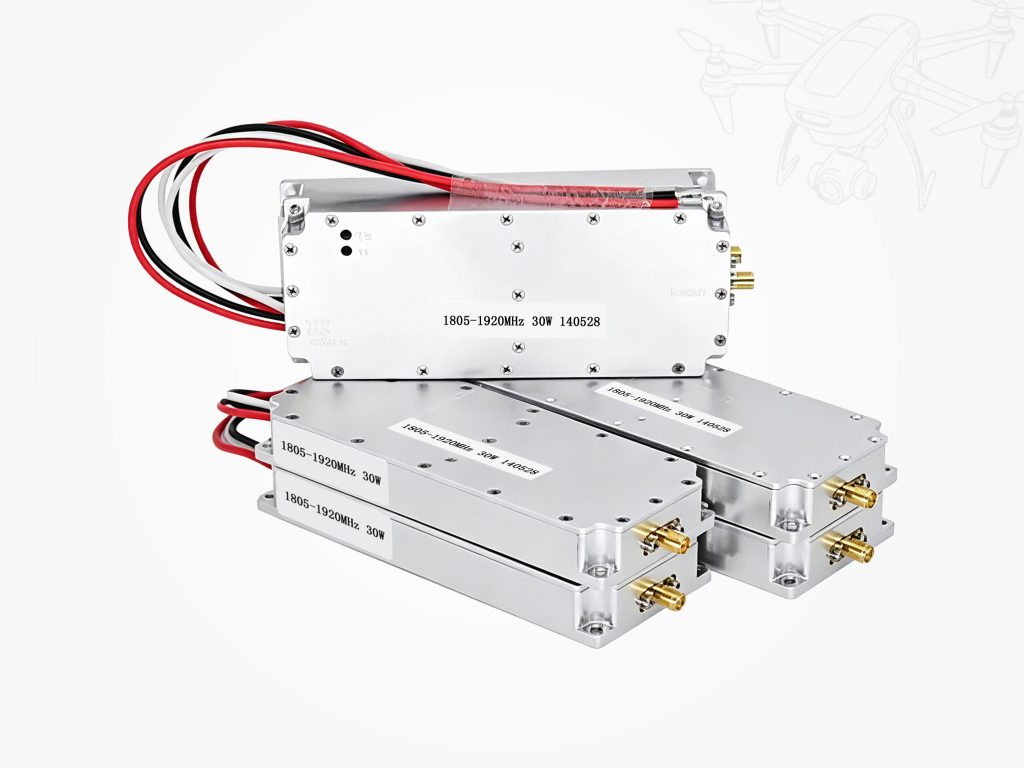
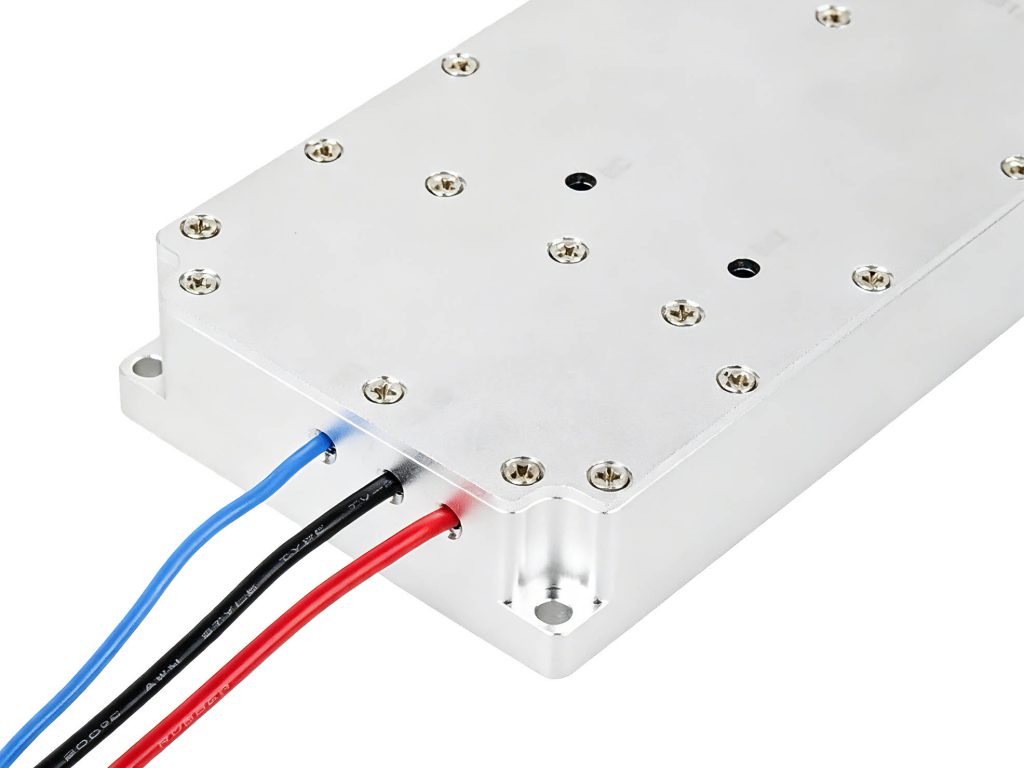
Measuring just 115.5×46.5×21mm and weighing 0.21kg, this drone jamming module is one of the smallest 30W jammers in its class. The milled aluminium housing provides both RF shielding and a thermal path, while the flat base includes mounting holes (standard on the physical unit) for secure attachment to a chassis or heatsink. The SMA connector sits on one short edge, and the DC input along with the control header are on the opposite side, making cable routing neat and straightforward. Whether you’re building a handheld gun‑type jammer, a suitcase‑style portable unit, or a rack‑mounted multi‑channel system, this module’s footprint leaves plenty of room for other components. At just over 200 grams, it adds negligible weight to mast‑head or vehicle‑mounted installations, allowing you to place it close to the antenna for minimal feedline loss.
Practical Tips from the Bench
When integrating this module, pay attention to the power supply wiring – keep leads short and use at least 18 AWG wire to minimise voltage drop at 3.2A. The drone jamming module doesn’t have visible protection LEDs (to save space), but it does include silent over‑temperature fold‑back and reverse‑polarity protection. If the internal temperature exceeds the safe threshold, the output will automatically roll back, preventing damage. For outdoor deployments, we suggest enclosing it in a waterproof box if rain is expected – the housing itself is not IP‑rated. Always test with a dummy load first; although the VSWR protection offers some resilience, sudden open circuits can still stress the output stage. In practice, we’ve seen this module reliably disrupt drone downlinks from distances of 300‑500 metres with a 6‑dBi patch antenna – real‑world results depend on antenna gain and line‑of‑sight, but it’s a proven performer. Whether you’re protecting a military outpost or a critical infrastructure site, this little jammer delivers a big punch in a tiny package.
Frequently Asked Questions
Case Studies
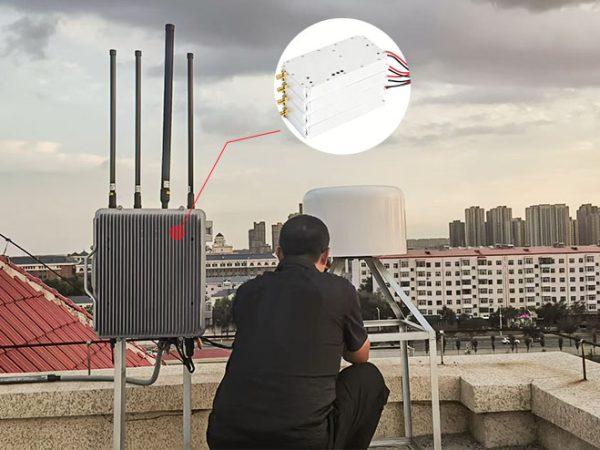
Heilongjiang Weather Center Completes Anti-Drone System Upgrade with Three High-Power Drone Jammer Modules

Tangshan Chem Plant Sealed Drone Gaps With 3 GaN Wideband Modules

How a National Prison Integrated Our Drone Jamming Module Into Their Fixed Counter-Drone System

Integrating Core RF Power: OEM Drone Jamming Module for Oil Refinery Security | Case Study
Send Us a Message
Related Products
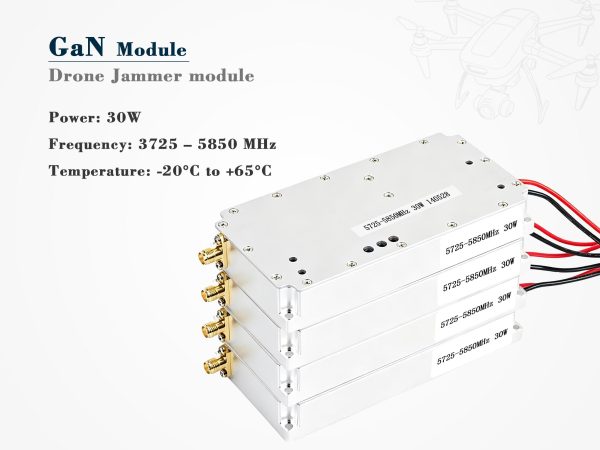
30W 5.8 GHz GaN Drone Jammer Module | 5725–5850 MHz
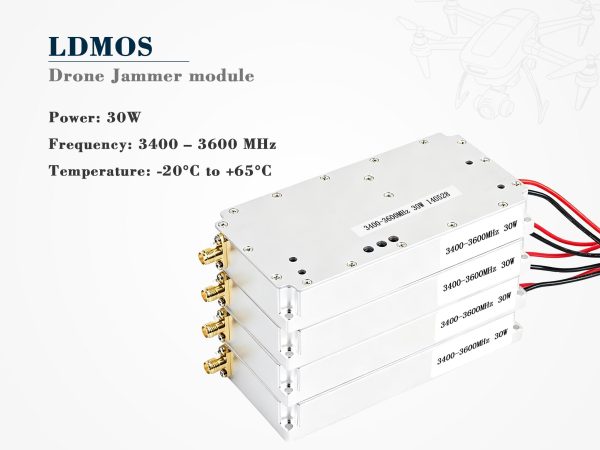
30W LDMOS Jamming Module for 3400–3600 MHz Drone Defense
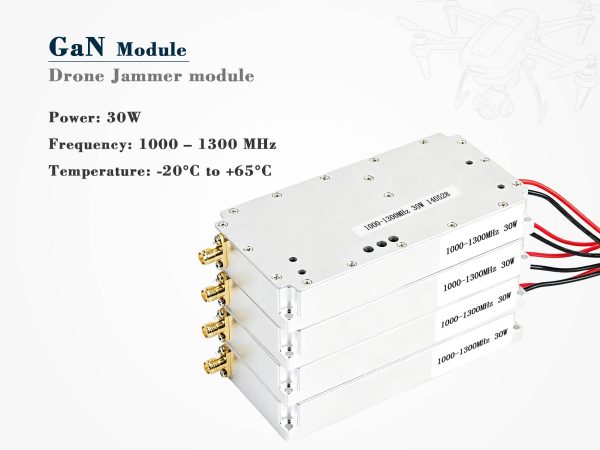
30W Anti-Drone Jamming Module: Compact 1000-1300MHz GaN Solution