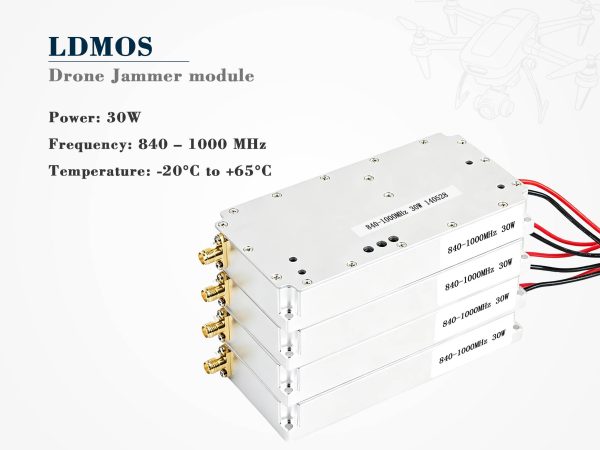
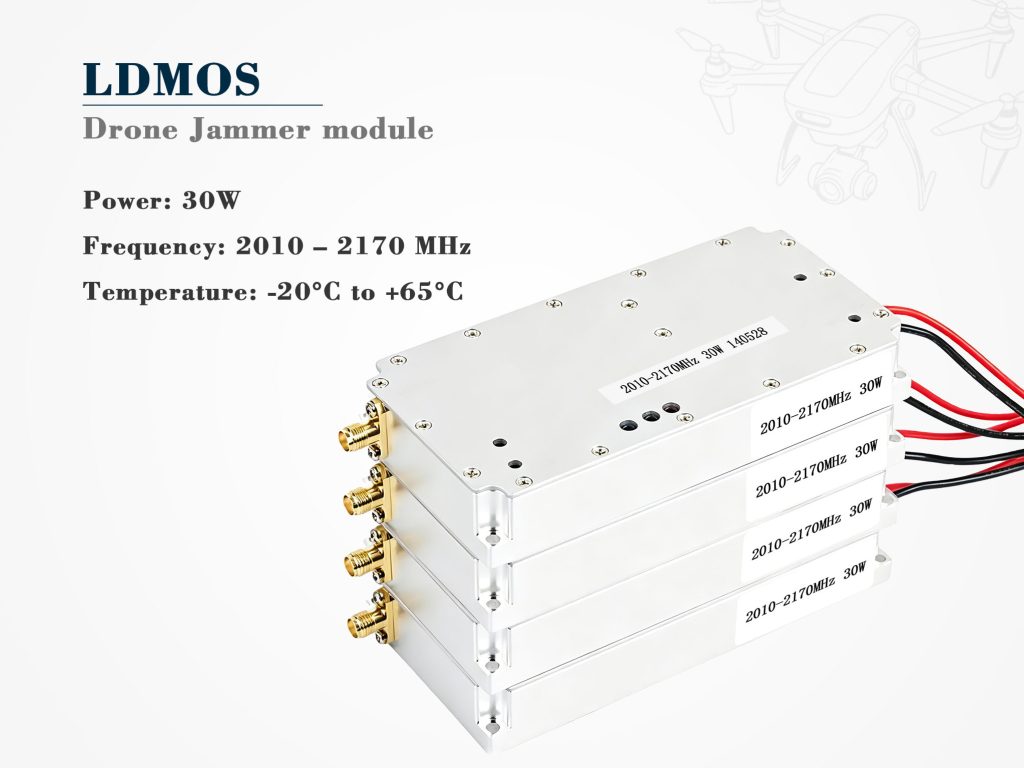
30W Drone Jammer Module 2010-2170MHz LDMOS – 3G/4G Band Blocker
30W drone jammer module for 2010-2170MHz, 24-29V, 3.2A, built-in sweep source, SMA output, 115.5×46.5×21mm, 0.21kg. Ideal for disrupting cellular-band UAV command links.
Technical Specifications
| Parameter | Specification | Notes |
| Frequency range | 2010 – 2170 MHz | Covers 3G/4G uplink and UAV data bands |
| Output power | 30W (typical) | Measured at 28V, CW mode |
| Supply voltage | 24 – 29 V DC | Nominal 28V recommended |
| Current draw | ≤ 3.2 A | At full output, 28V |
| Modulation source | Built‑in high‑speed sweep generator | Sweep rate configurable on request |
| Analog scan speed | Customisable (contact for details) | Default set per order |
| Input / output impedance | 50 Ω | SMA female output; internal input |
| Protection LEDs | over‑temp fold‑back built‑in | - |
| Operating temperature | -20 ~ +65 °C | Ambient, with adequate heatsinking |
| Dimensions (L×W×H) | 115.5 × 46.5 × 21 mm | Excluding connectors and pins |
| Weight | 0.21 kg | Approximate net weight |
| Base material | Aluminium alloy | Milled housing, natural finish |
Product Details
Why 2010‑2170MHz Is a Prime Target
Many long‑range drones and tactical UAVs operate in the 2GHz region, using the 2010‑2170MHz band for command uplinks, wideband video transmission, and telemetry. This band overlaps with the IMT‑2000 (3G) and parts of the LTE uplink spectrum, making it a natural choice for manufacturers who want to leverage off‑the‑shelf cellular RF components. The downside? It’s also a vulnerability. This drone jammer module focuses its 30W of LDMOS power squarely on that range, overwhelming the drone’s receiver front‑end and breaking the connection to its ground control station. Unlike GPS jamming, which causes navigation loss, attacking the data link cuts the operator’s eyes and ears – no live video, no command updates, no situational awareness. It’s a different layer of defence, one that’s particularly effective against long‑endurance reconnaissance drones that rely heavily on continuous broadband downlinks. For layered counter‑UAS systems, having a dedicated 2GHz jammer is quickly becoming a non‑negotiable requirement.
Thermal and Electrical Performance – Field Ready
Like its 30W siblings, this 30W drone jammer module draws a maximum of 3.2A at 28V, with a typical efficiency exceeding 40%. That puts the input power around 75‑80W, which is remarkably efficient for a linear LDMOS amplifier. The supply range is wide: 24‑29V DC, so you can use standard 24V lead‑acid batteries, lithium packs, or vehicle power systems without additional regulation. The output VSWR is spec’d at ≤2.0, giving you a safe margin even with slightly mismatched antennas. The SMA female connector ensures low‑loss connections and easy mating with common RF cables. For continuous operation, we recommend attaching a passive heatsink (around 50×50×30mm with fins) – the aluminium housing does a decent job spreading heat, but at 30W, convection alone can struggle in still air. Many users run this module at a 30‑50% duty cycle, pulsing it with an external controller, and find that the bare housing keeps temperatures within safe limits for hours.
Built‑in Sweep Source and Simple Enable Control
Inside the compact enclosure is a high‑speed sweep generator that continuously moves across the 2010‑2170MHz band. This sweeping interference is markedly more disruptive than a fixed carrier because modern digital receivers employ channel estimation and equalisation algorithms; a moving interference forces them to constantly recalculate, quickly overwhelming their error‑correction capabilities. The sweep rate is pre‑set at the factory, but we can tailor it to your specific counter‑measures – faster sweeps for hopping systems, slower ones for steady‑state links. The module’s operation is controlled via a TTL‑compatible enable pin: apply +5V or leave it floating to activate the output; ground the pin to disable it. This feature allows you to synchronise multiple modules across different bands, firing them in sequence or in bursts to conserve power and minimise thermal stress. It also makes integration with existing weapon station controllers or security system PLCs straightforward.
Miniature Footprint – Integration Made Easy
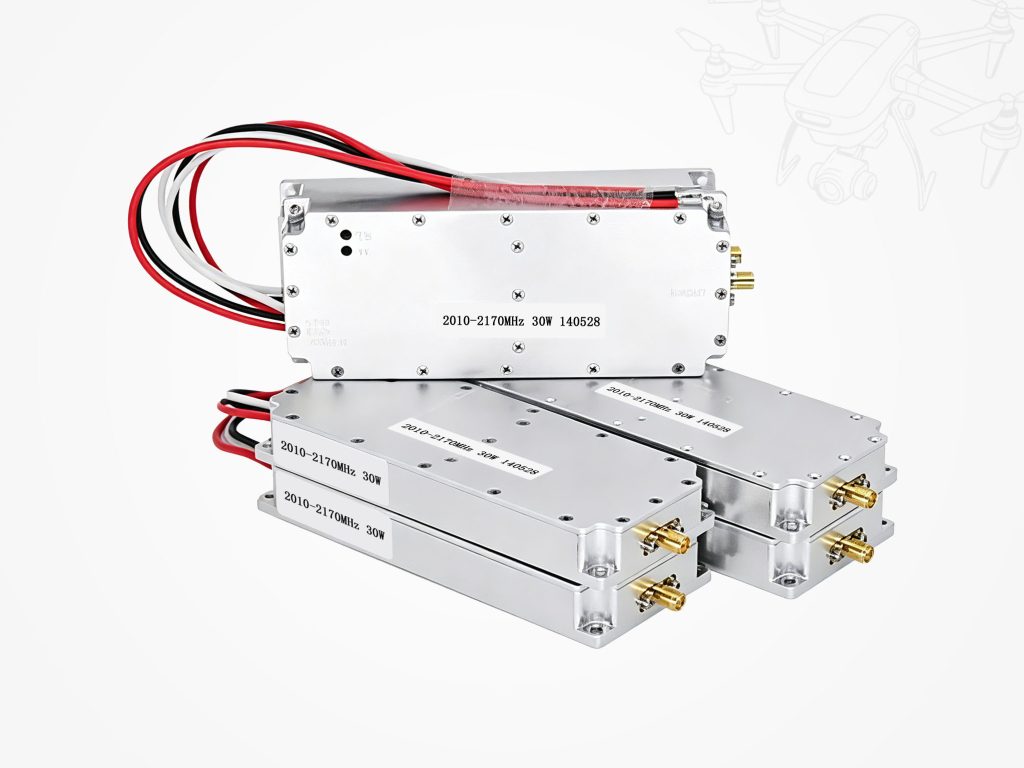
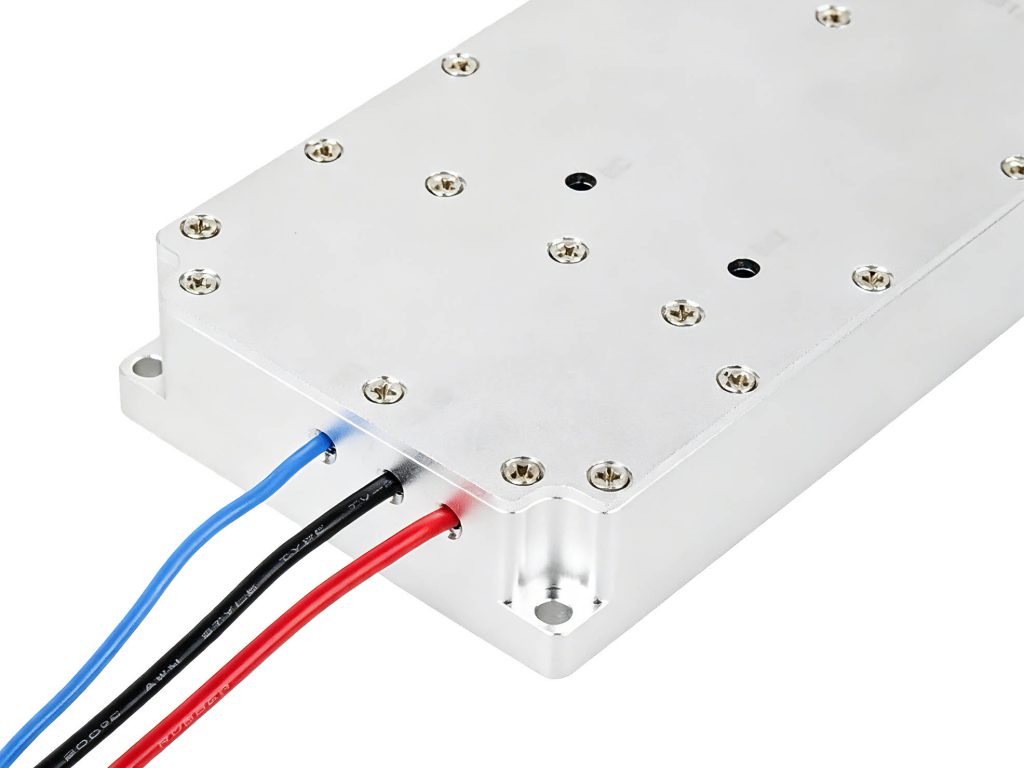
At 115.5mm long, 46.5mm wide, and just 21mm tall, this module takes up very little real estate. Weighing only 0.21kg, it’s light enough for handheld jammer guns, tripod‑mounted units, or even UAV‑borne countermeasures (though we’d caution against radiating from a flying platform without serious filtering). The housing is milled from a single aluminium block, offering EMI shielding and a flat base for heatsink attachment. The SMA output connector sits on one short edge, while the DC input and control header are on the opposite side – a layout that simplifies cable management in tight enclosures. Mounting holes are provided on the base (standard on production units), so you can screw it down securely without worrying about vibration loosening connections. Whether you’re upgrading an existing jamming system or building a new one from scratch, this module’s form factor leaves plenty of room for batteries, controllers, and antennas.
Field Notes and Deployment Wisdom
Before deploying, always test with a 50Ω dummy load to confirm operation – a sudden open circuit at 30W can produce voltage transients that stress the LDMOS, though the built‑in protection does offer some tolerance. For optimal range, pair the module with a circularly polarised antenna (right‑hand or left‑hand, depending on the drone’s system) to maximise effective isotropic radiated power. In our field tests, a 6‑dBi patch antenna delivered reliable link breaks at 300‑400 metres line‑of‑sight; with a higher‑gain panel, that distance can stretch considerably. Keep DC leads as short as possible and use at least 18 AWG wire to avoid voltage sag at 3.2A. If you’re operating in humid or rainy environments, we recommend enclosing the 30W drone jammer module in a weatherproof box – the housing is not IP‑rated. And finally, note that this module does not have visual LEDs for protection status (we prioritised compactness), but it does include silent over‑temperature rollback and reverse‑polarity protection. When the internal temperature hits the limit, the output folds back gracefully, then recovers once it cools. With sensible handling, this little dynamo will serve you well in both static defence posts and mobile response vehicles.
Frequently Asked Questions
Case Studies
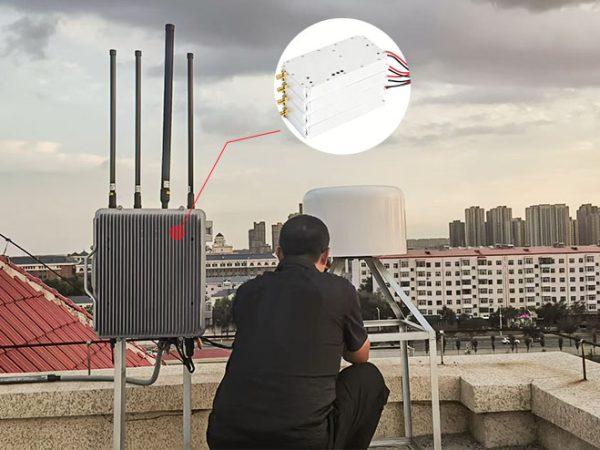
Heilongjiang Weather Center Completes Anti-Drone System Upgrade with Three High-Power Drone Jammer Modules

Tangshan Chem Plant Sealed Drone Gaps With 3 GaN Wideband Modules

How a National Prison Integrated Our Drone Jamming Module Into Their Fixed Counter-Drone System

Integrating Core RF Power: OEM Drone Jamming Module for Oil Refinery Security | Case Study
Send Us a Message
Related Products
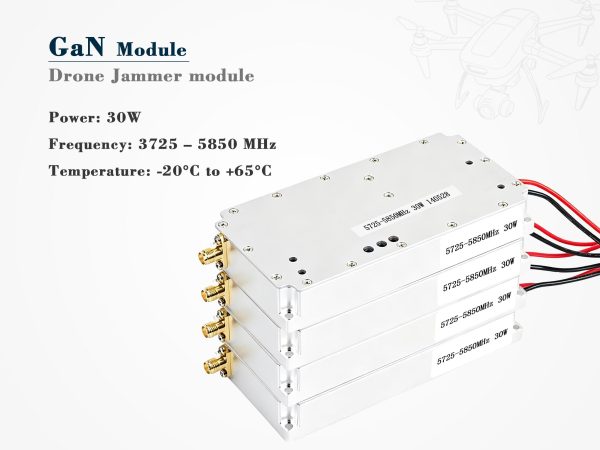
30W 5.8 GHz GaN Drone Jammer Module | 5725–5850 MHz
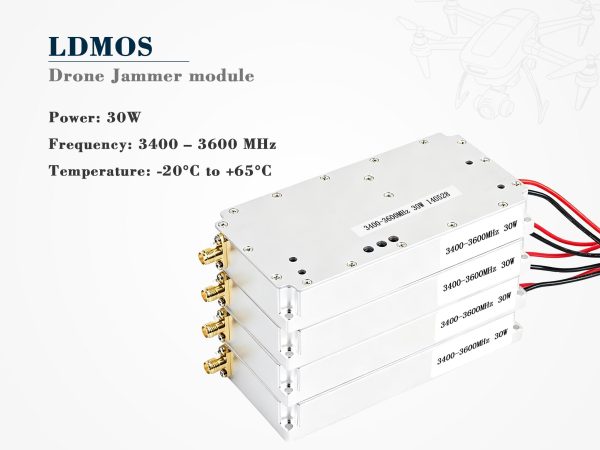
30W LDMOS Jamming Module for 3400–3600 MHz Drone Defense
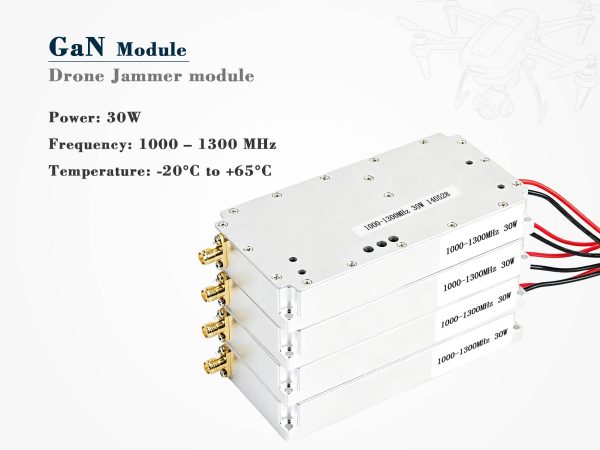
30W Anti-Drone Jamming Module: Compact 1000-1300MHz GaN Solution