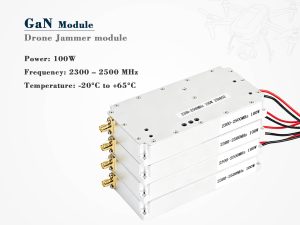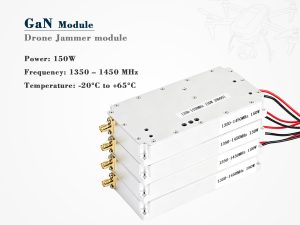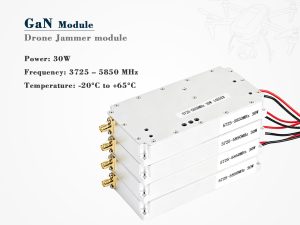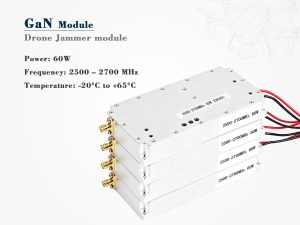
The wholesale drone jammer module market is not a typical electronics category. Buyers are usually system integrators, defense contractors, authorized security distributors, and government-approved programs. Price matters, but compliance, traceability, and technical support matter more. If you are sourcing modules for resale or integration, treat this as a controlled procurement process—not a commodity buy.
What Buyers Mean by “Wholesale Drone Jammer Module”
A module can be a single-band RF board, a multi-band rack unit, or an OEM board set for counter-drone systems. It may include RF power stages, filters, cooling, control interfaces, and antenna ports. The exact configuration depends on the platform and the legal authorization.
| Module type | Typical role | What to check before ordering | Compliance note |
|---|---|---|---|
| Single-band RF module | Focused RF output for one frequency range | Output stability, VSWR protection, thermal design | May require end-user certificate |
| Multi-band module | Covers several remote-control, video, and GNSS bands | Band isolation, power balance, shielding | Export controls often apply |
| OEM board set | For integration into authorized counter-drone systems | Interface docs, firmware support, MTBF data | Not for open-market resale |
| Rackmount module | Fixed-site or vehicle systems | Cooling, remote control, redundancy | Installation by licensed operators only |
| Portable module | Mobile authorized teams | Battery safety, weight, heat management | Strict transport and use rules |
Compliance Is the First Filter
In many countries, drone jamming is restricted to government, military, law enforcement, or licensed operators. A wholesale supplier should ask for end-user details, import/export licenses, and destination country. If a supplier offers “no questions asked” wholesale drone jammer modules, that is a red flag. Legitimate B2B sellers usually have compliance paperwork, restricted product lists, and clear warranty terms.
Supplier Vetting Checklist
-
Business license and export control history
-
Applicable RF test reports and product documentation
-
ISO quality system or similar manufacturing certification
-
Past integration cases in authorized projects only
-
Spare parts and repair policy
-
Clear lead times and MOQ
-
English technical documentation
-
NDA and IP protection
Pricing, MOQ, and Lead Time
Wholesale pricing depends on output power, band count, cooling, enclosure, and compliance documentation. Do not compare only unit price. Ask for landed cost, warranty, and support. A cheap module that fails in the field can cost more than a reliable one.
| Factor | Low-end range | Mid-range | High-end |
|---|---|---|---|
| Band count | 1 | 2–3 | 4+ |
| Cooling | Passive | Fan-assisted | Liquid/advanced |
| Control | Manual | Local digital | Networked/remote |
| Documentation | Basic | Full test report | Full traceability |
| MOQ | Higher | Moderate | Lower for program buyers |
| Lead time | 2–4 weeks | 4–8 weeks | 8–12+ weeks |
Quality and After-Sales
Ask about burn-in testing, temperature cycling, vibration testing, and RF calibration. For wholesale orders, request sample evaluation under NDA. Check warranty length, repair turnaround, and firmware updates. Since the product is controlled, after-sales support should include misuse prevention and operator training materials.
Shipping and Documentation
Controlled RF equipment may face customs scrutiny. Work with freight forwarders experienced in controlled goods. Prepare commercial invoices, packing lists, end-user statements, and licenses. Never misdeclare goods.
Final Thoughts
The wholesale drone jammer module market rewards buyers who prioritize compliance, technical documentation, and long-term supplier relationships. If you are an authorized buyer, define your integration requirements first, then vet suppliers against legal and technical criteria. The lowest quote is rarely the best deal in this category.