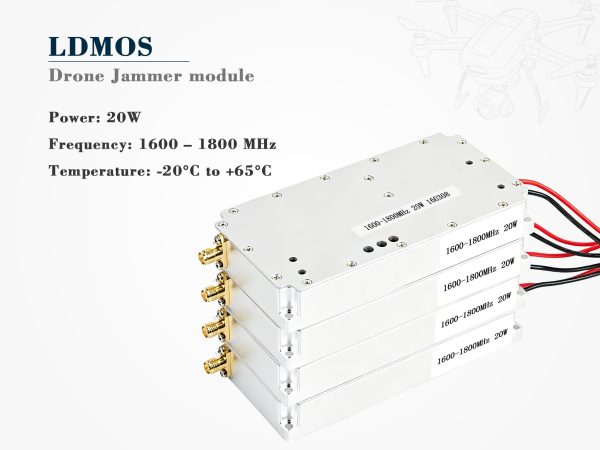
20W Drone Jammer Module 758–788MHz LDMOS
20W drone jammer module 758–788MHz LDMOS with built-in high-speed sweep source, 24–29V DC, SMA female, 115.5×46.5×21mm, 0.21kg.
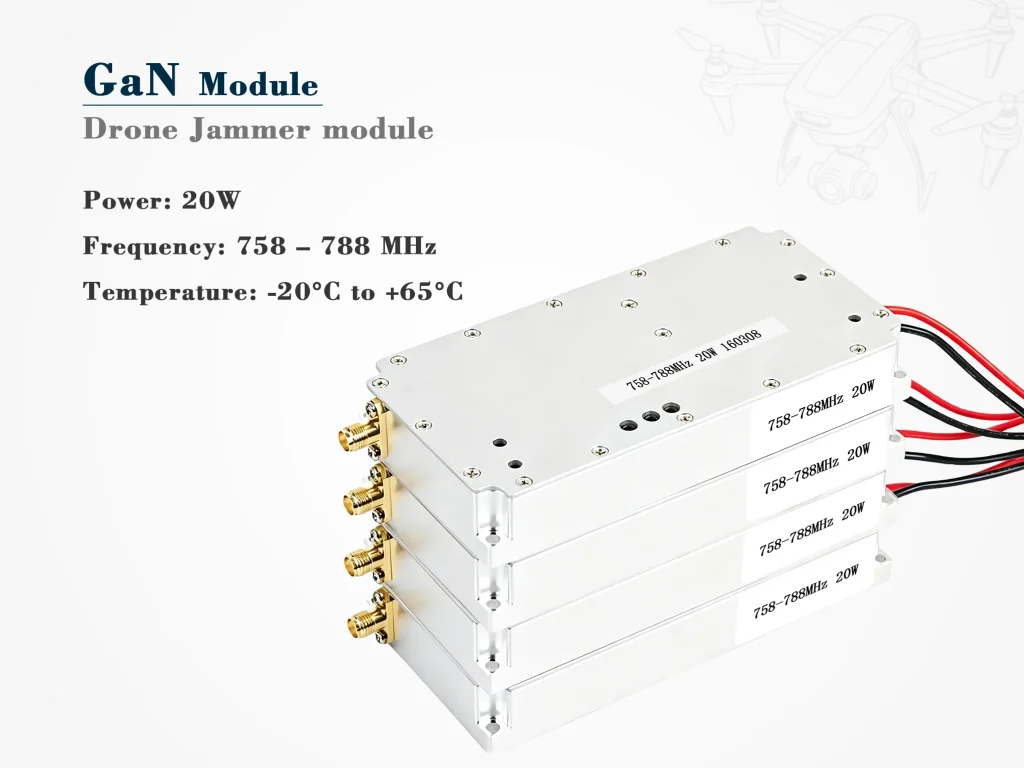
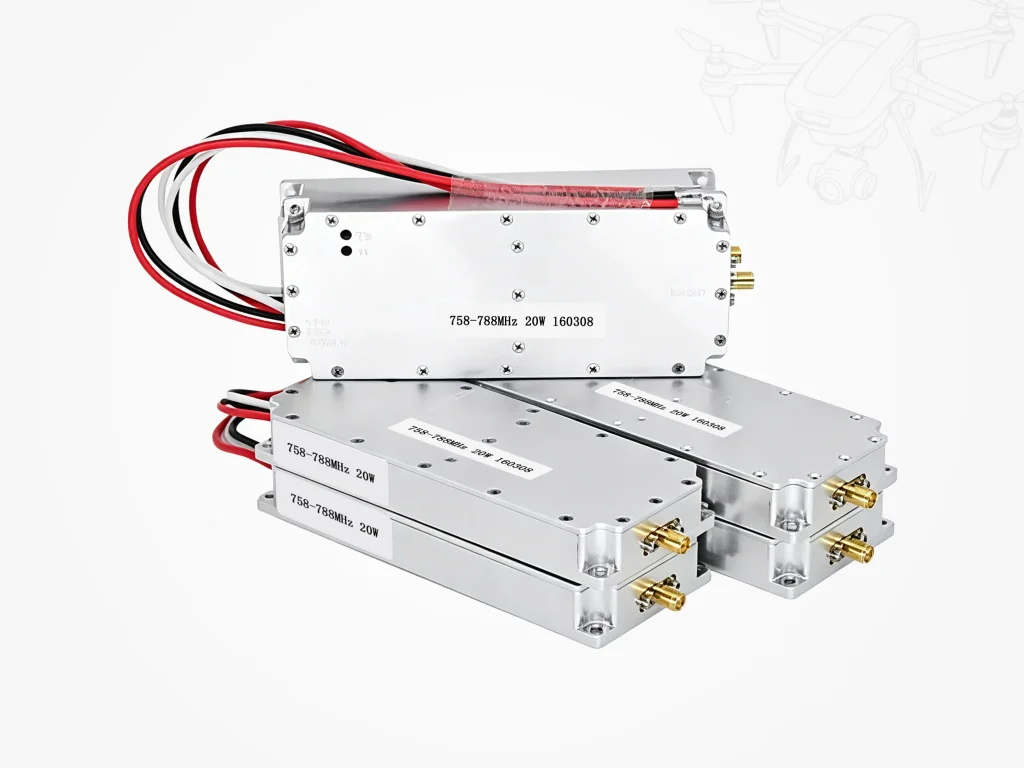
Technical Specifications
| Parameter | Specification | Notes |
| Frequency range | 758–788 MHz | Fixed band |
| Output power | 20 W | Typical |
| Supply voltage | DC 24–29 V | Nominal range |
| Current draw | 2.5 A max | Maximum |
| Modulation source | Built-in high-speed sweep source | Analog interference source |
| Analog scan speed | High-speed sweep | Exact rate configuration-dependent |
| Input / output impedance | 50 Ω | SMA female output |
| Protection LEDs | Power switch, overvoltage, overtemperature | Visual status only |
| Operating temperature | -20 to +65 °C | Case temperature range |
| Dimensions (L×W×H) | 115.5 × 46.5 × 21 mm | Housing only |
| Weight | 0.21 kg | Typical |
| Base material | Not stated | Rugged metal housing |
Product Details
The 20W 758–788MHz LDMOS analog interference integrated module is a compact RF block for drone signal suppression systems. It combines a 20W LDMOS amplifier and a built-in high-speed sweep source in one metal housing, so integrators do not need to match a separate generator and amplifier. The module runs from 24–29V DC and draws up to 2.5A. Output is through an SMA female connector, and output VSWR is specified at ≤2.0. Efficiency is ≥40%, which helps keep heat under control in tight enclosures.
Integrated RF chain, simpler integration
Because the sweep source is already inside, the RF path is shorter and easier to shield. The module is aimed at fixed installations, portable cases, and OEM systems where space and wiring matter. The 758–788MHz band is fixed, so the design is focused rather than broadband. This is useful when the target band is known and you want to avoid extra filtering and tuning work.
Power, control, and status
The switch control is simple: +5V or floating turns the module on; grounding turns it off. That logic is easy to drive from a controller or a manual switch. Three LED indicators cover power, overvoltage, and overtemperature. They give a quick visual check during bench tests and field service. The operating temperature range is -20 to +65°C. Even with ≥40% efficiency, the housing should still be mounted with airflow or a suitable thermal path. Do not block the case surfaces.
Mechanical fit
At 115.5×46.5×21mm and 0.21kg, the module fits into compact enclosures and handheld-style builds. The SMA female output keeps the RF connection standard. Use short, well-matched cable runs and check VSWR before full power. The supply should be clean and within 24–29V DC; a 2.5A current margin is sensible. Add reverse polarity and transient protection at system level if the module is used in vehicle or outdoor setups.
Analog sweep in real builds
The analog sweep source is built in and described as high-speed. Exact scan rate is configuration-dependent, so ask for the sweep profile that matches your use case. A fast sweep can cover the band quickly, but it may not suit every test plan. Check the receiver or detector response in your system and adjust dwell time, antenna pattern, and mounting height. In many builds, the RF module is only one part of the result; the antenna and site layout often matter just as much.
Cooling and power integrity
A 20W drone jamming module in this size can feel warm in continuous use. Mount it to a metal surface, keep vents clear, and test case temperature at full power. Use a supply that stays within 24–29V DC under load. If the input cable is long, check voltage drop at the module. The LEDs help with quick checks, but they do not replace current, temperature, and VSWR measurements during integration.
Where it fits
Typical projects include drone detection-and-response systems, authorized counter-UAS test rigs, and RF research benches. It is not a stand-alone certified end product. Integrators are responsible for enclosure, cooling, power protection, EMC, and local regulatory compliance. The built-in sweep source makes the drone jamming module a practical building block, but final performance depends on antennas, cables, mounting, and the surrounding system.
Ordering notes
Confirm the sweep profile, connector orientation, and control wiring before production. The LED functions are useful for diagnostics, but they are not a substitute for system-level monitoring. For repeated builds, keep the 24–29V supply stable and verify that the housing temperature stays within the stated operating range. A simple test jig with a 50Ω load and a power meter will help catch connector or cable issues early.
Frequently Asked Questions
Case Studies
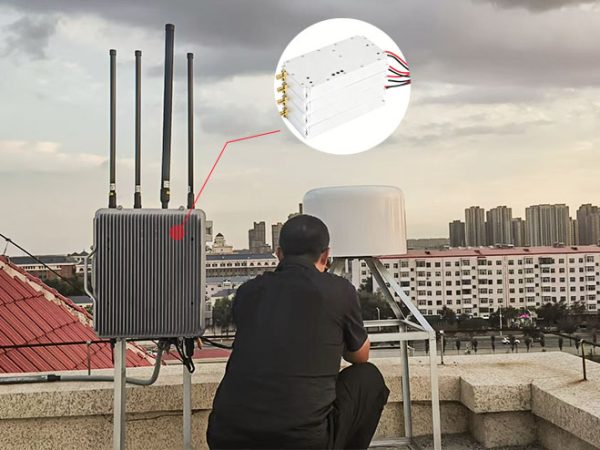
Heilongjiang Weather Center Completes Anti-Drone System Upgrade with Three High-Power Drone Jammer Modules
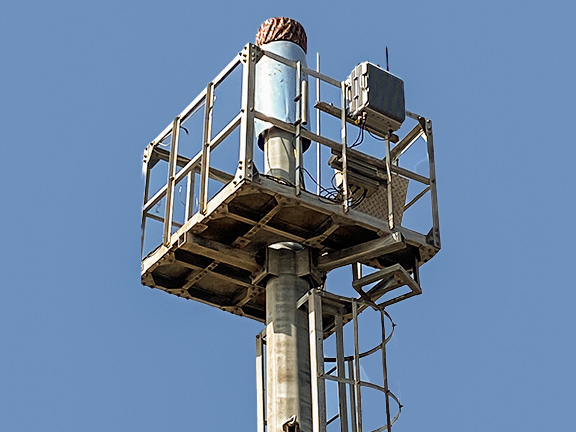
Tangshan Chem Plant Sealed Drone Gaps With 3 GaN Wideband Modules
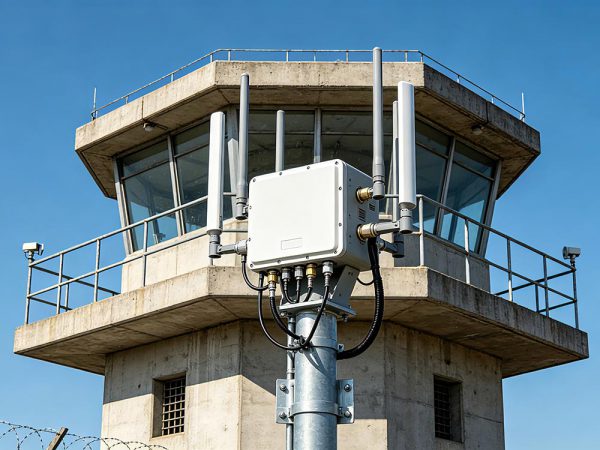
How a National Prison Integrated Our Drone Jamming Module Into Their Fixed Counter-Drone System
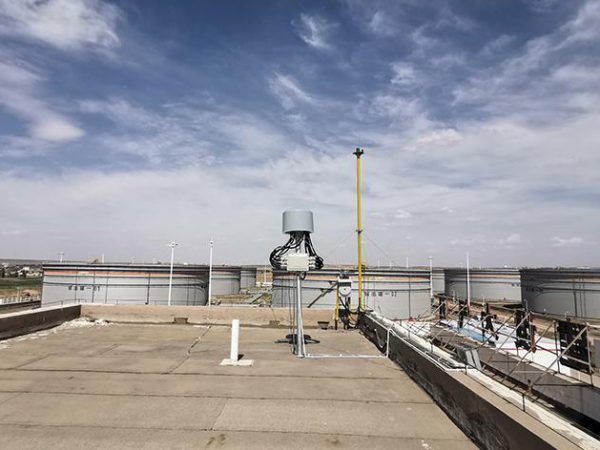
Integrating Core RF Power: OEM Drone Jamming Module for Oil Refinery Security | Case Study
Send Us a Message
Related Products
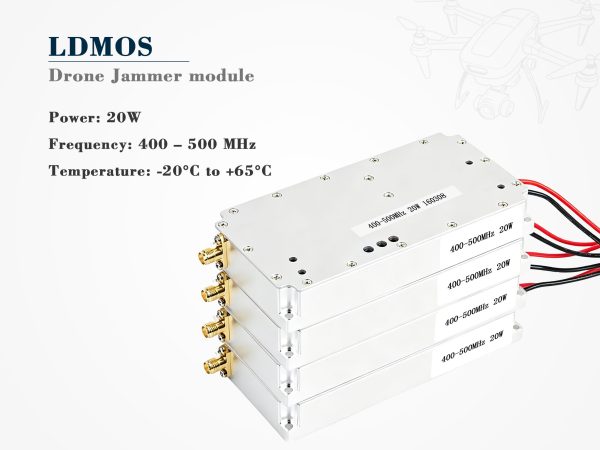
20W LoRa Drone Jammer Module | 400–500MHz RF Test
20W 720–1020MHz UAV Jammer Module | LDMOS Analog
Powerful 20W LDMOS Drone Jammer Module for 6.9–7.2 GHz