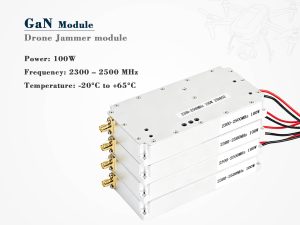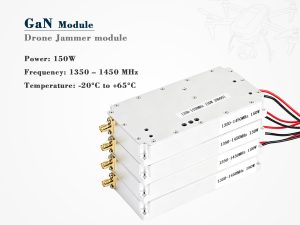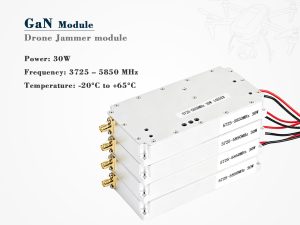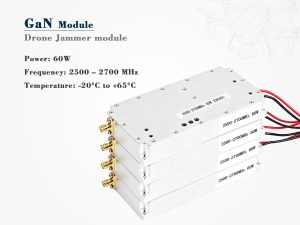
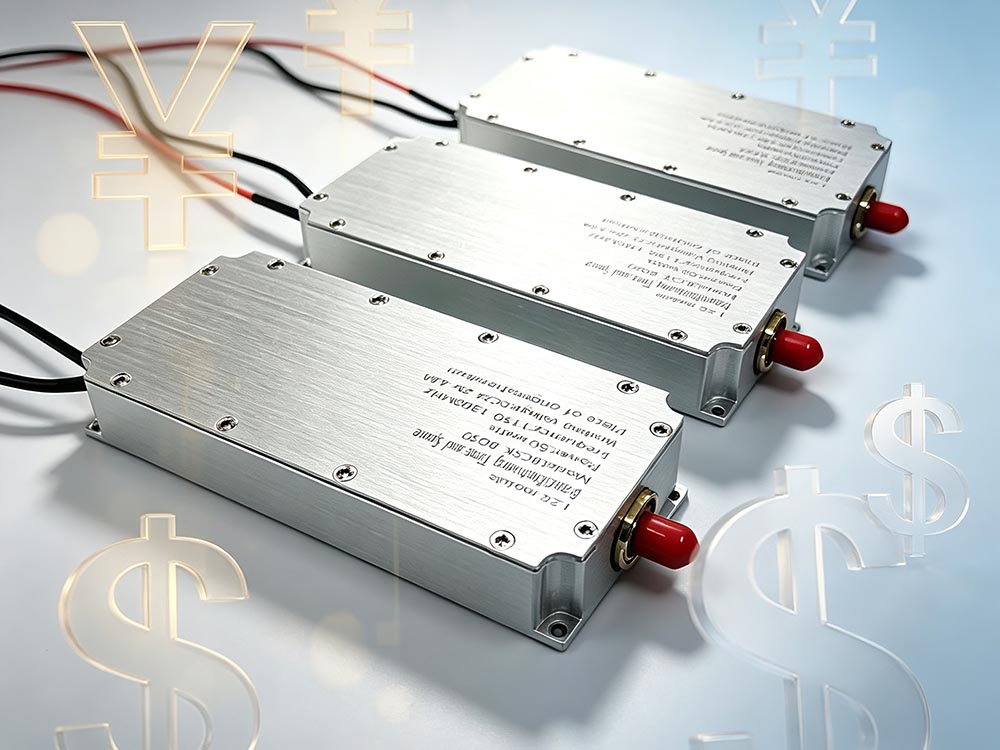
If you have ever collected three quotes for a drone jammer module, you already know the price can swing from a few hundred dollars to tens of thousands. The gap is rarely about one component. It comes from scope: band count, output power, cooling, enclosure, compliance paperwork, and after-sales support.
This article is written for procurement and project planners who need a realistic budget range—not a shopping link. It also assumes the module will be used only where jamming is legally authorized. In many countries, transmitting jamming signals is restricted to government agencies or licensed operators.
Quick answers: what moves the price most?
| Cost factor | Lower-cost signal | Higher-cost signal |
|---|---|---|
| Band coverage | Single band | Multi-band or modular design |
| Output power | Low power | High power with stricter thermal design |
| Mechanical design | Open-frame board | Rugged, IP-rated, vibration-tested housing |
| Integration | Standalone module | API, remote control, logging, network management |
| Compliance | Basic documents | Certified testing, filtering, legal review |
| Order size | Prototype or sample | Volume production with custom firmware |
A buyer who compares only the headline price will usually miss the real cost. Two modules may look similar in a photo, but one may need extra cooling, a larger power supply, or months of integration work.
Market snapshot: typical module price bands
The ranges below are planning estimates, not quotations. Actual prices vary by region, currency, certification requirements, order volume, and legal restrictions. They are intended to help budget conversations, not to replace a formal RFQ.
| Module category | Common project fit | Planning range (USD) | What affects the number |
|---|---|---|---|
| OEM RF board | Integrator prototype | $150–$1,200 | Bands, connectors, firmware, quantity |
| Single-band module | Small fixed site | $300–$900 | Housing, power supply, filtering |
| Multi-band module | Facility or campus | $1,200–$4,500 | Band count, cooling, control software |
| Rugged vehicle module | Mobile patrol | $5,000–$15,000 | Vibration, alternator power, enclosure |
| High-power rack module | Critical infrastructure | $12,000–$40,000+ | Project scope, redundancy, compliance |
| Custom integrated system | Multi-site deployment | $50,000+ | Software, training, installation, support |
These figures explain why “drone jammer module price” is such a broad search term. A low-power board and a rack-mounted system are not in the same product class, even if both are called jammer modules.
Why the cheapest quote often costs more
A low quote can be attractive, especially for a pilot project. But in this category, cheap usually means something was removed from the scope.
-
Missing filters can increase interference with nearby communications.
-
Poor thermal design can shorten module life and cause power derating.
-
No firmware updates can leave the system outdated within a year.
-
No compliance file can create serious legal and procurement risk.
-
Weak support can turn a two-week installation into a two-month delay.
From a procurement view, the better question is not “Which supplier is cheapest?” It is “Which supplier can document performance, support lawful use, and stay reachable after delivery?”
Compliance check before price negotiation
Before asking for a final price, confirm the legal and operational basis of the project.
-
Is jamming allowed in the destination country or region?
-
Who is the authorized operator?
-
Is frequency coordination required with local authorities?
-
What documentation must be provided for inspection or audit?
-
What happens if the device interferes with public or emergency networks?
-
Does the supplier provide logs, audit trails, and operator training?
If any of these answers are unclear, price negotiation is premature. Compliance is not a paperwork detail in this industry; it can determine whether the module can be used at all.
RFQ details that get a serious quote
A useful RFQ should state:
-
Authorized use case and destination country
-
Required operational bands, only where legally permitted
-
Power and coverage expectations
-
Mounting, power supply, and cooling limits
-
Control interface and logging needs
-
Certification and test reports
-
Warranty, spare parts, and training
-
Quantity and delivery schedule
Suppliers who ask about compliance and integration are usually more reliable than those who quote a price within five minutes.
Final budget note
Price is not a sticker. Total cost includes the module, integration, installation, compliance, maintenance, and replacement parts. For early planning, expect OEM boards in the hundreds, finished multi-band modules in the low thousands, and rugged or high-power systems in the tens of thousands.
The right question is not “What is the cheapest drone jammer module price?” but “What is the lowest total cost for a compliant, reliable module?” That shift in thinking will produce a better budget, a safer project, and fewer surprises after delivery.