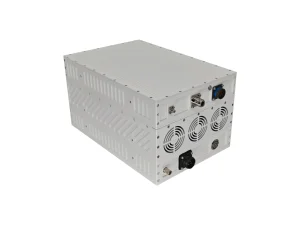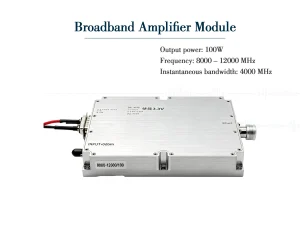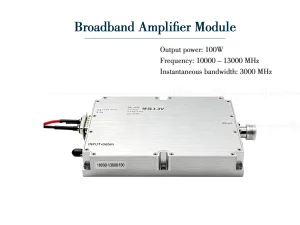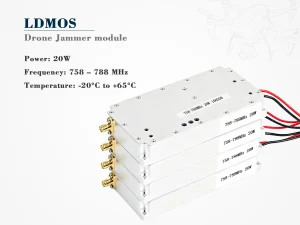
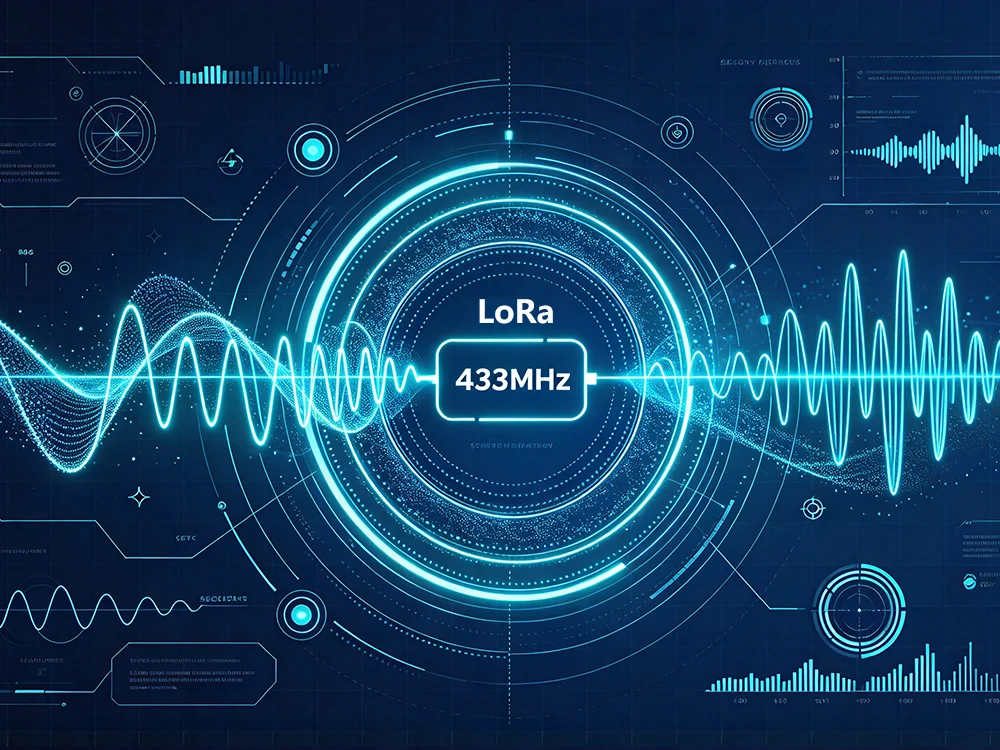
The 433MHz LoRa drone jammer module category sits at an awkward intersection of RF engineering, procurement, and regulation. Many listings present these modules as OEM-ready building blocks, but serious buyers rarely stop at “does it work?” They ask a harder set of questions: Is the product legal in the target market? What does it do to nearby 433MHz IoT devices? Are the test reports credible? And how would an operator detect interference before it becomes an incident?
This article is written for procurement teams, integrators, compliance leads, and counter-UAS evaluators who need a realistic view of the category. It does not provide construction or deployment guidance. In most jurisdictions, transmitting jamming signals is illegal outside narrow authorized scenarios, so the commercial discussion must start with legal exposure rather than hardware enthusiasm.
Why 433MHz and LoRa attract attention
433MHz remains a practical band for low-power telemetry, remote controls, sensors, and industrial IoT. LoRa adds long-range, low-power modulation, which makes it attractive for distributed monitoring and drone-related control or telemetry links. That combination explains why the phrase “433MHz LoRa drone jammer module” appears in search results and supplier catalogs.
But the same characteristics that make 433MHz LoRa useful also make interference risk broad. A module marketed for one scenario can affect LoRaWAN gateways, alarm sensors, utility telemetry, agricultural monitors, and other nearby devices. Buyers should treat the product as a regulated RF risk item, not a generic component.
The first filter is legal, not electrical
A datasheet may list frequency range, output power, and interface options, but it rarely answers the question that matters most: where and under what conditions may the device be used? Export control, spectrum licensing, type approval, and authorized-use rules vary widely. A module that carries a CE or FCC mark may still be unsuitable for a given application if the mark covers a different configuration, antenna, or enclosure.
Procurement teams should require jurisdiction-specific legal review before sampling. Vendors that cannot explain authorized-use boundaries, test standards, and configuration control are a poor fit for any serious project.
Datasheet claims versus evaluation reality
| Evaluation area | What a supplier may claim | What a buyer should verify |
|---|---|---|
| Frequency and band plan | “433MHz ISM” | Exact center frequency, bandwidth, regional band limits, and coexistence with LoRaWAN/IoT devices |
| Output power and EIRP | “High power” | Conducted power, antenna gain, EIRP, tolerance, and test-report scope |
| Spurious and out-of-band emissions | “Low noise” | Harmonic suppression, filtering data, and lab evidence across operating modes |
| Control interface | “OEM-ready” | Protocol documentation, fail-safe behavior, access control, and logging |
| Thermal and duty cycle | “Continuous operation” | Thermal rise, derating limits, and realistic duty-cycle assumptions |
| Compliance documentation | “CE/FCC” | Standards covered, configuration tested, and authorized-use conditions |
The table above is deliberately practical. A module with impressive headline power but weak filtering or unclear documentation is not a bargain; it is an unresolved compliance and interference problem.
Detection belongs in every evaluation
Counter-UAS and RF monitoring teams increasingly treat detection as a first-class requirement. Even in authorized test environments, the ability to observe abnormal RF behavior, distinguish interference from congestion, and document events matters. Detection also helps organizations separate a genuine jamming concern from a faulty sensor, a misconfigured gateway, or normal 433MHz traffic.
For a practical monitoring walkthrough, see How to Detect LoRa Drone Jamming Signals. That guide is a useful companion because it focuses on observation and analysis rather than transmission. In a procurement review, pair any module discussion with a detection plan, escalation path, and evidence-retention process.
Procurement checklist
-
Confirm the legal basis for the intended use in every target jurisdiction.
-
Ask for test reports that match the exact antenna, enclosure, and operating mode.
-
Map collateral risk to nearby 433MHz IoT, alarm, and telemetry systems.
-
Require clear documentation for control interfaces, logging, and fail-safe behavior.
-
Include a detection and monitoring plan before any authorized test.
-
Prefer vendors with traceable configuration control and clear authorized-use statements.
-
Treat “OEM-ready” claims as unverified until documentation and samples align.
Bottom line
The 433MHz LoRa drone jammer module market is not a simple commodity category. It combines RF performance claims with significant legal, coexistence, and reputational risk. The strongest evaluation is not the one that asks only about output power; it is the one that asks about jurisdiction, filtering, documentation, detection, and collateral impact. Buyers who apply that lens will make better decisions—and avoid turning a datasheet claim into an operational problem.