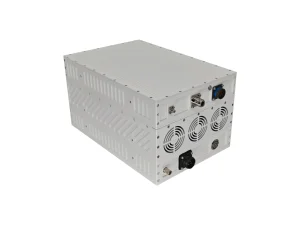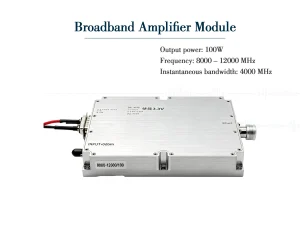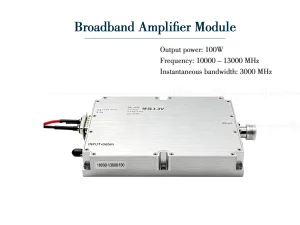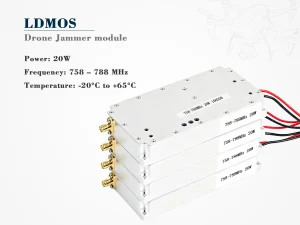
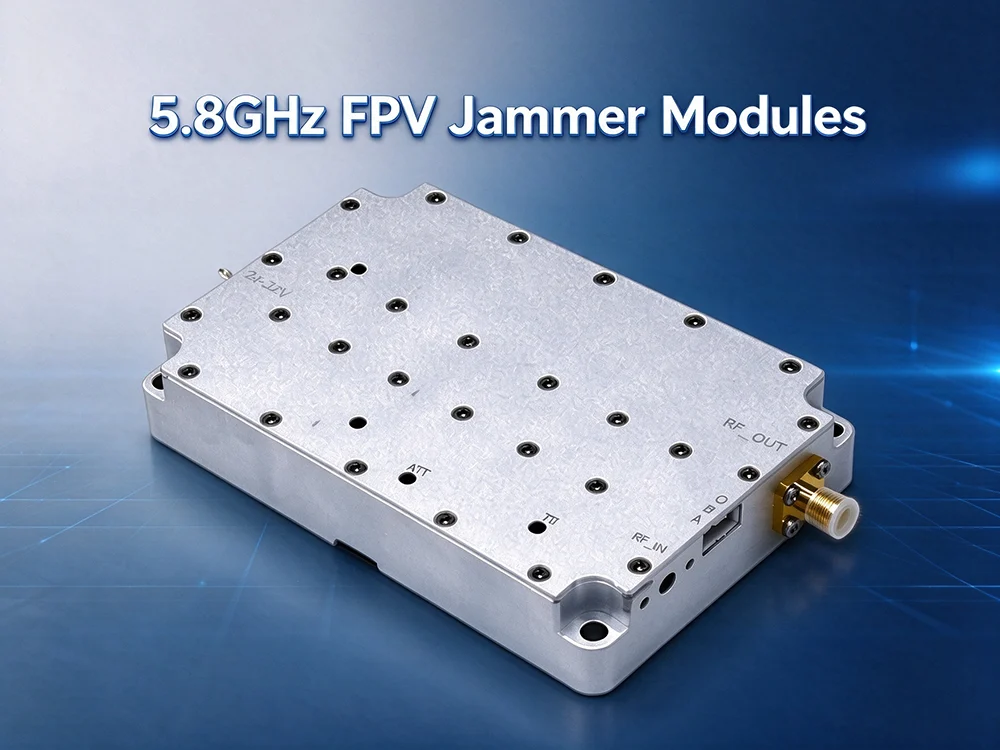
The 5.8GHz FPV jammer module category is often treated as a hardware commodity. In practice, buyers are purchasing a regulated RF subsystem with documentation, integration, and lifecycle implications. This brief focuses on market and procurement signals rather than operational guidance.
Market Snapshot
Demand for 5.8GHz FPV jammer modules comes from three main buyer groups: RF test labs building shielded setups, counter-UAS research teams working under authorization, and systems integrators sourcing modules for controlled evaluation. The common thread is not field deployment but repeatable, documented testing.
What separates a serious supplier from a catalog listing? Usually documentation and integration support. A module with clear block diagrams, EMC reports, and end-use restrictions is easier to approve than one sold mainly on output claims.
What Buyers Compare in Practice
| Comparison Point | What to Ask | Common Red Flag |
|---|---|---|
| Frequency documentation | Is the covered band clearly documented and filtered? | Vague “5.8GHz” claims without test data |
| Output architecture | Can the supplier explain the RF chain at block-diagram level? | Marketing-only descriptions |
| Control and logging | Are access control and event logging available? | No traceability features |
| Thermal design | What duty cycle and cooling assumptions are documented? | Unrealistic continuous-use claims |
| Enclosure and EMC | Are shielding and EMC reports available? | No enclosure or emissions documentation |
| Documentation set | Are manuals, labels, and test reports included? | Incomplete or draft-only paperwork |
| Support and lifecycle | Are spares, service, and revision control offered? | No long-term support path |
A low price sheet rarely reflects the cost of missing documentation. In this category, approval friction is often more expensive than the module itself.
Supplier Evaluation: Look Beyond the Price Sheet
Procurement teams should ask for a written authorized-use statement, a clear distinction between research modules and finished products, and confirmation that labeling and manuals match the target market. Suppliers who cannot explain their compliance position in plain language are a poor fit for institutional buyers.
It also helps to separate sales claims from engineering evidence. Ask for revision history, block diagrams, and EMC documentation before commercial terms are finalized. If a supplier treats these requests as unusual, that is useful information.
Where LoRa Options Enter the Conversation
Some procurement teams review multiple frequency bands for different authorized test scenarios. If your project also compares lower-frequency modules, see our related article on Best LoRa Drone Jammer Module. It frames a separate set of buyer questions; the 5.8GHz FPV jammer module decision should still be driven by its own test plan and regulatory review.
Integration Notes That Affect Approval
Integration risk is often underestimated. Antenna choice, shielding, power quality, and monitoring all affect whether a test setup is controllable and repeatable. Three practical risks deserve early attention:
-
Scope creep: a module approved for a shielded lab may later be proposed for field use without a new review.
-
Weak access control: authorized-use equipment should have clear ownership, logging, and storage procedures.
-
Ambiguous supplier claims: “counter-FPV capability” should be replaced with specific, verifiable documentation.
Teams should also confirm that the module will not be used for unauthorized interference. That confirmation belongs in the procurement file, not just in email.
Quick Buyer Questions
Is a 5.8GHz FPV jammer module a plug-and-play part?
No. It should be treated as a regulated RF subsystem with documentation and integration requirements.
What matters more: output claims or documentation?
For institutional buyers, documentation usually matters more because it supports approval, audits, and repeatable testing.
Can one module serve multiple test scenarios?
Only within the authorized test plan and applicable legal framework. Each new use case may require a fresh review.
Closing
The 5.8GHz FPV jammer module market rewards buyers who ask for evidence early. Start with authorized use, compare suppliers on documentation as well as hardware, and keep the project scope narrow. Teams that do this are better positioned to manage technical, legal, and reputational risk.