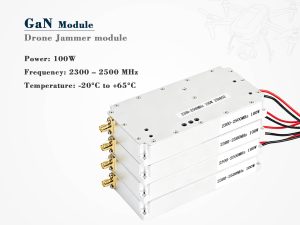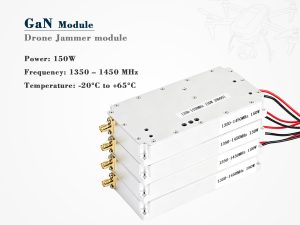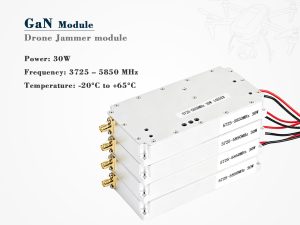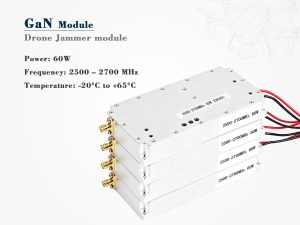
Drone jammer module for video link is a specialized RF subsystem built to degrade or disrupt the wireless downlink that carries live video from a UAV to its ground station. It is not a generic “signal blocker.” In authorized defense, law enforcement, test-range, and compliance scenarios, the module must be engineered around band selection, output power, antenna gain, duty cycle, thermal design, and spectrum regulations. This guide explains the practical points buyers, integrators, and RF engineers ask about most.
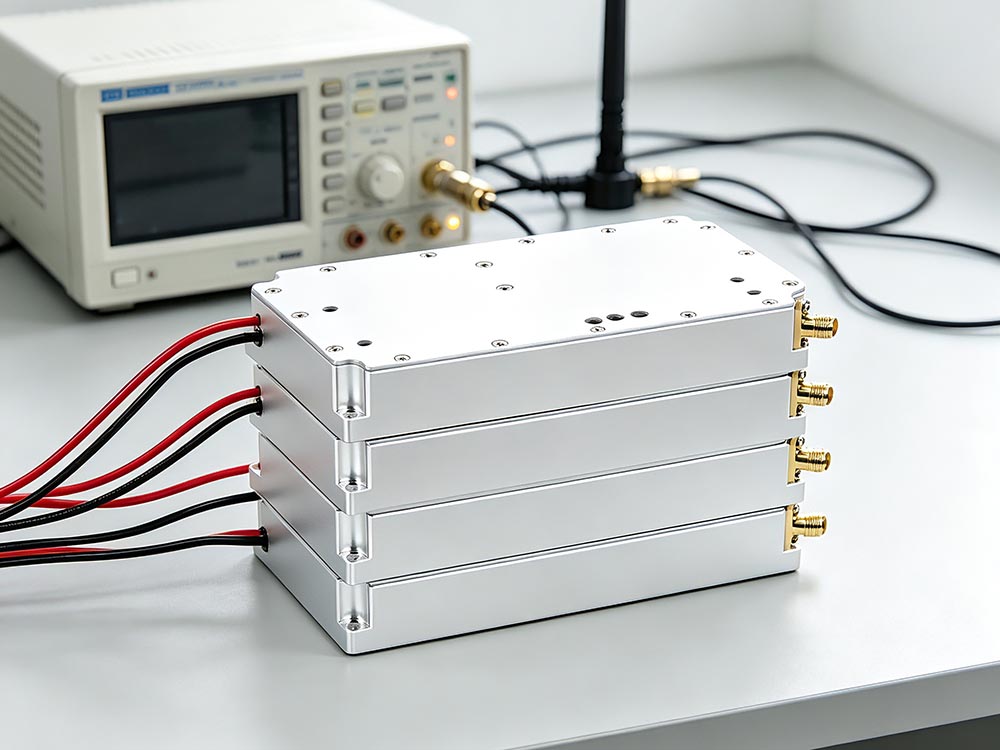
What a Drone Jammer Module for Video Link Actually Does
A video link jammer module targets the RF channel used for real-time video return. Many UAVs use 2.4 GHz or 5.8 GHz for video, while some long-range or specialized platforms use 1.2 GHz, 1.3 GHz, 900 MHz, or licensed bands. The module may use noise, swept frequency, or modulated interference, depending on the target waveform and the rules of engagement.
In legal deployments, the goal is usually controlled disruption: force the UAV video feed to drop, freeze, or degrade so operators can respond. The module should be part of a layered system that includes a drone detection module, RF monitoring, and command authorization.
RF Chain: Detection, Decision, and Transmission
A typical architecture includes:
-
RF front-end for spectrum sensing
-
Signal classification and threat library
-
Jammer exciter and modulator
-
RF power amplifier
-
Directional or sector antenna systems
-
Thermal and power management
-
Safety interlock and compliance logging
Why Video Link Is Different from Control Link
Video links often use wider bandwidth than control links. They may rely on OFDM, adaptive modulation, and high-gain ground antennas. A drone jammer module for video link must therefore match not only frequency but also bandwidth, polarization, and timing. If the module only covers the control link, the video feed may continue. If it only covers the video link, the UAV may still be controlled. That is why multi-band coordination matters.
Drone Jammer Module for Video Link: Bands and Power Table
| Band | Common Video Link Use | Module Design Note | Compliance Note |
|---|---|---|---|
| 2.4 GHz | Consumer and tactical video | Compact antennas, high duty cycle | Widely used; strict power limits |
| 5.8 GHz | HD video downlink | Wider bandwidth, directional gain | High atmospheric loss; legal limits vary |
| 1.2 / 1.3 GHz | Long-range video | Larger antennas, lower loss | Often licensed or restricted |
| 900 MHz | Telemetry and some video | Narrowband options | Regional band plans differ |
| 4.9 GHz | Public safety and specialty | Licensed operation | Authorization required |
| 3.3 GHz | Custom UAV links | Application-specific | Rare and highly regulated |
External reference: ETSI radio equipment standards and FCC jammer enforcement guidance are essential reading before deployment.
Integration Rules for a Drone Jammer Module for Video Link
Antenna Placement and Isolation
Antenna placement decides real-world performance. A high-gain directional antenna can increase effective radiated power, but it also narrows coverage. Poor isolation between transmit and receive chains can desensitize the detection receiver. Use filters, circulators, and physical separation. Keep GPS and control-link antennas away from the jammer path unless the mission requires otherwise.
Cooling and Power Budget
Video link jamming often demands higher duty cycle than control-link jamming because video is continuous. That creates heat. The table below shows typical design trade-offs.
| Parameter | Entry-Level Module | Rugged Module | High-Power Module |
|---|---|---|---|
| Output power | 10–20 W | 30–50 W | 80–150 W |
| Channels | 1–2 | 2–3 | 3–5 |
| Cooling | Heatsink | Forced air | Liquid or advanced cold plate |
| Mounting | Portable | Vehicle or mast | Fixed site or shelter |
| Best use | Lab and short range | Mobile patrol | Authorized fixed defense |
Compliance, Testing, and Legal Boundaries
In many countries, transmitting jamming signals is illegal except for specific government or authorized users. A drone jammer module for video link must be tested in a shielded room, faraday cage, or licensed test range. Key tests include:
-
Frequency accuracy and bandwidth
-
Spurious emissions and harmonics
-
VSWR and antenna matching
-
Thermal rise at maximum duty cycle
-
Duty-cycle timing and fail-safe shutdown
-
Electromagnetic compatibility
Documentation should cover serial numbers, firmware versions, operator authorization, and mission logs. Without this, a technically capable module can become a legal and operational liability.
Selection Matrix for Buyers
| Buyer Need | Recommended Focus | Ask the Supplier |
|---|---|---|
| Portable patrol | Lightweight 2.4/5.8 GHz | Battery life, duty cycle, antenna kit |
| Vehicle mount | Rugged 2–3 band | Vibration rating, power input, cooling |
| Fixed site | High-power directional | ERP, sector coverage, remote control |
| Test lab | Repeatable and shielded | Calibration, logging, safety interlock |
| System integrator | Open API and modular RF | Firmware access, band modules, diagnostics |
FAQ
What output power is typical?
For portable authorized use, 10–50 W is common. Fixed-site systems may use higher power, but effective radiated power and legal limits matter more than raw watts.
Can one module cover 2.4 GHz and 5.8 GHz?
Yes, but dual-band design requires separate filters, amplifiers, and antennas. A single wideband chain often sacrifices efficiency and creates unwanted emissions.
How do integrators reduce collateral interference?
Use directional antennas, narrow band filters, low duty cycle where allowed, shielding, and strict operating procedures. Always coordinate with spectrum authorities.
Final Thoughts
A drone jammer module for video link is a precision RF tool, not a plug-and-play blocker. The best results come from matching bands, power, antennas, cooling, and compliance to the mission. Buyers should prioritize documented testing, legal authorization, and system integration over maximum output power. When deployed correctly, the module can support counter-UAV operations while reducing risk to nearby networks and equipment.