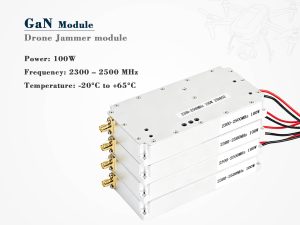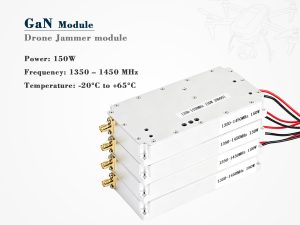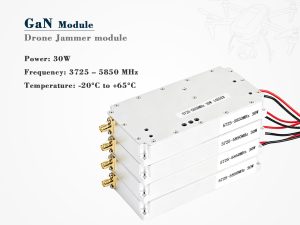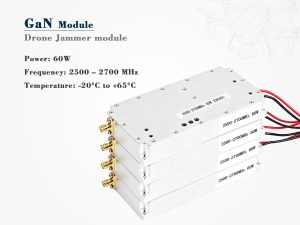
Drone jammer module vs signal jammer is a comparison that many buyers search for, yet the two terms are not fully interchangeable. A signal jammer is usually a complete device that blocks one or more wireless services. A drone jammer module is normally a subsystem or building block inside a larger counter-drone system. That difference affects power design, cooling, antennas, compliance, and total cost.
What Does “Drone Jammer Module vs Signal Jammer” Really Compare?
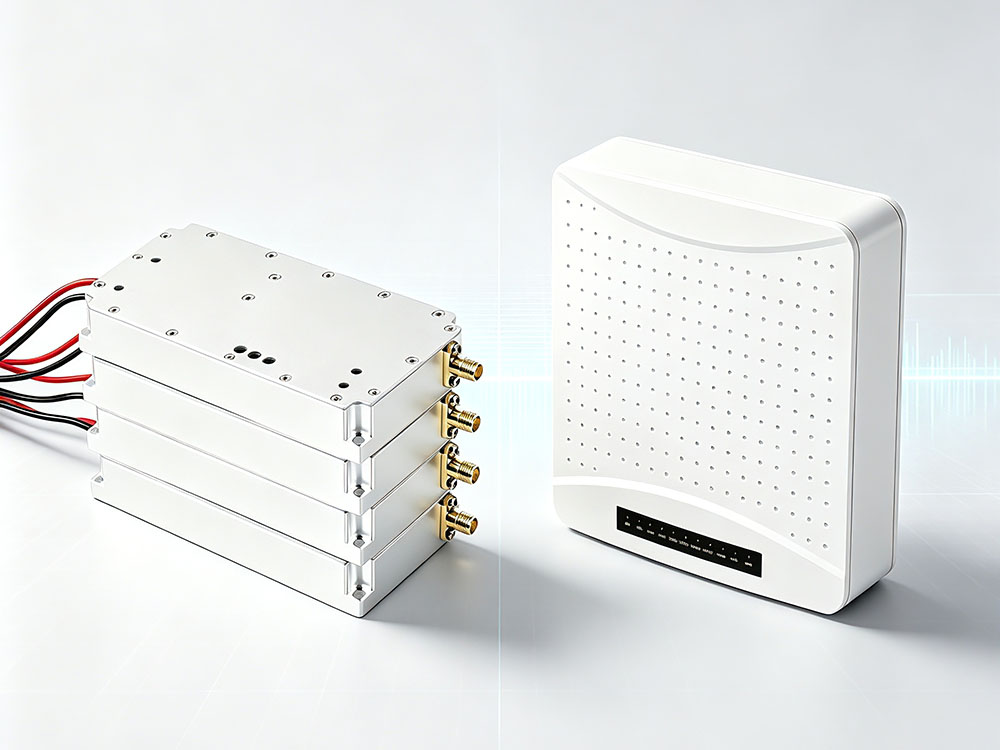
A drone jammer module is often an RF power amplifier, signal generator, or multi-band module designed to disrupt drone command, telemetry, video, or GNSS links. It may be sold as an open-frame board, a shielded module, or a rack-mounted unit for OEM integration.
A signal jammer is a broader category. It can mean a handheld phone jammer, a WiFi blocker, a GPS jammer, or a drone countermeasure device. In everyday language, people use “signal jammer” as an umbrella term. In engineering procurement, however, the word “module” signals that the item is not a finished product.
For related reading, see our guide to RF jammer modules.
Drone Jammer Module vs Signal Jammer: Comparison Table
| Aspect | Drone Jammer Module | General Signal Jammer |
|---|---|---|
| Definition | Component or subsystem for integration | Finished or semi-finished jamming device |
| Main target | Drone control, video, telemetry, GNSS | Phones, WiFi, GPS, drones, or mixed signals |
| Frequency design | Often multi-band and drone-specific | Varies by model and market |
| Output power | Designed around system ERP and duty cycle | Usually rated as a complete device |
| Form factor | PCB, shielded module, amplifier block | Handheld, desktop, vehicle, or rack unit |
| Antenna | External, directional, or sector antenna | Integrated or external depending on design |
| Cooling | Heatsink, fan, liquid cooling, or conduction | Case-level cooling |
| Integration | Requires controller, power supply, antenna | Often plug-and-play |
| Compliance | Strongly regulated in most countries | Strongly regulated in most countries |
| Typical buyer | OEM, integrator, defense contractor | End user, security team, researcher |
| Price pattern | Lower per module, higher system total | Single-unit price, limited expansion |
Core Technical Differences
Frequency Agility and Band Coverage
A drone jammer module usually focuses on common UAV bands. These can include 433 MHz, 868 MHz, 915 MHz, 1.2 GHz, 1.5 GHz GNSS, 2.4 GHz, and 5.8 GHz. Some modules also cover 3.3 GHz or custom military bands. A general signal jammer may cover only cellular bands, only WiFi, or a mix of consumer frequencies.
Output Power and ERP
Power is not just wattage. Effective radiated power, or ERP, depends on cable loss, antenna gain, and beamwidth. A 10 W drone jammer module connected to a high-gain directional antenna can outperform a 30 W signal jammer with a poor antenna. Buyers should compare ERP, not only module wattage.
Antenna and Directionality
Drone defense often uses directional or sector antennas to reduce interference with nearby networks. A generic signal jammer may use omni-directional antennas, which can raise legal and operational risk. For detection and tracking, pair jamming with a drone detection system.
Cooling and Duty Cycle
Modules used in continuous operation need serious thermal design. A drone jammer module may run at high duty cycle in a fixed site, so heatsink size, airflow, and ambient temperature matter. Many low-cost signal jammers are designed for short bursts, not 24/7 operation.
External technical references are useful here. The FCC explains why jamming devices are illegal in the United States, while the FAA provides UAS safety context. The ITU offers international spectrum management background.
When a Drone Jammer Module Beats a General Signal Jammer
OEM Anti-Drone Systems
If you are building a counter-drone product, a drone jammer module vs signal jammer comparison usually favors the module. You can choose bands, power levels, antennas, and software control. You can also integrate the module into a larger command-and-control platform.
Fixed Site Protection
Airports, prisons, and critical infrastructure may need fixed-site mitigation. A multi-band drone jammer module can be mounted with sector antennas and controlled by a detection system. A generic signal jammer rarely offers the same frequency control or audit logs.
Mobile Convoy Protection
Vehicle-mounted systems need rugged modules, vibration tolerance, and stable power. A finished consumer signal jammer is often too fragile. A drone jammer module designed for mobile use can be integrated with vehicle power and cooling.
When a Signal Jammer Label Is Misleading
Some vendors sell a “drone signal jammer” that is simply a repackaged phone jammer. It may transmit on 2.4 GHz and 5.8 GHz, but without proper filtering or antenna control. That can interfere with WiFi, Bluetooth, and other legitimate services. In regulatory terms, this is risky. In technical terms, it may be ineffective against frequency-hopping drones.
A true drone jammer module should specify:
-
Frequency bands and bandwidth
-
Output power per band
-
Modulation or jamming waveform
-
Harmonic and spurious emissions
-
Control interface, such as RS-485, Ethernet, or GPIO
-
Cooling method and duty cycle
-
Antenna requirements
If a supplier cannot provide these details, the product is probably not a professional module.
Legal and Regulatory Reality Check
In many countries, transmitting jamming signals is illegal except for authorized government or military use. The FCC states clearly that cell, GPS, and WiFi jamming devices may not be marketed, sold, or operated in the U.S. Similar restrictions exist in the EU, UK, Canada, Australia, and many other markets.
For drone-specific systems, authorization may be limited to police, military, or approved critical infrastructure operators. Always check local law before buying.
Legal Check Before You Buy a Drone Jammer Module or Signal Jammer
| Question | Why It Matters |
|---|---|
| Who is allowed to operate it? | End-user rules vary by country |
| Which frequencies are permitted? | Some bands are strictly protected |
| Is type approval required? | Import and sale may be restricted |
| Can output power be limited? | Lower ERP reduces interference risk |
| Is there a licensed operator? | Many systems require trained personnel |
| Are logs and controls available? | Accountability matters for audits |
Buying Checklist
| Check | Good Sign | Red Flag |
|---|---|---|
| Frequency list | Clear band-by-band specs | “Blocks all signals” |
| Power rating | ERP and per-band data | One vague wattage number |
| Cooling | Heatsink or fan data | No thermal info |
| Control | API, serial, or Ethernet | No remote control |
| Compliance | Clear legal notices | “No license needed” |
| Support | Test report and integration help | No datasheet |
| Warranty | Defined terms | Unclear returns |
FAQ
Is a drone jammer module just a signal jammer?
No. A drone jammer module is usually a component for integration. A signal jammer is a broader term for a complete jamming device. The module may be part of a signal jammer system, but the words describe different levels of product.
Can I legally buy a drone jammer module?
It depends on your country and status. In many places, buying, owning, or operating jamming equipment is restricted or illegal. Government, military, and some critical infrastructure operators may receive limited authorization. Check with a qualified local attorney or regulator.
Which is better for drone defense?
For professional drone defense, a purpose-built drone jammer module is usually better because it offers band control, antenna flexibility, and system integration. For simple lab testing, a low-power shielded enclosure may be enough, but legal limits still apply.
Conclusion
The drone jammer module vs signal jammer question comes down to scope. A signal jammer is a category. A drone jammer module is a specialized building block. If you need a finished device, you may search for a signal jammer. If you are building or upgrading an anti-drone system, you should compare modules by frequency, ERP, cooling, control, and compliance.
Choose the module when integration, range, and frequency control matter. Choose a finished signal jammer only when it is legal, properly specified, and fit for the task. In counter-drone work, vague labels create technical and legal risk. Precise specifications create reliable systems.