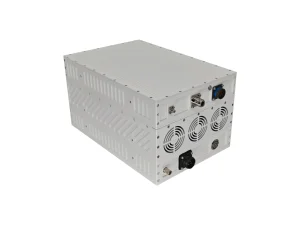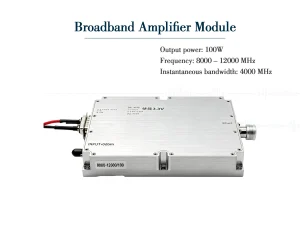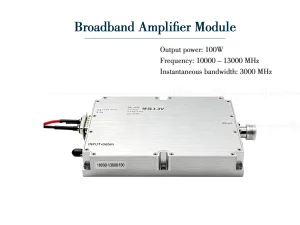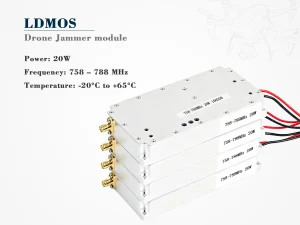
The market for GNSS drone jammer modules is often described in extremes. One narrative stresses urgent counter-UAS demand; another focuses almost entirely on legal risk. A more useful industry view treats the module as a regulated RF subsystem intended for authorized deployments—not as a generic accessory that can be bought, installed, and switched on without governance.
That distinction matters for integrators, procurement teams, and operators. A GNSS drone jammer module may sit inside a broader counter-UAS architecture, but it does not create legal authority, replace detection systems, or remove aviation-safety obligations. The strongest suppliers are increasingly competing on documentation, auditability, fail-safe behavior, and lifecycle support rather than on headline claims alone.
Where demand is coming from
Interest is concentrated in environments where drone intrusion is treated as an operational risk: critical infrastructure, airports, correctional facilities, border controls, public events, and authorized defense test ranges. In many jurisdictions, use is restricted to government agencies or specifically authorized operators. As a result, procurement conversations are shifting from standalone devices toward managed subsystems that log activity, report faults, integrate with detection workflows, and support after-action review.
This is also changing how buyers evaluate a drone jammer module. Technical fit remains important, but it is no longer the only question. Teams now ask whether the module can be governed, maintained, updated, and documented in a way that survives regulatory and public scrutiny.
What a GNSS drone jammer module is—and is not
At a high level, a GNSS drone jammer module is an RF component designed to interfere with GNSS reception in controlled and authorized scenarios. It is not a drone detector, a complete counter-UAS system, or a substitute for rules of engagement. It should be evaluated as one part of a layered process that includes detection, identification, human decision-making, response, and review.
For a plain-language explanation of signal flow and system boundaries, see How Does a Drone Jammer Module Work?. That foundational guide is useful for stakeholders who need to understand the module’s role without treating it as a standalone solution.
What buyers actually evaluate
| Evaluation area | Practical question | Common failure |
|---|---|---|
| Regulatory fit | Is operation permitted at this site, by trained personnel, with documented approvals? | Treating authorization as paperwork after purchase |
| Aviation and public safety | Has interference risk to nearby GNSS-dependent systems been assessed? | Assuming “low power” removes all risk |
| Detection integration | Does the module operate only within an authorized workflow and audit trail? | Buying the module before defining detection and decision rules |
| Fail-safe behavior | What happens on power loss, overheating, or control-link loss? | No status telemetry or manual recovery plan |
| Cybersecurity | Who can change settings, and are changes logged? | Default credentials and shared access |
| Lifecycle support | Are training, spares, firmware governance, and disposal covered? | One-off purchase with no long-term support |
The table points to a broader trend: buyers are not just purchasing an RF module. They are purchasing evidence that the module can be used responsibly within a specific legal and operational context.
Compliance is the product, not a footnote
Radio-spectrum rules, aviation safety requirements, export controls, and end-user obligations vary by jurisdiction. A supplier’s ability to provide clear documentation—such as authorized-use statements, training materials, integration guidance, incident-reporting procedures, and warranty terms—can matter as much as the hardware itself. This article is not legal advice; operators should confirm requirements with qualified counsel and relevant authorities.
For procurement teams, the safest approach is to start with authority and operational workflow, then evaluate the GNSS drone jammer module against those constraints. A module that cannot be audited, updated, or supported may create more risk than it removes.
Integration realities
A GNSS drone jammer module works best as part of a layered counter-UAS process: detect, identify, decide, respond, and review. Integration should define who can authorize activation, what conditions trigger a response, how faults are escalated, and how events are recorded. Human oversight and clear rules of engagement are essential.
Suppliers should also be asked how the module reports health status, how firmware changes are controlled, and what interfaces are available for command-and-control systems. These questions are less glamorous than RF specifications, but they often determine whether a deployment is sustainable.
Procurement questions worth asking
-
Which jurisdictions have approved this module for the intended use?
-
What documentation supports lawful deployment and operator training?
-
How does the module report status, faults, and configuration changes?
-
What integration interfaces are available for authorized command-and-control systems?
-
How are export-control and end-user requirements handled?
-
What is the support model for spares, training, firmware governance, and disposal?
Outlook
The GNSS drone jammer module market is likely to become more compliance-driven, not less. As counter-UAS programs mature, buyers will favor suppliers that can demonstrate auditability, interoperability, safety governance, and lifecycle support. The keyword will remain a procurement term, but successful deployments will be framed as regulated RF subsystems within authorized counter-UAS architectures—not as standalone devices.
In short, the technical module is only one layer. Legal authority, safety assessment, detection integration, human oversight, and lifecycle governance determine whether a deployment is defensible. Teams that start with those questions will be better positioned to evaluate any GNSS drone jammer module on the market.