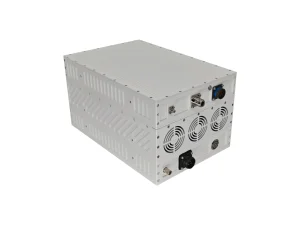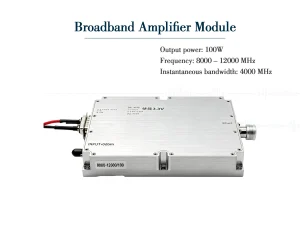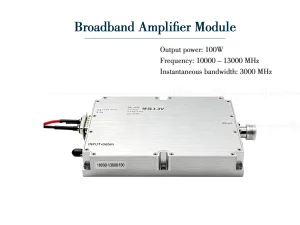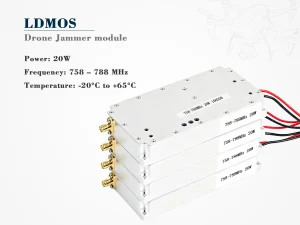
The market for counter-UAS hardware is moving away from single-purpose components and toward integrated, compliance-aware subsystems. Within that shift, the multi-band LoRa drone jammer module has become a useful category marker for buyers, integrators, and security teams evaluating RF-based counter-drone equipment for authorized environments. The term is often used loosely, however, so it helps to separate technical scope from marketing language.
This article is written as an industry and procurement briefing rather than a product roundup. It focuses on what the module category means, how deployment models differ, and why compliance documentation matters as much as RF specifications. It does not provide operating instructions, and it should not be read as guidance for unlicensed RF interference.
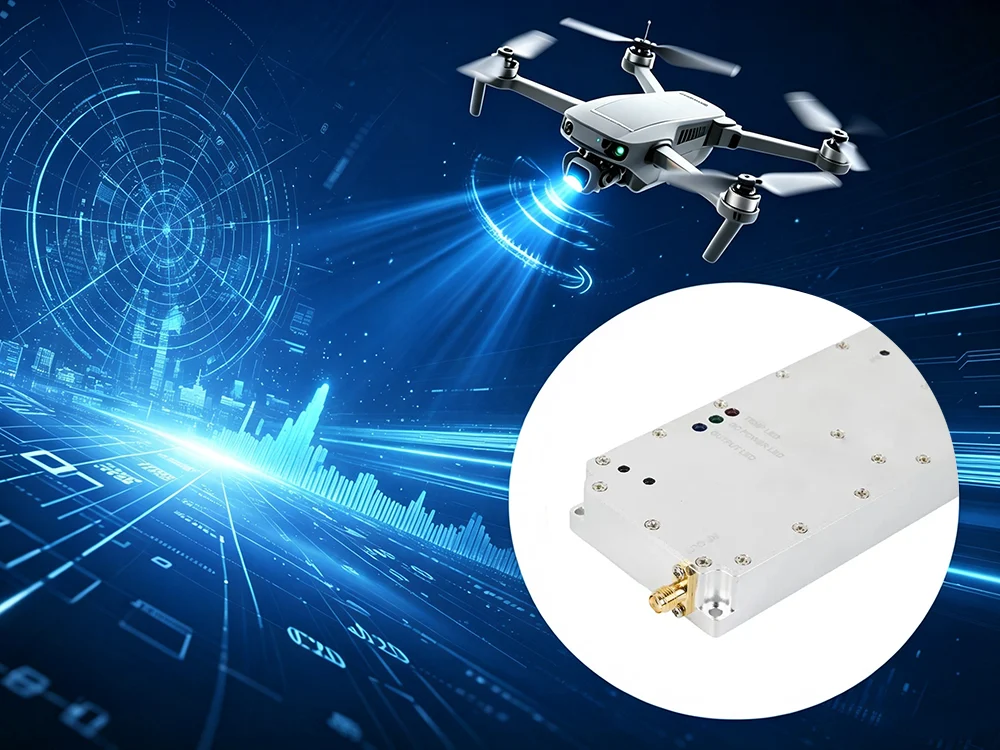
What the category actually covers
A multi-band LoRa drone jammer module is typically positioned as a compact RF subsystem designed to support counter-UAS functions across more than one frequency range. “LoRa” in the name usually refers to the module’s relevance to LoRa-based control or telemetry links, not to a single universal design standard. “Multi-band” means the module is intended to address several RF paths or bands, often through multiple RF chains, filtering stages, and control interfaces.
Buyers should be careful with this terminology. A genuine multi-band module is not simply a single-band device with a broader marketing label. It should be supported by clear documentation on band coverage, channel configuration, thermal behavior, electromagnetic compatibility, control interfaces, and safety limits. For authorized users, the module is one part of a larger counter-UAS workflow that includes detection, identification, rules of engagement, logging, and supervision.
Market drivers and deployment models
Demand is strongest where security teams need modular counter-UAS capability without building every RF component from scratch. Government security, critical infrastructure protection, regulated event security, and approved test environments are the most common contexts. Civilian use remains highly restricted in many jurisdictions, and procurement teams should treat legal authorization as a gating requirement rather than a post-purchase consideration.
| Deployment model | Typical operator | Key requirement | Module implication |
|---|---|---|---|
| Government security | Authorized agencies | Clear legal mandate and supervision | Audit logs, controlled interfaces, documented band limits |
| Critical infrastructure | Approved security teams | Integration with detection and response workflows | Stable thermal design and EMI/EMC evidence |
| Event security | Licensed specialists | Rapid deployment under strict rules | Compact form factor and fail-safe controls |
| R&D and testing | Accredited laboratories | Controlled, shielded environments | Configurable test modes and detailed documentation |
The table shows why a single “best” specification does not exist. A module that suits an approved laboratory may be unsuitable for field integration, and a field-oriented unit may lack the logging and access controls required by public-sector buyers.
Design and procurement priorities
For integrators, the most important questions are not only about output capability. They concern reliability, traceability, and responsible control. A multi-band LoRa drone jammer module should be evaluated as part of a system that includes detection sensors, command-and-control software, operator training, and maintenance processes.
| Evaluation area | Buyer question | Why it matters |
|---|---|---|
| RF architecture | Is band coverage documented band by band? | Prevents overbroad marketing claims and integration surprises |
| Thermal design | Are duty cycles and cooling assumptions stated? | Supports reliability and reduces field failure risk |
| EMI/EMC | Are test reports and integration notes available? | Helps avoid interference with nearby systems |
| Control and logging | Are access control and event logs supported? | Improves accountability in authorized deployments |
| Firmware | Is update policy clear and signed? | Reduces supply-chain and configuration risk |
| Compliance file | Are export, spectrum, and safety documents complete? | Supports legal review and procurement approval |
A common mistake is to compare modules only by size, weight, and nominal band count. In practice, documentation quality often determines whether a module can pass internal legal review, insurance checks, and system-level acceptance testing. For a buyer-oriented shortlist and product comparison, see our guide to the Best LoRa Drone Jammer Module.
Compliance risk deserves first-page attention
RF jamming is prohibited or tightly restricted in many countries. Even where counter-UAS activity is permitted, it is usually limited to specific authorities, facilities, or operational conditions. Export controls may also apply to modules, components, software, and technical data. Procurement teams should therefore ask for jurisdiction-specific legal review before sampling, importing, or integrating any drone jammer module.
Responsible suppliers should be able to explain intended use boundaries, access controls, logging features, and documentation packages without promising unrestricted operation. Buyers should be cautious of vendors that frame compliance as a customer-only issue or that provide vague answers about spectrum authorization and end-use restrictions.
Conclusion
The multi-band LoRa drone jammer module category is best understood as a compliance-sensitive counter-UAS building block, not a standalone solution. The strongest procurement strategies combine technical due diligence with legal review, deployment planning, and operator accountability. As the market matures, documentation quality, controlled interfaces, and responsible supply-chain practices will matter as much as band coverage in separating credible modules from marketing claims.