Security teams comparing the top drone jamming modules for security quickly realize that no single metric decides a purchase. Band coverage, effective radiated power, modularity, and regulatory status all shape field performance. This guide covers seven proven modules for 2026, including a comparison table and legal notes for safe deployment.
What Defines a Reliable Module?
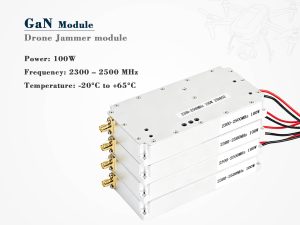
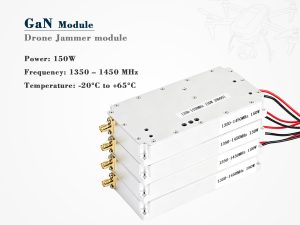
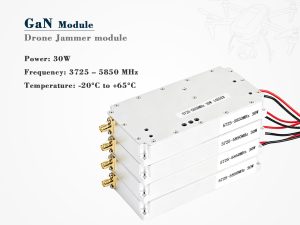
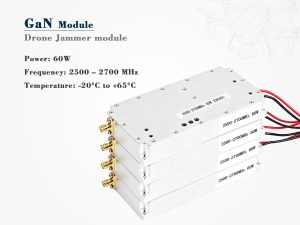
A reliable module covers the main UAS control frequencies: 2.4 GHz, 5.8 GHz, GPS L1/L2, and often 433 MHz or 915 MHz for older drones. Output power typically ranges from 15 W for handheld units to 100 W per band for fixed sites. Look for hot-swappable RF heads, built-in spectrum sensing, and IP65-rated enclosures if the unit will sit outdoors. Modular systems also let you add bands later without replacing the entire rack. Some modules include automatic signal detection that triggers jamming only when a drone uplink is present, which reduces duty cycle and regulatory risk.
7 Proven Top Drone Jamming Modules for Security
The seven top drone jamming modules for security below cover different deployment profiles, from vehicle convoys to airport perimeters.
| Model | Bands Covered | Effective Range | Output Power | Best For |
|---|---|---|---|---|
| SkyFence M4 | 2.4/5.8/GPS | 800 m | 40 W per band | Fixed perimeters |
| DroneGuard R12 | 2.4/5.8/GPS/433 | 1.2 km | 80 W total | Airports, prisons |
| AeroShield P6 | 2.4/5.8 | 500 m | 25 W per band | Vehicle convoys |
| Sentinel J8 | 2.4/5.8/GPS/GLONASS | 1.5 km | 100 W per band | Critical infrastructure |
| Nomad Q3 | 2.4/5.8 | 300 m | 15 W per band | Handheld response |
| Fortress X2 | 2.4/5.8/GPS/915 | 900 m | 60 W total | Campus security |
| Tactical M7 | 2.4/5.8/GPS | 700 m | 50 W per band | Mobile units |
SkyFence M4 is a fixed-site favorite for campus perimeters, with solid GPS denial and remote management. DroneGuard R12 adds 433 MHz coverage for legacy hobby drones and is often seen at prisons and airports. AeroShield P6 is compact enough for convoy vehicles, with two-band jamming and fast boot-up. Sentinel J8 delivers high power for critical infrastructure and covers GLONASS as well as GPS. Nomad Q3 is a handheld unit for rapid response, trading range for portability. Fortress X2 covers 915 MHz for industrial IoT threats, with a balanced 60 W output. Tactical M7 works as a mobile-unit workhorse with 50 W per band and a ruggedized chassis.
Most fixed modules use sector antennas to focus energy on a defined airspace, reducing collateral interference. For regulatory details, review the FCC’s jammer enforcement page.
Deployment and Legal Factors
Deploying the top drone jamming modules for security without a spectrum plan can disrupt Wi-Fi, Bluetooth, and even aviation navigation. In the United States, private entities generally cannot legally operate jammers; only federal agencies have broad authority. Many security teams therefore pair passive detection with law enforcement response, or use jammers only in controlled military ranges. Always coordinate with local aviation regulators and spectrum authorities. Conduct a site survey to map existing RF signals before activating any module. This step prevents accidental disruption of critical links such as air traffic control or emergency communications. For vendor-neutral threat data, see DroneShield’s counter-drone overview.
FAQ
Q: Which modules are legal for private security teams?
A: In most jurisdictions, private use is heavily restricted. Fixed modules may be approved for military, law enforcement, or national infrastructure operators. Check national spectrum rules and obtain written authorization before deployment.
Q: Can a single module jam all drones?
A: No. Multi-band modules cover most commercial drones, but frequency-hopping or custom UAS may require additional bands. Use detection first to confirm the threat frequency.