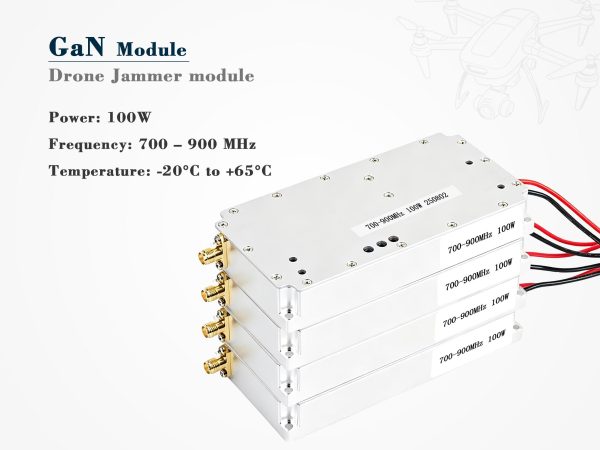
100W Anti-Drone Module: Ultimate 700-840MHz GaN Jammer
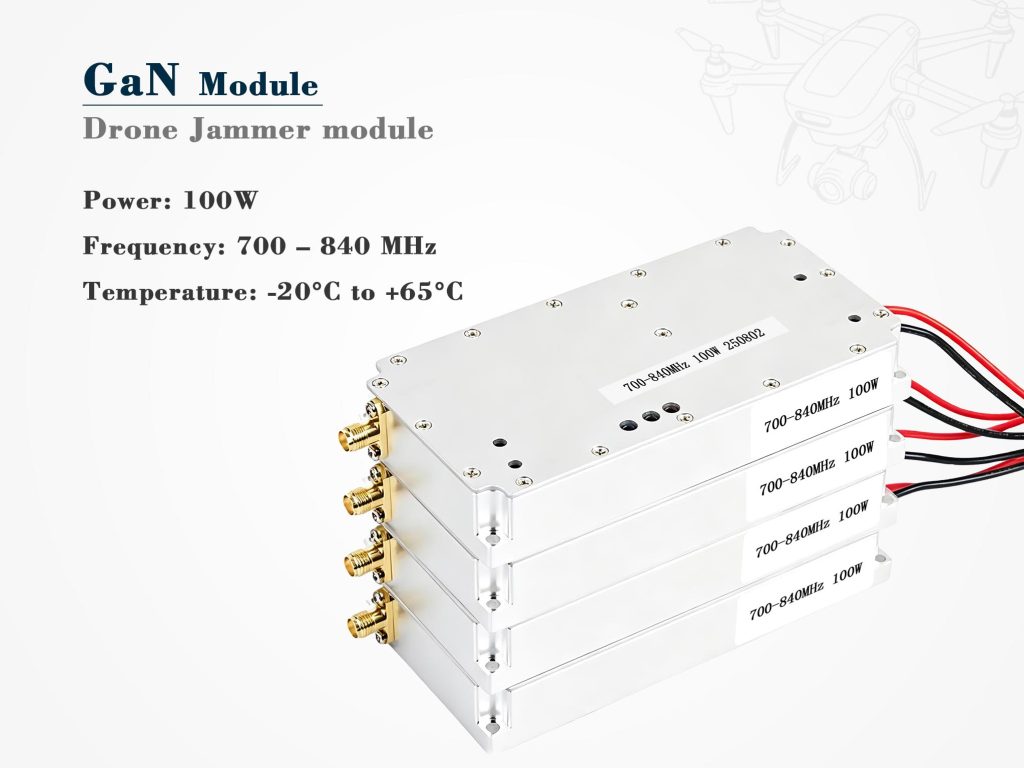
100W anti-drone module delivers 100W output, covers 700-840MHz, built-in noise source, 28V DC, compact 150x80x22mm. Disrupts drone control and video links.

Technical Specifications
| Parameter | Specification | Notes |
| Frequency range | 700 – 840 MHz | Covers drone control, FPV video, and telemetry sub-bands |
| Output power | 100 W (50 dBm) | Measured at N-female connector |
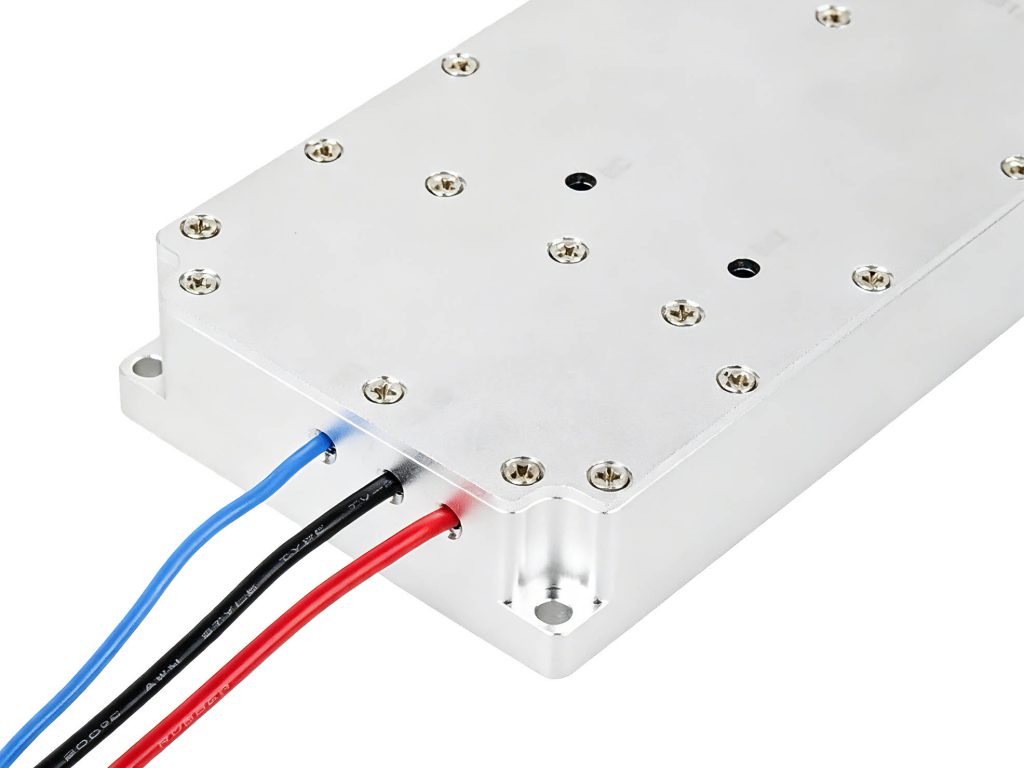
| Supply voltage | 28 V DC (28 – 32 V) | Regulated supply recommended |
| Current draw | ≤ 9.2 A | At full 100 W output into 50 Ω |
| Modulation source | Built-in high-speed noise modulated source | Customizable to VCO, DDS, SDR |
| Analog scan speed | 270 kHz (default) | Custom range 100 – 500 kHz available |
| Input / output impedance | 50 Ω | N-female output connector |
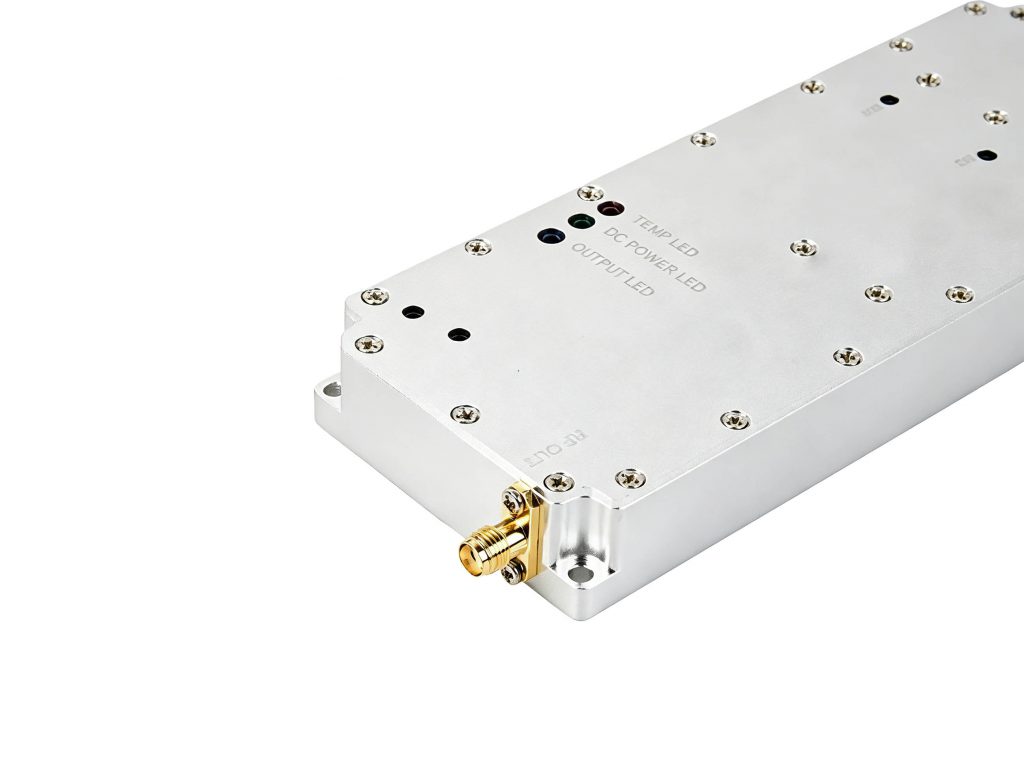
| Protection LEDs | Power On (green), Over-voltage (red), Over-temp (red) | Real-time status on PCB |
| Operating temperature | -20 °C to +65 °C | Ambient operating range |
| Dimensions (L×W×H) | 150 × 80 × 22 mm | Compact copper/aluminum assembly |
| Weight | 800 g | Module only, no antenna |
| Base material | GaN-on-SiC HEMT, copper carrier | High thermal conductivity base |
Product Details
When drone threats escalate, the 100W Anti-Drone Module answers with brute-force GaN power across the 700–840 MHz spectrum. Unlike lower-power boards that struggle in noisy urban airspace, this compact unit pumps a full 100 watts of RF disruption—enough to overwhelm command, video, and telemetry links from a safe distance. Security integrators and military end-users increasingly turn to this module for its rare combination of high power and lightweight design.
GaN-on-SiC: Efficiency Meets Ruggedness
What makes a 100-watt jammer fit into a 150×80×22 mm envelope? The answer sits in the base material. The 100W Anti-Drone Module uses a gallium nitride HEMT grown on a silicon carbide substrate, then bonded to a thick copper carrier. This GaN-on-SiC stack handles extreme current density without thermal runaway. A class-AB biasing scheme balances linearity and efficiency, so the module stays cool enough for continuous sweeps while still hitting its rated 100-watt ceiling. If you have ever dealt with overheating LDMOS pallets, the difference is immediate: GaN simply shrugs off heat that would send older silicon into protection mode.
Built-in Noise Source and Sweep Flexibility
There is no need for external signal generators. The board carries a high-speed noise modulated source that acts as a broadband disruptive blanket. The default analog scan speed sits at 270 kHz, but the design is not locked down—customers routinely request sweep rates between 100 kHz and 500 kHz for specific drone protocols. For even more aggressive waveforms, the modulation engine can be factory-configured as a VCO, DDS, or SDR core. The output exits through a 50-ohm N-female connector, ready to mate with high-power antennas.
Control, Indicators, and Thermal Management
Integration is streamlined. A stable 28 V DC supply (tolerant from 28 to 32 V) feeds the module, drawing at most 9.2 A when running at full 100 W output. There is no complicated serial bus: a simple enable line activates the jammer, making it a drop-in fit for security panels or manual trigger boxes. Three onboard LEDs provide immediate diagnostics—power on, over-voltage warning, and over-temperature alert. Because the GaN-on-SiC chip sits directly on a copper base, heat spreads fast into the chassis, and the module operates reliably across a -20°C to +65°C ambient range. For layered defense, pair it with our drone detection sensors to trigger jamming only when a threat is confirmed.
Deployment and Customization
The 100W Anti-Drone Module is frequently found in fixed-site perimeter protection, vehicle-mounted convoy jammers, and ruggedized portable kits. At 800 grams, it adds negligible weight to a backpack system, yet delivers the kind of power previously reserved for rack-mounted amplifiers. Because the 700–840 MHz band overlaps popular ISM, FPV video, and certain navigation side-lobes, a single module can neutralize multiple drone models simultaneously. Always check local spectrum regulations before radiating. For OEMs, custom scan speeds, modulation sources, and connector types are available—making this module a versatile building block for next-generation counter-UAS platforms.
Frequently Asked Questions
Case Studies
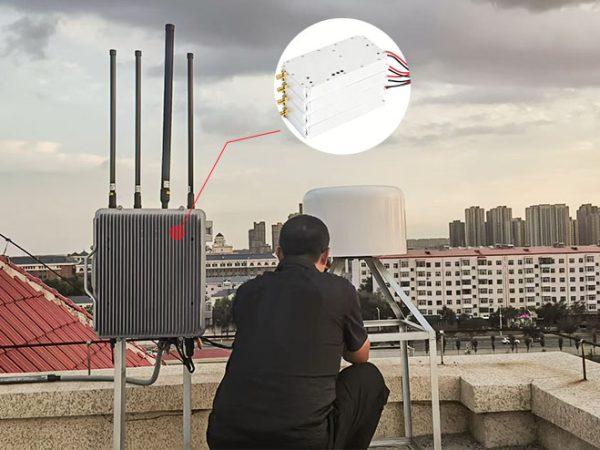
Heilongjiang Weather Center Completes Anti-Drone System Upgrade with Three High-Power Drone Jammer Modules

Tangshan Chem Plant Sealed Drone Gaps With 3 GaN Wideband Modules

How a National Prison Integrated Our Drone Jamming Module Into Their Fixed Counter-Drone System

Integrating Core RF Power: OEM Drone Jamming Module for Oil Refinery Security | Case Study
Send Us a Message
Related Products
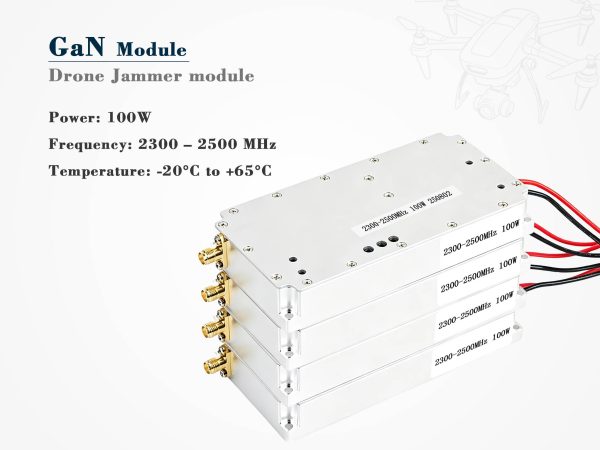
2300–2500 MHz 100W GaN Counter-UAV Module
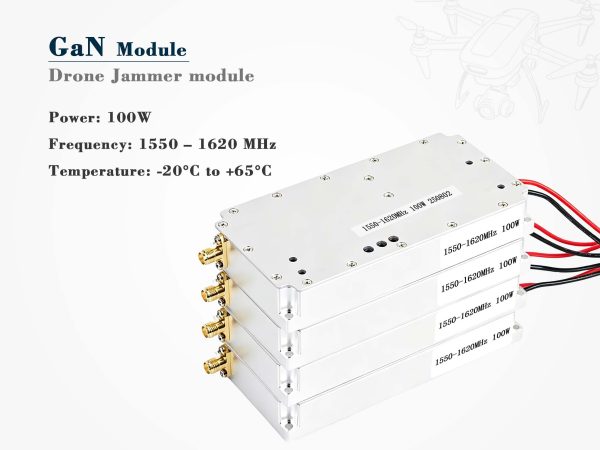
100W GaN Drone Jamming Module 1550–1620MHz
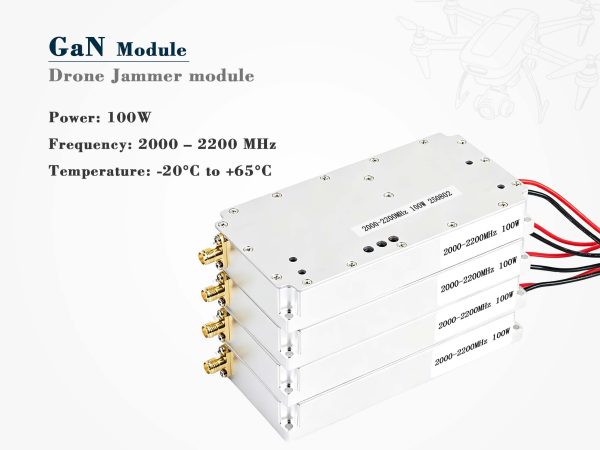
100W 2000–2200MHz GaN Analog Drone Interference Module