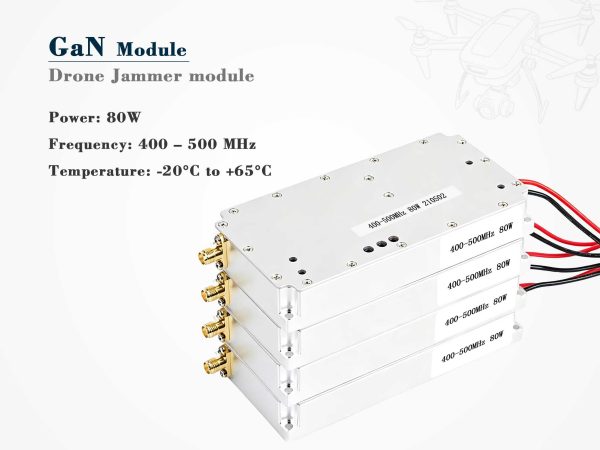
80W GaN AntiDrone Module 5600-5900
80W GaN anti-drone module for 5600-5900MHz with internal sweep and absorptive VSWR protection. 24-29V, 10A, SMA out, 168.5x84.5x23mm, 0.55kg. Reliable C-band jamming.
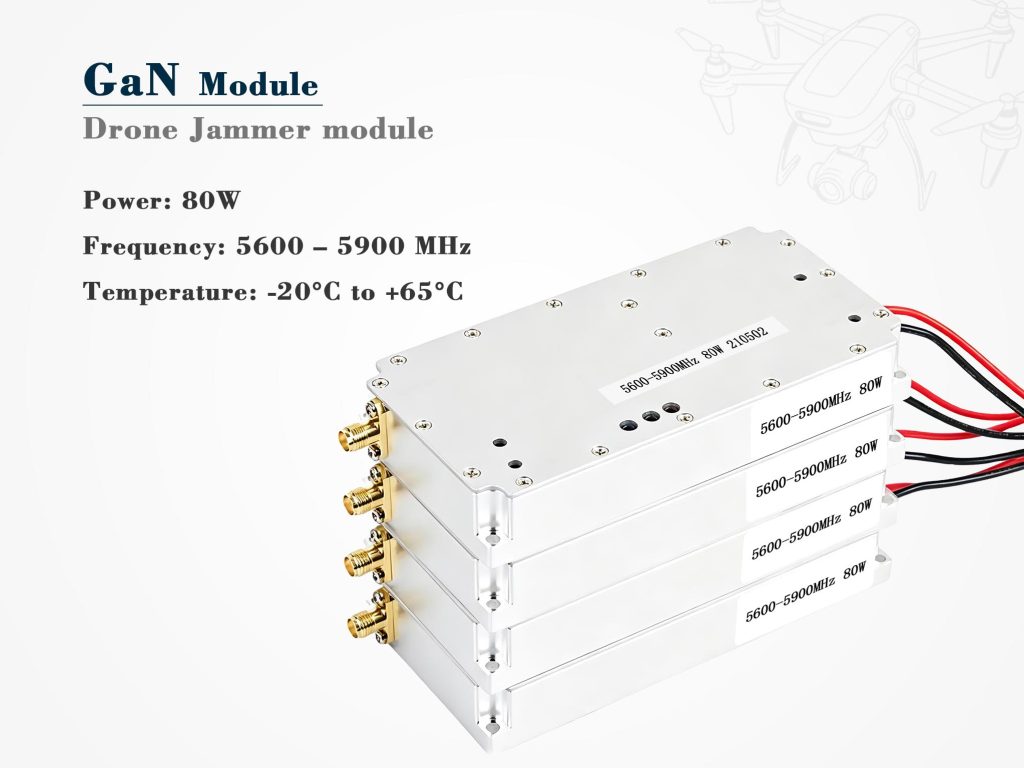
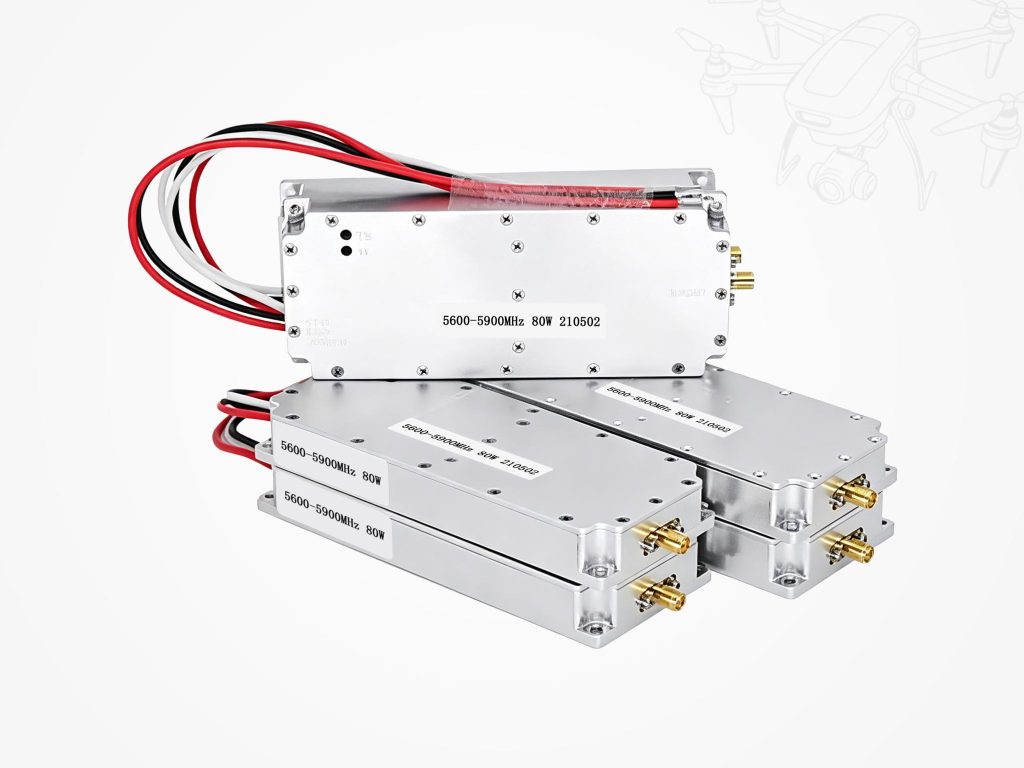
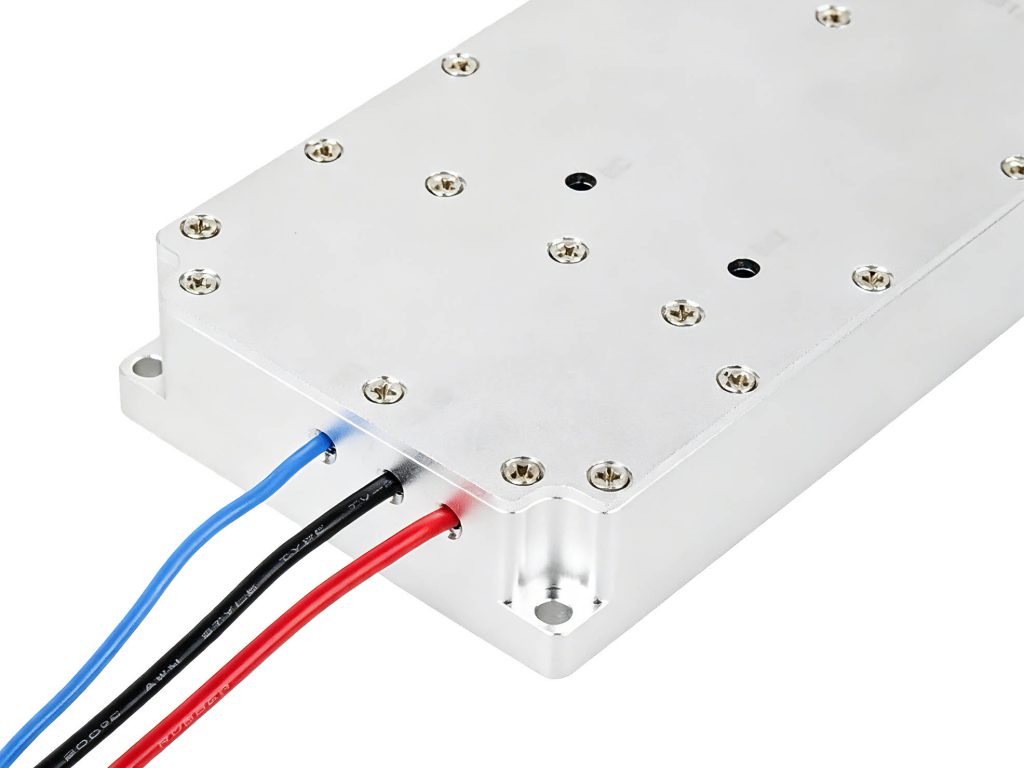
Technical Specifications
| Parameter | Specification | Notes |
| Frequency range | 5600–5900 MHz | fixed band, no external tuning needed |
| Output power | 80W (typical) | measured at 50Ω load, 28V supply |
| Supply voltage | DC 24V–29V | 28V nominal recommended |
| Current draw | ≤10.0A | at full output, 28V |
| Modulation source | built‑in high‑speed sweep | analog scanning, no external RF input |
| Analog scan speed | internal preset fast sweep | factory‑optimised for video/control links |
| Input / output impedance | 50Ω (RF output); control pin high‑Z | output only; control is TTL |
| Protection LEDs | Power‑on (green), VSWR fault (red) | absorptive VSWR protector integrated internally |
| Operating temperature | -20°C to +65°C | ambient; baseplate cooling required for continuous high‑duty use |
| Dimensions (L×W×H) | 168.5×84.5×23mm | excluding SMA and pins |
| Weight | 0.55kg | approximate, ±5% |
| Base material | aluminium alloy | black anodised finish |
Product Details
At a Glance
The 80W GaN anti-drone module is a self‑contained jamming solution for the 5600–5900MHz band – a range heavily used by consumer and enterprise drones for video downlinks and command links. Built around gallium nitride (GaN) technology, it delivers a solid 80W of RF power while keeping size and weight in check. Inside the same 168.5×84.5mm footprint as higher‑power variants, this unit offers a balanced trade‑off between output and current draw, making it an attractive choice for portable or vehicle‑mounted counter‑UAV systems.
Power and Band Coverage
Rated at 80W typical output into 50Ω, this module maintains a VSWR below 2.0 across the entire 5600–5900MHz window. The supply voltage spans 24V to 29V DC, with a maximum current draw of 10.0A at full tilt. Efficiency is specified at ≥40%, meaning the module produces about 200W of heat at maximum output – manageable with proper heatsinking. The output port is a standard SMA female, compatible with common high‑power cables and antennas. This frequency band overlaps with unlicensed 5.8GHz ISM channels, which many drone manufacturers adopt for their real‑time video transmission, so the module directly addresses that threat.
Integrated Sweep and Smart Protection
Unlike simple amplifier blocks, this 80W GaN anti-drone module houses a fast internal sweep oscillator that covers the full 5600–5900MHz range without any external RF drive. Once powered and enabled, it automatically sweeps through the band, disrupting both fixed‑frequency and frequency‑hopping drone links. More importantly, the module includes an absorptive VSWR protection circuit. Instead of reflecting mismatched power back into the GaN transistor, this built‑in load absorbs reflected energy, significantly lowering the risk of failure when the antenna is detuned, disconnected, or damaged. This feature is especially valuable in field operations where antenna conditions can change unpredictably.
GaN Efficiency and Thermal Behaviour
Gallium nitride is the key enabler here. It offers higher breakdown voltage and better thermal conductivity than older semiconductor technologies, allowing the 80W GaN anti-drone module to run cooler and more reliably under sustained jamming. The 40% efficiency translates into less wasted energy per watt of output, which helps keep the aluminium baseplate – measuring 168.5×84.5×23mm – within safe limits. Even so, continuous operation at 80W demands a decent heatsink and, ideally, forced‑air cooling. The module operates from -20°C to +65°C ambient, but we recommend active cooling when duty cycles exceed 50% or ambient temperatures climb above 40°C.
Control Interface and Mechanical Fit
Enable logic is straightforward: apply +5V or leave the control pin open to turn the module on; ground the pin to switch it off. This TTL‑compatible input makes it easy to integrate with mission controllers, remote switches, or microcontroller boards. The entire unit weighs only 0.55kg – identical to the 150W version, thanks to the shared mechanical design – and its compact dimensions allow installation in gimbal bays, backpack jammers, or 1U rack drawers. The SMA female connector is positioned for easy cable routing, and the control pin is clearly labelled on the header.
Protection and Long‑Term Reliability
Besides the absorptive VSWR protector, the module does not include visual LEDs, but its internal circuitry constantly monitors load conditions. The GaN die itself can handle brief overloads, but the protection circuit adds an extra safety net. For long‑term field deployment, we advise adding a fast‑blow fuse or electronic circuit breaker on the DC line to guard against supply glitches. Regular inspection of the RF connector and cooling surfaces will keep this 80W GaN anti-drone module performing at its best for many mission cycles.
Where It Fits in Your System
This 80W GaN anti-drone module is purpose‑built for C‑band drone countermeasures. It complements lower‑band (2GHz) jammers by covering the 5.6–5.9GHz region, which is increasingly popular for high‑definition video and telemetry. With 80W output, it offers a good balance between range and power consumption – enough to break links at several hundred metres, yet modest enough to run from standard 28V batteries in mobile setups. For fixed sites, multiple modules can be combined to cover wider areas or different polarisations, though standalone operation is the most common use case.
Why Choose This 80W GaN Anti-Drone Module?
Compared to lower‑power alternatives, this unit gives you extra margin against modern drones with better receivers and antennas. Compared to the 150W sibling, it draws 5A less current, easing power supply and cooling requirements while still offering substantial jamming capability. The integrated sweep and built‑in VSWR protection save you from designing external circuits, reducing development time and BOM cost. Whether you are upgrading an existing system or building a new one, this 80W GaN anti-drone module delivers reliable, field‑ready performance without unnecessary complexity.
Frequently Asked Questions
Case Studies
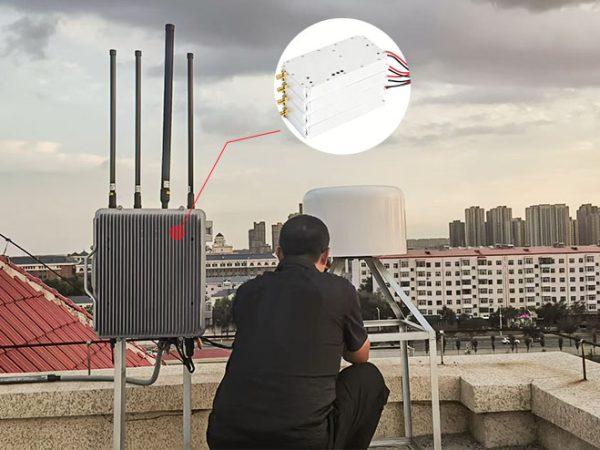
Heilongjiang Weather Center Completes Anti-Drone System Upgrade with Three High-Power Drone Jammer Modules

Tangshan Chem Plant Sealed Drone Gaps With 3 GaN Wideband Modules

How a National Prison Integrated Our Drone Jamming Module Into Their Fixed Counter-Drone System

Integrating Core RF Power: OEM Drone Jamming Module for Oil Refinery Security | Case Study
Send Us a Message
Related Products
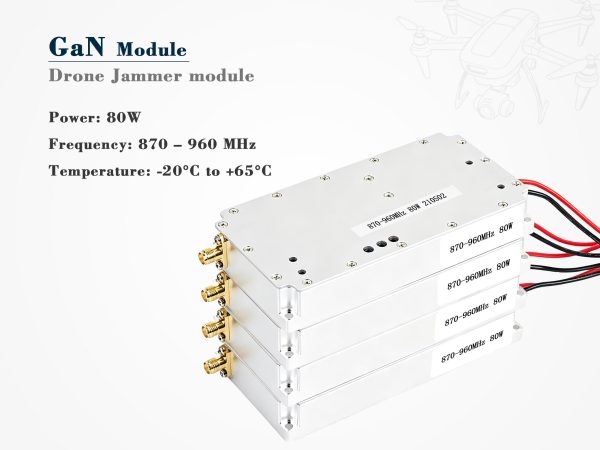
80W GaN Drone Jammer Module 870–960MHz | Analog Sweep
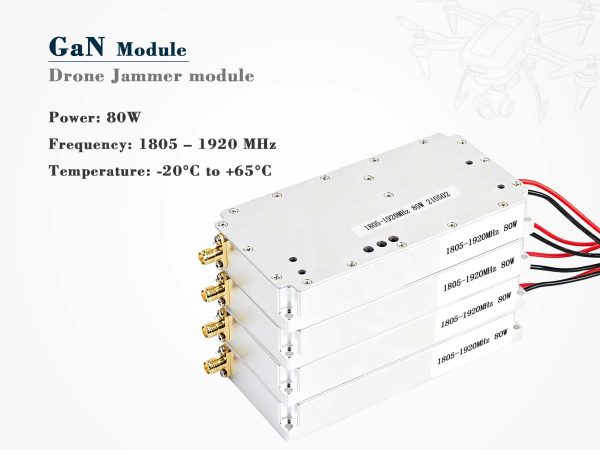
80W 1805–1920MHz GaN UAV Countermeasure Jammer Module
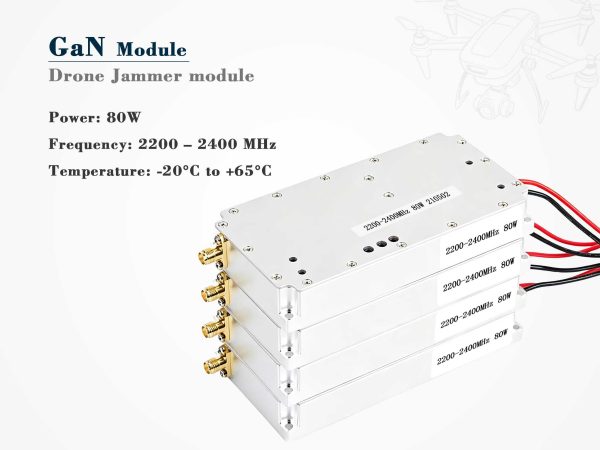
80W GaN Jammer Module: Powerful 2200–2400MHz Counter-UAS Solution