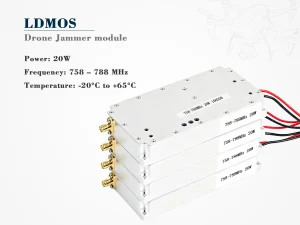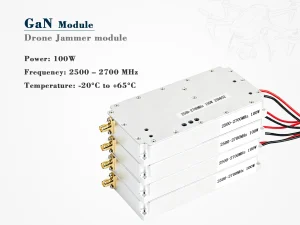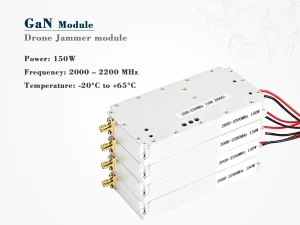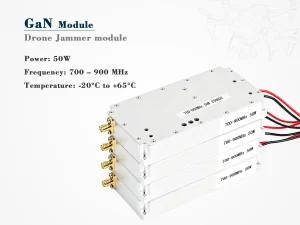
A LoRa FPV jammer module for sale listing can look straightforward: a power rating, a frequency range, a price and a lead time. In practice, those four data points rarely tell you whether the module will survive integration, pass compliance review or remain supportable over a multi-year program.
This buyer-focused guide walks through what “for sale” actually means in this market, which specifications deserve scrutiny, and how to separate a serious supplier from a board assembler.
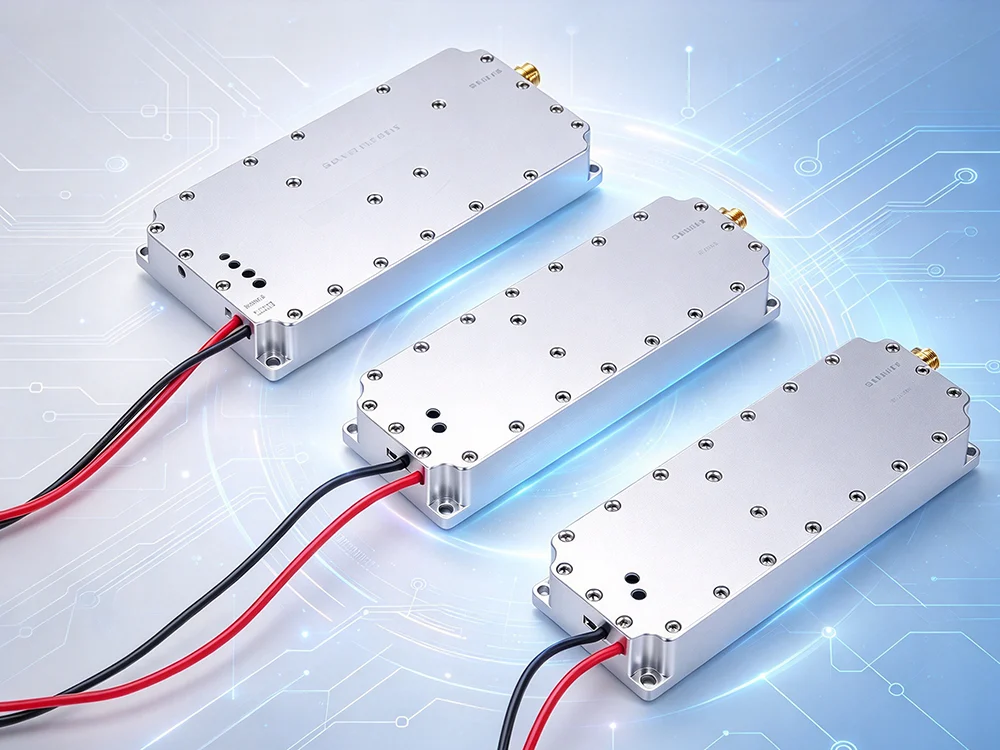
What “LoRa FPV Jammer Module for Sale” Usually Covers
The phrase covers a wide range of products. Some listings are evaluation boards intended for laboratory testing. Others are production-ready modules with enclosures, connectors and firmware tooling.
Buyers should first confirm which category a listing belongs to. A low-cost board and a CE-marked module are not interchangeable, even if both appear under the same search term.
Common Listing Categories
| Listing Type | Typical Content | Best Fit | Watch-Out |
|---|---|---|---|
| Evaluation board | Bare PCB, basic connector, sample firmware | Lab trials, proof of concept | No thermal solution, limited documentation |
| Development kit | Board, heatsink, cable set, SDK | Integrator prototyping | Power output may be lower than production spec |
| Production module | Enclosure, control interface, test report | Vehicle or fixed-site integration | Compliance scope varies by region |
| Custom OEM build | Specified bands, power, interface | Multi-year programs | Longer lead time and higher MOQ |
If a listing does not state which category it belongs to, ask before requesting a quote. This single question filters out many mismatched expectations.
Core Specifications to Compare
Most LoRa FPV jammer module for sale listings emphasize output power. That number matters, but it is not the whole story.
| Specification | Why It Matters | What to Request |
|---|---|---|
| Frequency coverage | Must match the target LoRa bands used in your region | Band edges, channel mask range |
| Output power | Affects range and thermal load | Sustained power at 25°C and 55°C |
| Duty cycle | Determines real-world thermal performance | Derating curve, not just peak figure |
| Control interface | Drives integration effort | UART, USB, Ethernet or CAN documentation |
| Fault reporting | Supports remote diagnostics | VSWR, over-temperature and PA fault flags |
| Firmware update path | Affects long-term support | Signed update method, rollback support |
| Compliance documents | Required for many procurements | CE/RED, FCC, RoHS and REACH files |
A useful rule: if a supplier cannot provide sustained power figures and a derating curve, treat the listing as an evaluation product rather than a deployment-ready module.
For a broader procurement framework, see our OEM LoRa FPV jammer module market guide.
Pricing Signals: What a Low Price Often Hides
Price variation in this segment is wide. Some of that variation reflects legitimate differences in power class, enclosure quality and documentation. Some reflects missing work.
Common hidden costs include:
-
Thermal hardware. A bare board may need a heatsink, fan or cold plate that is not included.
-
Compliance testing. Pre-compliance and formal testing can add significant calendar time and cost.
-
Firmware integration. Custom control protocols may require engineering effort on both sides.
-
Spares and support. A cheap unit with no spares path can become expensive after deployment.
Buyers should compare total landed cost, not unit price. A module that arrives with test reports and a documented update path is often cheaper over the program lifecycle.
Compliance Is Not Optional
Jamming equipment is regulated in many jurisdictions. A LoRa FPV jammer module for sale listing that does not address compliance is a warning sign, not a bargain.
Ask for the following before placing a volume order:
-
Applicable test reports for the exact variant being quoted.
-
A declaration of conformity or equivalent statement.
-
RoHS and REACH documentation.
-
Export classification and end-use statements.
-
Confirmation that the module’s intended use is lawful in your jurisdiction.
Requirements differ by country and by end user. Programs serving government or critical-infrastructure customers often face additional documentation demands.
Our coverage of 868MHz LoRa FPV jammer module explains how regional compliance affects lead times.
Lead Times and Minimum Order Quantities
Listings often show a lead time that applies only to sample quantities. Production quantities can be very different.
| Order Size | Typical Supplier Behavior | Buyer Action |
|---|---|---|
| 1–5 units | Quoted from stock or short build | Confirm whether units are production grade |
| 10–50 units | Build-to-order, partial documentation | Request sample test report |
| 100+ units | Contract manufacturing schedule | Negotiate firmware and spares terms |
Buyers should also clarify minimum order quantities for custom frequency variants. A supplier may stock a standard 868MHz version but require a larger order for a custom band plan.
Red Flags in a LoRa FPV Jammer Module for Sale Listing
Not every listing deserves a request for quotation. The following signals should prompt caution.
-
No sustained power figure, only a peak number.
-
No mention of thermal design or duty cycle.
-
No compliance documents or a promise to provide them “after order.”
-
No firmware version number or update policy.
-
No fault reporting over the control interface.
-
Vague frequency coverage such as “sub-GHz” without band edges.
-
No identifiable manufacturing location or traceability statement.
These gaps do not always mean the product is unusable. They do mean the buyer is carrying more integration and compliance risk.
Questions to Send Before You Buy
A short, structured request saves time on both sides.
-
What is the exact frequency range and channel mask capability?
-
What is the sustained output power at 25°C and 55°C?
-
Which control interfaces are supported, and is documentation included?
-
Does the module report VSWR and over-temperature faults?
-
What firmware update mechanism is used, and is rollback supported?
-
Which compliance documents are available for this exact variant?
-
What is the lead time for sample, pilot and volume quantities?
-
What spares and repair path are available after warranty?
Suppliers who answer these questions precisely tend to be easier to integrate with. Suppliers who answer vaguely tend to create schedule risk.
Final Checklist
Before you commit to a purchase, confirm the following:
-
The listing category matches your intended use.
-
Sustained power and thermal data are documented.
-
The control interface matches your platform.
-
Compliance documents cover your jurisdiction and end use.
-
Firmware support and spares are defined.
-
Total landed cost includes thermal hardware and testing.
A LoRa FPV jammer module for sale is only a good deal if it can be integrated, documented and supported. Treat the listing as a starting point, not a specification.