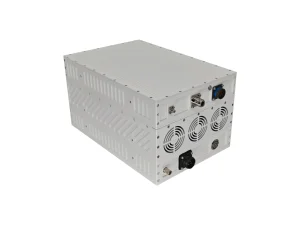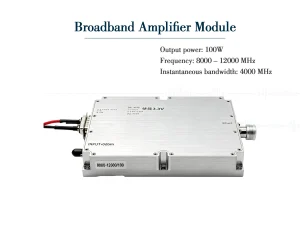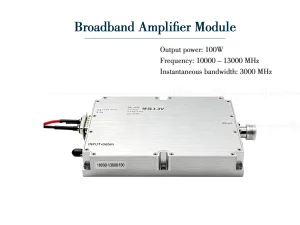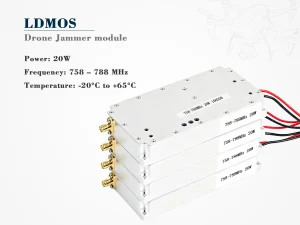
FPV jammer module price is rarely a single, fixed number. Quotes can range from a few hundred dollars for a basic low-power board to five figures for rugged, multi-band OEM systems. The gap is not only about RF output power. It reflects filtering quality, thermal design, integration support, test documentation, order volume, and compliance risk.
For buyers who need a technical baseline before comparing quotations, it helps to understand what an FPV jammer module is and how the module fits into a wider counter-FPV system.
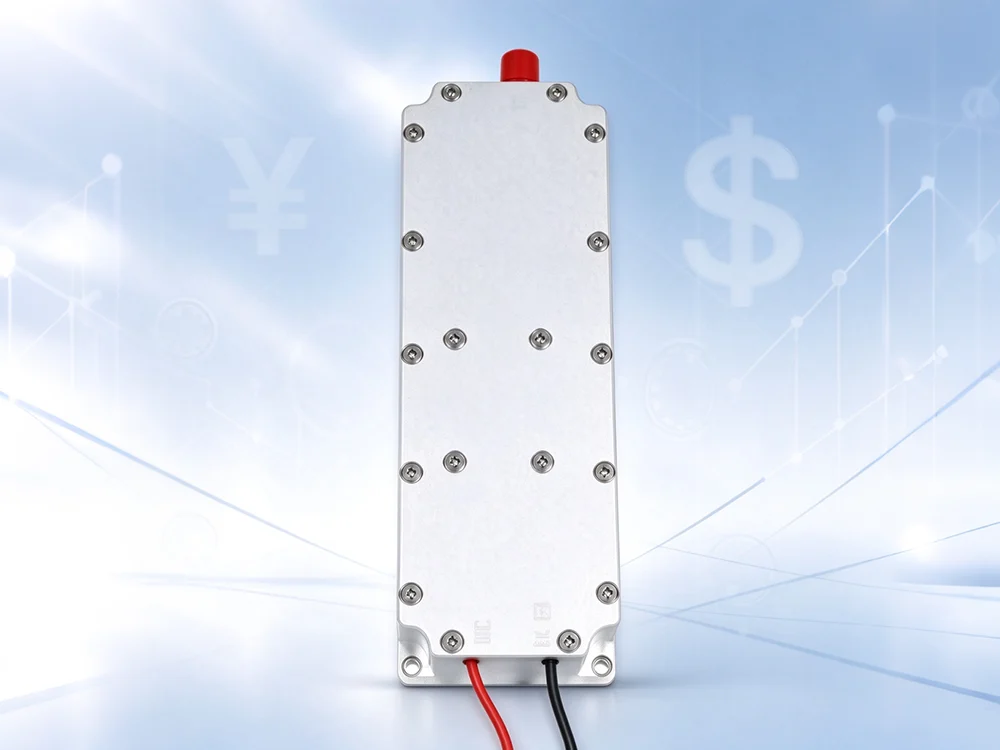
Why FPV jammer module prices vary so widely
A jammer module is an RF subsystem, not a commodity part. Two modules may look similar in photos but differ significantly in bill of materials and total cost of ownership. The main price variables include:
-
Frequency bands and band count
-
RF output power and duty cycle
-
Amplifier technology and efficiency
-
Filtering, shielding, and harmonic suppression
-
Thermal management and enclosure rating
-
Control interface, firmware, and monitoring features
-
Antennas, cables, power supply, and accessories included
-
Sample testing, test reports, and warranty terms
-
Minimum order quantity, lead time, and shipping terms
-
Export classification and compliance documentation
The table below gives an illustrative market view. It is not a quotation and should not be used as a substitute for a specification-based supplier review.
| Module tier | Typical design focus | Common RF output class | Indicative sample-price range* | Main price drivers |
|---|---|---|---|---|
| Entry / single-band | Basic bench or low-cost integration | 1–5 W | USD 120–450 | Simple filtering, limited thermal headroom, low MOQ |
| Mid-range multi-band | Balanced size, cost, and integration | 10–30 W total | USD 500–1,800 | Better filters, modular bands, integration support |
| High-power / rugged | Field-oriented, multi-band, sealed housing | 30–100 W+ total | USD 2,000–8,000+ | GaN PA, advanced thermal design, test reports, compliance work |
| OEM / ODM custom | Custom bands, firmware, housing, or antenna set | Custom | USD 10,000+ NRE plus unit cost | Custom engineering, tooling, certification, validation |
*Illustrative only. Actual FPV jammer module price depends on region, order volume, frequency set, included accessories, export classification, and supplier documentation.
The cost drivers buyers should separate
1. RF chain quality
Amplifiers, drivers, and combiners affect efficiency, heat, and service life. A lower-cost module may meet a basic output claim on paper but require more cooling or deliver inconsistent performance across bands.
2. Filtering and shielding
Good filtering and shielding add cost, but they help control unwanted emissions and reduce integration problems. Buyers should compare test data, not only headline wattage.
3. Thermal and mechanical design
Heat is a major hidden cost. Compact modules with insufficient thermal design may need external cooling, larger enclosures, or shorter duty cycles, which raises the total system cost.
4. Integration and control
Firmware, control protocols, status monitoring, connectors, and supplied accessories all affect price. A module that is “cheap” but difficult to integrate can become expensive during deployment.
5. Compliance and documentation
Radio jamming equipment is tightly restricted or illegal in many jurisdictions. Authorized defense, security, testing, or government users should verify import/export rules, end-use requirements, certifications, and supplier documentation before purchase.
Compare quotations on a like-for-like basis
When reviewing FPV jammer module cost, ask suppliers to confirm whether the quote includes:
-
Antennas, cables, heatsink, enclosure, and power supply
-
Frequency bands, bandwidth, and output power per band
-
Duty cycle and operating temperature range
-
Control interface and firmware options
-
Sample test report and production test method
-
Minimum order quantity, lead time, and warranty
-
Shipping terms, duties, and export paperwork
-
Compliance statements and end-use restrictions
A low unit price can be misleading if accessories, testing, or compliance support are excluded. The better benchmark is total landed cost for a documented, integrable module.
How to benchmark an FPV jammer module price
Start with a clear requirement: target bands, size, power class, duty cycle, interface, environment, and documentation. Then request a specification-matched quote from at least three suppliers. Compare test evidence, thermal design, integration support, and compliance readiness alongside price.
Use published price ranges only as a screening tool. They help identify whether a quote is broadly plausible, but they cannot replace a technical and regulatory review.
Conclusion
FPV jammer module price should be evaluated as the cost of a compliant, testable RF subsystem—not as the lowest number in an inbox. Buyers who separate RF quality, thermal design, integration scope, and documentation costs will make more reliable procurement decisions and avoid hidden expenses later.