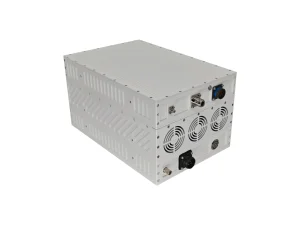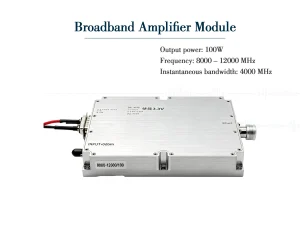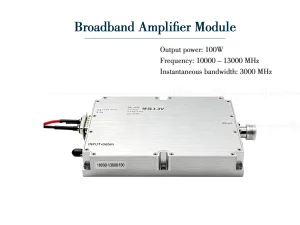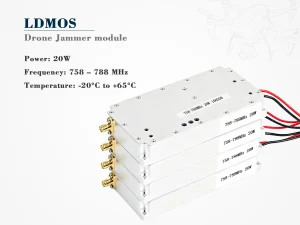
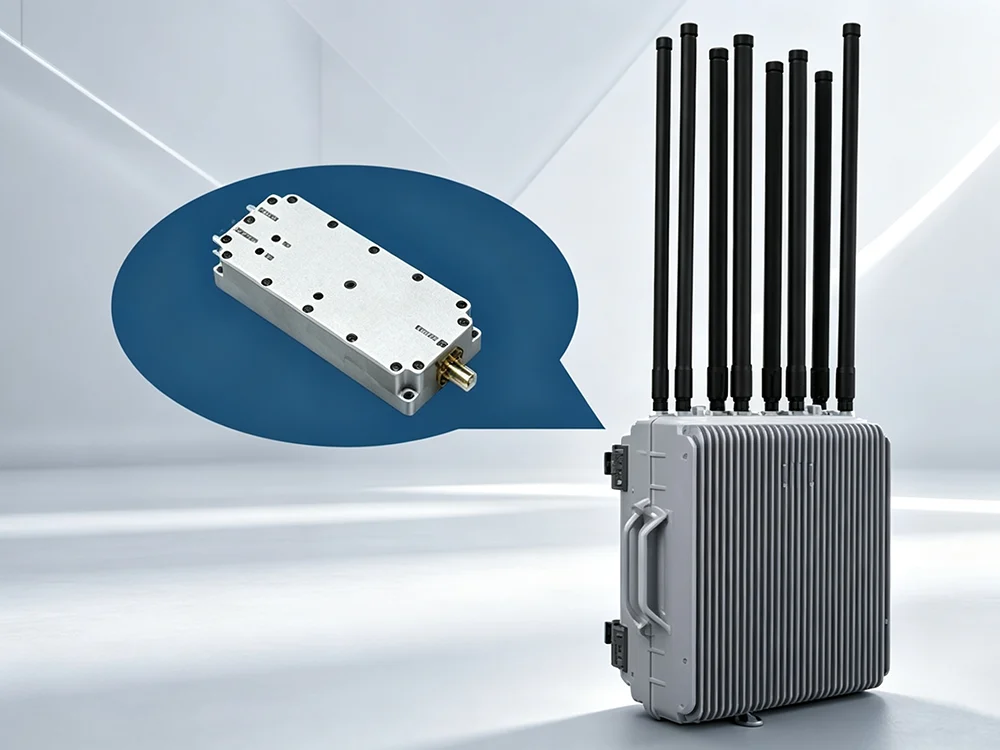
An FPV jammer module is a radio-frequency device or subassembly designed to disrupt or deny wireless links used by first-person-view (FPV) systems. In practice, that can mean interfering with control, video, or telemetry signals within a specified frequency range. The term “module” usually refers to an integrated RF unit that may be built into a larger system rather than sold as a standalone consumer product.
That definition is simple. The buying decision is not. FPV jammer modules sit at the intersection of RF engineering, counter-drone security, and telecommunications regulation. In many markets, importing, marketing, possessing, or operating jamming equipment is restricted or prohibited outside authorized government, defense, or laboratory contexts. Buyers should treat legal review as a first step, not a final checkbox.
Why the “Module” Label Matters
A jammer module is not automatically a finished field-ready system. It may include an RF source, amplification stage, control interface, thermal management, and power conditioning—but integration, antennas, enclosure, and safety controls often sit with the system integrator. This distinction matters because a module’s suitability depends heavily on the host platform, the intended environment, and the documentation that supports authorized use.
For buyers, the key question is not simply “what frequency does it cover?” It is “who is allowed to use it, where, for what purpose, and with what evidence?” That compliance-first framing separates professional procurement from casual online purchasing.
What Buyers Typically Evaluate
Most serious procurement teams look beyond headline output figures. They assess integration risk, thermal behavior, power quality, control interfaces, and documentation. The table below summarizes the practical evaluation areas.
| Evaluation Area | Why It Matters | Buyer Question |
|---|---|---|
| Frequency coverage | Must match the authorized scenario and local spectrum rules | Is the intended band permitted for this use case? |
| Output control | Helps support controlled testing and safe operation | Are limits documented and enforceable? |
| Thermal design | Continuous operation can stress RF components | Is heat managed for the intended duty cycle? |
| Power interface | Poor power quality can reduce reliability | Does it match the host platform’s electrical environment? |
| Control and monitoring | Integrators need clear status and fault reporting | Can operators verify state and detect faults? |
| Compliance documentation | Regulatory review often depends on evidence | Are certifications, labels, and usage restrictions clear? |
| Integration support | Modules are rarely plug-and-play | Does the vendor provide technical and legal-use guidance? |
A low price per unit can be misleading if the module lacks documentation, stable thermal design, or clear authorized-use boundaries. In this category, procurement risk is often regulatory and reputational as much as technical.
The 5.8GHz Context
5.8GHz is widely associated with FPV video transmission, which is why 5.8GHz-focused modules attract attention in counter-drone and RF testing discussions. However, band familiarity does not equal legal permission. Rules vary by country and sometimes by application, power level, location, and operator status. Buyers should confirm local requirements before requesting samples or discussing deployment.
For a band-specific market view, see our internal brief: 5.8GHz FPV Jammer Modules: Buyer Market Brief. It examines buyer expectations, documentation gaps, and the importance of authorized-use verification in that segment.
Compliance Is the Gate, Not a Feature
In several jurisdictions, jamming devices are treated differently from ordinary RF components. Marketing language such as “testing tool” or “security module” does not override spectrum laws. A professional buyer should ask for clear intended-use statements, restriction notices, and evidence that the supplier understands local regulatory boundaries.
| Procurement Check | Red Flag to Watch |
|---|---|
| Written intended-use statement | Vague claims that it is “for any security use” |
| Clear frequency and restriction labeling | Missing or inconsistent technical labels |
| Authorized-use guidance | Encouragement to operate without local approval |
| Traceable documentation | No manufacturer or compliance contact |
| Support for integrators | No fault reporting or integration notes |
FAQ: What Is an FPV Jammer Module?
Is an FPV jammer module a consumer device?
Generally, no. It should be treated as a regulated or restricted RF product depending on jurisdiction.
Does frequency coverage alone make a module suitable?
No. Legal authorization, integration quality, thermal design, and documentation are equally important.
Can it be used for testing?
Only where local law and authorization permit, typically in controlled or shielded environments with proper approvals.
What should buyers request first?
A clear intended-use statement, regulatory status, technical documentation, and authorized-use guidance.
Final Takeaway
An FPV jammer module is best understood as a regulated RF subassembly for denying or disrupting FPV wireless links in authorized contexts—not as a generic security gadget. Buyers who start with compliance, documented intended use, and integration risk will make better decisions than those who compare modules on output claims alone. In this market, the safest purchase is the one that can be legally justified before it is technically evaluated.