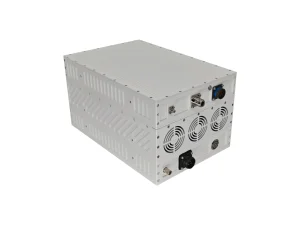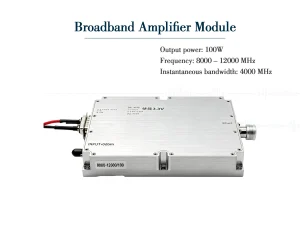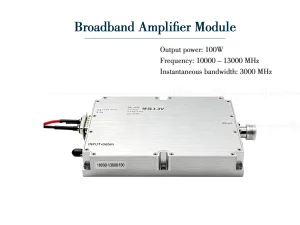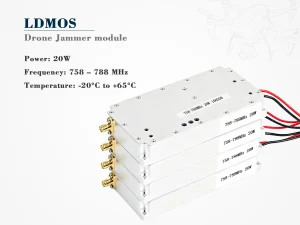
The market for counter-drone hardware has matured quickly, and buyers are no longer asking only whether an FPV drone jammer module can be sourced. They are asking whether it can be integrated cleanly, documented properly, and supported over a multi-year program. That shift matters. In many projects, the RF module is no longer a stand-alone item; it is one subsystem inside a wider detection-to-decision chain that includes sensors, command-and-control software, antennas, power conditioning, and strict rules of engagement.
For teams new to the category, a useful starting point is this primer: What Is an FPV Jammer Module?. For procurement teams, however, the more practical question is how to compare modules without reducing the decision to a single output-power number.
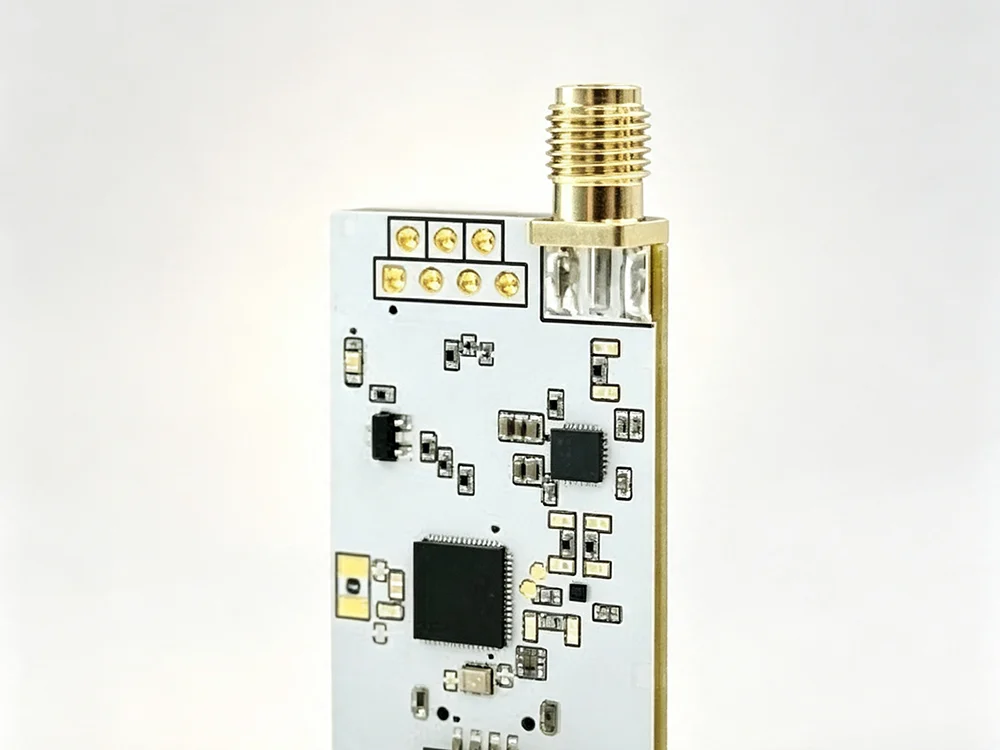
Why the RF layer is getting more attention
FPV-style threats are fast, low-cost, and often adapted quickly. That combination puts pressure on defenders to shorten the reaction loop. A jammer module can be part of that response, but only when it is matched to the deployment concept. A fixed-site installation has different priorities from a vehicle-mounted system or a man-portable kit. Thermal headroom, antenna placement, power quality, and remote monitoring often matter as much as raw RF capability.
This is also where inexperienced buyers get into trouble. A module that looks strong on a datasheet may be difficult to integrate if its control interface is proprietary, its thermal design assumes unrealistic airflow, or its documentation is too thin for an authorization review.
What integrators actually evaluate
Experienced C-UAS teams tend to evaluate an FPV drone jammer module across five dimensions: RF design, thermal behavior, control interface, mechanical fit, and compliance evidence. The table below summarizes the questions worth putting to a supplier before a sample is approved.
| Evaluation area | Questions to ask the supplier | Why it affects the program |
|---|---|---|
| RF architecture | Which bands are supported, and how are they filtered? What is the duty cycle under realistic load? | Prevents surprises when the module is paired with different antennas and deployment profiles |
| Thermal design | What cooling method is assumed? What is the temperature derating curve? | Reduces field failures and avoids overstating continuous performance |
| Control and telemetry | Which interface is used? Are status, temperature, and fault flags available? | Determines integration effort with the C2 layer and remote monitoring |
| Mechanical fit | What are the dimensions, weight, mounting points, and connector types? | Affects enclosure design, vehicle mounting, and service access |
| Compliance evidence | What test reports, declarations, and usage restrictions are available? | Supports legal review and reduces procurement risk |
Design-in notes that affect total cost
A common mistake is to compare module prices without accounting for integration cost. A lower-cost module can become expensive if it needs custom cooling, additional filtering, or a separate control board. Buyers should ask for 3D models, connector pinouts, and a clear power envelope early in the evaluation. If the supplier cannot provide these, the integration team should price in additional engineering time.
Another issue is antenna strategy. The module and antenna should be treated as a pair. Installers need to understand mounting constraints, cable loss, and separation from sensitive receivers. In practice, a well-documented module with modest specifications often outperforms a higher-power unit that is poorly matched to the enclosure and antenna.
Compliance is part of the bill of materials
RF jamming is tightly regulated in many jurisdictions, and authorization requirements vary. That makes compliance a procurement issue, not an afterthought. Buyers should confirm that the intended use is permitted for their location and operational role, and that the supplier can support the documentation needed for review. For fixed installations, site licensing and coordination may also apply. A module should never be selected solely on performance claims; the legal and operational context must be part of the specification.
Where the category is heading
The next phase of the market is likely to favor modules that are easier to supervise and integrate. Buyers increasingly want diagnostic telemetry, modular band configurations, and clearer documentation for safety and authorization reviews. Suppliers that treat the module as part of a system—rather than a black box—will be better positioned with integrators.
For defense and security teams, the practical takeaway is simple: evaluate an FPV drone jammer module as a subsystem, not a commodity. Ask for evidence, test it under realistic thermal and power conditions, and confirm the compliance path before committing to a design. That approach takes longer at the sample stage, but it usually saves far more time during deployment.