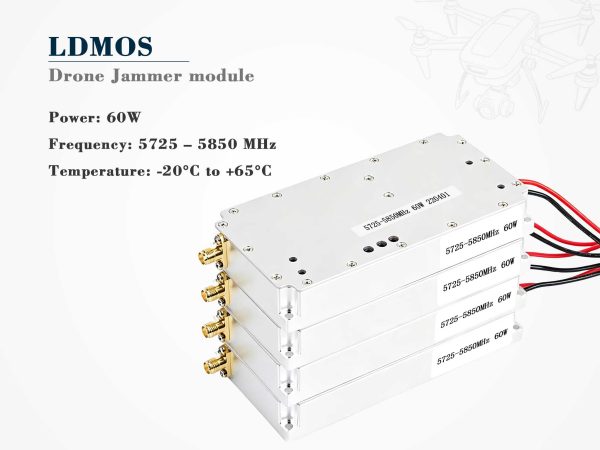
60W GaN Anti-Drone Module 135-175MHz
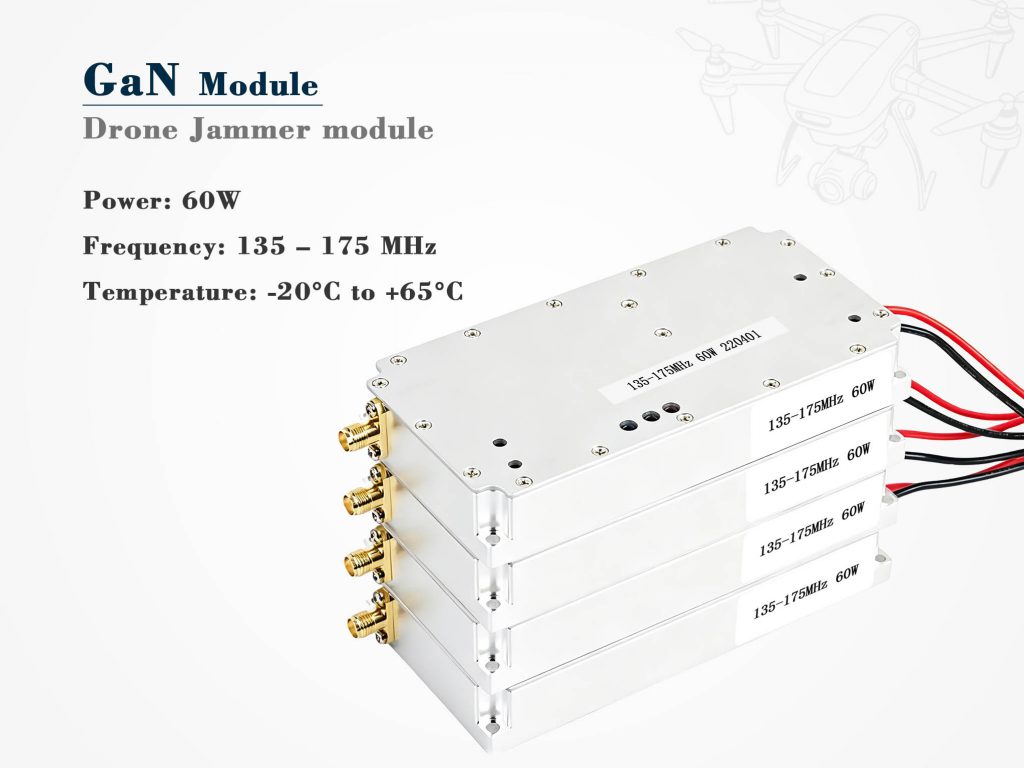
60W GaN anti-drone module (135–175MHz), built-in high-speed sweep source, 12–14V DC, ≤12A, SMA female, 220g. Compact VHF counter-UAS solution with GaN efficiency.

Technical Specifications
| Parameter | Specification | Notes |
| Frequency range | 135 – 175 MHz | Instantaneous swept coverage |
| Output power | 60 W (approx. 47.8 dBm) | At SMA female connector, VSWR ≤2.0 tolerated |
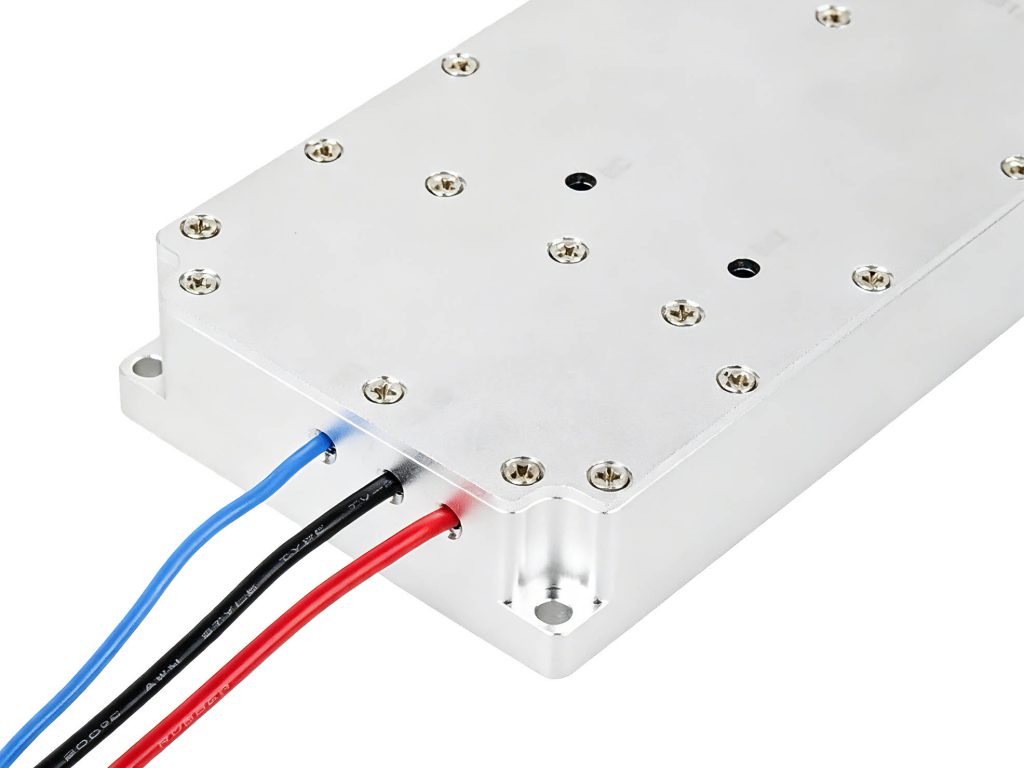
| Supply voltage | 12 – 14 V DC | Nominal 14 V recommended |
| Current draw | ≤ 12 A | At full 60 W output, efficiency ≥40% |
| Modulation source | Built-in high-speed sweep generator | Customizable to VCO, DDS, or SDR on request |
| Analog scan speed | High-speed preset | Configurable for specific hopping patterns |
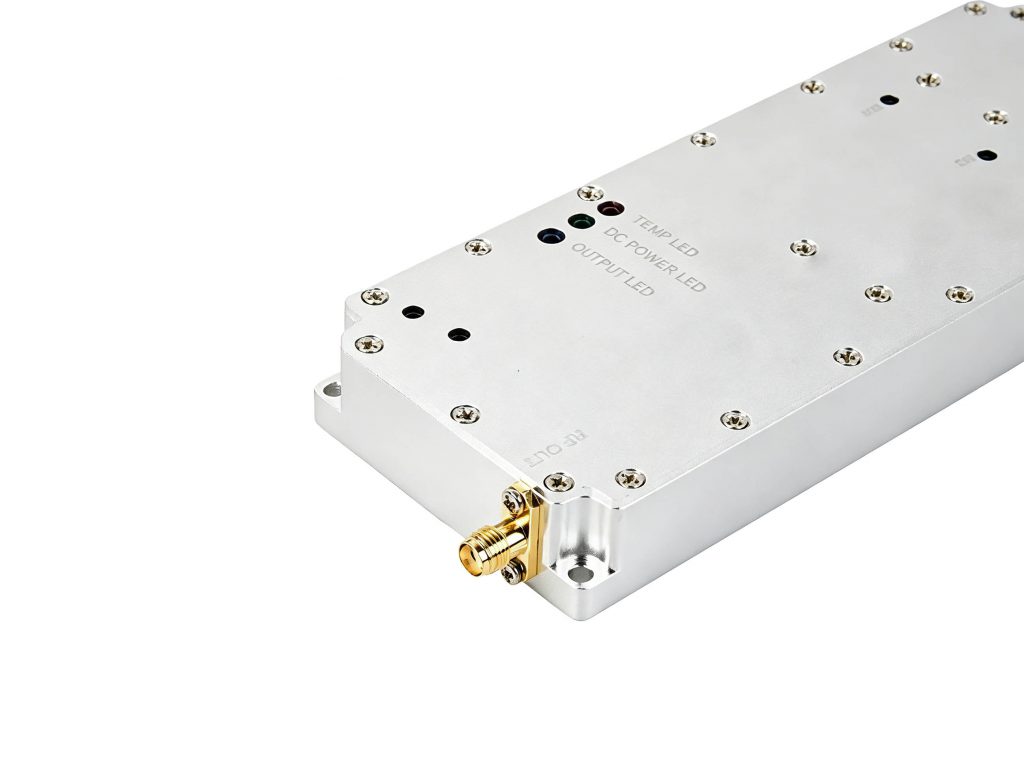
| Input / output impedance | 50 Ω | SMA female connector |
| Protection LEDs | N/A | On/off via TTL: +5 V or float = ON, GND = OFF |
| Operating temperature | -20 to +65 °C | Baseplate must be heat-sunk for continuous duty |
| Dimensions (L×W×H) | 138 × 50.5 × 17 mm | Slim aluminum housing |
| Weight | 220 g (0.22 kg) | Module only |
| Base material | Aluminum alloy chassis / GaN-on-SiC transistor | High thermal conductivity spreader |
Product Details
While most counter-drone chatter revolves around gigahertz bands, a quiet threat operates much lower on the dial. Modified consumer drones, long-endurance fixed-wing UAVs, and certain military-surplus platforms often leverage VHF links between 135 and 175 MHz. The physics work in their favor — signals at these wavelengths hug terrain, punch through light foliage, and reach out far beyond typical ISM-band limits. If your anti-drone setup doesn’t address this slice, you are ignoring a genuine vulnerability. This 60-watt GaN anti-drone module was designed precisely to plug that hole, offering a compact, single-supply, swept-jamming solution that feels more like an automotive-grade component than a lab bench experiment.

GaN at VHF: A Practical, Not Exotic, Choice
Gallium nitride might sound like an exotic ingredient, but in a 60W VHF power amplifier it makes cold, hard engineering sense. The GaN-on-SiC transistor in this module delivers high gain and excellent efficiency (≥40%) across the full 135–175 MHz band, all while running off a 12–14 V DC rail. That voltage range is the big story here. It means you can power the module directly from a standard automotive battery, a 4S LiPo pack, or a vehicle’s electrical system without buck-boost converters that generate noise and waste space.
The architecture is dead simple. A built-in high-speed sweep generator covers the entire 40 MHz span with dense, continuous scanning. You don’t need to program a DDS or sync an SDR — just apply power. The single TTL-level control pin turns the module on (with +5V or simply floating) and off (pulled to ground). That’s it. No SPI bus, no USB dongle, no configuration panel.
Low Voltage, High Portability
The 12-volt requirement transforms how you deploy this module. You can mount it in a vehicle and run it straight off the alternator/battery system. You can carry a compact 12-20 Ah LiFePO4 pack in a backpack and operate for extended periods without voltage regulators. The module itself weighs only 220 grams, roughly the same as a smartphone, and its 138 × 50.5 × 17 mm footprint fits inside tubes, slimline enclosures, or even the handle of a directional antenna setup. For man-portable anti-drone systems or rapidly deployable fixed-site jammers, that combination of low-voltage operation and small size is genuinely hard to beat.
Thermal Reality at 60 Watts
With 12 amps flowing at 13.8 volts, the module pulls about 165 watts of DC input. At ≥40% efficiency, around 100 watts must be dissipated as heat during sustained operation. The aluminum baseplate is the thermal interface — bolt it to a finned heatsink or a metal enclosure wall. For typical intermittent jamming bursts, passive cooling alone is often sufficient. If your mission profile demands continuous-on operation, active airflow or a larger thermal mass is advised. The module’s operating temperature range extends to +65°C, so outdoor summer deployment is well within its comfort zone.
Integrating Into a Layered Counter-UAS Strategy
Think of this anti-drone module as the low-frequency anchor in a multi-band anti-drone system. Pair it with a 900 MHz, 2.4 GHz, and 5.8 GHz module, and you’ve covered the entire spectrum from VHF up to C-band. The TTL control logic makes it trivial to sequence modules — trigger them all at once for a blanket effect, or fire them in a pattern to conserve battery power. Because the module is self-contained with its sweep source, you can treat it as a black-box jammer and focus your engineering effort on the detection and command side of your system.
Frequently Asked Questions
Case Studies
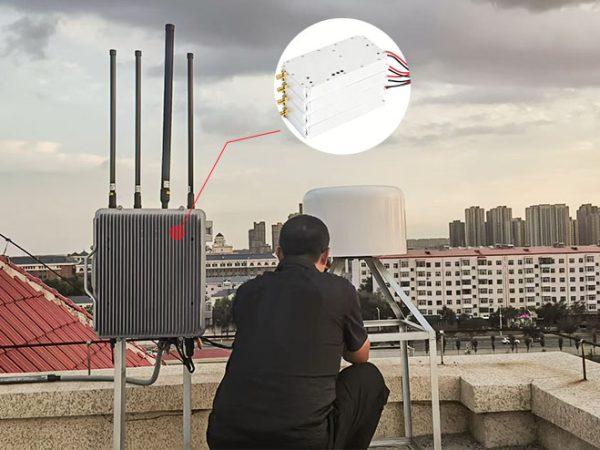
Heilongjiang Weather Center Completes Anti-Drone System Upgrade with Three High-Power Drone Jammer Modules

Tangshan Chem Plant Sealed Drone Gaps With 3 GaN Wideband Modules

How a National Prison Integrated Our Drone Jamming Module Into Their Fixed Counter-Drone System

Integrating Core RF Power: OEM Drone Jamming Module for Oil Refinery Security | Case Study
Send Us a Message
Related Products
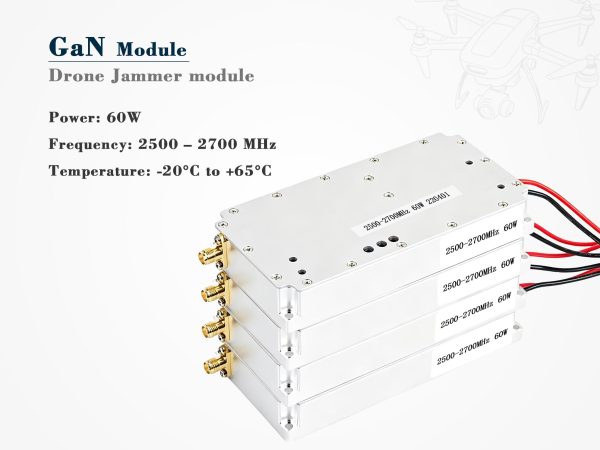
60W 2500–2700MHz GaN Drone Jammer Module
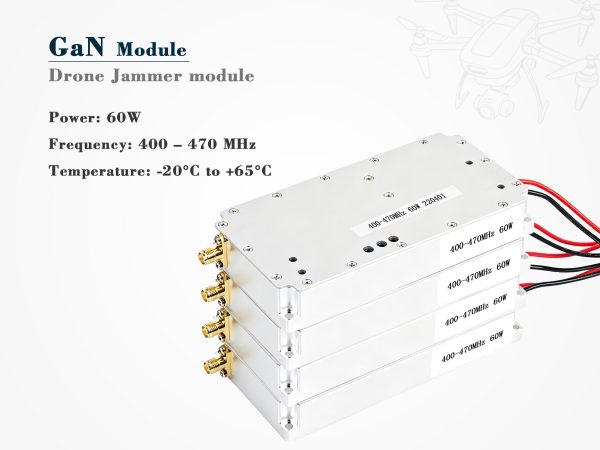
60W GaN Drone Jammer Module 400-470MHz
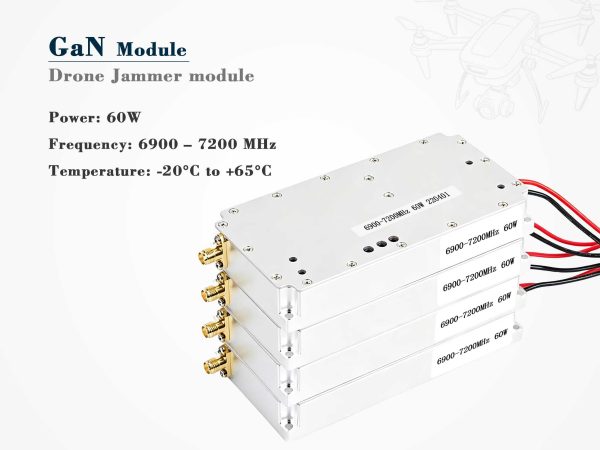
60W GaN Jamming Module: Compact 6900–7200MHz Counter-Drone Power