
150W Drone Jamming Module 3400-3600MHz | GaN Module
150W GaN jamming module covers 3400–3600MHz with built-in sweep source & VSWR protection. 24-29V, 15A, SMA out, 168.5x84.5x23mm, 0.55kg. For drone defense.


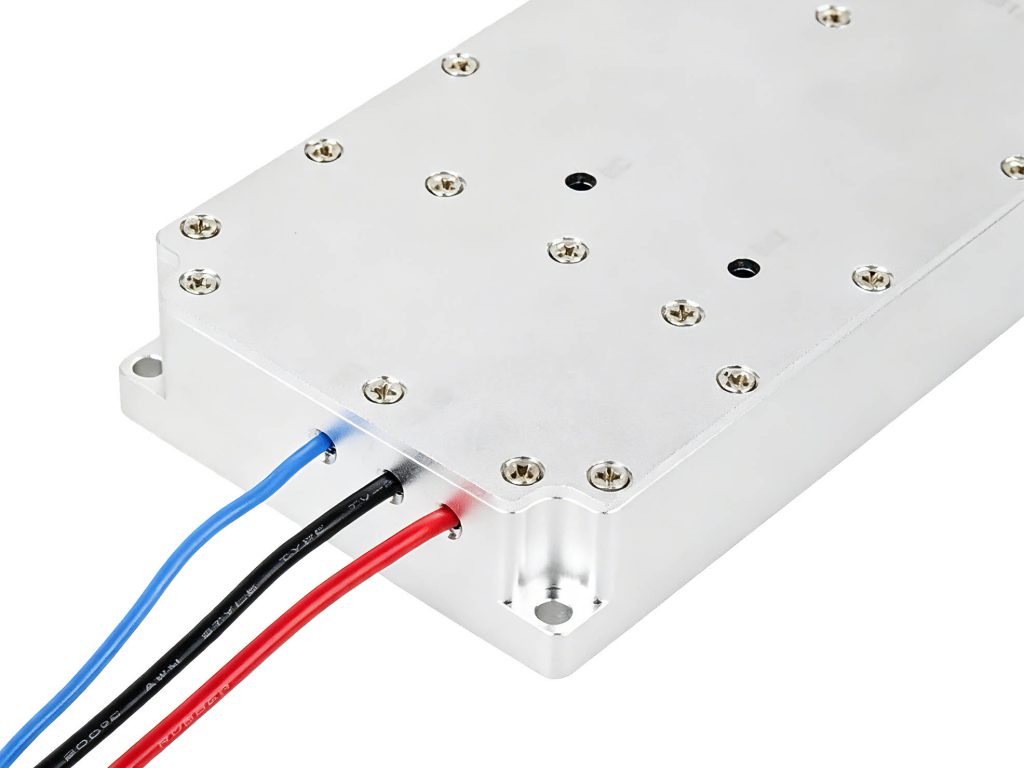
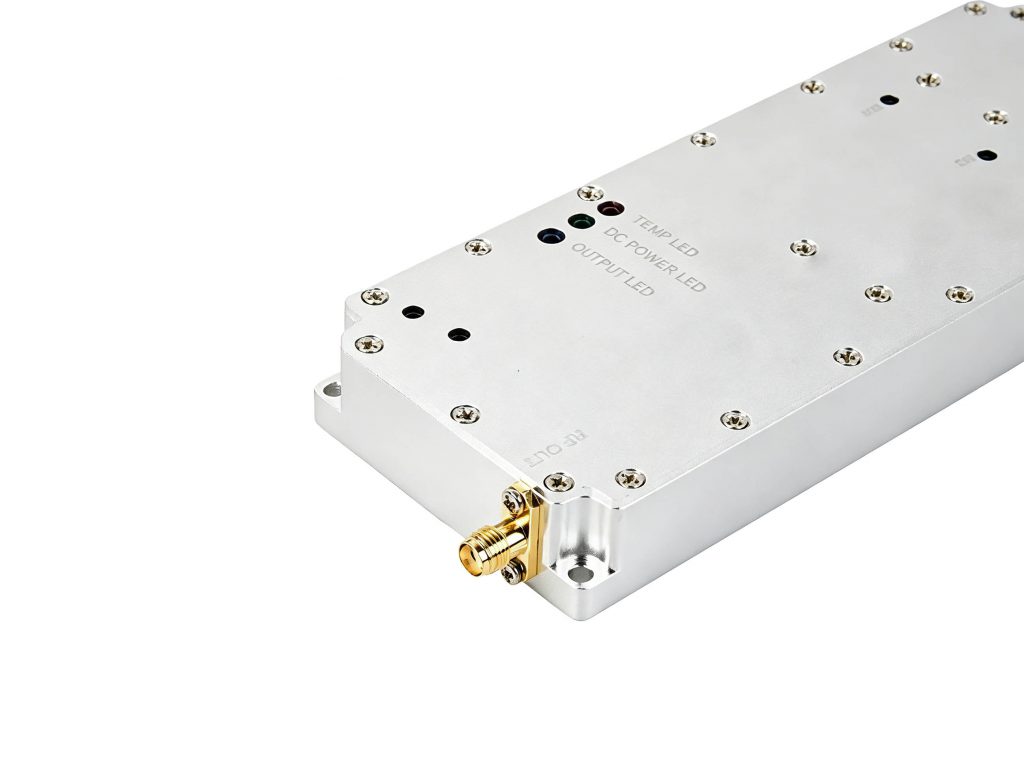
Technical Specifications
| Parameter | Specification | Notes |
| Frequency range | 3400–3600 MHz | fixed band, no external tuning |
| Output power | 150W (typical) | measured at 50Ω load, 28V supply |
| Supply voltage | DC 24V–29V | 28V nominal recommended |
| Current draw | ≤15.0A | at full output, 28V |
| Modulation source | built‑in high‑speed sweep | analog scanning, no external RF input |
| Analog scan speed | internal preset fast sweep | optimized for drone command links |
| Input / output impedance | 50Ω (RF output); control pin high‑Z | output only; control is TTL |
| Protection LEDs | Power‑on (green), VSWR fault (red) | Absorbing protection activates, reset by power cycle |
| Operating temperature | -20°C to +65°C | ambient; baseplate cooling required for continuous use |
| Dimensions (L×W×H) | 168.5×84.5×23mm | excluding SMA and pins |
| Weight | 0.55kg | approximate, ±5% |
| Base material | aluminum alloy | black anodized finish |
Product Details
Product Snapshot
This 150W Drone Jamming Module leverages GaN technology to deliver solid output across the 3400–3600MHz band. It packs an internal fast‑sweep oscillator and a built‑in absorptive VSWR protection circuit into a relatively compact housing. Designed for counter‑UAV operations, it handles continuous interference tasks with minimal external support. The module’s GaN architecture ensures high efficiency and thermal resilience, making it a strong candidate for both ground‑based and mobile platforms.
Key Power and Frequency Specs
Rated at 150W typical output into 50Ω, this module maintains a VSWR below 2.0. The supply range is DC 24V to 29V, with a maximum draw of 15.0A at full tilt. Efficiency stays at or above 40%, which is commendable for a 150‑watt GaN design. The output connector is an SMA female, and the internal sweep source covers the entire 3400–3600MHz range without needing an external signal generator. This frequency band is increasingly used for drone command links and telemetry, giving the module direct relevance in modern electronic warfare.
Built‑in Sweep and VSWR Protection
One standout feature is the absorptive VSWR protection device integrated into the RF path. Unlike simple reflective limiters, this circuit absorbs reflected power, reducing stress on the GaN transistor when the antenna is mismatched or disconnected. The sweep oscillator is factory‑tuned for fast, linear scanning across the band, disrupting frequency‑hopping or fixed‑channel drones. Users simply apply DC power and enable the module; the sweep starts automatically. No external modulation or trigger is required.
GaN Advantages for High Power
Gallium nitride (GaN) technology is the backbone of this 150W Drone Jamming Module. GaN offers higher power density, better efficiency, and superior breakdown voltage compared to older LDMOS or GaAs designs. This translates into smaller size for the same output, lower junction temperatures, and longer mean time between failures. The module’s 40% efficiency means less waste heat, which simplifies cooling in field deployable systems. GaN also handles high VSWR gracefully, working in tandem with the built‑in protection to safeguard the amplifier.
Thermal Management and Operating Range
The module operates from -20°C to +65°C ambient. With 150W output and ~40% efficiency, heat dissipation is roughly 225W at full power. The aluminum alloy baseplate (168.5×84.5×23mm) helps spread heat, but forced‑air cooling or a substantial heatsink is strongly recommended for continuous operation, especially when duty cycles exceed 50%. In practice, many users mount the module on a finned heatsink with a fan. The GaN die’s high thermal conductivity allows short bursts without active cooling, but sustained jamming missions demand proper thermal design.
Control and Integration
Enable logic remains simple: +5V or floating turns the module on; grounding turns it off. This TTL‑compatible pin allows easy interfacing with mission computers or manual switches. The module weighs only 0.55kg, which is light for a 150W unit, and its dimensions—168.5mm long, 84.5mm wide, 23mm high—fit into standard equipment racks or drone payload bays. The SMA female connector is robust, but for 150W, users should ensure the mating cable and antenna can handle that power level (e.g., using low‑loss, high‑power rated cables).
Protection and Reliability
Beyond VSWR protection, the module has no built‑in LED indicators, but the absorptive protector acts silently. It reduces the risk of catastrophic failure due to open or short circuits at the output. The GaN process also provides inherent over‑voltage tolerance to some extent, though staying within 24–29V is recommended. For field use, it is wise to add a fuse or circuit breaker on the DC line. The module’s protection features reduce maintenance frequency and increase mission availability.
Deployment Scenarios
This 150W Drone Jamming Module is suited for fixed sites, vehicle‑mounted systems, and even large UAV‑based jammers. Its 3400–3600MHz coverage targets newer C‑band drone frequencies, complementing lower‑band jammers. The high power enables effective range extension, especially against non‑line‑of‑sight or hardened links. When used in multi‑module arrays, the internal sweep can be synchronized via external timing (though not covered here), but standalone operation is the primary use case.
Comparison with Lower‑Power Alternatives
Compared to 20W LDMOS modules, this GaN unit delivers over seven times the output power with only about six times the current draw—a favorable scaling. The added VSWR protection and wider band (3400–3600MHz) make it a forward‑looking choice. While heavier and larger, it still offers a power‑to‑weight ratio of 273W/kg, which is competitive. For operators needing extended reach or higher margin against modern frequency‑agile drones, this 150W drone jamming module is a logical upgrade.
Frequently Asked Questions
Case Studies
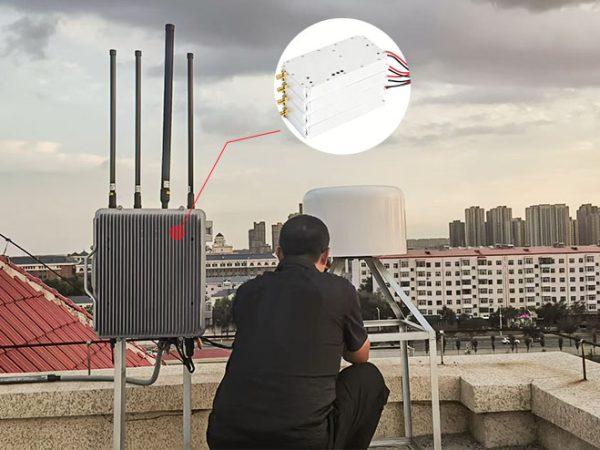
Heilongjiang Weather Center Completes Anti-Drone System Upgrade with Three High-Power Drone Jammer Modules

Tangshan Chem Plant Sealed Drone Gaps With 3 GaN Wideband Modules

How a National Prison Integrated Our Drone Jamming Module Into Their Fixed Counter-Drone System

Integrating Core RF Power: OEM Drone Jamming Module for Oil Refinery Security | Case Study
Send Us a Message
Related Products

150W 1350–1450MHz GaN Analog Jammer Module

150W 600–700MHz GaN Drone Countermeasure Module

150W GaN Anti-Drone Jammer Module for 720-1020 MHz