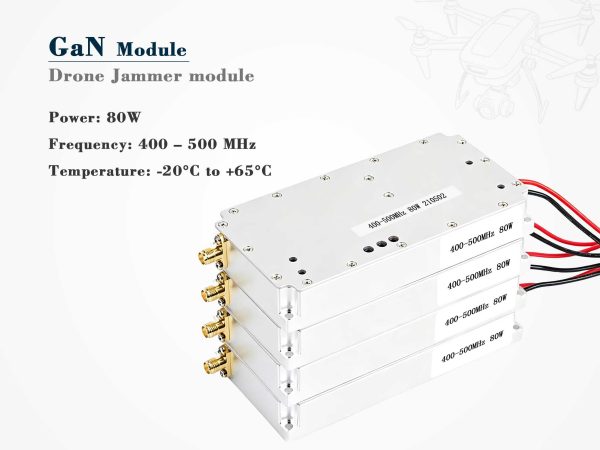
High-Power 80W Drone Jammer Module (1000-1300MHz)
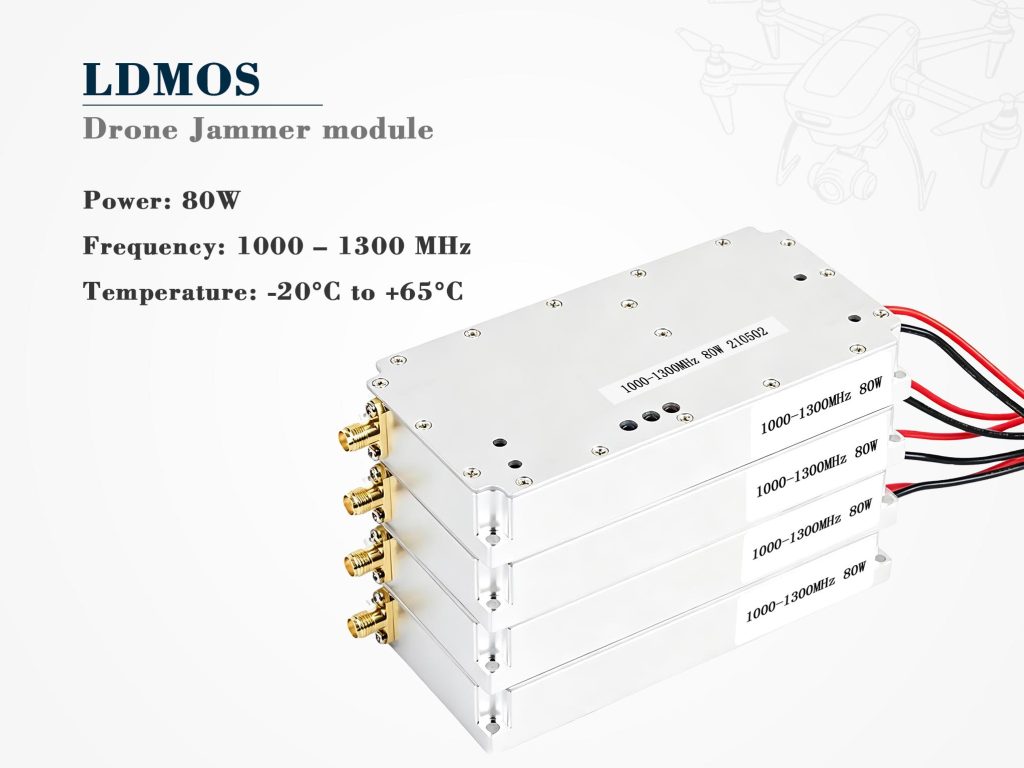
High-power 80W drone jammer module covering 1000-1300MHz with LDMOS, built-in analog sweep, 24-29V, compact housing, ideal for counter-UAS systems.
Technical Specifications
| Parameter | Specification | Notes |
| Frequency range | 1000~1300 MHz | Covers popular 900 MHz ISM band |
| Output power | 80 W (≈49 dBm) typ. | LDMOS final stage, P1dB typically above 80 W |
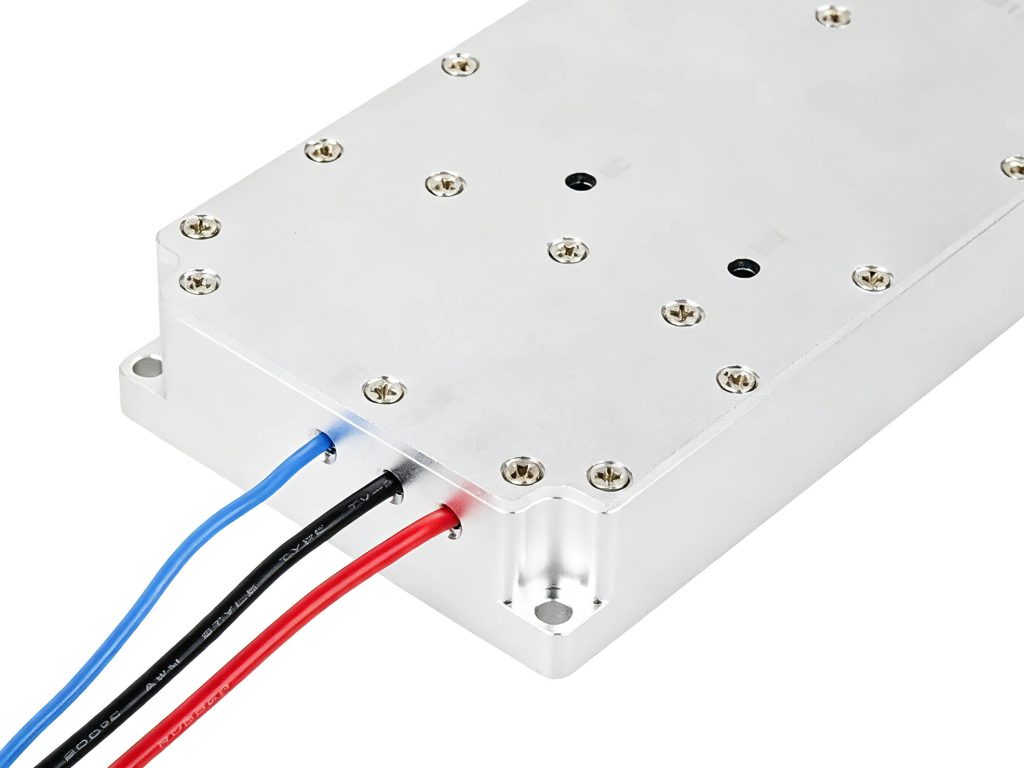
| Supply voltage | DC 24 V ~ 29 V | Reverse polarity protection built in |
| Current draw | ≤10.0 A at full output | Average draw depends on sweep duty cycle |
| Modulation source | Built-in high-speed analog sweeping VCO | No external signal generator required |
| Analog scan speed | Configurable (factory default covers full band in <1 ms) | Custom profiles available on request |
| Input / output impedance | 50 Ω nominal | SMA female output connector |
| Protection LEDs | Power On (green), VSWR Alarm (red) | Absorptive protection activates on high reflection |
| Operating temperature | -20°C ~ +65°C | Baseplate temperature; forced air recommended at full power |
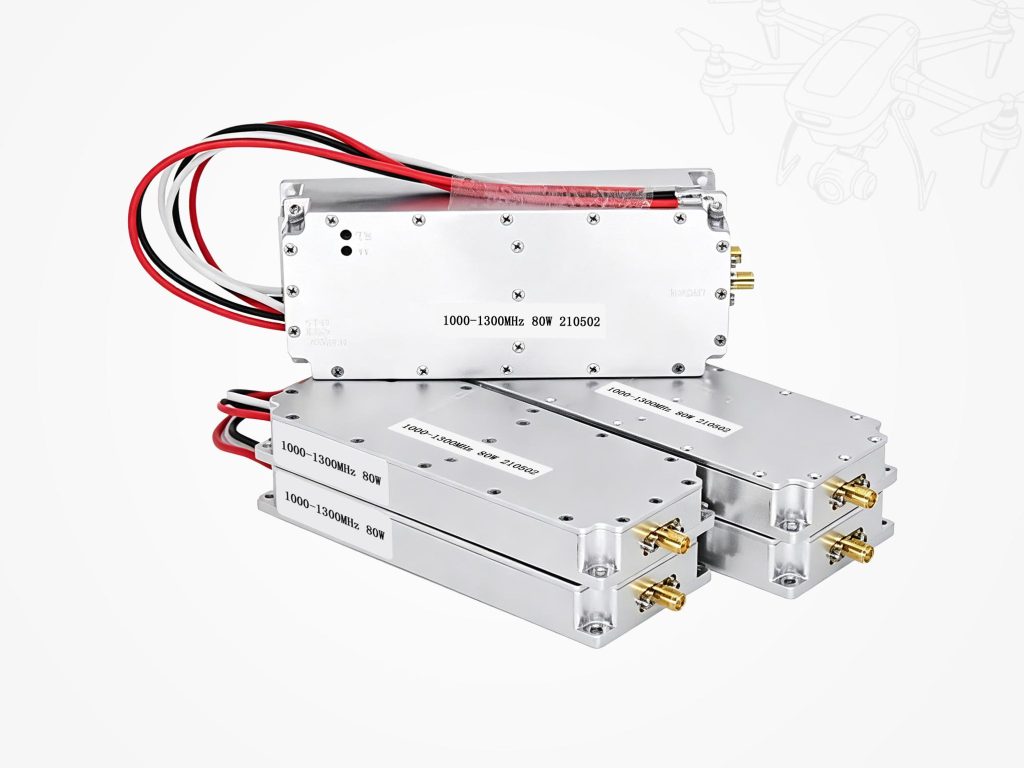
| Dimensions (L×W×H) | 168.5 × 84.5 × 23 mm | Including mounting flange |
| Weight | 0.55 kg | Aluminum alloy chassis |
| Base material | Black anodized aluminum alloy | Corrosion-resistant, doubles as heat sink |
Product Details
When you need a dependable RF countermeasure, the 80W drone jammer module delivers consistent wideband disruption. Designed for the 1000–1300 MHz band, it targets common UAV control and video links with enough headroom to handle antenna mismatches and real-world losses. We have seen integrators use it in vehicle-mounted, fixed-site, and portable configurations, and its all-in-one architecture keeps system complexity low.
Why the 80W Drone Jammer Module Stands Out
Most modules in this power class separate the sweep generator from the amplifier. Here, the high-speed analog source is already embedded, so you avoid extra cabling, impedance tuning, and the noise that comes with interconnects. The LDMOS final stage pushes 80 watts while staying above 40% efficiency, which matters when you are running from batteries or a constrained DC bus. If you have worked with gallium arsenide designs before, you will appreciate the ruggedness of the silicon LDMOS approach; it tolerates load mismatches that would destroy a bare GaAs device.
Built‑in Analog Sweep That Simplifies Integration
The internal source sweeps the full 1000–1300 MHz range at rates fast enough to disrupt frequency‑hopping drones. Because modulation is analog, the signal stays spectrally dense without the gaps you sometimes get from stepped DDS architectures. The sweep parameters can be customized at the factory, but the default profile covers the ISM‑overlap, GPS‑L1 lower skirt, and common drone FPV channels in one continuous motion. This is not a generic signal generator bolted onto an amplifier; it was purpose‑built for the 80W drone jammer module, so the ramp linearity and settling behavior are already optimized.
Integrated VSWR Protection and Rugged Build
Antenna faults are the number‑one killer of high‑power amplifiers. The module includes an absorptive VSWR protection circuit that shunts reflected energy away from the output transistor. An onboard LED gives you a quick visual warning when a mismatch exceeds safe limits—no extra monitoring gear needed. The base material is a black‑anodized aluminum alloy plate that doubles as a heat spreader. With a footprint of 168.5 × 84.5 × 23 mm and 0.55 kg weight, the 80W drone jammer module fits inside tightly packed equipment cases. Ambient ratings from -20°C to +65°C mean it tolerates outdoor deployments without additional climate control, though we always recommend some airflow at full power.
Simple Control and Power Requirements
Logic control works with a single pin: leave it floating (or apply +5V) to activate, pull to ground to shut down. This makes the unit easy to drive from a microcontroller, a manual toggle switch, or an external threat‑detection system. Supply voltage is 24V to 29V DC; maximum current draw is 10 A at peak output. A standard 28V rail from a MIL‑STD‑1275 or equivalent power supply is a good fit. Because the module reaches full power almost instantly, there is no long‑duration soft‑start delay to worry about. Just be sure to terminate the SMA output before enabling the amplifier—the built‑in protection is robust, but no amplifier enjoys being keyed into an open load. For guidance on safe RF practices, the FCC’s jammer enforcement advisory is worth reviewing, even if your application falls outside its jurisdiction.
Where the 80W Drone Jammer Module Fits
You will see these modules integrated into counter‑UAS payloads, convoy protection systems, and test ranges. Because the output is purely a swept carrier with no embedded digital protocol, it acts as a blunt‑force layer that forces drones into fail‑safe modes or return‑to‑home behavior. When paired with a directional antenna and a separate detection subsystem, the 80W drone jammer module forms the transmit backbone of a layered defense. Our own antenna matching guide can help you select the right radiator for your beamwidth needs.
Frequently Asked Questions
Case Studies
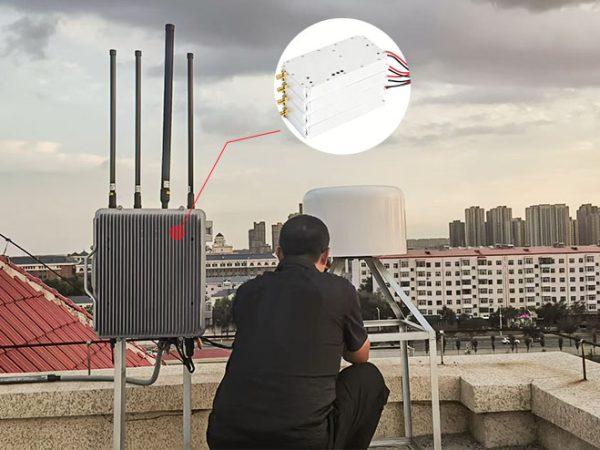
Heilongjiang Weather Center Completes Anti-Drone System Upgrade with Three High-Power Drone Jammer Modules

Tangshan Chem Plant Sealed Drone Gaps With 3 GaN Wideband Modules
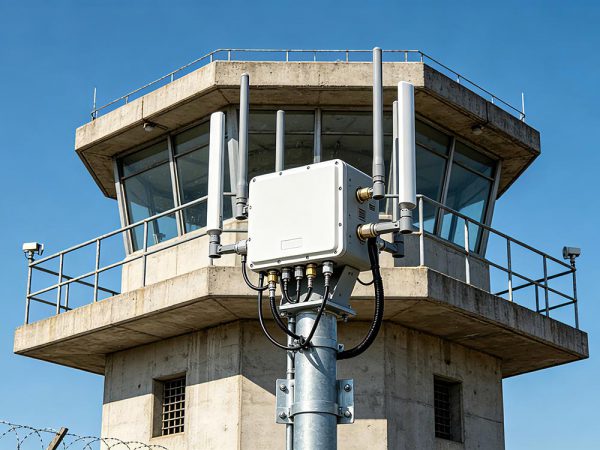
How a National Prison Integrated Our Drone Jamming Module Into Their Fixed Counter-Drone System

Integrating Core RF Power: OEM Drone Jamming Module for Oil Refinery Security | Case Study
Send Us a Message
Related Products
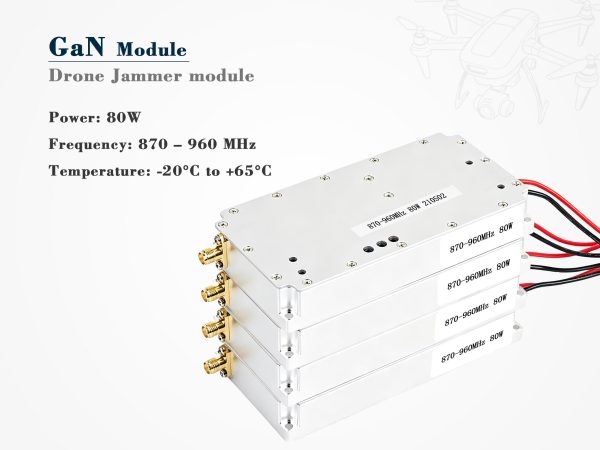
80W GaN Drone Jammer Module 870–960MHz | Analog Sweep
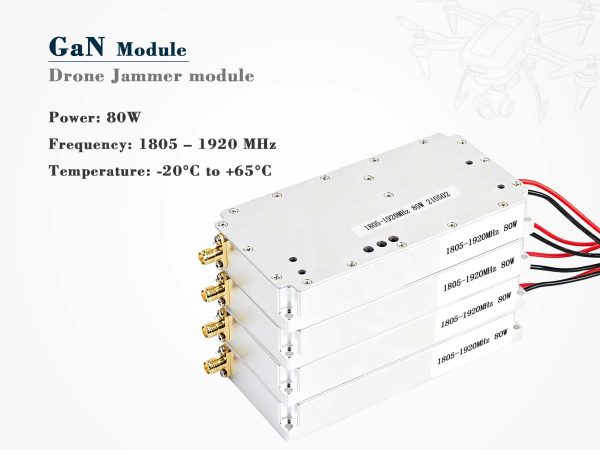
80W 1805–1920MHz GaN UAV Countermeasure Jammer Module
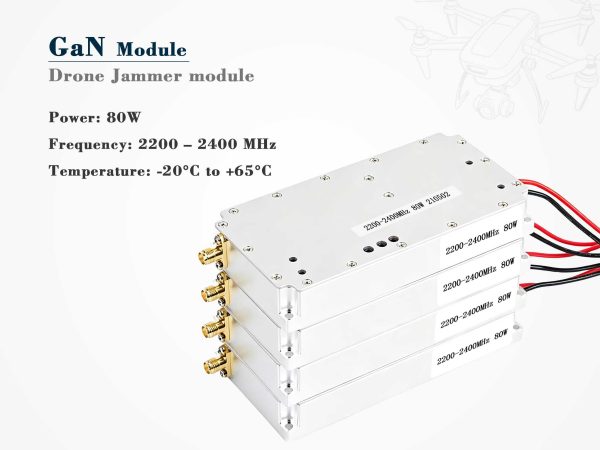
80W GaN Jammer Module: Powerful 2200–2400MHz Counter-UAS Solution