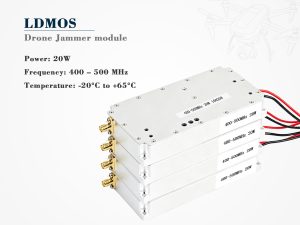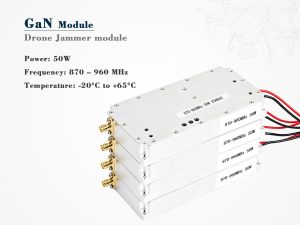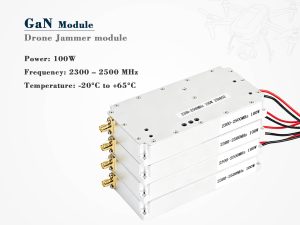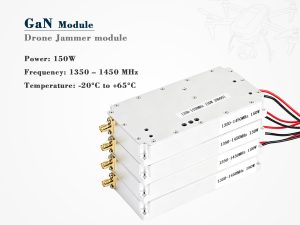
ExpressLRS (ELRS) has become a dominant radio control link in the FPV and drone ecosystem. Its low latency, long-range capability, and open-source flexibility have made it popular with legitimate operators and, unfortunately, with unauthorized users as well. That reality has pushed ELRS into the counter-UAS conversation. For defense, security, and critical infrastructure teams, an ELRS drone jammer module is not just another RF accessory. It is a specialized countermeasure component that must be selected, integrated, and governed with care.

This article examines the ELRS drone jammer module market from an industry perspective. It is written for authorized counter-UAS programs and does not provide operational instructions for interfering with communications.
Why ELRS Changes the Counter-UAS Equation
Traditional RC links often use fixed or narrowband channels. ELRS uses a packet-based, frequency-hopping approach with telemetry and configurable packet rates. That design improves link reliability for drone pilots, but it also creates challenges for counter-UAS systems. A jammer module aimed at ELRS must account for link agility, return telemetry, and the broader RF environment.
For integrators, the key point is that ELRS is not a single frequency. It is a family of configurations. A module that performs well against one setup may be less effective against another. This is why datasheet claims should be treated as starting points, not guarantees.
Technical Characteristics That Matter
| ELRS Characteristic | Operational Implication | Integration Consideration |
|---|---|---|
| Frequency hopping | Harder to predict channel use | Wideband coverage and fast response |
| Telemetry return link | Two-way communication | Must consider both control and telemetry paths |
| Configurable packet rates | Different latency and duty cycles | Testing across common configurations |
| Open-source ecosystem | Rapid firmware and hardware changes | Module must stay current with link evolution |
| Low latency | Real-time control | Counter-UAS response must be equally timely |
Module Selection Criteria
When evaluating an ELRS drone jammer module, procurement and engineering teams should look beyond output power. The following factors often determine whether a module is suitable for a real counter-UAS platform:
-
RF coverage: Does the module address the relevant ELRS bands and modulation schemes used in the target environment?
-
Response time: Can it detect and react within the timeframe required by the mission?
-
Thermal design: Does it support the expected duty cycle without rapid derating?
-
Power quality: Is it compatible with the platform’s voltage range, grounding, and transient behavior?
-
Control interface: Does it offer clear status telemetry, fail-safe logic, and role-based access?
-
Size, weight, and power (SWaP): Can it fit the platform without compromising endurance or payload?
-
Compliance evidence: Are RF exposure, EMC, and environmental test reports available?
A module that looks strong on paper can fail in the field if any of these areas are neglected.
Integration and Deployment Realities
Integrating an ELRS jammer module is different from integrating a generic RF module. ELRS links are dynamic, and the RF environment is rarely clean. Nearby communication systems, GPS receivers, and other counter-UAS components can all interact with the module.
Practical deployment planning should cover:
-
Antenna placement and isolation to reduce self-interference
-
Shielding and filtering to protect platform radios
-
Thermal management under realistic mission profiles
-
Fail-safe behavior when authorization is lost or communication is interrupted
-
Logging and audit trails for responsible use
In fixed-site installations, the module may be part of a layered detection and mitigation architecture. On mobile platforms, SWaP and power constraints usually dominate. In both cases, the module should be treated as one component in a larger system, not a standalone solution.
Testing Without Overpromising
Testing should reflect the real world, not a controlled lab. Teams should validate performance across different ELRS packet rates, hopping patterns, and environmental conditions. They should also test coexistence with the platform’s own radios and sensors. Because ELRS firmware and hardware evolve quickly, regression testing is important after any update.
A useful test matrix includes:
-
Standalone module performance
-
Platform-level RF coexistence
-
Thermal behavior at expected duty cycles
-
Vibration, shock, and ingress protection
-
Control latency, telemetry accuracy, and fail-safe response
-
EMC pre-compliance and formal qualification
Regulatory and Ethical Boundaries
Jamming technology is tightly controlled in most countries. In many jurisdictions, only authorized government or defense users may operate jamming equipment. Any ELRS drone jammer module program should therefore begin with legal review, not technical procurement.
Compliance measures may include authorization interlocks, geofencing, audit logging, operator training, and clear rules of engagement. Suppliers should be able to provide documentation for RF exposure, EMC, environmental qualifications, and cybersecurity. Without these safeguards, a technically capable module can create legal and operational risk.
Market Outlook
The counter-UAS market continues to grow as drone use expands across commercial, public safety, and defense sectors. ELRS is likely to remain a popular link because of its performance and open-source community. That means demand for specialized ELRS countermeasure modules will persist.
The winners in this space will not be the vendors with the highest output power claims. They will be the ones that offer well-documented, thermally stable, compliant modules with clear control interfaces and strong integration support.
Conclusion
An ELRS drone jammer module is a specialized tool for authorized counter-UAS operations. Its value depends less on raw power and more on how well it fits the platform, the mission, and the law. Integrators should prioritize RF compatibility, thermal resilience, control logic, testing, and compliance from the very beginning. In a rapidly changing RF ecosystem, that disciplined approach is the difference between a reliable capability and an expensive experiment.