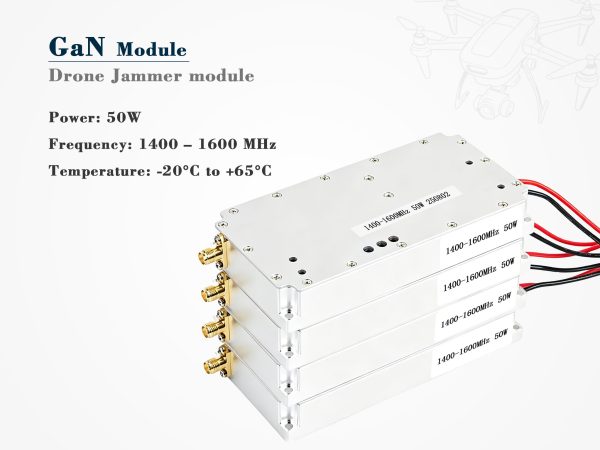
GaN 50W 870–960MHz Counter-Drone RF Module
50W GaN RF module for 870–960MHz counter-drone systems. 47±1dBm output, 28V, 3.2–4.5A, SMA, 117×58×18mm, customizable.
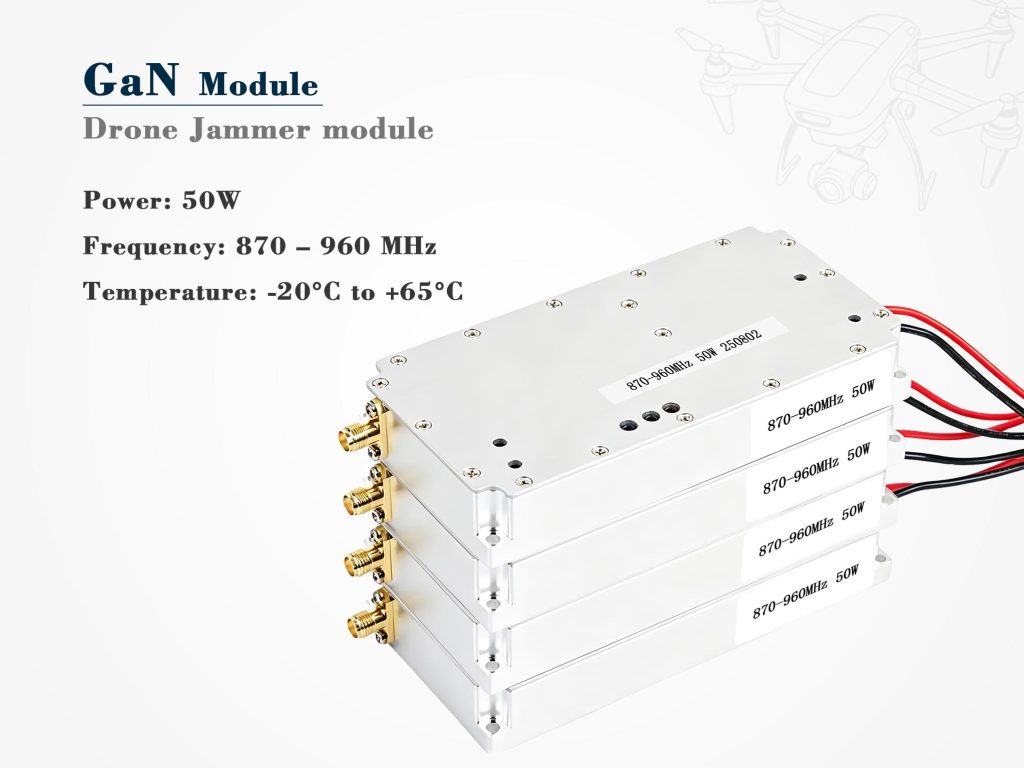
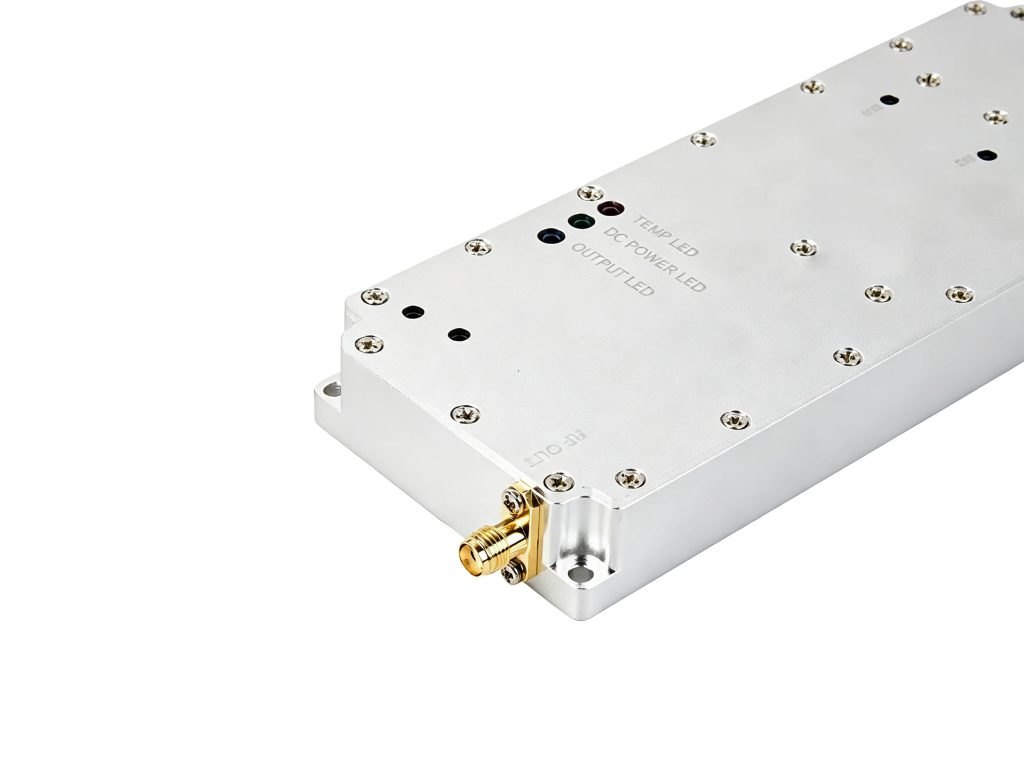
Technical Specifications
| Parameter | Specification | Notes |
| Frequency range | 870–960 MHz | Wideband coverage |
| Output power | 47 ± 1 dBm | 50 W |
| Supply voltage | 28 V | 24–28 V |
| Current draw | ≤3.2–4.5 A | At 50 W output |
| Modulation source | Built-in high-speed noise modulation | VCO, DDS, SDR optional |
| Analog scan speed | 270 kHz | 100–500 kHz customizable |
| Input / output impedance | 50 ohms | Standard |
| Protection LEDs | Power, overvoltage, overtemperature | Status indicators |
| Operating temperature | -20 to +65 °C | Normal operation |
| Dimensions (L×W×H) | 117 × 58 × 18 mm | Or custom |
| Weight | 300 g | Approx. |
| Base material | GaN on SiC | Copper heat spreader |
Product Details
A Compact 50W GaN Module for 870–960MHz
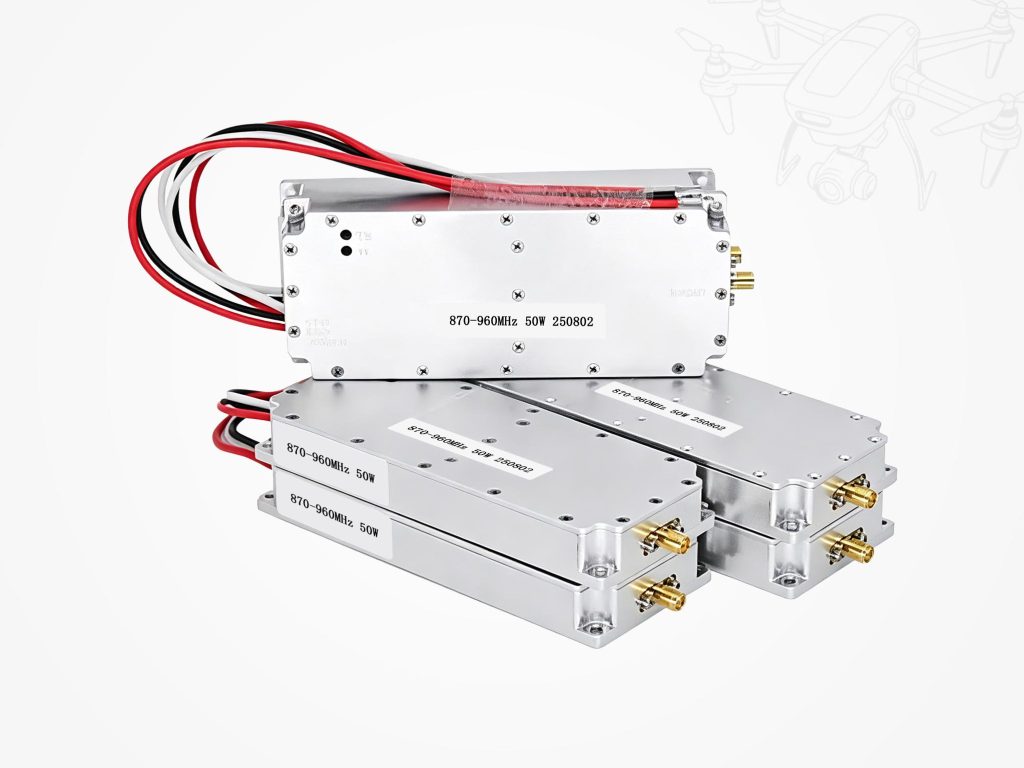
This GaN RF module is built for counter-drone and wideband jamming systems that need solid output in the 870–960 MHz band. It delivers 50 W (47 ± 1 dBm) from a 24–28 V supply, drawing 3.2–4.5 A. The design uses GaN on SiC mounted on a copper heat spreader, so it handles high power in a small 117 × 58 × 18 mm package. Weight is about 300 g.
Why GaN on SiC Matters
GaN on SiC offers high power density and good thermal performance. In this module, that means less wasted heat, stable output, and reliable operation over -20 to +65 °C. The AB-class design supports instantaneous wideband operation. It is not a narrowband toy. It is made for real RF chains where 50-ohm input and output impedance keeps matching simple.
Output and Modulation
Output power is 47 ± 1 dBm, roughly 50 W. The built-in high-speed noise modulation source gives immediate broadband noise without an external signal generator. Analog scan speed is 270 kHz as standard. If your system needs a different sweep, 100–500 kHz is available. You can also request VCO, DDS, or SDR modulation sources. This makes the module useful for different counter-drone architectures, from fixed sites to mobile platforms.
Designed for Integration
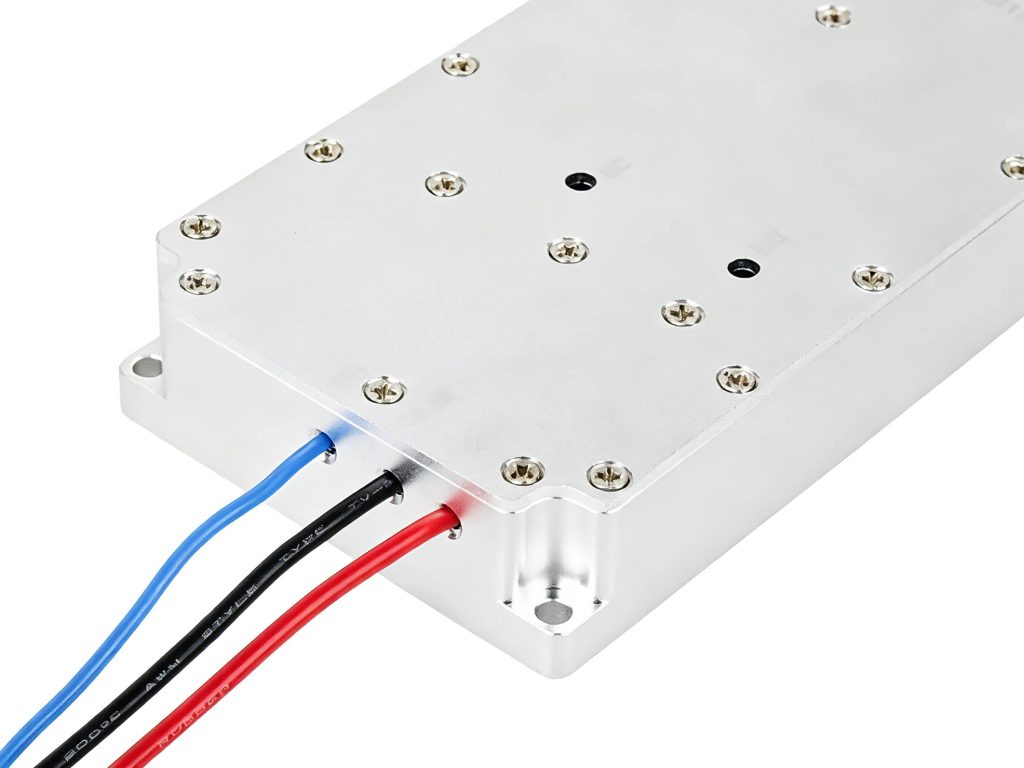
The module uses SMA female connectors. Front-panel style LEDs show power, overvoltage, and overtemperature status. That helps technicians check system health fast. The small size and 300 g weight reduce payload and rack space. The copper base helps move heat into the chassis or heatsink. For best life, mount it to a suitable thermal path and keep airflow around the fins or cold plate.
Customization Without Long Delays
Standard frequency coverage is 870–960 MHz. Custom options include different frequency ranges, scan speeds, modulation sources, connectors, and mechanical layouts. If your project needs a different housing or interface, the 117 × 58 × 18 mm format can be adjusted. This flexibility suits OEMs, integrators, and research teams that need a repeatable RF building block rather than a one-off design.
Where It Fits
Typical uses include authorized counter-drone systems, RF test benches, wideband signal sources, and protected-site equipment. It is not a consumer device. Operation may be regulated. Users are responsible for local laws, licensing, and safe use. Do not operate near critical communications, hospitals, airports, or emergency services unless you have written approval. The module is a component, not a complete jammer. It needs a proper power supply, control system, antenna, and thermal design.
Reliability in the Field
The AB-class GaN layout is chosen for ruggedness. It handles voltage from 24 to 28 V and keeps output stable when the input varies. The aluminum or copper mounting interface helps with shock and vibration when installed correctly. For continuous duty, derate if case temperature climbs. Keep RF cables short and rated for 50 W. Use a clean supply and protect the DC line from transients.
A Practical RF Building Block
If you need a compact 50W GaN module for 870–960MHz, this unit gives you wideband output, built-in modulation, and flexible customization. It is small, light, and ready for integration into a larger counter-drone or RF system. Contact us with your frequency, scan speed, modulation, and mechanical needs. We can quote a standard or custom version.
Frequently Asked Questions
Case Studies
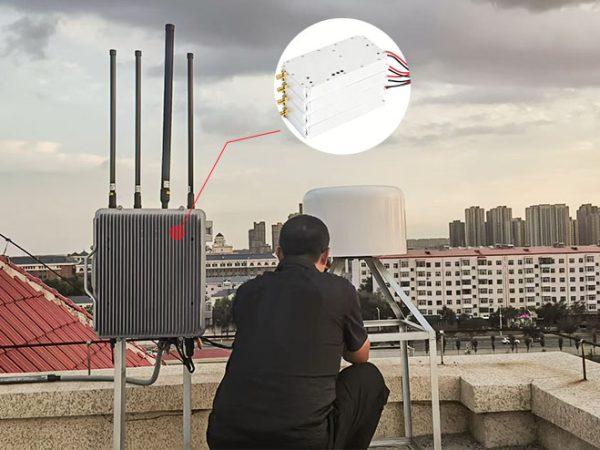
Heilongjiang Weather Center Completes Anti-Drone System Upgrade with Three High-Power Drone Jammer Modules

Tangshan Chem Plant Sealed Drone Gaps With 3 GaN Wideband Modules

How a National Prison Integrated Our Drone Jamming Module Into Their Fixed Counter-Drone System

Integrating Core RF Power: OEM Drone Jamming Module for Oil Refinery Security | Case Study
Send Us a Message
Related Products
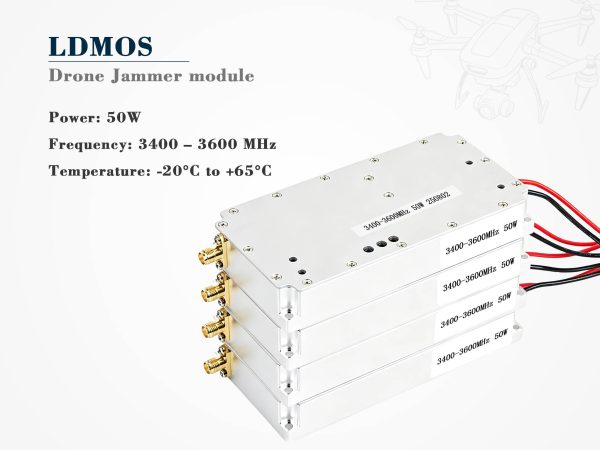
3400–3600 MHz 50W Drone Countermeasure Module
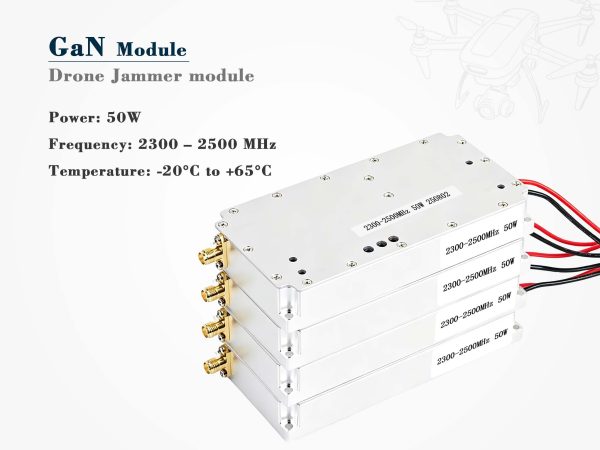
2300–2500MHz 50W GaN Module for Drone Countermeasure and Signal Shielding
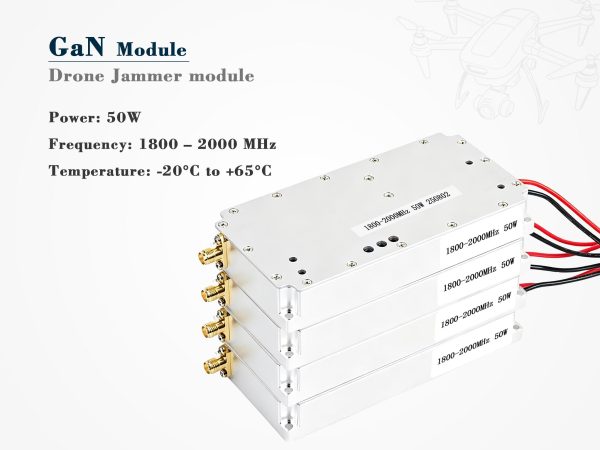
Powerful 50W GaN Jammer Module 1800-2000MHz