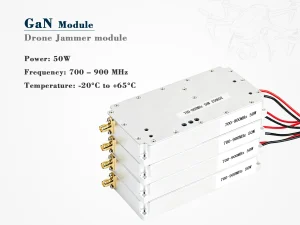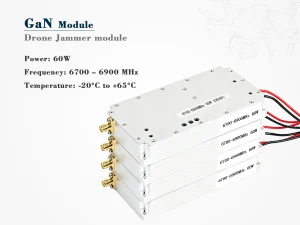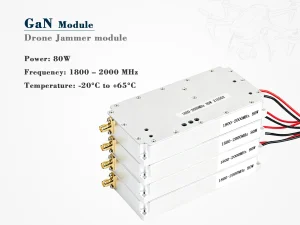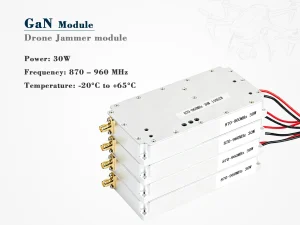
The search phrase “LoRa FPV jammer module selection guide” is appearing more often in counter-UAS procurement discussions. Yet the wording can be misleading. In most markets, jamming equipment is not a normal commercial component. It is a controlled, licensed, or prohibited category depending on jurisdiction. For authorized programs, selection is less about finding a single powerful module and more about proving lawful use, controlled deployment, and accountable supply.
This article does not recommend, source, or provide operational instructions for jamming devices. It examines the compliance and procurement factors that shape the category in 2026.
Market context: LoRa, FPV, and counter-UAS interest
LoRa is widely used for low-power, long-range telemetry and IoT links. FPV systems usually prioritize low-latency video and control. Because these technologies serve different missions, buyers should not assume that one “LoRa FPV jammer module” fits every scenario. In practice, authorized counter-UAS teams evaluate the whole RF environment, not just a module label.
That distinction matters for SEO and industry messaging. A credible LoRa FPV jammer module selection guide should start with legal authority, not datasheet headlines. Vendors that lead with output power alone are increasingly viewed as a compliance risk.
The first filter is authorization
Before technical review, procurement teams should confirm:
-
The end user is legally authorized to operate RF mitigation equipment.
-
The intended use complies with national telecommunications, aviation, and public safety rules.
-
Frequency coordination and exclusion zones are documented.
-
Export controls, end-user certificates, and re-export restrictions are understood.
In many countries, selling, owning, or operating a jammer outside government or defense channels is illegal. That makes “selection” a governed process rather than an off-the-shelf purchase.
Due diligence table for buyers
| Selection area | What to verify | Why it matters |
|---|---|---|
| Legal authorization | End-user license, government approval, operator training | Unauthorized jamming can lead to criminal penalties |
| Frequency governance | Coordinated bands, protected services, geographic limits | Prevents harmful interference with safety and emergency links |
| Emission controls | Certified limits, filtering, shielding, test reports | Reduces spillover and regulatory exposure |
| Control and accountability | Authentication, logging, fail-safe shutdown | Supports audits and incident review |
| Thermal and power design | Duty cycle, cooling, input protection | Improves reliability in field conditions |
| Supply chain evidence | Traceability, export classification, documentation | Reduces sourcing and compliance risk |
Technical review without operational shortcuts
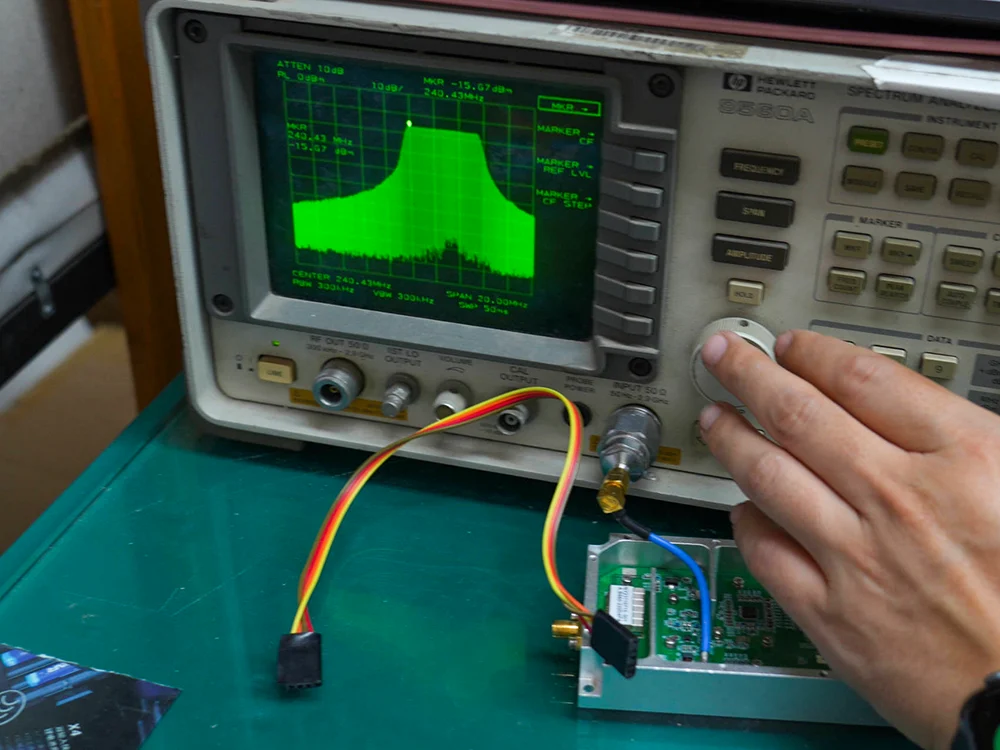
Authorized buyers still need engineering evidence. However, a responsible selection guide should avoid step-by-step jamming instructions. Instead, evaluation should focus on system behavior: how the module fails, how it logs use, how it avoids unintended emissions, and how it integrates with command-and-control policies.
Test reports from accredited laboratories carry more weight than marketing claims. Procurement teams should also ask whether firmware updates are controlled, whether the device can be remotely disabled, and whether spare parts remain available under export rules.
Supply chain and documentation risks
The counter-UAS supply chain is under sharper scrutiny. Modules may be re-exported, rebranded, or sold without proper classification. For this reason, documentation is not a paperwork exercise. It is part of the product.
Red flags include:
-
No clear manufacturer identity or traceability.
-
Frequency and power claims without accredited test evidence.
-
Refusal to provide end-user or export documentation.
-
Marketing that targets unlicensed civilian use.
-
No fail-safe, logging, or disable features.
Outlook for the category
The phrase “LoRa FPV jammer module selection guide” will continue to attract search traffic because counter-UAS budgets are rising in some regions. But the winning industry message in 2026 is not “more power.” It is “provable compliance.” Vendors and buyers that treat authorization, testing, and traceability as primary features will be better positioned than those competing only on hardware specifications.
For procurement teams, the practical takeaway is simple: start with the legal basis, then evaluate the engineering evidence. A module that cannot be lawfully deployed is not a solution, no matter how impressive its datasheet appears.