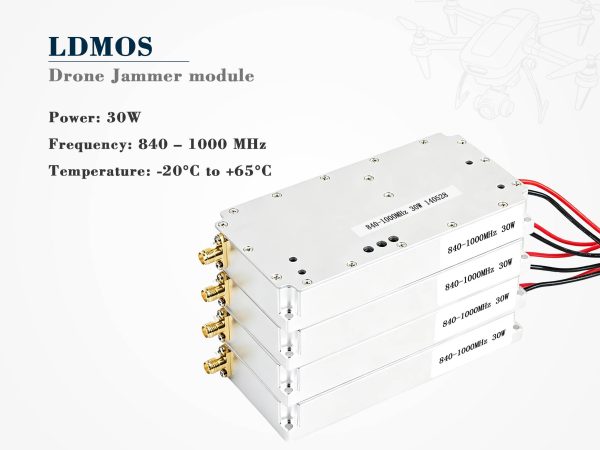
30W LoRa FPV Jamming Module | 870–960MHz GaN
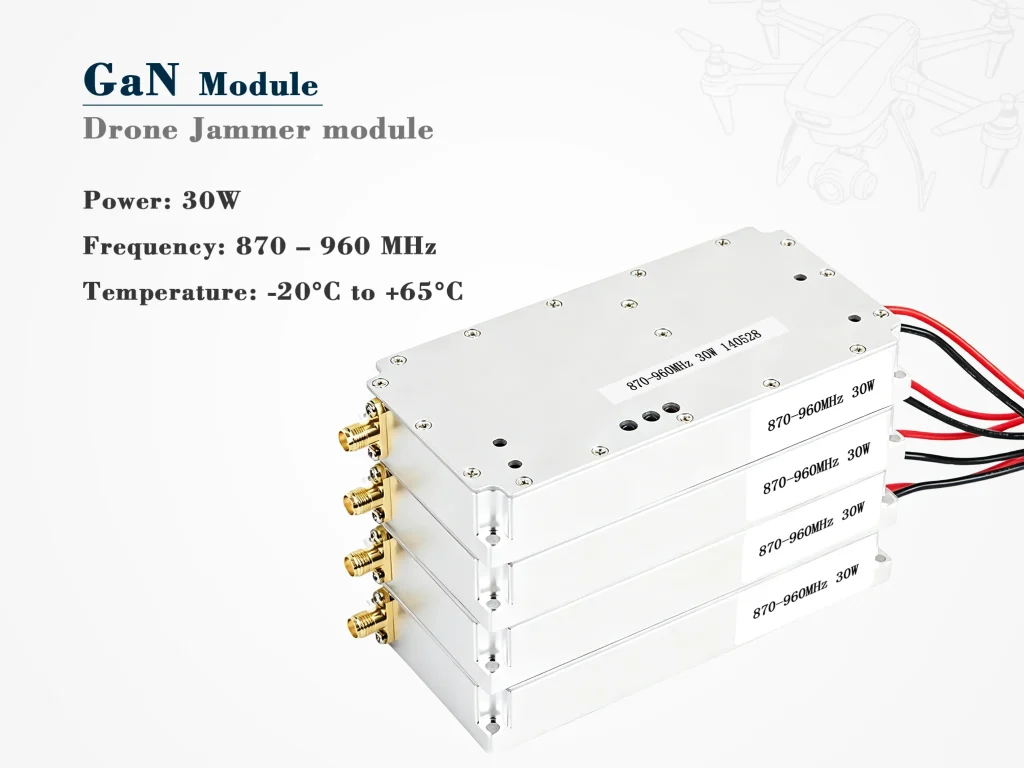
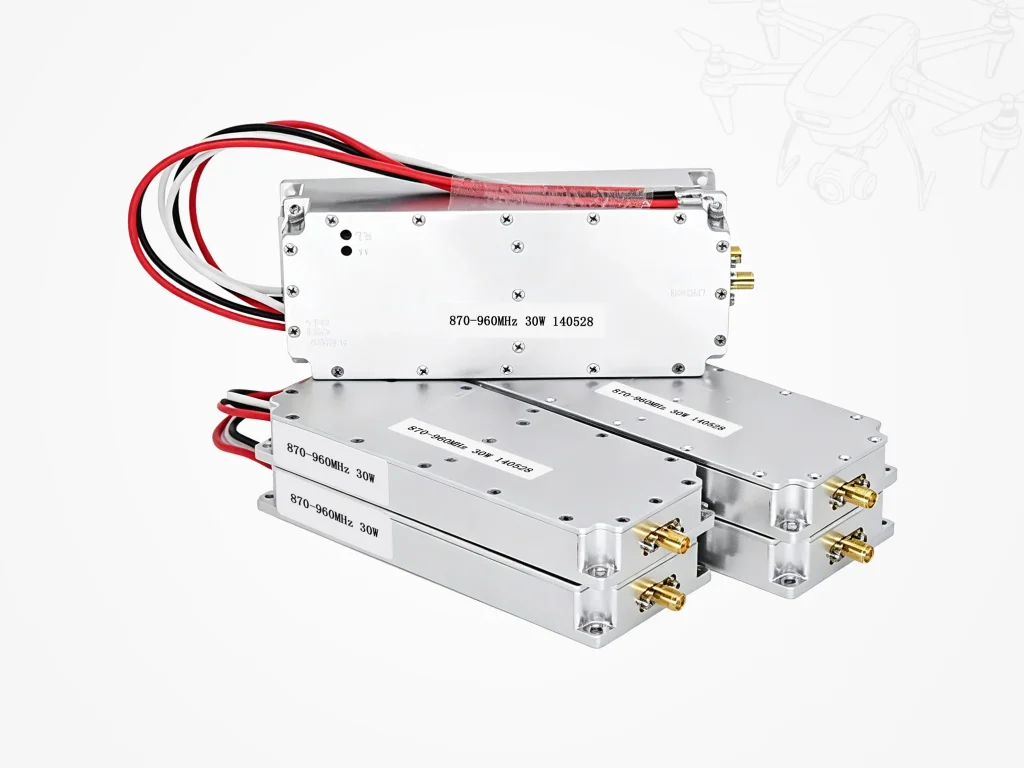
30W GaN LoRa FPV jamming module, 870–960MHz, DC24–29V, 3.2A, SMA female, high-speed sweep, 115.5×46.5×21mm, 0.21kg. Authorized use only.
Technical Specifications
| Parameter | Specification | Notes |
| Frequency range | 870–960MHz | Covers LoRa, ISM, and FPV links |
| Output power | 30W | Typical |
| Supply voltage | DC24–29V | Regulated DC input |
| Current draw | 3.2A max | At 24–29V |
| Modulation source | Built-in high-speed sweep source | Analog interference source |
| Analog scan speed | High-speed internal sweep | Factory configured |
| Input / output impedance | 50Ω | SMA female output |
| Protection LEDs | Power, over-voltage, over-temperature | Status indicators |
| Operating temperature | -20 to +65°C | Keep airflow |
| Dimensions (L×W×H) | 115.5×46.5×21mm | Compact chassis |
| Weight | 0.21kg | Module only |
| Base material | Aluminum alloy | Durable metal housing |
Product Details
The 30W LoRa FPV Jamming Module is a compact GaN-based RF source for 870–960MHz band testing. It combines a high-speed sweep source, RF amplifier, and control interface in one metal housing. With 30W output and DC24–29V input, it fits bench, rack, and field setups where size and efficiency matter. The output uses an SMA female connector. Maximum current draw is 3.2A. This is not a toy. Use it only in authorized environments.
Why GaN Matters
GaN offers higher power density and better thermal performance than older silicon designs. That means more output from a small module. Efficiency is ≥40%, so heat management stays practical. The unit includes over-voltage and over-temperature LEDs, helping operators spot faults fast. A power switch LED shows live status.
Band and Power
The 870–960MHz range covers many LoRa, ISM, and FPV video links. Output power is 30W typical. Output VSWR is ≤2.0, so it works with reasonable 50Ω loads. Poor antennas can still cause reflections, so always connect a suitable load or antenna before power-up. The built-in high-speed sweep source removes the need for an external signal generator in many test scenarios.
Control and Integration
On/off control is simple: +5V or floating means on; grounding means off. That makes it easy to drive from a microcontroller, relay, or manual switch. The SMA female output connects to filters, attenuators, or antennas. Supply range is DC24–29V. Maximum current is 3.2A. Keep wiring short and use a supply that can handle peak demand. The module measures 115.5×46.5×21mm and weighs 0.21kg, so it fits tight enclosures.
Thermal and Environmental
Operating temperature is -20 to +65°C. Do not block airflow. In high-duty cycles, add a heatsink or fan. The metal housing helps spread heat. If the over-temperature LED turns on, reduce duty cycle or improve cooling. If the over-voltage LED lights, check the supply immediately. These LEDs are quick status indicators, not calibration tools.
Use Cases
Typical uses include RF lab testing, receiver robustness checks, and authorized counter-drone trials. It can also support LoRa and FPV link budget studies. Because the band overlaps licensed and license-exempt services, coordination matters. Never transmit on public networks or near sensitive systems without permission. Rules vary by country. The operator is responsible for compliance.
What to Check Before Buying
Confirm your target frequencies, required duty cycle, and antenna impedance. Check that your power supply can deliver 24–29V at 3.2A. Plan for attenuation if you test close to a receiver. If you need a specific scan speed or custom connector, ask before ordering. The 30W LoRa FPV Jamming Module is built for integration, not casual handheld use.
Final Thoughts
This 30W LoRa FPV Jamming Module packs a sweep source, amplifier, and protection LEDs into a small frame. It is straightforward to power and control. With the right antenna, cooling, and legal clearance, it can be a useful tool for authorized RF testing. Always treat high-power RF as a serious hazard and follow local regulations.
Frequently Asked Questions
Case Studies
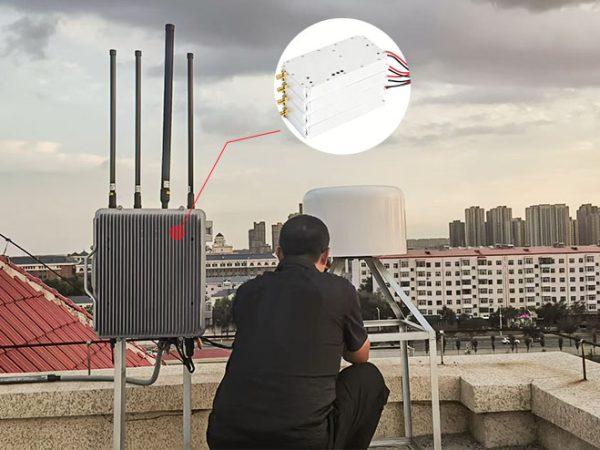
Heilongjiang Weather Center Completes Anti-Drone System Upgrade with Three High-Power Drone Jammer Modules
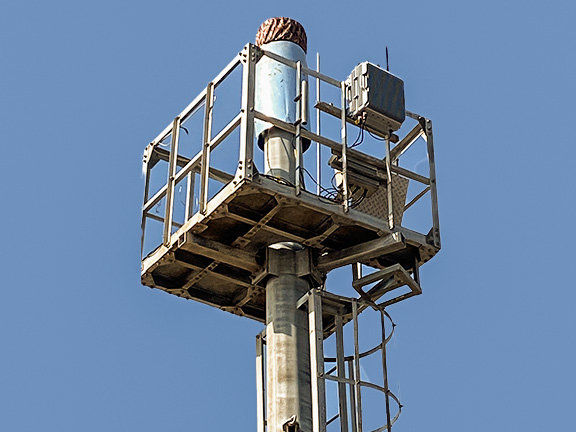
Tangshan Chem Plant Sealed Drone Gaps With 3 GaN Wideband Modules
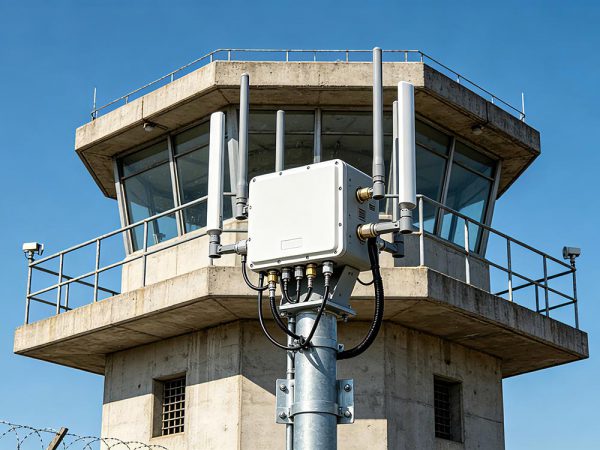
How a National Prison Integrated Our Drone Jamming Module Into Their Fixed Counter-Drone System
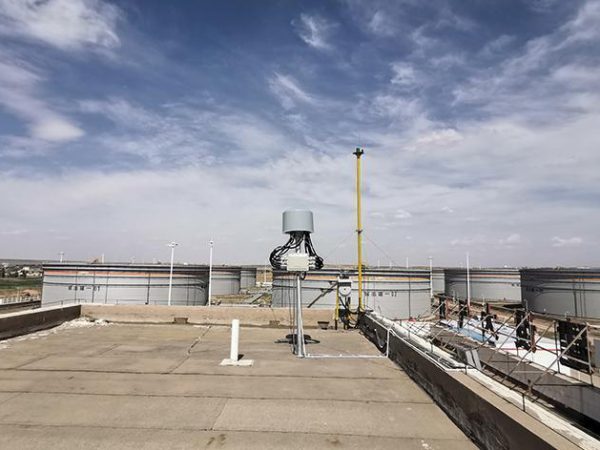
Integrating Core RF Power: OEM Drone Jamming Module for Oil Refinery Security | Case Study
Send Us a Message
Related Products
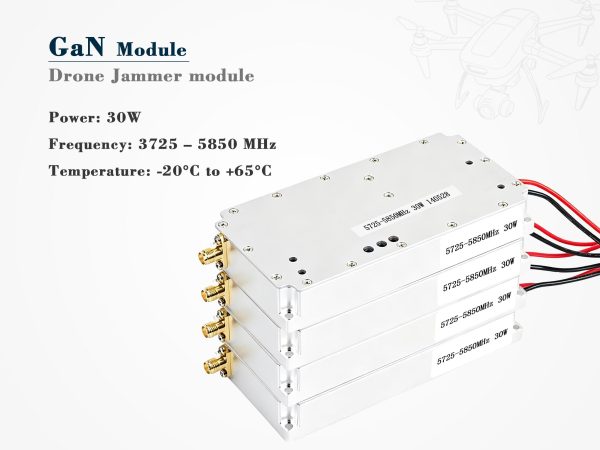
30W 5.8 GHz GaN Drone Jammer Module | 5725–5850 MHz
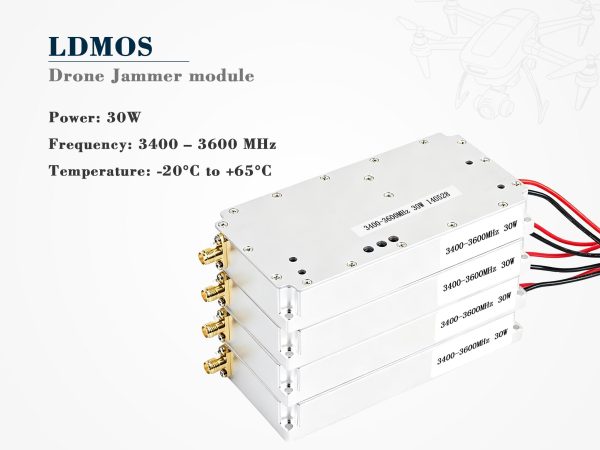
30W LDMOS Jamming Module for 3400–3600 MHz Drone Defense
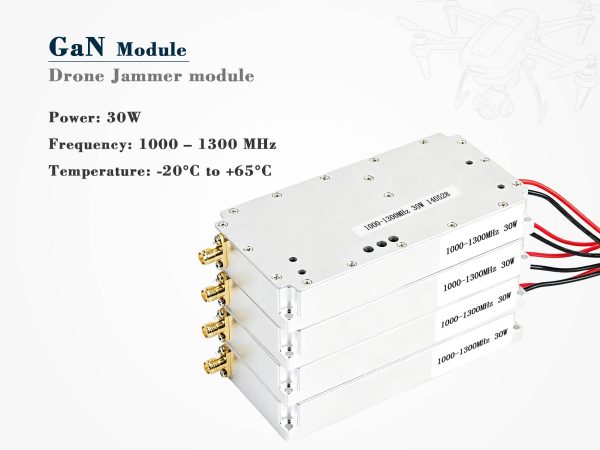
30W Anti-Drone Jamming Module: Compact 1000-1300MHz GaN Solution