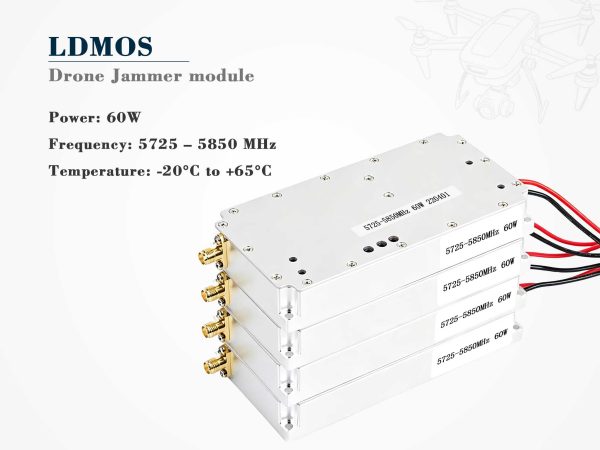
Compact 60W GaN Anti-Drone Jammer Module for 6.7–6.9GHz
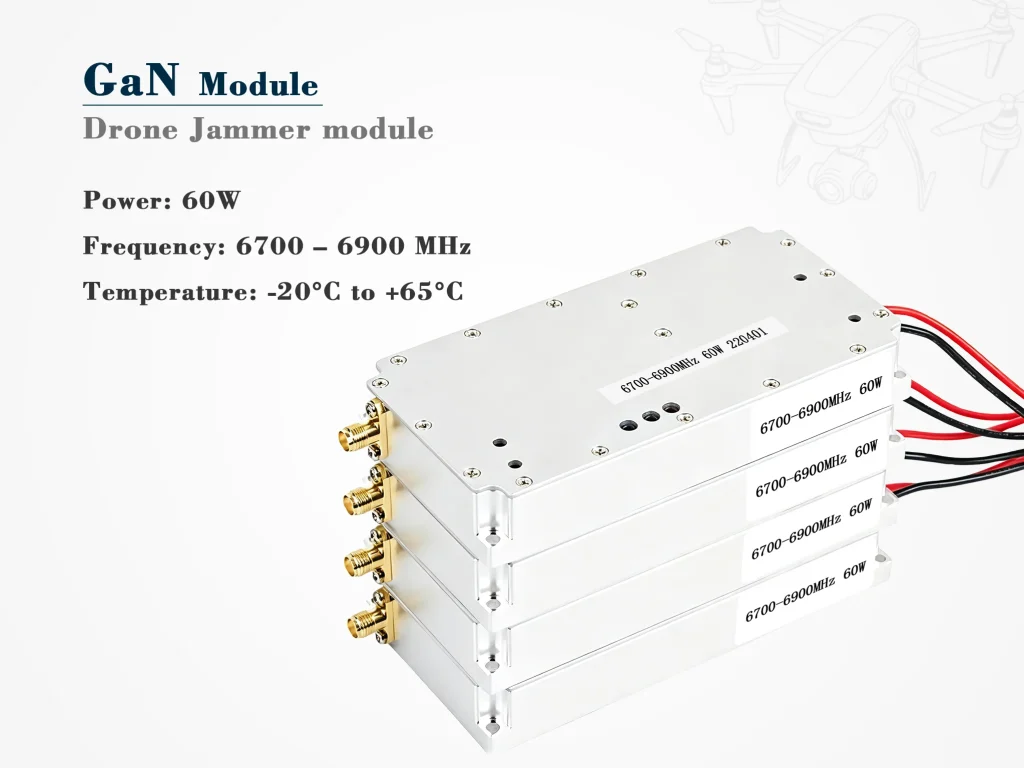
60W GaN anti-drone jammer module, 6700–6900MHz, DC12–14V, 13A max, ≥40% efficiency, SMA female, high-speed sweep source, 138×50.5×17mm, 0.22kg
Technical Specifications
| Parameter | Specification | Notes |
| Frequency range | 6700–6900MHz | 6.7–6.9GHz band; confirm exact range before order |
| Output power | 60W | Typical |
| Supply voltage | DC12–14V | Regulated supply recommended |
| Current draw | 13A max | At full output |
| Modulation source | Built-in high-speed sweep source | Internal RF source |
| Analog scan speed | High-speed sweep | Factory preset; ask for exact scan rate |
| Input / output impedance | 50 Ohm | RF path; SMA female output |
| Protection LEDs | Power, over-voltage, over-temperature | Status indicators |
| Operating temperature | -20 to +65°C | Ambient |
| Dimensions (L×W×H) | 138×50.5×17mm | Approx. |
| Weight | 0.22kg | Approx. |
| Base material | GaN RF stage; metal housing | Enclosure helps heat spreading |
Product Details
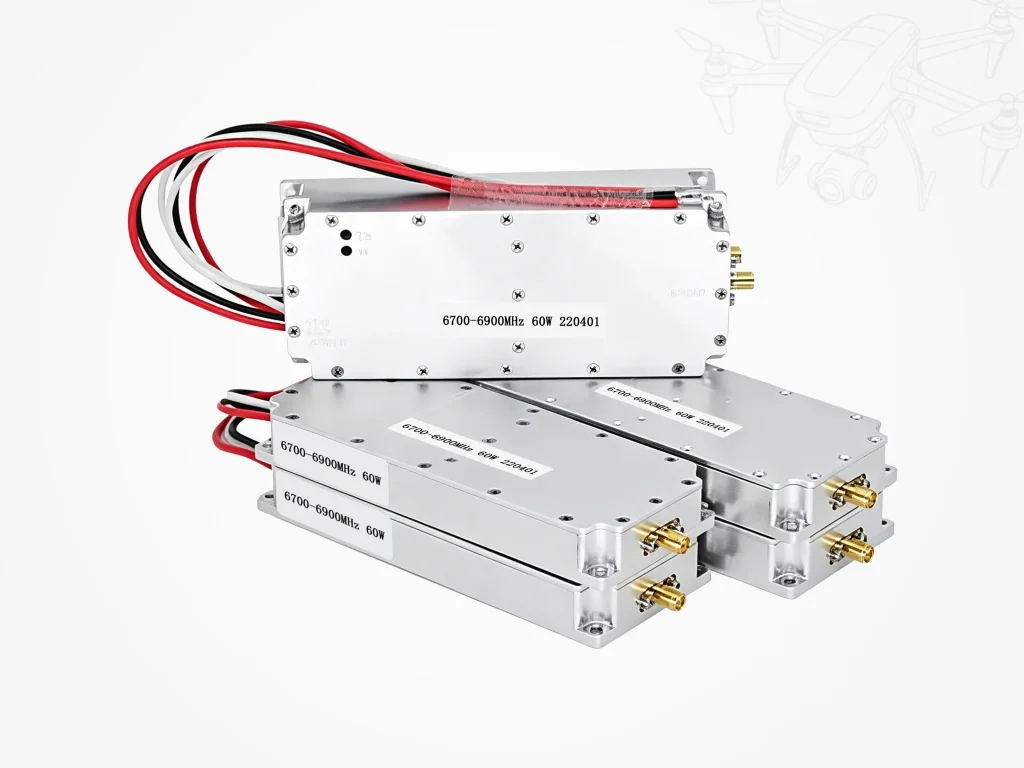
If you need a compact 60W GaN anti-drone jammer module, this 6700–6900MHz unit is worth a close look. It combines a GaN RF output stage, a built-in high-speed sweep source, and simple switch control in a 138×50.5×17mm metal-style housing. At about 0.22kg, it fits portable and rack-mounted counter-UAS designs. It is designed for system builders who want a compact RF block. Remember, it is an RF module, not a finished product. You still need a suitable antenna, regulated DC power, cooling, and legal approval for your region.
GaN Power in a Small Body
GaN technology helps this module deliver 60W output with efficiency of at least 40%. That efficiency matters because less energy is wasted as heat, but 60W RF power still requires a solid heatsink and airflow. The output VSWR is ≤2.0, so antenna matching should be checked before full-power operation. A poor match can reduce range, raise temperature, and stress the amplifier.
6700–6900MHz Coverage
The module covers the 6700–6900MHz band, often used in specific anti-drone and RF research setups. A built-in high-speed sweep source means basic analog interference does not need an external signal generator. The RF output uses an SMA female connector, and the system impedance is 50 Ohm. Keep coaxial cables short and low-loss, especially at 6.7–6.9GHz.
Simple Switch Control
Control is easy to integrate. Apply +5V or leave the switch line floating to turn the module on. Ground the line to turn it off. This logic works well with remote control boards, timing circuits, and safety interlocks. The module also includes LEDs for power, over-voltage, and over-temperature, so operators can see key status conditions at a glance.
Power, Heat, and Protection
Supply voltage is DC12–14V, and maximum current draw is 13A. Use a regulated supply with enough current headroom, plus proper wiring to avoid voltage drop. The operating temperature range is -20 to +65°C. In hot or enclosed installations, forced air or a larger heatsink is strongly recommended. The protection LEDs help warn you before thermal or voltage issues become failures.
Integration Tips
Mount the anti-drone jammer module close to the antenna to reduce cable loss. Never run it without a load or with a bad antenna. Check VSWR, supply polarity, and grounding before power-up. Because drone jamming rules differ by country, confirm frequency limits, licensing, and permitted use before deployment. This module is best treated as a controlled RF building block for qualified integrators.
Who It Is For
This 60W GaN anti-drone jammer module suits OEMs, RF labs, and counter-UAS system developers that need 6.7–6.9GHz coverage in a small package. It can be used in test rigs, custom housings, and integrated anti-drone platforms. If your design needs higher power, different bands, or custom control logic, ask the supplier about options before design-in.
Quick Summary
In short, this module offers 60W GaN output, 6700–6900MHz coverage, a built-in sweep source, DC12–14V operation, and a compact 138×50.5×17mm footprint. It is not a consumer gadget; it is a serious RF component for qualified projects. Match it well, cool it properly, and follow local laws. Ask for a datasheet and test report before production.
Frequently Asked Questions
Case Studies
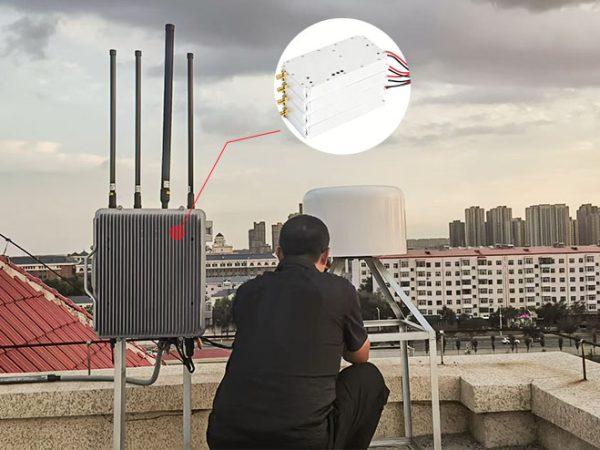
Heilongjiang Weather Center Completes Anti-Drone System Upgrade with Three High-Power Drone Jammer Modules

Tangshan Chem Plant Sealed Drone Gaps With 3 GaN Wideband Modules

How a National Prison Integrated Our Drone Jamming Module Into Their Fixed Counter-Drone System

Integrating Core RF Power: OEM Drone Jamming Module for Oil Refinery Security | Case Study
Send Us a Message
Related Products
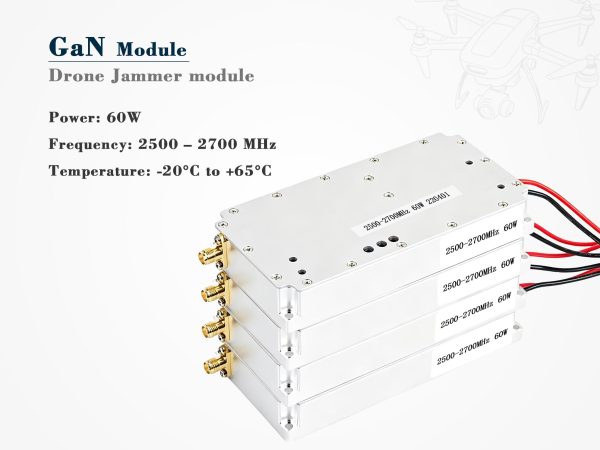
60W 2500–2700MHz GaN Drone Jammer Module
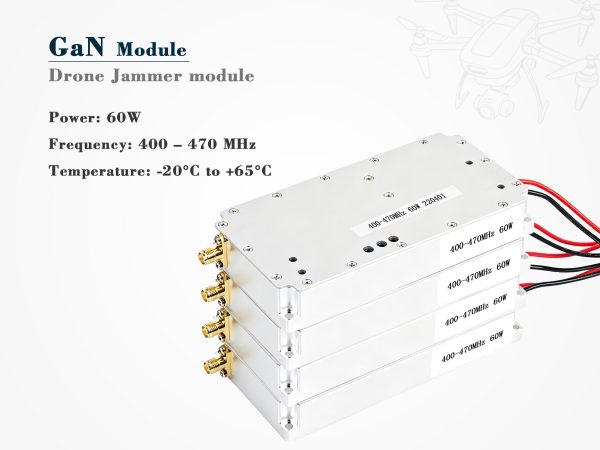
60W GaN Drone Jammer Module 400-470MHz
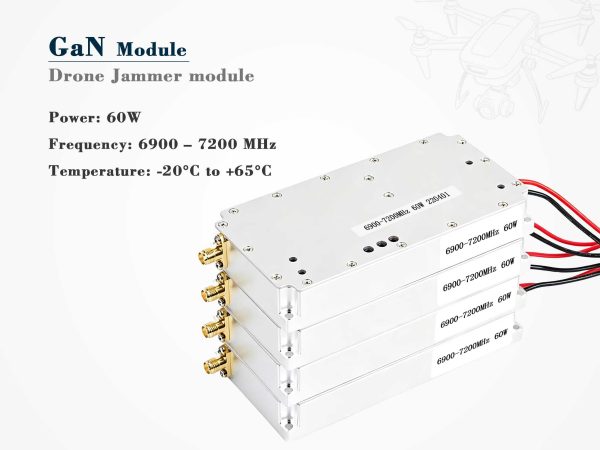
60W GaN Jamming Module: Compact 6900–7200MHz Counter-Drone Power