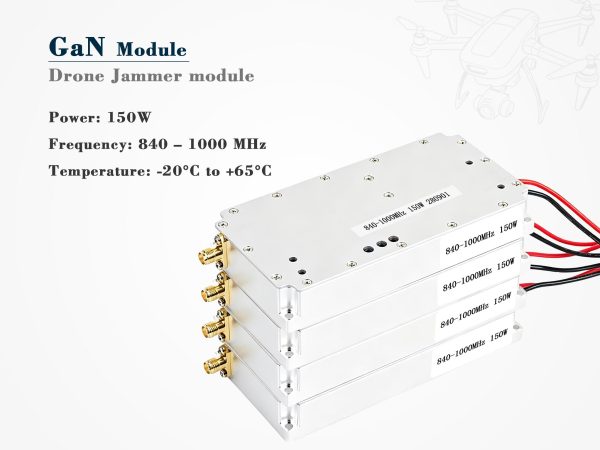
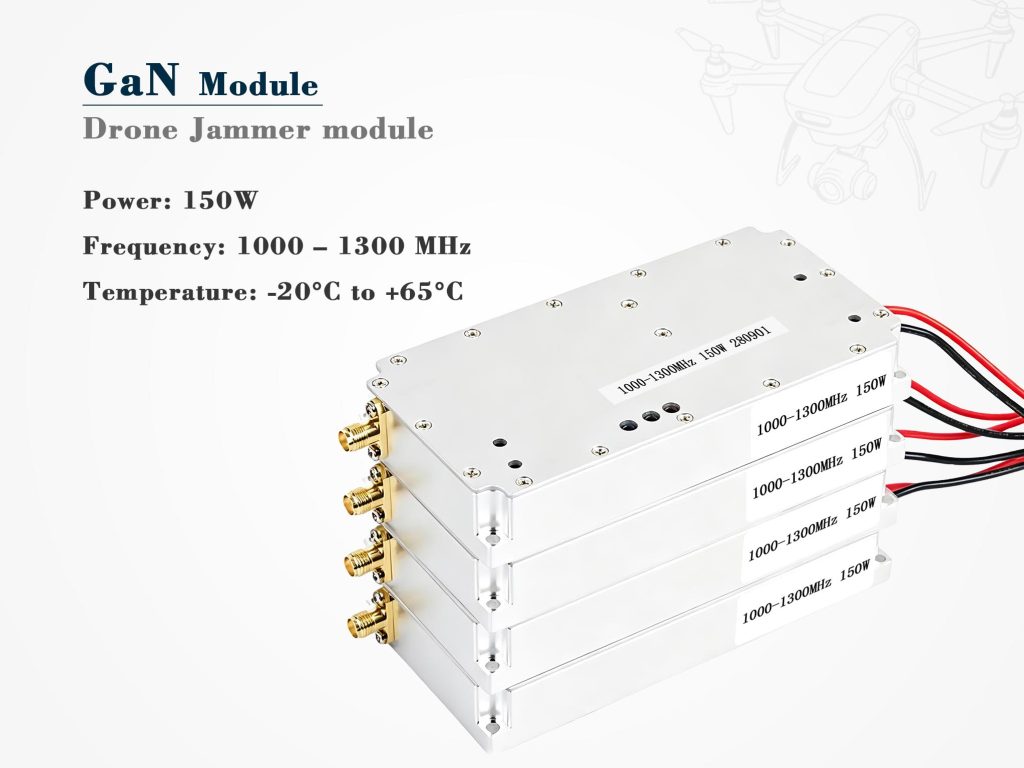
High-Power 150W Anti Drone Module 1000-1300MHz GaN
150W anti drone module (1000-1300MHz) with GaN, built-in sweep source, VSWR protection, 24-29V DC, 15A max, 168.5x84.5x23mm. Ideal for robust counter-UAS missions.

Technical Specifications
| Parameter | Specification | Notes |
| Frequency range | 1000–1300 MHz | Covers L-band drone telemetry, control links, and potential navigation threats |
| Output power | 150 W (51.8 dBm) typical | Saturated power, VSWR ≤2.0 |
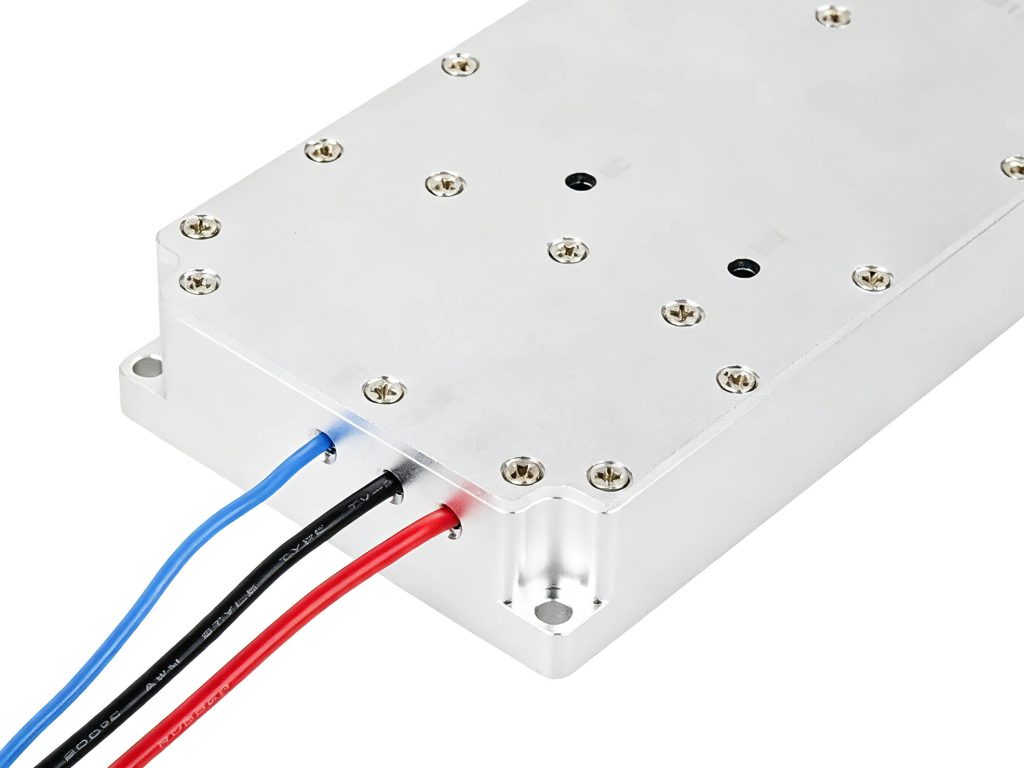
| Supply voltage | 24–29 V DC | 28 V nominal recommended |
| Current draw | ≤15.0 A | At 28 V, full 150 W output |
| Modulation source | Built‑in high‑speed analog sweep | No external generator needed |
| Analog scan speed | Fast sweep, configurable | Modulates carrier across full operating band |
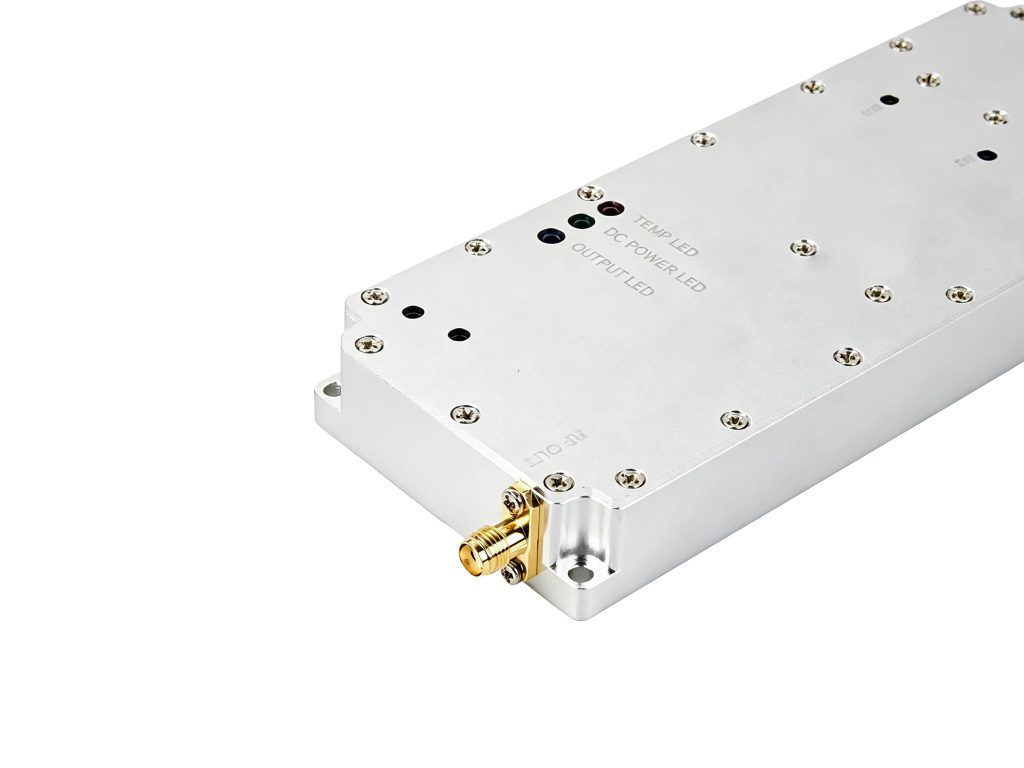
| Input / output impedance | 50 Ω | Output VSWR ≤2.0:1, absorptive protection integrated |
| Protection LEDs | None (optional on request) | Status indicator can be added |
| Operating temperature | -20°C to +65°C | Baseplate conduction cooled |
| Dimensions (L×W×H) | 168.5 × 84.5 × 23 mm | SMA‑female connector adds slight length |
| Weight | 0.55 kg | Net module weight |
| Base material | Anodized aluminum alloy | Functions as heat spreader and mounting chassis |
Product Details
Introduction to the 150W Anti Drone Module
When drone threats escalate into high-power, wideband denial requirements, a standard module often falls short. The 150W anti drone module addresses this gap head-on. Built around a gallium nitride (GaN) transistor, this integrated analog jammer delivers 150 watts of saturated RF output across 1000–1300 MHz. Unlike conventional LDMOS-based units, it packs an onboard high-speed sweep source and an absorptive VSWR guard, making it a complete, rugged building block for military, airport, and critical infrastructure counter-UAS systems.
Why 1000–1300 MHz Matters for Modern Drone Defense
While many jammers focus solely on 2.4 GHz and 5.8 GHz, an increasing number of long-range drones and UAV data links operate in the L-band segment between 1000 and 1300 MHz. This slice carries telemetry, command handshakes, and even video downlinks. A dedicated 150W anti drone module in this band ensures you are not left blind when a drone hops down into lower frequency territory. By pairing the module with a properly matched directional antenna, you create a focused energy curtain that overwhelms drone receivers without wasting power on irrelevant spectrum.
GaN Inside: Power Efficiency Meets Compact Design
The heart of this 150W anti drone module is a gallium nitride RF power transistor. GaN offers fundamentally superior power density and thermal conductivity compared to legacy LDMOS. That means you get a real 150 watts (51.8 dBm) from a slab measuring just 168.5 × 84.5 × 23 mm. Efficiency exceeds 40%, so the 15‑amp draw at 28 V DC converts mostly into useful RF, not waste heat. Anodized aluminum baseplate conduction cooling is usually sufficient, keeping the module operationally stable from -20°C to +65°C. For sustained full-duty transmission, simply bolt it to a large metal bulkhead or add a modest fan.
Built‑In Sweep Source and Absorptive Protection
A common headache with high‑power modules is the need for an external waveform generator. The 150W anti drone module removes that burden entirely. The integrated analog sweep engine modulates the GaN carrier with a fast, configurable frequency excursion, generating a dense noise‑like jamming signal across the entire 1000–1300 MHz span. Just apply DC power and a TTL enable signal.
Equally important is the built‑in absorptive VSWR protection. When an antenna gets damaged, iced over, or disconnected in the field, the resulting high reflection can destroy a final‑stage transistor. This module absorbs excessive reflected energy, protecting the GaN device and guaranteeing a ≤2.0:1 output VSWR under normal conditions.
Control and Deployment Scenarios
TTL logic makes the 150W anti drone module dead simple to integrate. Float the control pin or feed it +5 V to emit; ground it to silence. Use cases range from fixed‑site prison perimeter denial and airport asset protection to vehicle‑mounted convoy jammers. Because effective radiated power depends heavily on antenna gain, spec a low‑loss cable and a high‑gain 50‑Ω antenna to squeeze every dBm out of this powerhouse. Always confirm you hold the appropriate spectrum authorization before transmitting; units are strictly for authorized government and infrastructure security users.
Frequently Asked Questions
Case Studies
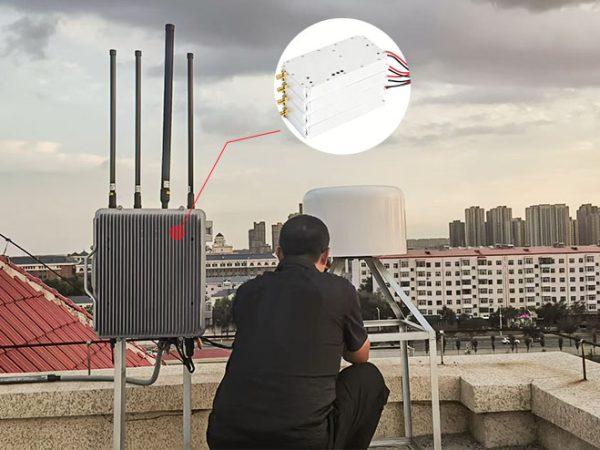
Heilongjiang Weather Center Completes Anti-Drone System Upgrade with Three High-Power Drone Jammer Modules

Tangshan Chem Plant Sealed Drone Gaps With 3 GaN Wideband Modules

How a National Prison Integrated Our Drone Jamming Module Into Their Fixed Counter-Drone System

Integrating Core RF Power: OEM Drone Jamming Module for Oil Refinery Security | Case Study
Send Us a Message
Related Products
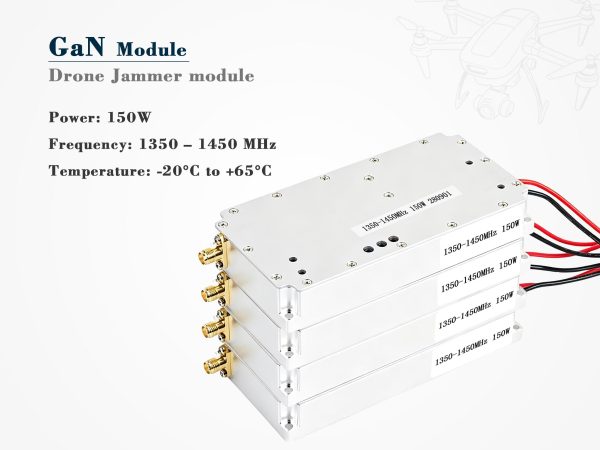
150W 1350–1450MHz GaN Analog Jammer Module
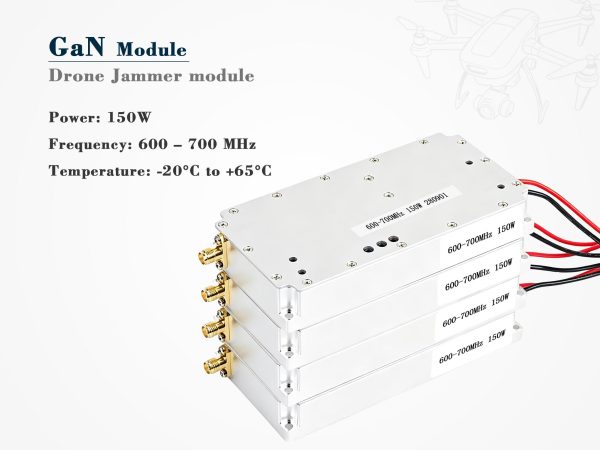
150W 600–700MHz GaN Drone Countermeasure Module
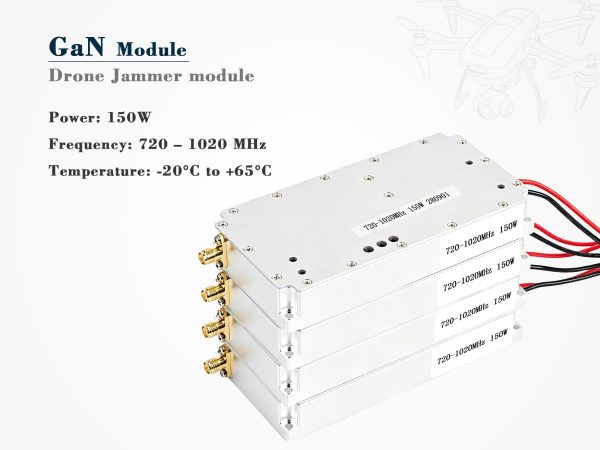
150W GaN Anti-Drone Jammer Module for 720-1020 MHz