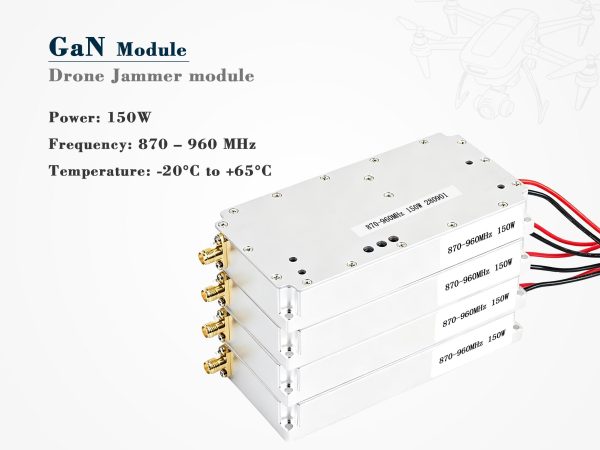
150W Anti UAV Module 5725-5850MHz GaN Jammer
150W anti UAV module covering 5725-5850MHz with built-in analog sweep source, GaN output, 24-29V DC, 15A max, SMA female, 168.5x84.5x23mm, 0.55kg.


Technical Specifications
| Parameter | Specification | Notes |
| Frequency range | 5725–5850 MHz | 5.8 GHz ISM band for drone video and control |
| Output power | 150 W nominal | GaN final stage, efficiency ≥40% |
| Supply voltage | DC 24–29 V | Regulated supply recommended |
| Current draw | 15.0 A max | Allow surge headroom for cold start |
| Modulation source | Built-in high-speed analog sweep | No external source required |
| Analog scan speed | High-speed continuous sweep | Factory-set full-band analog sweep |
| Input / output impedance | 50 Ω | SMA female output, VSWR ≤2.0 |
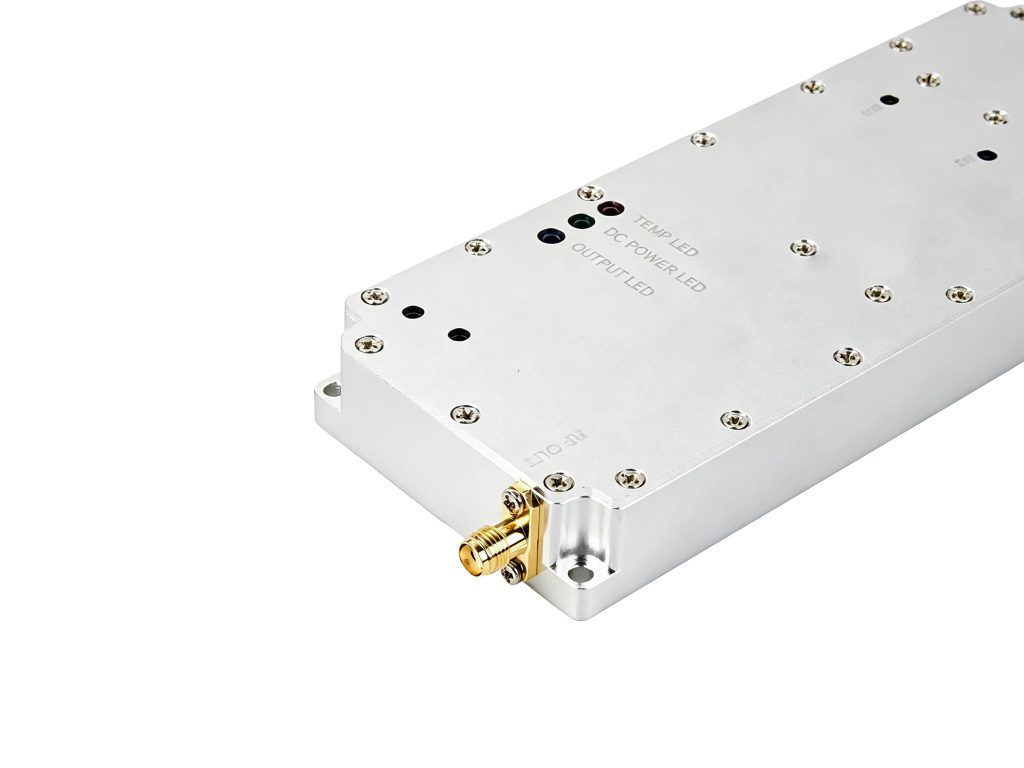
| Protection LEDs | Power, overvoltage, overtemperature | Status visible on module |
| Operating temperature | -20 to +65 °C | Baseplate cooling recommended |
| Dimensions (L×W×H) | 168.5 × 84.5 × 23 mm | Compact module |
| Weight | 0.55 kg | Aluminum housing |
| Base material | Aluminum alloy housing / high-frequency PCB | For thermal and RF performance |
Product Details
The 150W anti UAV module is a high-power GaN interference unit for the 5725–5850 MHz band. It combines an internal high-speed analog sweep source, driver stage, and GaN final amplifier in one compact assembly. This removes the need for an external exciter. The module delivers 150 W nominal output through an SMA female connector and runs from a 24–29 V DC rail. It suits fixed, vehicle-mounted, and tactical counter-UAS platforms.
Why 5.8 GHz Matters
Most consumer and FPV drones use 5.8 GHz for video downlinks and some control links. The band from 5725 to 5850 MHz is shared by analog and digital video, telemetry, and remote controllers. A fixed-frequency jammer can be defeated by channel hopping, but a wideband analog sweep covers the entire band as soon as the module is enabled. The 150W anti UAV module produces dense continuous interference across this range, which is more effective than a single CW tone.
GaN Output and RF Performance
The output stage uses gallium nitride technology. GaN offers higher power density and better thermal performance than LDMOS at 5.8 GHz. The module delivers 150 W nominal output with at least 40% efficiency. Output VSWR is rated at ≤2.0, and an internal absorptive VSWR protection device helps prevent damage from antenna mismatch. The output connector is SMA female. Because the source is analog, the output appears as a dense sweeping signal. For integrators, the 150W anti UAV module provides a strong balance of power, size, and thermal performance at 5.8 GHz.
Power, Switching, and Protection
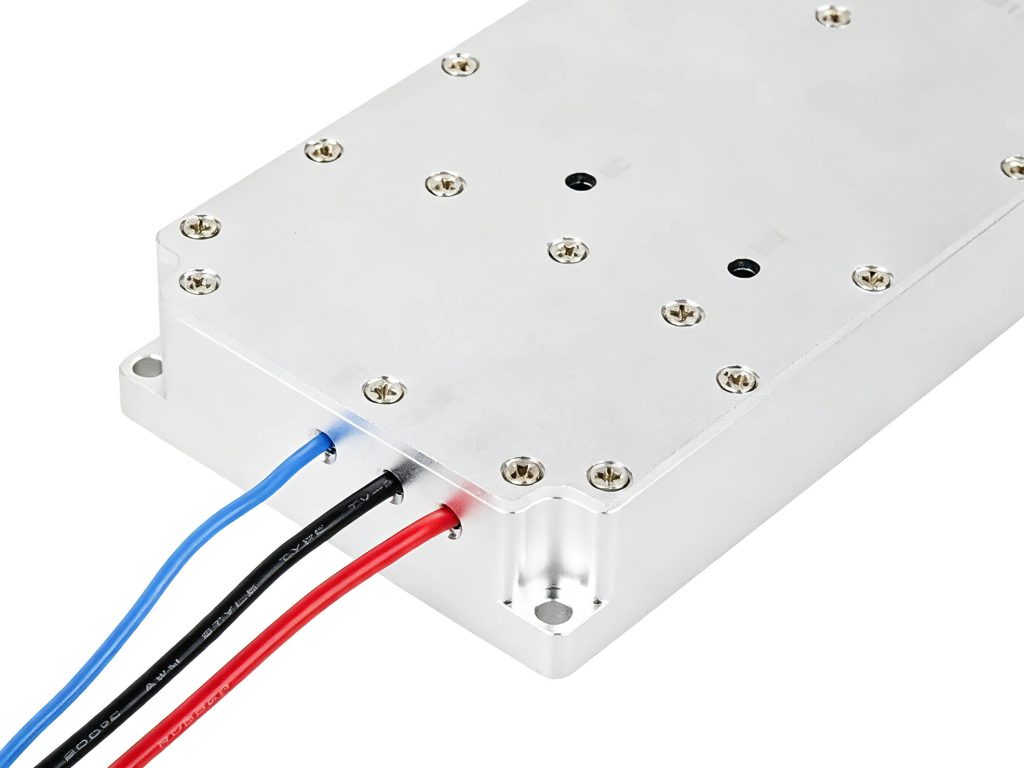
Supply voltage should stay between DC 24 V and 29 V. Maximum current draw is 15.0 A, but the supply needs extra headroom for transients. The control interface is simple: +5 V or floating enables RF output, while grounding the control pin turns it off. This TTL-style logic works with microcontrollers, switches, and mission controllers. LEDs show power, overvoltage, and overtemperature status. The built-in VSWR protection adds safety during field antenna changes.
Thermal and Mechanical Notes
The module measures 168.5 × 84.5 × 23 mm and weighs 0.55 kg. At 150 W output and about 40% efficiency, roughly 225 W of heat must be removed. The aluminum housing is not a heatsink by itself. Mount the module on a large finned heatsink or cold plate with thermal grease. Use a thermal pad or grease with good thermal conductivity, and ensure the mating surface is flat. The operating temperature range is -20 to +65 °C, but continuous full-power operation requires forced air or a large metal chassis.
Integration Steps
First, mount the module to a suitable cooling surface. Second, connect a 50 Ω dummy load or antenna before applying DC power. Third, set the supply to 24–29 V DC and verify the power LED. Fourth, check the control pin. A grounded pin keeps RF off; floating or +5 V turns RF on. Finally, use a directional coupler and power meter to confirm output before connecting the final antenna. The 150W anti UAV module still needs an antenna, DC supply, and control logic to form a complete jammer.
Field Use and Reliability
In fixed and vehicle-mounted deployments, the 150W anti UAV module is often paired with a high-gain panel or sector antenna covering 5.8 GHz. The integrated sweep source means no external modulation source is required. Operators should follow local RF exposure and spectrum rules. Keep the feedline short, use connectors rated for the power, and verify the load before each mission. With proper cooling and a stable 28 V supply, the module can run continuously during long counter-UAS operations.
Why GaN Changes the Equation
Compared with LDMOS designs, GaN allows the 150W anti UAV module to achieve higher output in a smaller footprint while keeping acceptable efficiency. For multi-band jammers, this module can be combined with lower-frequency units to cover drone control bands from 840 MHz to 5.8 GHz. The common control logic and supply voltage simplify system design. The module solves the hard part—wideband high-power RF generation at 5.8 GHz—so integrators can focus on the antenna and enclosure.
Frequently Asked Questions
Case Studies
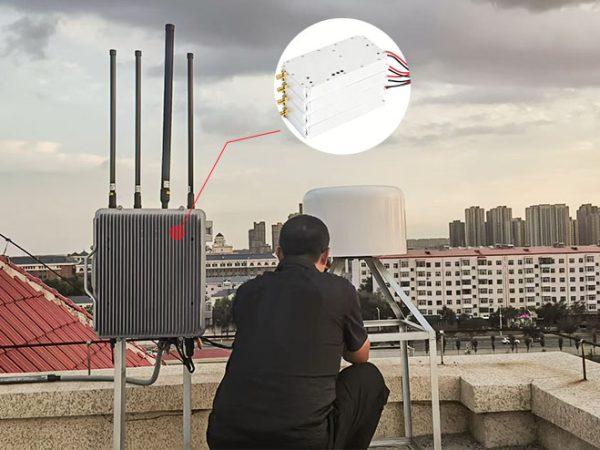
Heilongjiang Weather Center Completes Anti-Drone System Upgrade with Three High-Power Drone Jammer Modules

Tangshan Chem Plant Sealed Drone Gaps With 3 GaN Wideband Modules

How a National Prison Integrated Our Drone Jamming Module Into Their Fixed Counter-Drone System

Integrating Core RF Power: OEM Drone Jamming Module for Oil Refinery Security | Case Study
Send Us a Message
Related Products
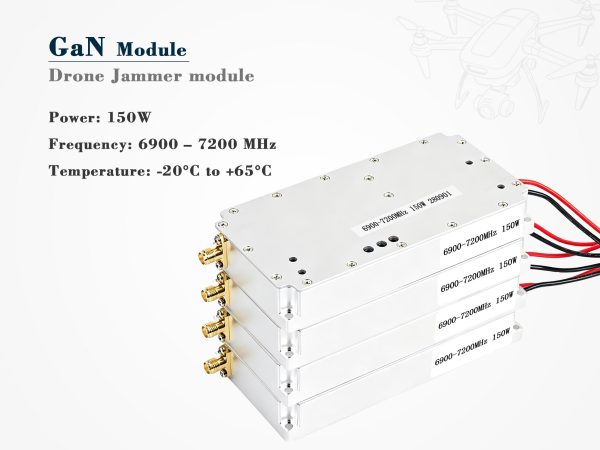
150W Drone Jammer Module: 6900-7200MHz GaN Board
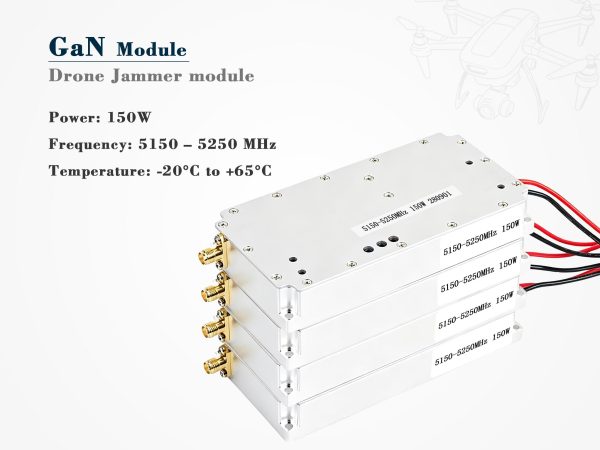
150W GaN Jamming Module 5150-5250MHz with Sweep Source
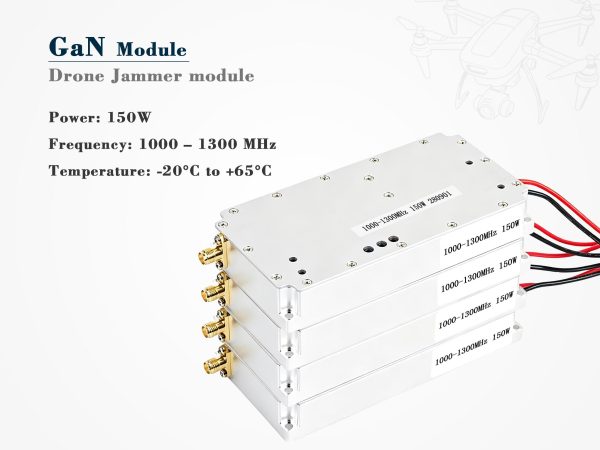
High-Power 150W Anti Drone Module 1000-1300MHz GaN