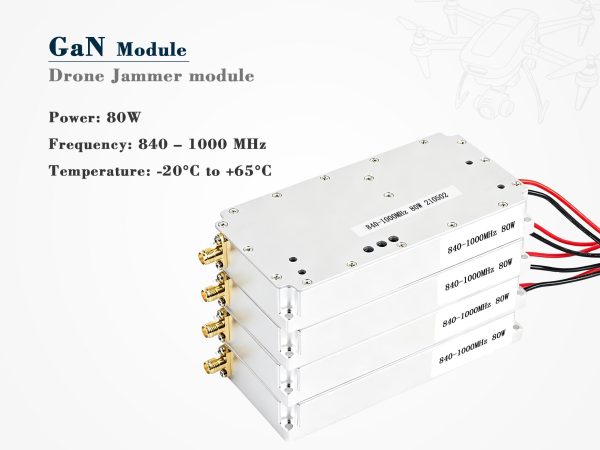
80W UAV Jammer Module: Heavy-Duty LDMOS Analog Jamming
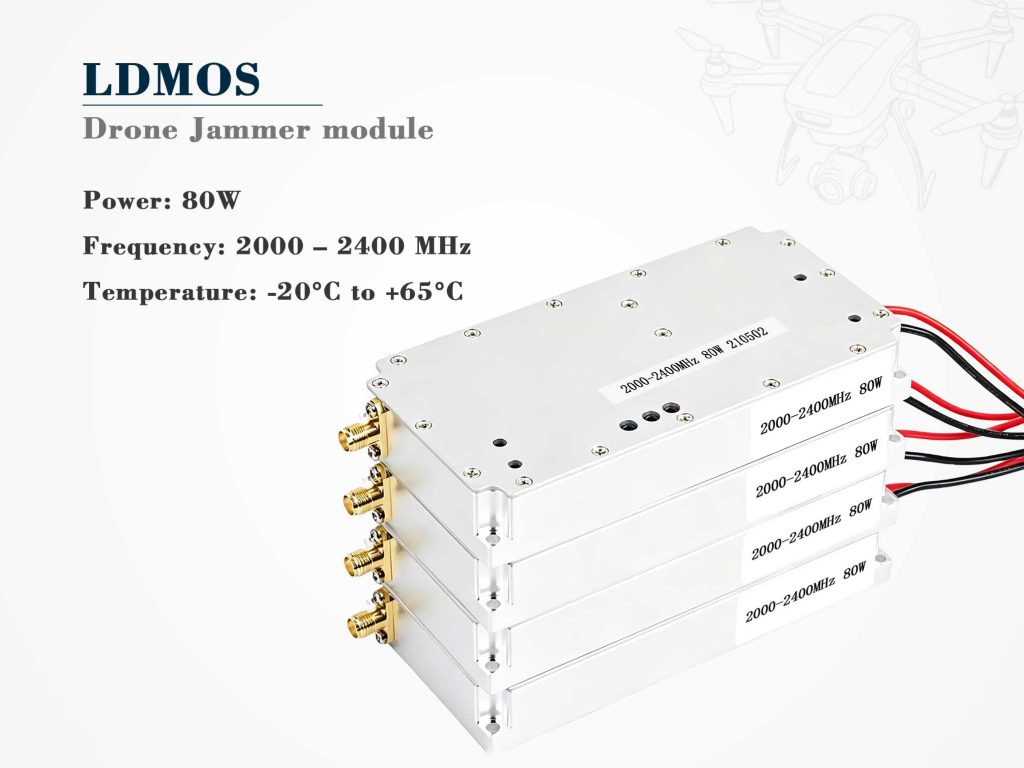
80W UAV jammer module delivers 80W across 2000–2400MHz, 24–29V DC, built-in sweep source, SMA female output, VSWR protection and LED alerts.
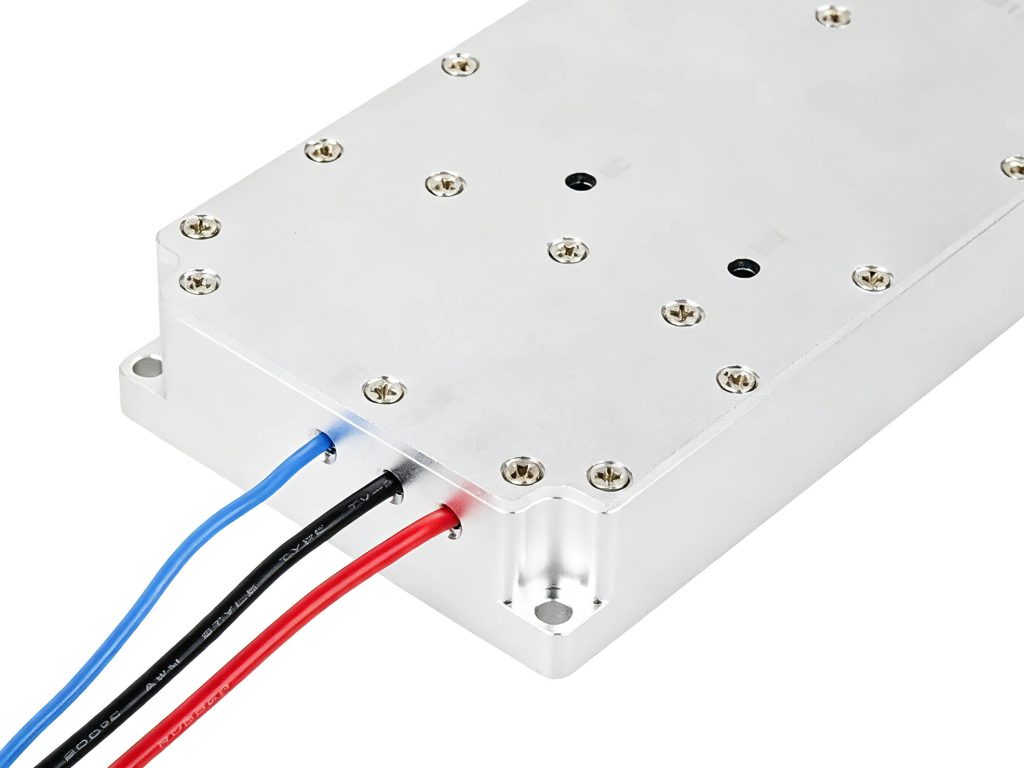
Technical Specifications
| Parameter | Specification | Notes |
| Frequency range | 2000~2400MHz | Covers common drone control/video bands |
| Output power | 80W | Typical at 24–29V DC |
| Supply voltage | DC24V~29V | Regulated supply recommended |
| Current draw | 10.0A max | Peak at full output |
| Modulation source | Built-in high-speed sweep source | No external generator required |
| Analog scan speed | High-speed analog sweep | Fixed by internal source |
| Input / output impedance | 50Ω nominal | SMA female output |
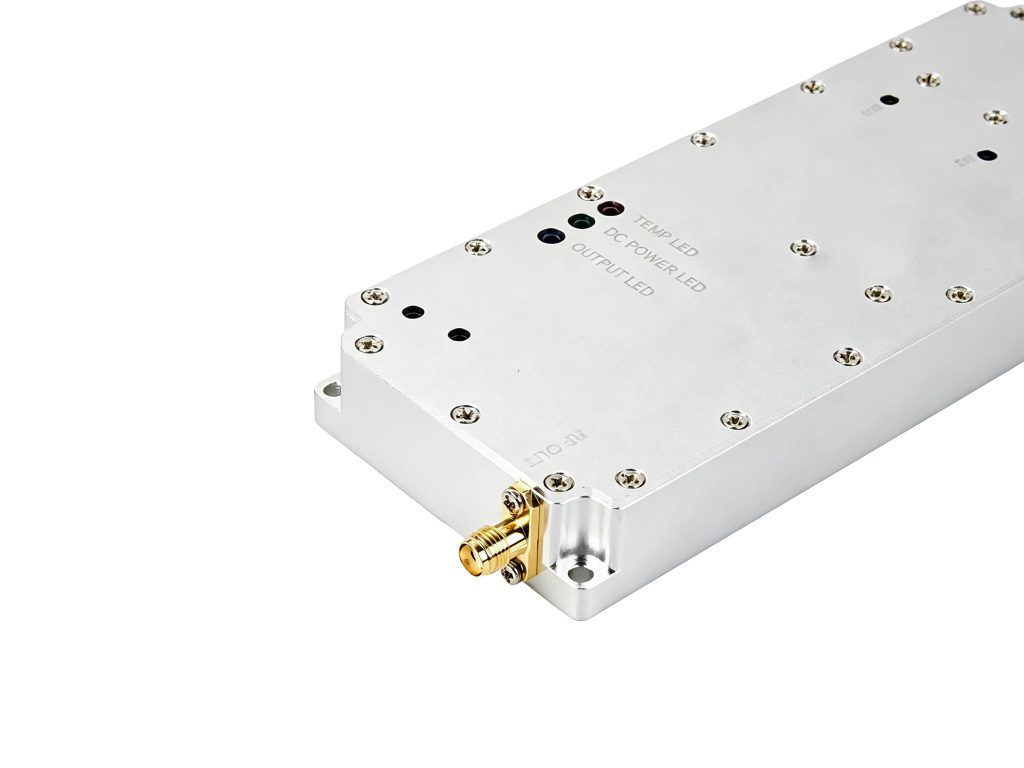
| Protection LEDs | Power, overvoltage, overtemperature | Plus absorptive VSWR protection |
| Operating temperature | -20~+65°C | Ensure adequate cooling |
| Dimensions (L×W×H) | 168.5×84.5×23mm | Compact LDMOS deck |
| Weight | 0.55kg | Metal base plate |
| Base material | Aluminum alloy enclosure | Acts as heat spreader |
Product Details
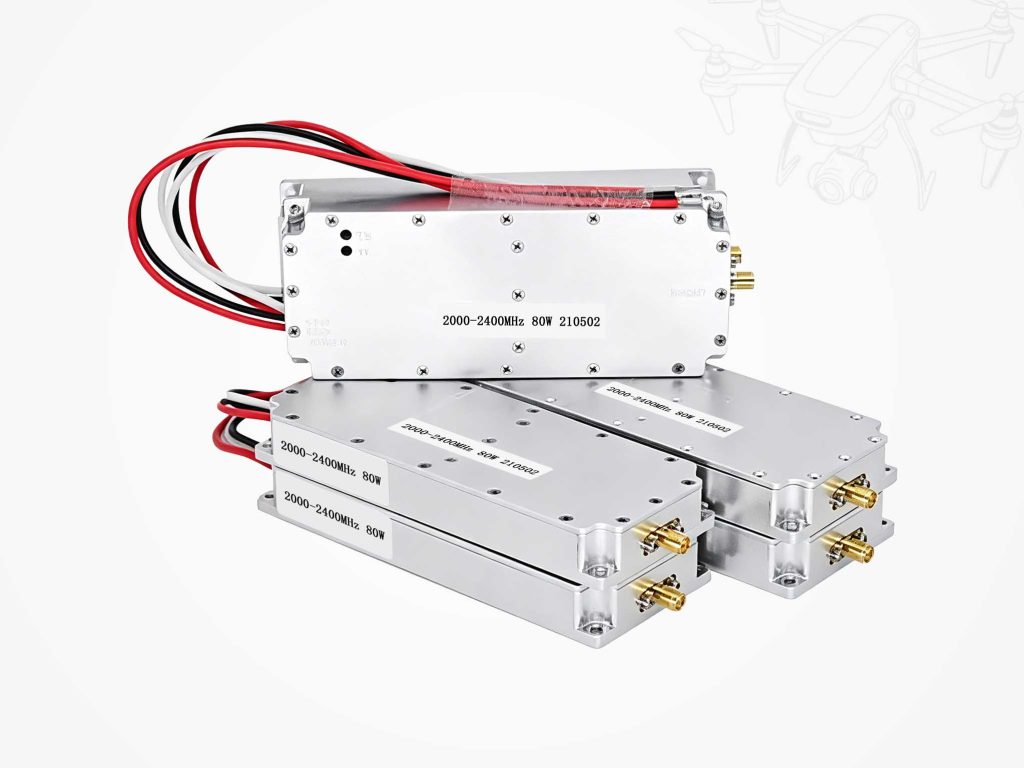
The 80W UAV jammer module is a compact LDMOS-based RF deck built for 2000–2400MHz drone countermeasure systems. It combines a high-speed analog sweep source with an 80W output stage in a 168.5×84.5×23mm metal housing. The module runs from a 24–29V DC supply and draws no more than 10.0A at full load, which keeps power budgeting simple. The RF chain is matched for 50Ω and uses an SMA female output, so it drops into most counter-UAS amplifier trays without custom plumbing.
RF Output and the 80W UAV Jammer Module
The RF output stage covers 2000–2400MHz with a typical output power of 80W. It uses LDMOS technology to keep gain reasonably flat across the band. The module provides an SMA female output connector and is designed for a 50Ω load. Output VSWR is rated at 2.0 or lower, which helps reduce reflected power when the antenna match is not perfect. The output match remains stable across the band, and the absorptive protection helps when antenna return loss changes during vehicle motion or multi-antenna switching.
Because the interference source is built in, you do not need a separate DDS or arbitrary waveform generator. The internal high-speed sweep source produces an analog modulation pattern that moves quickly across the full range. This makes the module useful for broadband denial applications where a fixed tone is not enough.
Mount the module close to the antenna to reduce cable loss. Keep DC input lines short and use adequate wire gauge for the 10A peak current. If you want a closer look at LDMOS device behavior, see this LDMOS technology overview.
Power, Protection, and Switching
Supply voltage is 24–29V DC. Typical efficiency is at least 40%, which simplifies thermal design compared with older class-A amplifier chains. The board draws up to 10.0A, but average current depends on sweep mode and antenna match. A regulated 28V rail is a good starting point. For a single 80W UAV jammer module, a 28V/12A supply is usually sufficient. Use a current-limited supply to avoid overshoot, and double-check wiring before powering up because the module does not include reverse-polarity protection.
The 80W UAV jammer module includes an absorptive VSWR protection device. It is not a simple reflective limiter; it absorbs excess reflected energy to protect the LDMOS output transistor. LED indicators show power switch, overvoltage, and overtemperature states. The control line switches the module on with +5V or floating, and off when grounded.
Before deploying any RF jammer, check local regulations and licensing requirements. The FCC jammer enforcement page explains why unauthorized use is restricted in many regions.
Mechanical and Integration Notes
The module measures 168.5×84.5×23mm and weighs 0.55kg. The metal base plate doubles as a heat spreader. Mount it to a flat heatsink or fan-cooled chassis plate with thermal grease, and do not block airflow around the RF output section. The module is light enough for mobile or airborne payloads, but heatsinking remains the main integration task. Use four mounting screws and avoid flexing the PCB near the RF output.
The SMA female output is located on the end panel. Use torque-controlled SMA connectors to avoid damaging the center pin. If you need a lower power stage for lab tests, see our 50W UAV jammer module.
The built-in sweep source keeps integration simple, but the analog scan speed is fixed by the internal source. If your system requires external modulation control, ask the supplier before ordering. The module is intended for analog swept jamming use; fixed-frequency or CW operation may require an external bias adjustment and should be confirmed with the vendor.
Common Applications
The 80W UAV jammer module suits fixed-site, vehicle-mounted, and portable counter-drone systems. It is especially useful when the operator needs a single compact deck that covers 2.0–2.4GHz with analog sweep rather than a multi-box rack setup.
Frequently Asked Questions
Case Studies
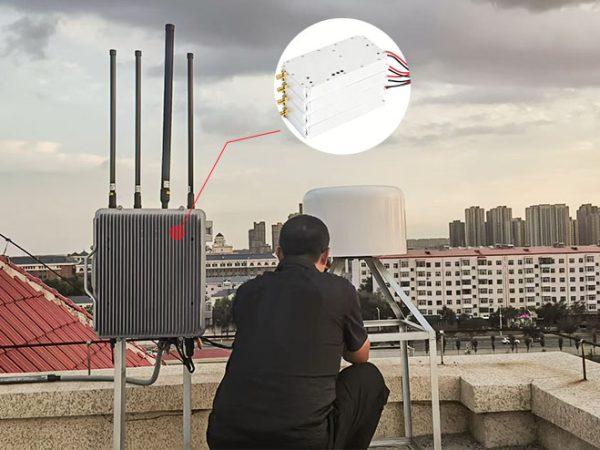
Heilongjiang Weather Center Completes Anti-Drone System Upgrade with Three High-Power Drone Jammer Modules

Tangshan Chem Plant Sealed Drone Gaps With 3 GaN Wideband Modules
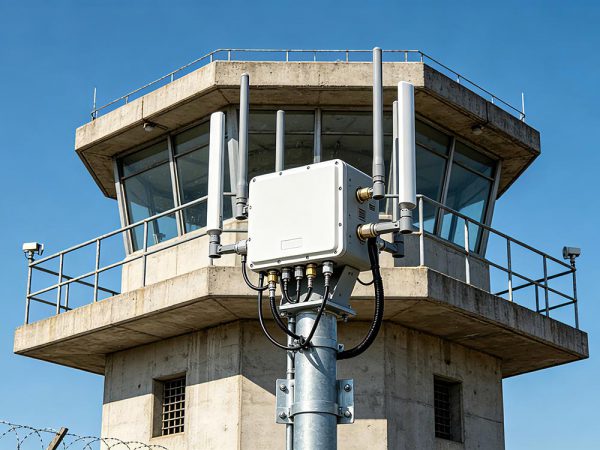
How a National Prison Integrated Our Drone Jamming Module Into Their Fixed Counter-Drone System

Integrating Core RF Power: OEM Drone Jamming Module for Oil Refinery Security | Case Study
Send Us a Message
Related Products
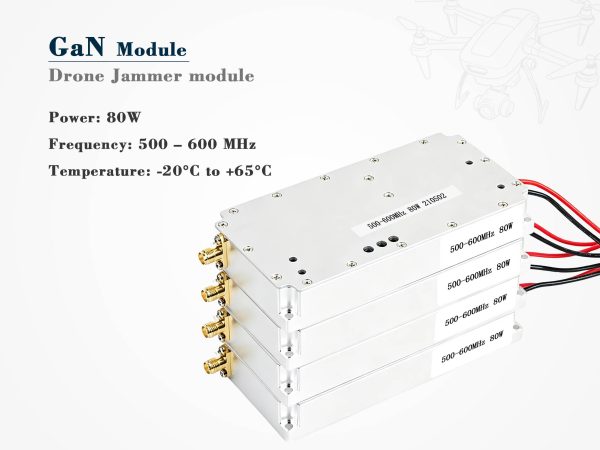
80W Anti Drone Module: 500-600MHz GaN Countermeasure
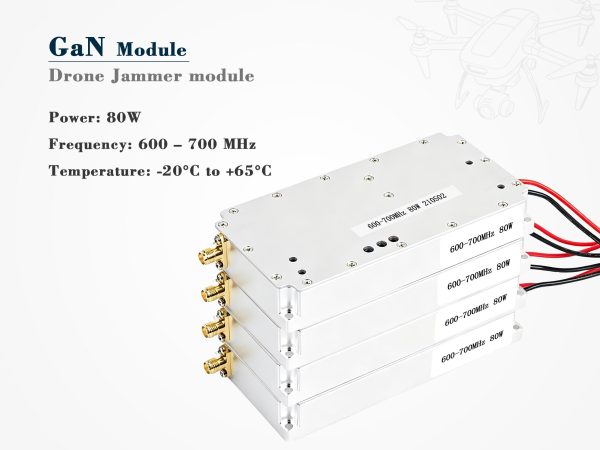
80W Anti Drone Module – 600–700 MHz GaN Analog Jammer
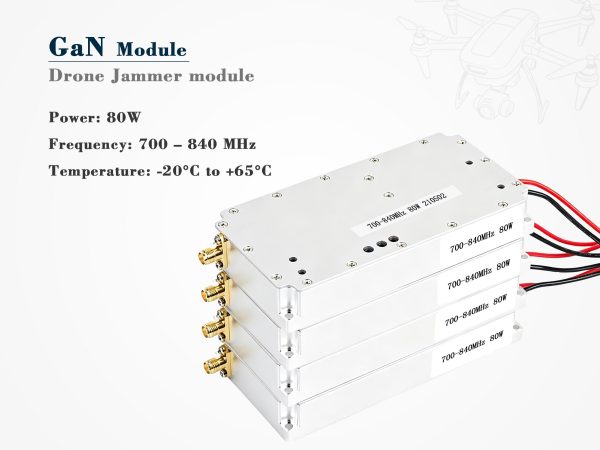
80W GaN Drone Jamming Module | 700-840MHz Sweep Source