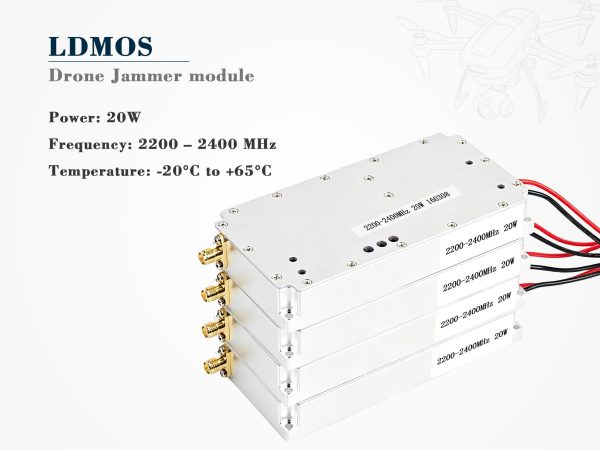
20W LoRa Drone Jammer Module | 400–500MHz RF Test
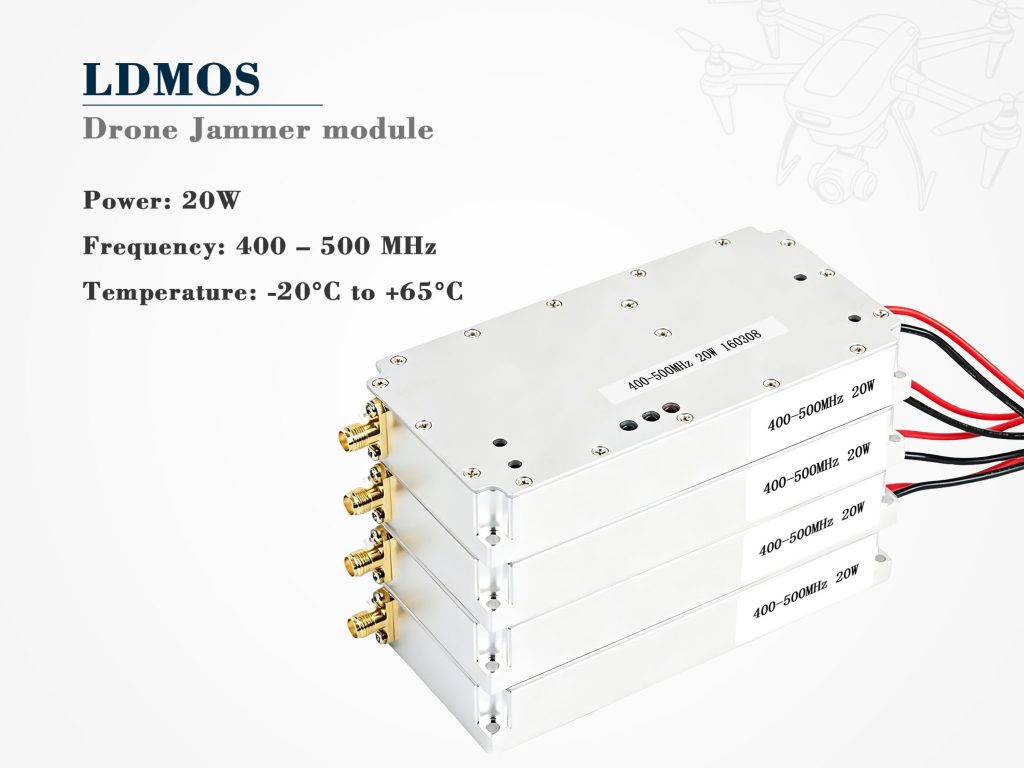
20W LoRa Drone Jammer Module covers 400–500MHz, DC24–29V, 2.5A max, SMA female, high-speed sweep source, LED protection, 115.5×46.5×21mm housing.
Technical Specifications
| Parameter | Specification | Notes |
| Frequency range | 400–500MHz | Covers common LoRa and drone-control bands |
| Output power | 20W | Typical RF output |
| Supply voltage | DC24–29V | Regulated supply recommended |
| Current draw | 2.5A max | At full load |
| Modulation source | Built-in high-speed sweep source | Analog scan |
| Analog scan speed | High-speed | Factory configured; not user-adjustable |
| Input / output impedance | 50 Ohm | SMA female output |
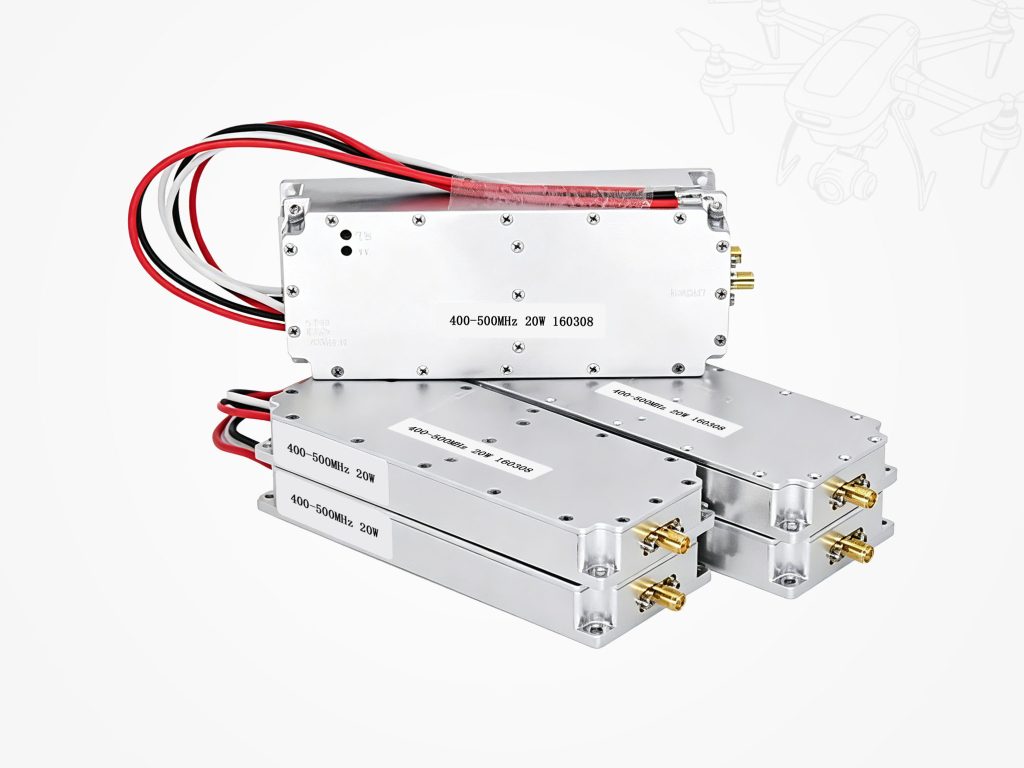
| Protection LEDs | Power, over-voltage, over-temperature | Status indicators |
| Operating temperature | -20°C to +65°C | Ensure airflow for continuous use |
| Dimensions (L×W×H) | 115.5×46.5×21mm | Compact metal housing |
| Weight | 0.21kg | Approx. |
| Base material | Aluminum alloy | Shielded housing |
Product Details
The 20W LoRa Drone Jammer Module is a compact RF interference unit built for controlled, authorized environments. It covers 400–500MHz, a band often used by LoRa links, telemetry, and some drone control channels. With 20W output and an internal high-speed sweep source, it gives system integrators a ready module for RF testing, counter-drone research, and protected-site deployments where local laws allow.
A Compact 400–500MHz RF Module
This module measures 115.5×46.5×21mm and weighs only 0.21kg. Its small metal housing fits into portable cases, fixed panels, or custom enclosures. The SMA female output connects to a suitable antenna. Because the module uses DC24–29V, it can run from common industrial power supplies or battery packs. Maximum current draw is 2.5A, and efficiency is at least 40%. Output VSWR is ≤2.0, which helps protect the amplifier when a matched antenna is used.
20W Output with Built-In Sweep Source
The module does not need an external signal generator. Its built-in high-speed sweep source creates analog interference across the 400–500MHz range. This makes it useful for testing receiver immunity, evaluating LoRa link behavior, and simulating harsh RF conditions. The 20W output gives strong coverage in open areas, but real range depends on antenna gain, cable loss, terrain, and the target receiver. For best results, use a 50 Ohm antenna and keep coax runs short.
Simple Control and Status LEDs
Control is straightforward. A +5V signal or floating pin turns the module on; grounding the control pin turns it off. This makes it easy to connect to a remote switch, relay, or microcontroller. Front-panel LEDs show power, over-voltage, and over-temperature status. These indicators help operators spot faults quickly during field tests or long bench runs.
Thermal and Environmental Design
The operating temperature range is -20°C to +65°C. The aluminum housing helps move heat away from the amplifier, but 20W RF output still needs airflow or a heatsink in continuous use. Do not block the case. Keep the module away from sensitive receivers unless the test requires interference. Proper grounding and shielded cables reduce unwanted emissions and improve stability.
Compliance and Safe Use
This is not a consumer device. RF jamming is regulated in most countries. Use the 20W LoRa Drone Jammer Module only where you have written permission, such as government, law enforcement, licensed security, or approved laboratory testing. Never use it to disrupt public communications, emergency services, or aviation. Check local rules before buying, installing, or powering the module. The operator is responsible for legal and safe operation.
Who It Is For
The module suits RF engineers, counter-drone integrators, and authorized security teams. It can be integrated into a larger detection and response system, but it should not be treated as a standalone solution. Detection, direction finding, and legal review matter just as much as output power. With its compact size, 20W output, and simple control interface, this 400–500MHz module is a practical building block for approved RF projects.
Key Integration Notes
Good RF design starts before power is applied. Mount the 20W LoRa Drone Jammer Module on a metal plate when possible. Use a directional antenna if you need to limit the affected area. Keep the power supply stable and within DC24–29V. Add a fuse and reverse-polarity protection. Test at low duty cycle first, then monitor temperature and VSWR. Stop immediately if the LED warns of over-temperature or over-voltage.
Frequently Asked Questions
Case Studies
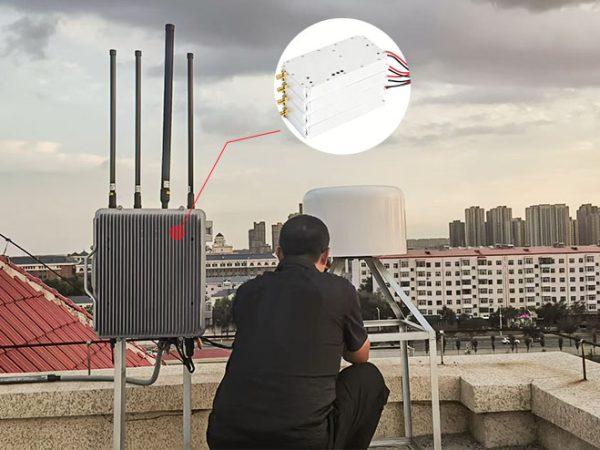
Heilongjiang Weather Center Completes Anti-Drone System Upgrade with Three High-Power Drone Jammer Modules
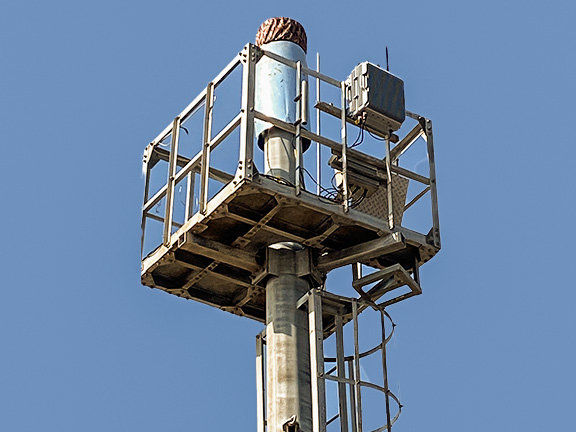
Tangshan Chem Plant Sealed Drone Gaps With 3 GaN Wideband Modules
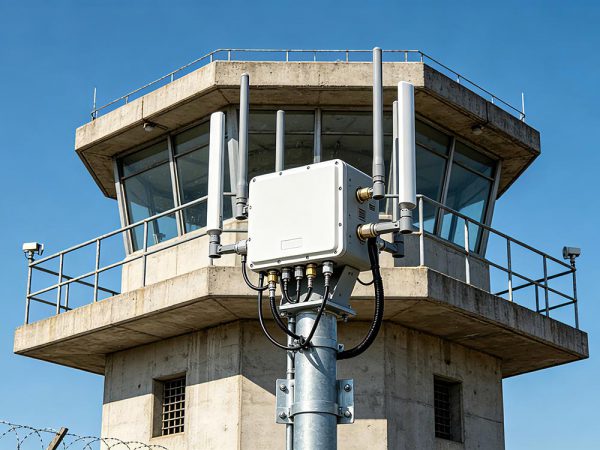
How a National Prison Integrated Our Drone Jamming Module Into Their Fixed Counter-Drone System
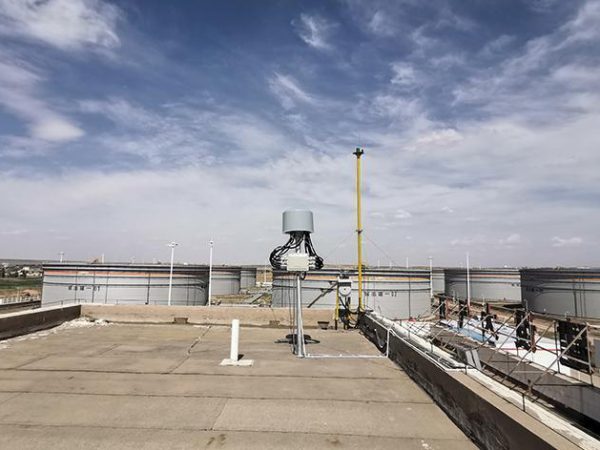
Integrating Core RF Power: OEM Drone Jamming Module for Oil Refinery Security | Case Study
Send Us a Message
Related Products
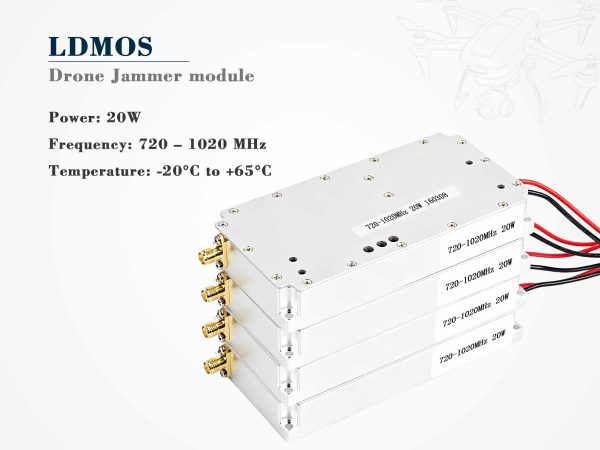
20W 720–1020MHz UAV Jammer Module | LDMOS Analog
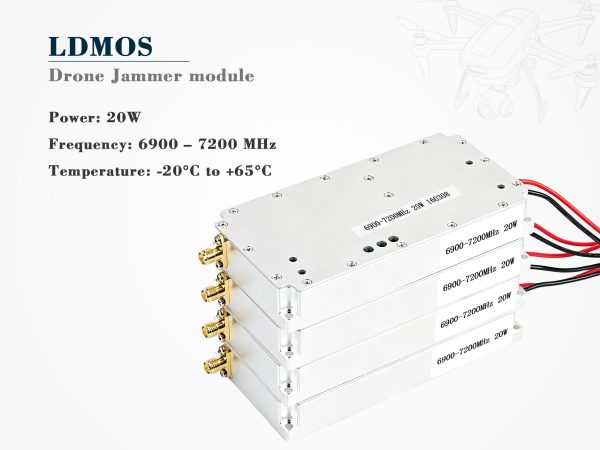
Powerful 20W LDMOS Drone Jammer Module for 6.9–7.2 GHz
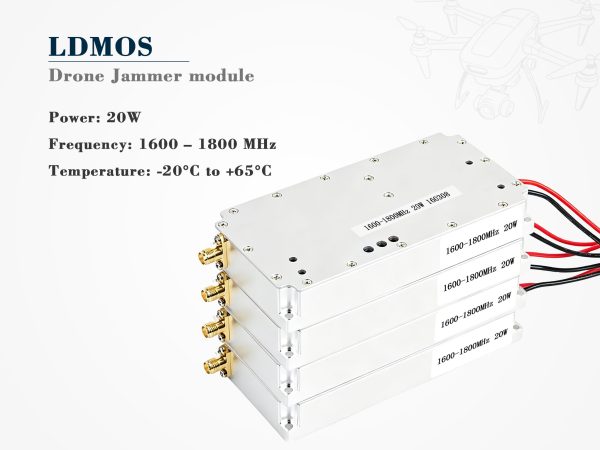
Powerful 20W Anti Drone Module 1600–1800MHz