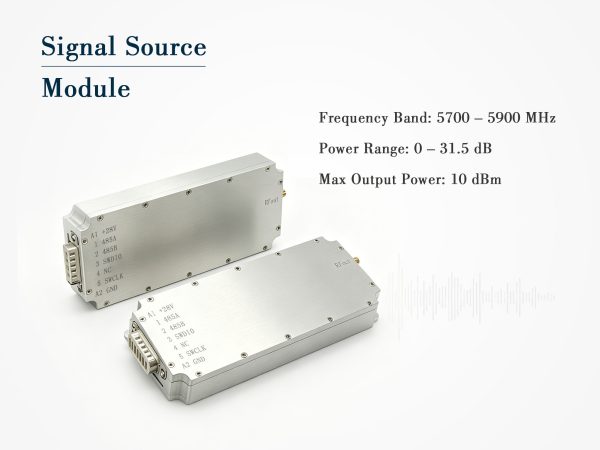
1800-2000MHz Signal Source Module with RS485 & 0.5dB Step
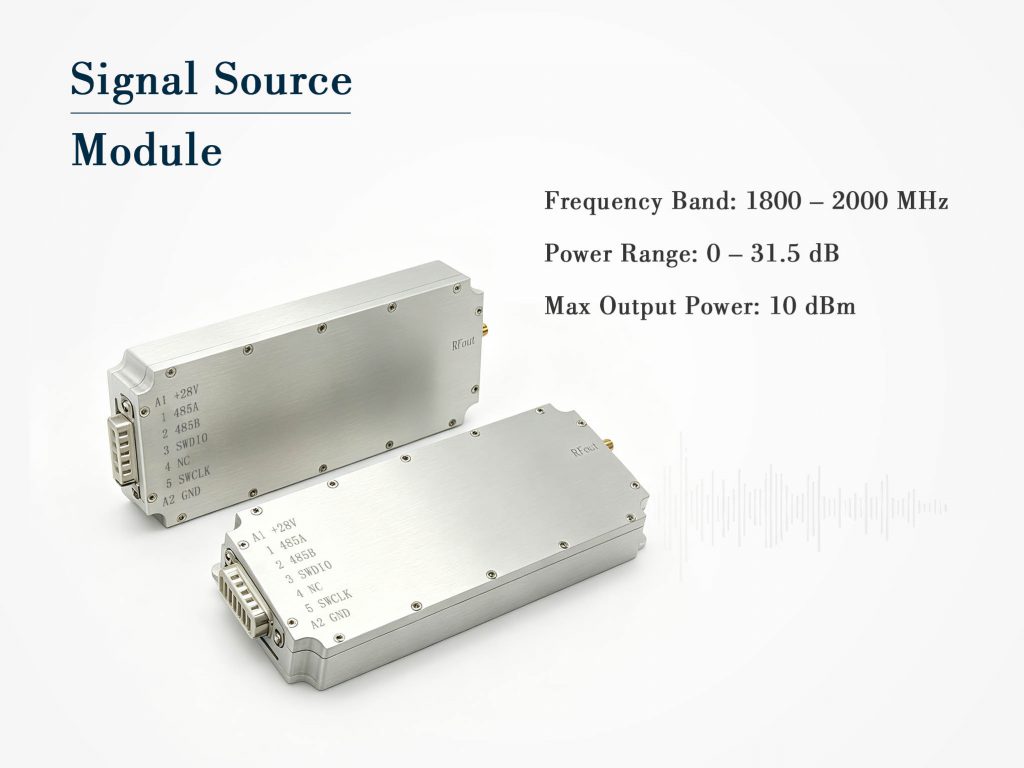
1800-2000MHz digital signal source module, 10dBm max output, 0.5dB power step, RS485 control, SMA female, compact 146x63x17.5mm.
LTE and DCS/PCS base station testing
Repeater and DAS commissioning
Active antenna and filter characterization
Production line automation
R&D lab prototyping
Technical Specifications
| Parameter | Typical Value |
| Frequency Range | 1800 – 2000 MHz |
| Signal Type | Digital signal source |
| Max Output Power | +10 dBm |
| Output VSWR | ≤ 2.0 |
| Power Adjustment Range | 0 – 31.5 dB (0.5 dB step) |
| Control Interface | RS485 |
| Supply Voltage | 12 V – 29 V DC |
| Max Current | 200 mA @ 28 V |
| Output Connector | SMA female |
| Power/Control Connector | 7W2 |
| Dimensions | 146 × 63 × 17.5 mm |
| Weight | 0.21 kg |
Product Details

If you work anywhere near the 1.8 to 2 GHz range — whether it’s DCS, PCS, LTE bands 2/3/4, or even 2.4 GHz front-end testing — you know the frustration of lugging around a full-size signal generator just for a stable continuous wave. This digital signal source module changes that. It gives you a clean, repeatable tone from 1800 MHz to 2000 MHz in a package that fits in your hand and talks directly to your test software over RS485.
Fine steps, real benefits
When you’re nudging a receiver’s AGC threshold or finding the 1 dB compression point of a front-end LNA, half-dB steps let you see the true shape of the response. One-dB jumps often miss the subtle knee that tells you where the device starts to misbehave. And because the attenuation is digital, every sweep returns the same results. Run it 100 times or once — the repeatability holds.
Control and power over a single 7W2 connector
Nobody likes cable salad on the test bench. The 7W2 mixed D-sub connector handles both DC power and RS485 data, so you run one cable bundle to the module instead of three. The module accepts anything from 12 V to 29 V DC and draws just 200 mA at 28 V. That means you can power it from a bench supply, a 24 V industrial rail, or even a vehicle battery in the field.
On the software side, RS485 is rock solid over long distances and electrically quiet environments. You can string up to 32 units on the same differential bus, address them individually, and run synchronized multi-channel tests without GPIB or USB chaos.
Compact, not compromised
The 146 × 63 × 17.5 mm footprint slips easily into a shielded test enclosure or mounts directly onto a production jig. At 0.21 kg, it’s lighter than most handheld test accessories. The SMA female output connects to standard cables with minimal reflection, thanks to a VSWR of ≤2.0. Even if your DUT presents an imperfect match, the module stays well-behaved — no sudden oscillations or power fold-back.
Where you’ll lean on this signal source module
-
LTE and DCS/PCS base station testing: Sweep receiver paths and verify sensitivity across bands 2, 3, 4, and 9.
-
Repeater and DAS commissioning: Inject a known CW tone to level-set gain stages without carrying a full-size analyzer.
-
Active antenna and filter characterization: Map frequency response and gain compression with precise power control.
-
Production line automation: Embed the module in a test fixture, drive it over RS485, and collect consistent pass/fail data.
-
R&D lab prototyping: Keep one on your desk for quick impedance checks, mixer drive, or LO substitution.
The bottom line
A reliable 1800–2000 MHz source shouldn’t eat up bench space or budget. This signal source module gives you tight level control, simple RS485 automation, and a rugged metal body that fits anywhere. Once you add it to your toolkit, you’ll wonder why you spent so much time wrestling with oversized lab generators for tasks that only need a clean, stable tone.
Frequently Asked Questions
Case Studies
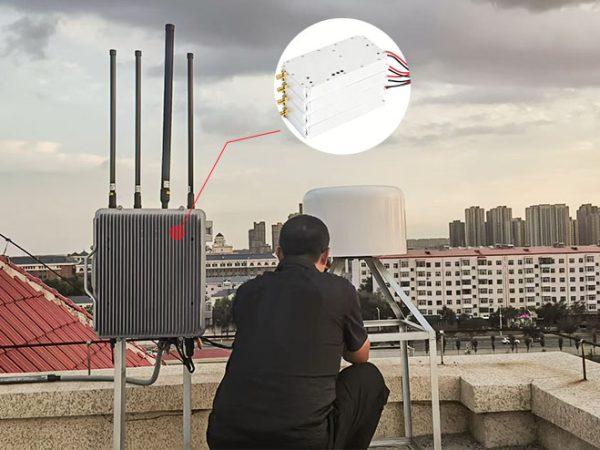
Heilongjiang Weather Center Completes Anti-Drone System Upgrade with Three High-Power Drone Jammer Modules

Tangshan Chem Plant Sealed Drone Gaps With 3 GaN Wideband Modules
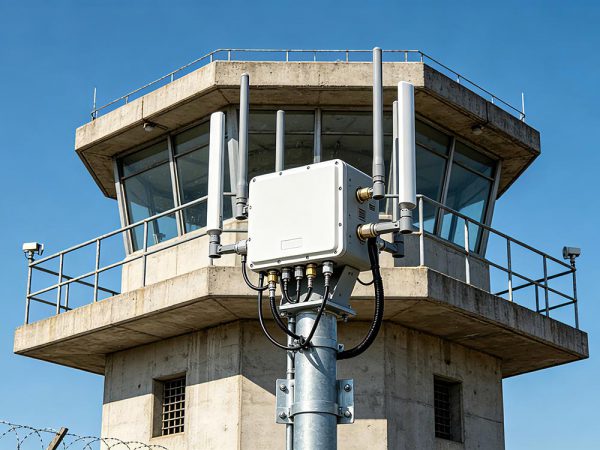
How a National Prison Integrated Our Drone Jamming Module Into Their Fixed Counter-Drone System
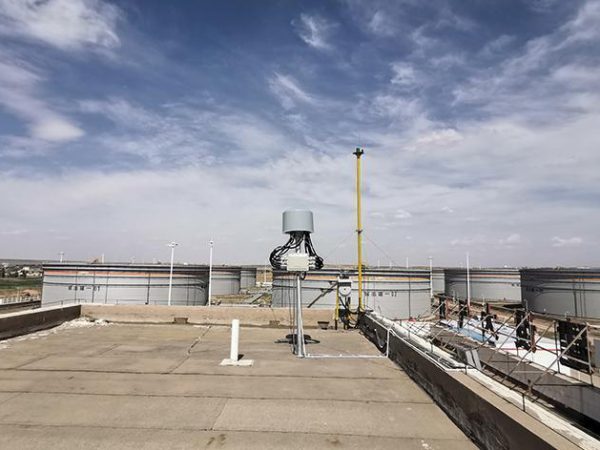
Integrating Core RF Power: OEM Drone Jamming Module for Oil Refinery Security | Case Study
Send Us a Message
Related Products
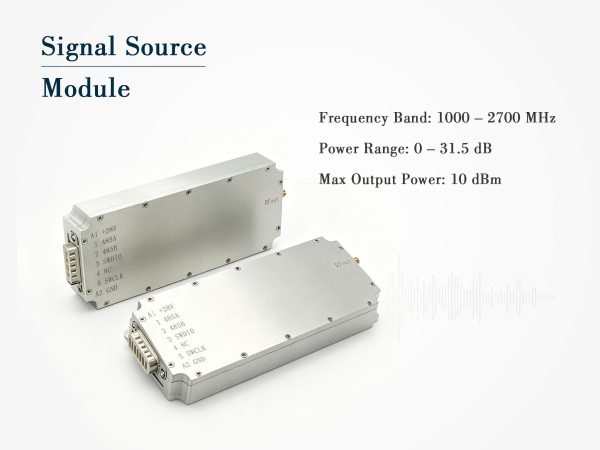
Wideband Signal Source Module – 1000 to 2700MHz, 10dBm with Digital Attenuator
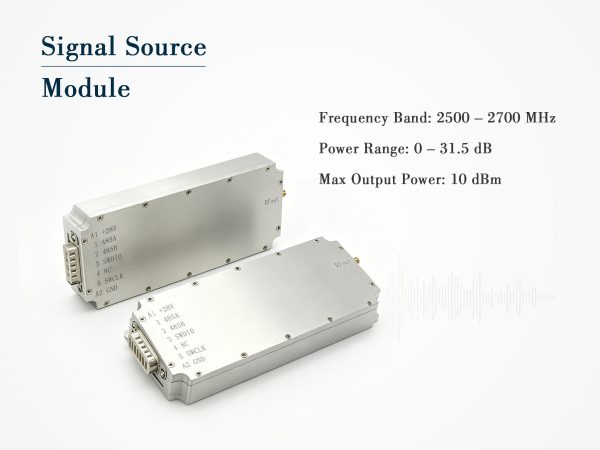
Compact Signal Source Module – 2500–2700MHz, 10dBm with Digital Attenuation
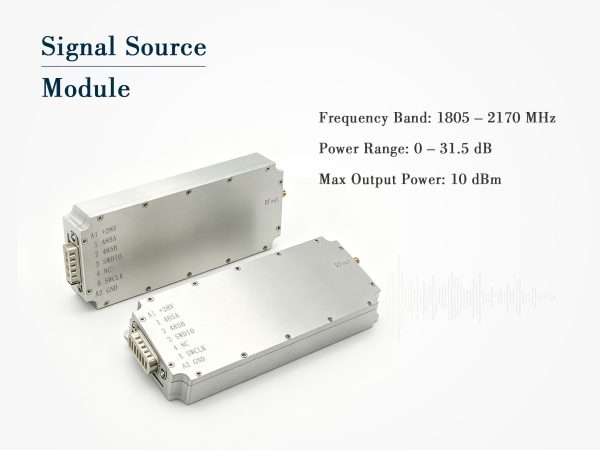
Digital Signal Source Module 1805-2170MHz